Wild Creek Web Studio
  • About Wild Creek
    • Awards
    • Case Studies
    • Portfolio
    • Testimonials
  • Services
    • SEO Services
    • Paid Marketing Services
    • Social Media Marketing
    • Consulting and Strategy
  • Resources
    • Blogs
    • Free SEO Tools
    • Digital Marketing Glossary
  • Contact
Implementing a Strong B2B SEO Strategy

Implementing a Strong B2B SEO Strategy

In today’s online world, search engine optimization (SEO) is very important for businesses that want to succeed. SEO is not only about using keywords. It is also about creating a good user experience that can attract and convert your target audience. This is key for B2B companies. Content marketing is also vital. It helps show thought leadership and supports long-term growth. By creating useful and engaging content for your ideal customer, you can bring in organic traffic, improve brand visibility, and increase conversions.

Implementing a Strong B2B SEO Strategy

In this Article

Toggle
  • Understanding B2B SEO
    • The Distinction Between B2B and B2C SEO: A Deep Dive
    • Why SEO is a Game Changer for B2B Businesses
  • Crafting a Robust B2B SEO Strategy: Key Components
    • Identifying Your Target Audience and Buyer Personas
    • Conducting Comprehensive Keyword Research Tailored to B2B Needs
  • Optimizing Your Website for B2B Success
    • Designing a Website Structure That Complements B2B SEO
    • Implementing On-Page SEO Techniques for B2B Websites
    • Technical SEO: Ensuring Your Site’s Foundation is Solid
  • Content is King: Developing a B2B Content Strategy
    • Types of Content That Resonate with B2B Audiences
    • Leveraging Blog Posts, Case Studies, and Whitepapers Effectively
    • SEO and Content Synergy: Making Content Work for Your SEO Goals
  • Advanced B2B SEO Tactics
    • Harnessing the Power of Backlinks in B2B SEO
    • Utilizing Social Media to Amplify Your B2B SEO Efforts
    • The Role of Local SEO in B2B Digital Strategies
  • Measuring Success: B2B SEO Analytics and KPIs
    • Essential SEO Metrics for B2B Businesses
    • Using Analytics to Refine and Adjust Your SEO Strategy
  • Overcoming Common B2B SEO Challenges
    • Navigating the Long B2B Sales Cycle in Your SEO Strategy
    • Addressing Low Search Volume Keywords with High Intent
  • Looking Ahead: B2B SEO Trends and Predictions
    • The Growing Importance of AI and Machine Learning in B2B SEO
    • Voice Search Optimization: Preparing for the Future of SEO
  • Conclusion
  • Frequently Asked Questions
    • What Makes B2B SEO Different from B2C SEO?
    • How Often Should You Update Your B2B SEO Strategy?
    • Can B2B Companies Benefit from Local SEO?
    • How to Measure the ROI of B2B SEO?
    • What are the Most Effective B2B SEO Tools and Platforms?

Understanding B2B SEO

B2B SEO focuses on improving your online visibility to attract other businesses looking for your products or services. Unlike B2C, which aims at a large audience, B2B SEO targets a specific group. You need to understand your target audience deeply. Know what challenges they face and the terms they use when searching for solutions.

The main aim of B2B SEO is to make your website helpful for potential clients. You want to draw in organic traffic by matching your content with their search intent. This involves offering quality content that answers their questions and proves that your business is a trustworthy leader in your industry.

The Distinction Between B2B and B2C SEO: A Deep Dive

B2B and B2C SEO both help improve online visibility. However, they do this in different ways. This difference is because their target audiences and sales processes are not the same. B2C SEO seeks to reach more customers. It aims for quicker sales and focuses on attracting individual shoppers.

B2B SEO targets a particular audience. This audience consists of decision-makers looking for business solutions. When you write content for B2B, your aim is to give valuable information. This information helps decision-makers work through the often complex B2B buying process.

Knowing these key differences is important. It helps you create SEO strategies that benefit your business. For B2B companies, this means you need to build trust. You should show your expertise and develop strong connections with potential clients.

Why SEO is a Game Changer for B2B Businesses

For B2B companies, SEO is not just a marketing tool. It is a strong way to grow over time. When you rank higher in Google Search results, your brand becomes more visible. This helps potential clients find the solutions you provide more easily.

When you improve your visibility, more people will visit your website. This leads to quality leads from businesses that want what you offer. Organic search, along with good SEO, brings steady, targeted traffic. This is different from paid ads, which disappear when you run out of money.

Investing in SEO for your B2B business provides many lasting benefits. It helps your brand gain authority and builds trust with potential clients. This positions your company as a leader in your field.

Crafting a Robust B2B SEO Strategy: Key Components

Building a strong B2B SEO strategy is unique for every business. You need to tailor it to fit your business, target audience, and industry. A winning B2B SEO strategy combines your technical skills with a solid understanding of your ideal customer.

This process covers everything. It starts with careful keyword research. Next, it moves on to content creation. Lastly, it ensures your website is properly optimized.

Identifying Your Target Audience and Buyer Personas

Knowing your target audience is the first step to creating a successful B2B SEO strategy. It is essential to go beyond just basic information. You should create detailed buyer personas. These personas will help you understand who your best customers are.

A good buyer persona helps you know what motivates your audience. It reveals the challenges they face and the issues they want to solve. This helps you understand their needs and how they look for solutions online. Here are some key points to think about when you create your B2B buyer personas:

  • Demographics: Which industry do they work in? What is their job title? How much experience do they have?
  • Pain Points: What problems make them feel stressed? What solutions are they searching for?
  • Information Sources: Where do they find important information for their industry? Which websites or articles do they trust?

When you understand your audience, you can create better content. You can also find the right keywords that connect to what they want and how they search for information.

Conducting Comprehensive Keyword Research Tailored to B2B Needs

Good keyword research is very important for a strong B2B SEO strategy. It helps you discover the exact words that your target audience uses while looking for solutions online. When you understand how they search, you can improve your website and content. This will help you rank higher in search results for key keywords.

Use keyword research tools to find keywords that many people search for but have low competition. These keywords should align with what you offer and what your target audience wants. Don’t just look at search volume. Pay attention to relevant keywords. They should reflect your business and help address your audience’s pain points.

Always remember to attract the right people. These are the businesses looking for the products or services you offer.

Optimizing Your Website for B2B Success

Optimizing your website is important for ranking well in search engine results pages (SERPs). It also improves user experience. For B2B companies, your site should be easy for search engines to read. It should be simple for potential clients to navigate.

This means changing things on the page, such as the text and meta descriptions. It also covers technical aspects, like how quickly the site loads and how well it functions on mobile devices.

Designing a Website Structure That Complements B2B SEO

A well-organized website layout is important for a good user experience and SEO. You can think of your website as a map. It helps visitors locate what they need quickly and easily. A clear design makes it simple for search engines to crawl and index your site. This can boost your search rankings.

Make sure it is easy to navigate your website. A clear navigation helps visitors find what they need without problems. Use categories and subcategories to organize your content well.

You need to build special landing pages for your products, services, or content offers. Be sure to include relevant keywords, strong calls to action, and clear benefits on these pages. This can help you boost your conversions.

Implementing On-Page SEO Techniques for B2B Websites

On-page SEO means making updates to your webpage to help it rank better for specific keywords. This includes the text you write and the HTML code. These updates help search engines to read and rank your pages properly. It’s very important to have quality content for good on-page SEO.

You should write content that is informative and interesting. It must be organized well and useful for the people you want to reach. Remember to use relevant keywords in your text, but do not overuse them. Too many keywords can lower your rankings. Here are the key points to remember for on-page SEO:

  • Title Tags: Create interesting titles that include keywords and show what is on your page.
  • Meta Descriptions: Write short and attractive descriptions that encourage people to click your link in search results.
  • Header Tags (H1-H6): Use header tags to structure your content. This makes it easier to read and helps with SEO.

By working on these areas, you can make your website easier to find. This will help you get more organic traffic.

Technical SEO: Ensuring Your Site’s Foundation is Solid

Technical SEO looks at the parts of your website that aren’t easily visible. These parts affect how your site shows up in search engines. A properly set up website makes it easier for search engines to read, list, and understand your content. This can help your rankings improve. You should do a complete SEO audit often. Use tools like Google Search Console for this. This practice can help you find and fix problems that might hurt your site’s performance.

Your website should load fast. Make sure it works well on mobile devices as well. Keep your site organized too. It’s essential to ensure your site is safe by using HTTPS. This is important for getting a good ranking on Google.

A good technical SEO plan is important for your SEO efforts. It helps search engines find and rank your website the right way.

Content is King: Developing a B2B Content Strategy

In B2B SEO, good content is very important. When you make relevant content, it attracts your target audience. It helps you become a leader in your field and can increase your sales. Your content strategy should meet the needs of your buyer personas at different stages of the sales funnel.

The goal is to give helpful information. This information should teach people, involve them, and assist potential customers in making a decision to buy something.

Types of Content That Resonate with B2B Audiences

A good B2B content strategy includes different types of content that meet the needs and interests of your target audience. When you offer different kinds of content, you can reach more people. This also helps you connect with them at different stages of the buyer journey. Here are some types of content to think about:

  • Blog Posts: These are a good way to share news about the industry. You can share updates about your company or answer common questions that people ask.
  • Case Studies: With these, you can highlight success stories of your clients. They show how valuable your products or services can be.
  • White Papers: These let you provide detailed information and useful analysis about trends or challenges in the industry.
  • Webinars: These are online events where you can connect with your audience. You can give helpful insights during these sessions.

Making different kinds of helpful content can help your brand become a leader in its area. This will also guide potential customers through your sales funnel.

Leveraging Blog Posts, Case Studies, and Whitepapers Effectively

Blog posts, case studies, and whitepapers are important parts of content marketing in B2B. They provide special advantages. These tools can help you attract, engage, and convert potential customers.

Blog posts are great for sharing news, ideas, and answers to common questions. They can increase the organic traffic to your website. This can make your brand look like a leader in your field.

Case studies build trust. They highlight the real advantages of your products by sharing success stories from actual clients.

Whitepapers are in-depth documents that provide important information about problems or trends in an industry. They are often gated content, which means that people need to give their contact details to read them. This practice helps you attract leads who are really interested in what you provide.

SEO and Content Synergy: Making Content Work for Your SEO Goals

Making great content is just one part of the job. To really benefit from it, your content and SEO strategies must work well together. SEO helps search engines find your content and understand it more clearly. This helps your content reach the right audience.

Start by including relevant keywords naturally in your content. Use them in titles, headings, meta descriptions, and the main text. Make sure your content is easy to read and simple to navigate. This is helpful for both search engines and users.

Share your content carefully to get links from trusted websites. If you combine your SEO and content work, it will make your content easier to find. This can help you bring in organic traffic and reach your marketing goals.

Advanced B2B SEO Tactics

After you build a strong base for your B2B SEO, you can look into advanced methods to increase your reach and impact. These methods help you gain authority and grow your online presence. They allow you to connect with your target audience beyond your website.

You can make it easier for potential clients to find you. You can do this by using backlinks, social media, and local SEO.

Harnessing the Power of Backlinks in B2B SEO

Backlinks are links that come from different websites to your content. They are very important for B2B SEO. Backlinks show search engines that your content is helpful and reliable. A good number of high-quality backlinks can boost your domain authority. This boost can help you get a better spot in search results.

To gain backlinks, you should concentrate on trustworthy websites in your field. You can do this by writing guest blogs, participating in forums related to your industry, and making content that people will want to share.

Creating a strong backlink profile takes time and effort. It is a slow process, but it needs a good plan. The results will be worth it. You will see better visibility and build your credibility. This makes it a wise investment.

Utilizing Social Media to Amplify Your B2B SEO Efforts

Social media does not directly change your search engine rankings. But it is very important for your overall B2B SEO plan. You should use social media to share your content, reach your target audience, and increase brand awareness.

Share your blog posts, case studies, and helpful content on social media. This allows you to connect with more people beyond your website. Engage in discussions in your area, answer questions, and make your brand a reliable source of information.

Social media is a great way to connect with possible customers. It helps you build strong relationships and brings more visitors to your website. This can improve your SEO and lead to greater success.

The Role of Local SEO in B2B Digital Strategies

For B2B businesses that have a physical place or focus on a certain area, local SEO is very important. It improves your online visibility and helps you show up higher in local search results. This helps you connect with more customers near you.

Make sure to get your Google My Business profile and keep it up to date. Add the correct information about your business, like your hours and customer reviews.

Make sure your website is in online directories that match your business where you are located. A strong local SEO plan helps people nearby find your business. This way, they can reach you online and visit you in person.

Measuring Success: B2B SEO Analytics and KPIs

Tracking and checking your B2B SEO performance is essential. It helps you see what is working and what needs improvement. You can also show the value of your efforts. Focus on key performance indicators (KPIs) that match your business goals. This could be increasing website traffic, lead generation, or conversions.

When you frequently look at these numbers, you get a better idea of your target audience. This understanding helps you improve your SEO strategy. As a result, you can get the best outcomes.

Essential SEO Metrics for B2B Businesses

To see how good your B2B SEO strategy is, you need to know and watch the right SEO metrics. There are many metrics available. However, focus on the ones that fit your business goals the most.

  • Organic Traffic: This is the number of people who visit your website from search engine results. A higher organic traffic means better visibility and good SEO efforts.
  • Bounce Rate: This tells you how many visitors look at just one page before leaving your site. A high bounce rate might mean that your content is not helpful or that the user experience is lacking.
  • Conversion Rate: This measures the percentage of visitors who do what you want them to do, like filling out a form or making a purchase.
Metric Description
Organic Traffic Number of visitors arriving from search results
Bounce Rate % of visitors leaving after viewing only one page
Conversion Rate % of visitors taking a desired action (e.g., form submission, purchase)
Keyword Ranking Position of your website in SERPs for target keywords
Backlinks Number of inbound links from other websites
Domain Authority A score predicting your website’s ranking ability (higher is better)
Page Load Speed Time it takes for your website to load (faster is better)
Mobile-Friendliness How well your website is optimized for mobile devices

Using Analytics to Refine and Adjust Your SEO Strategy

You should check your SEO performance regularly. Use data from tools to understand what your audience likes. This can help you find ways to improve. It will also help you make better choices for your strategy.

Check your website traffic, keyword rankings, and backlink profile often. This will help you understand how good your content is. Look for pages that have high bounce rates. Consider how you can make their content or design better.

Keep changing your keyword strategy based on what people search for and what your competitors are doing. SEO is not a project you complete once. You need to be flexible and ready to adapt to stay ahead.

Overcoming Common B2B SEO Challenges

B2B SEO is effective, but it comes with some challenges. One problem is that some industry-specific words have low search volume. Additionally, B2B transactions usually take a longer time to complete. These are a few of the challenges that B2B marketers deal with.

To achieve the best results in SEO, you must understand these issues. You should also find ways to solve them.

Navigating the Long B2B Sales Cycle in Your SEO Strategy

B2B businesses usually take more time to make a sale than B2C businesses. This happens because many people are part of the decision-making process. They also have to think carefully about complex solutions. To help with this, your SEO strategy should support leads throughout each stage of the buyer journey.

To create content for different stages of the sales funnel, start at the top. Use educational content to attract future customers. In the middle stage, offer resources that help them explore their choices. Finally, at the bottom of the funnel, share content aimed at getting conversions.

Use clear keywords for every step. This method helps potential customers find your content when they need it. When you match your content with the buyer’s journey, you build trust. This approach makes prospects feel at ease and prepared to buy.

Addressing Low Search Volume Keywords with High Intent

B2B businesses aim at particular markets. They provide special products or services. This often leads to fewer searches for related keywords. It can be tough, but there are benefits. You can focus more on keywords that show clear intent.

Focus on long-tail keywords instead of common ones. They may not get as many searches, but they can result in more sales. These keywords are directly tied to your business. They help you reach customers who want your specific products or services.

Ranking for longer keywords can help bring in visitors who are more likely to turn into leads and customers.

Looking Ahead: B2B SEO Trends and Predictions

B2B SEO is always changing. To stay ahead, you have to follow new trends. It’s important to include these trends in your strategy.

As technology grows and how people use it shifts, staying updated with these changes helps to make sure your SEO efforts stay strong and can reach your target audience.

The Growing Importance of AI and Machine Learning in B2B SEO

Artificial intelligence (AI) and machine learning are changing how SEO works. AI tools can create content on their own and give smart insights. These tools are becoming important for B2B marketers.

AI can make keyword research easier. It can look at your competitor’s data and suggest unique content for you. Machine learning helps us see how users act, find trends, and improve your website. This keeps people interested and involved.

You should check out AI SEO tools and add them to your work. These smart tools can help you automate boring tasks. This lets you make decisions based on data. You can also get useful insights to improve your SEO strategy.

Voice Search Optimization: Preparing for the Future of SEO

Voice search is quickly changing how people use search engines. With many voice assistants and smart devices out there, it’s important to prepare your B2B SEO for voice searches. This step will be important for getting success in the future.

When you make content, pay attention to natural language processing (NLP) and long-tail keywords. People usually ask full questions when they search by voice, not just short keywords. It’s key to write so that your text is easy to read. This will help your content answer complex questions in a more natural way.

Make sure your website loads fast and looks good on mobile devices. A lot of searches using voice happen on phones. If you change your SEO plans for voice searches, you can stay ahead. This will help your content be seen more by users.

Conclusion

Boosting your B2B business with a good SEO strategy is key for growth and getting noticed online. When you understand B2B SEO, you can effectively reach your target audiences and buyer personas. This helps you build a strong base for success. It’s vital to make engaging content that connects with B2B audiences. Use methods like backlinks and social media to improve your SEO efforts. Keep an eye on your progress with analytics. This way, you can change your strategy for the best outcomes. Stay updated on trends like AI and voice search. A strong B2B SEO strategy can help your business do well in a tough online market.

Frequently Asked Questions

What Makes B2B SEO Different from B2C SEO?

B2B SEO is all about a specific target audience. This audience consists of professionals who make tough decisions and have longer sales cycles. The content strategy is designed to give them detailed information. It also helps to build trust with these buyers as they go through their journey.

How Often Should You Update Your B2B SEO Strategy?

B2B SEO requires continuous work. You can’t finish it in one go. It’s important to keep it updated. You should adjust to changes in algorithms. Pay close attention to search engine results. Follow best practices in your strategy. Update any old content. Make sure your SEO efforts match your current goals.

Can B2B Companies Benefit from Local SEO?

Yes, if your B2B company focuses on a certain area or has a physical store, local SEO matters. It boosts your visibility in local search results. Local SEO also grows organic traffic from Google Maps. This can help you draw in customers who are close to your location.

How to Measure the ROI of B2B SEO?

Keep an eye on key numbers. Pay attention to the growth of organic traffic. Write down how many leads you create and the conversion rates from organic search. Additionally, compare the cost savings with other marketing methods. This will help you see the return on investment (ROI) of B2B SEO.

What are the Most Effective B2B SEO Tools and Platforms?

Essential tools for B2B SEO are important. Google Search Console is a free tool that shows how your site is doing. You might also want to use SEO platforms like Ahrefs or SEMrush. They can help you plan your keyword strategy and do competitor analysis. Analytics platforms are very important for tracking how people engage with your site.


0 comments
digital marketing

Is Digital Marketing Still Relevant in Today’s World?

In today’s tech-focused world, digital marketing is important for businesses to succeed. Unlike traditional marketing, digital marketing doesn’t use print, TV, or radio. It mainly uses online channels. These channels include websites, search engines, social media, and email to reach potential customers. A strong online presence is vital for businesses today. Good digital marketing helps build brand awareness. It lets businesses connect with their target audience and grow in a smart way.

digital marketing

In this Article

Toggle
  • Understanding the Role of Digital Marketing in Modern Businesses
    • The Evolution of Marketing Strategies in the Digital Age
    • How Digital Marketing Aligns with Consumer Behavior Trends
  • The Pillars of Digital Marketing
    • Exploring Various Digital Marketing Channels
    • The Importance of Content Marketing and SEO
  • Analyzing the Impact of Digital Marketing on Business Growth
    • Case Studies of Successful Digital Marketing Campaigns
    • Metrics to Measure Digital Marketing Success
  • Digital Marketing Strategies for Small Businesses
    • Budget-Friendly Digital Marketing Tactics
    • Leveraging Local SEO for Community Engagement
  • Overcoming Common Digital Marketing Challenges
    • Navigating the Complexities of Online Advertising
    • Addressing Data Privacy Concerns in Marketing
  • The Future of Digital Marketing
    • Emerging Trends in Digital Marketing for 2025 and Beyond
    • The Role of AI and Machine Learning in Personalizing User Experiences
  • Conclusion
  • Frequently Asked Questions
    • Why is digital marketing considered essential for businesses today?
    • How can small businesses benefit from digital marketing?
    • What are the key components of a successful digital marketing strategy?

Understanding the Role of Digital Marketing in Modern Businesses

Digital marketing has changed the way businesses work and talk to their target audience. Today, it is essential for all businesses. It helps them reach people all over the world. It also lets them talk to consumers directly and see how well their campaigns are doing at any time. By using this information, companies can make smarter choices, improve their strategies, and get a better return on their investment than with traditional marketing efforts.

Digital marketing helps companies build stronger connections with their customers. Businesses can communicate directly with their audience through social media and email campaigns. They can also learn about consumer behavior and preferences using digital marketing analytics. This information allows them to customize their messages and offers for specific demographics. By doing this, they can improve brand loyalty and increase sales.

The Evolution of Marketing Strategies in the Digital Age

The digital age has changed how businesses market. Companies have to adapt to stay current. Traditional marketing was the main way to promote a brand, but it matters less now. Digital channels are more important today. Businesses need to rethink their strategies. They should use new technology to connect better with their target audience.

With the rise of search engines, social media, and mobile devices, marketing has become more focused and based on data. Companies can now find their perfect customers more easily. They can track how people interact with their content and see how their campaigns are doing right away. This helps them adjust their strategies to achieve better results. Being able to adapt is very important for good digital marketing today.

The move from traditional marketing to digital marketing has opened up many new ways to promote products. Some of these methods are search engine optimization (SEO), content marketing, social media marketing, email marketing, influencer marketing, and video marketing. As technology changes, businesses have to be flexible. They need to use these new ways to compete well in the digital world.

How Digital Marketing Aligns with Consumer Behavior Trends

Digital marketing is closely linked to how people shop and act nowadays. Technology has shaped how people look for information and interact with brands. It’s important to notice these changes in consumer behavior to create effective digital marketing efforts.

Today, people check search engines and social media to learn about products and services before buying. They want experiences that feel personal. They also want quick answers and easy ways to interact across different digital channels. Digital marketing helps businesses meet these needs. It provides specific content, simple online shopping, and fast customer support through digital platforms.

When businesses change their marketing efforts to stay updated, they can strengthen their connection with customers. This helps them build brand loyalty and increase sales. It’s crucial to connect with your audience. You should know what they enjoy. Then, you can provide them with valuable content and enjoyable online experiences.

The Pillars of Digital Marketing

Digital marketing includes several strategies. Each strategy helps build a strong online presence. Here are some important strategies:

  1. Search engine optimization (SEO) helps to boost your ranking on organic search.
  2. Content marketing is about making and sharing useful content to reach your target audience.
  3. Social media marketing is a great way to engage with customers and raise brand awareness.

Email marketing remains important. It gives a personal feel that helps you build connections with leads and boost sales. Pay-per-click (PPC) advertising allows you to promote quickly on search engines and social media. It can bring quick results, but it costs money. Understanding these key parts is essential for making a strong digital marketing plan that fits your business goals.

Exploring Various Digital Marketing Channels

Digital marketing involves many channels. Each channel interacts with your target audience differently. You can use tools like search engines, email, and social media. These tools are always changing. It’s important to pick the right channels so your marketing efforts are effective.

Social media marketing is a great way to reach your audience directly. It allows you to engage people with real content and targeted social media advertising. This active approach helps brands show their personality, making connections feel friendly. At the same time, email marketing is still a powerful tool. It helps you build relationships with leads. You can share personalized offers and guide potential customers through the sales journey.

Knowing your target market is really important. You should look at how they behave online. Find out which platforms they like and how they consume content. Using different digital marketing channels together can make a big difference. This approach helps spread your brand message and connect with a wider audience.

The Importance of Content Marketing and SEO

Content marketing and SEO go hand in hand. They help bring in organic traffic and connect you to your target audience. Content marketing focuses on making useful and relevant content that fits what your audience needs. This method helps build your brand as a reliable source of information.

SEO helps your content get seen by the right people. You can increase your website’s visibility in search results. This can be done by using relevant keywords, gaining backlinks, and sticking to search engine rules. It brings organic traffic, which allows more people to find your brand.

Creating great content is just the start. If you don’t have good SEO, even the best blog posts or videos can get lost in search results. When you mix content marketing and SEO the right way, they support each other. This helps you show up more online, increases organic traffic, and makes your brand a top choice in your field.

Analyzing the Impact of Digital Marketing on Business Growth

Digital marketing is important for growing a business. It helps brands reach more people and make specific campaigns. Companies can check the results of what they do. They can talk to potential customers all over the world. By looking at data, businesses can see how their campaigns are performing. This helps them understand consumer behavior and make their marketing efforts better.

When businesses read and adjust their campaigns using real-time data, they can get more value from their investments. Digital marketing offers important insights into what customers want and how they behave. This helps businesses change their products, services, and marketing messages. The goal is to meet customer needs better and gain loyalty to the brand.

Case Studies of Successful Digital Marketing Campaigns

Successful digital marketing campaigns show us what works well. A good example is the ALS Ice Bucket Challenge. This campaign was a big hit on social media. It grew brand awareness and raised funds for ALS research.

The challenge was simple. People either poured ice water over their heads or donated money to help ALS research. This idea quickly became popular on social media. It attracted a lot of attention and raised millions of dollars. Here are some key reasons for its success:

  1. Simplicity and Shareability: The challenge was simple. This made it easy for people to join in and share it with friends.
  2. Emotional Connection: The campaign connected with people’s feelings. This helped raise awareness for a good cause and motivated them to take part.
  3. Celebrity Endorsement: Celebrities joined in, which helped the campaign reach more people and gain more attention in the media.

The ALS Ice Bucket Challenge shows how a good digital marketing campaign can succeed. It used social media to reach people. It also stirred up emotions and involved influencers. As a result, businesses can grow quickly and create strong brand awareness.

Metrics to Measure Digital Marketing Success

Measuring how well your digital marketing works is very important. It shows you the impact and helps you find ways to get better. Digital marketing analytics provides businesses with useful data. This data helps them track important numbers. By using this information, they can make smart choices to improve their marketing efforts.

Some important numbers to pay attention to are website traffic, conversion rate, and customer lifetime value (CLTV). Website traffic indicates how many people visit your site. The conversion rate shows what percent of visitors do what you want, like buy a product. CLTV measures how much money a customer will spend at your business over time. By tracking these numbers and more, businesses can see how well their marketing efforts are doing. This helps them make changes to get better results.

Here is a table that highlights some important digital marketing numbers:

Metric Description
Website traffic Overall website visits, unique visitors, page views, bounce rate
Conversion rate Percentage of visitors who complete a desired action (e.g., purchase, signup)
Customer acquisition cost The cost associated with acquiring a new customer
Return on investment (ROI) The overall profitability of your marketing efforts
Customer lifetime value Total revenue generated from a customer over their relationship with your business

Digital Marketing Strategies for Small Businesses

Small businesses have unique challenges in the digital world. They need effective digital marketing strategies to manage their limited resources. Unlike large companies with more money for marketing, small businesses must be clever. They should concentrate on methods that provide a strong return on their investments.

One good way to reach local customers is by using local SEO. Small businesses can also connect with people on social media. Another way to keep potential customers interested is by building an email list. If small businesses use these methods well, they can compete with larger companies. This can help them create a strong online presence in their community and even beyond.

Budget-Friendly Digital Marketing Tactics

Small businesses need to use their marketing budget wisely. It’s important to pick digital marketing strategies that won’t break the bank but still work well. Luckily, there are many affordable digital marketing options. These can help small businesses shine without spending too much money.

Content marketing is a great way to connect with your target audience without costing a lot. Small businesses can write helpful blog posts, create interesting social media content, or make informative videos. This shows that they know their stuff. It helps build brand awareness and brings more visitors to their websites.

Social media marketing is a great way for small businesses to promote themselves while keeping costs low. By making engaging profiles on platforms where their target audience is active, they can share useful content. This helps them build a loyal following and attract new potential customers. Many social media platforms also offer low-cost advertising options. These options allow small businesses to connect with more people in their target audience.

Leveraging Local SEO for Community Engagement

Local SEO matters a lot for small businesses. This is true, especially for those with a physical shop or those that serve a specific area. When businesses improve their online presence for local searches, they can bring in more customers. These customers are often looking for products or services close to them.

Setting up a Google My Business profile is very important. It helps show your business in key online directories. Using location words in your website content is also a must for better local SEO. Talking to people in your community on social media can really help. Working with other local businesses and asking for customer reviews can also boost your visibility in the area.

By being active in local online groups, small businesses can connect more with their target market. This helps them feel like trusted parts of the community. This method not only attracts more visitors and sales but also builds brand loyalty. It also strengthens customer relationships.

Overcoming Common Digital Marketing Challenges

Digital marketing is always changing. This brings unique challenges for businesses that want to succeed online. To be successful, they must adapt to algorithm changes, deal with more competition, and keep improving their methods to attract online users.

One big challenge is keeping up with fast changes in the digital world. Search engine algorithms change all the time. Social media platforms keep adding new features. Consumer behavior also changes with new technologies. To handle these challenges, businesses need to continue learning. They must be ready to change and use data to improve their plans for long-term success.

Navigating the Complexities of Online Advertising

Online advertising is a strong way to reach your target audience. But it comes with several challenges. You have to pick from different platforms, choose targeting options, and learn several bidding strategies. To succeed in online advertising, you need to gain knowledge and try new methods. Always look for ways to improve what you do.

One big challenge is getting a good return on your ads. You need to clearly define your target audience. This means knowing their age, interests, and online habits. If you understand what digital channels they use and the kind of content they enjoy, you can make ads that are more relevant and engaging.

You should create ads that relate to your audience. A clear call to action, a great offer, and good visuals are key to grabbing attention and boosting sales. It’s important to check your campaign data often. You need to try different parts of the ad and change your plans based on what works best. Doing this will help you run better ad campaigns.

Addressing Data Privacy Concerns in Marketing

Data privacy is very important in our online world today. Businesses gather and use customer data to make their marketing efforts better. To succeed in the long run, we must respect data privacy and build trust with consumers.

Digital marketing uses a lot of data. This data helps track website visitors and customize email campaigns. However, businesses must be clear about how they gather, store, and use customer data. By having simple privacy policies, asking permission for data collection, and giving customers options to manage their data, businesses can build trust.

Focusing on data privacy shows that businesses want to do the right thing. They care about building strong relationships with their customers. With many data breaches and concerns about privacy, it’s important to be open and respectful of customer data. This is crucial for keeping a good brand reputation and achieving lasting success.

The Future of Digital Marketing

The field of digital marketing keeps changing. New technologies and shifts in consumer behavior are pushing this change. These factors shift how businesses reach their target audience. To do well, companies need to be adaptable and think outside the box.

In the future, different technologies like artificial intelligence (AI), voice search, augmented reality (AR), and virtual reality (VR) will change digital marketing. These tools will create very personalized experiences. They will help businesses to improve how they connect with their customers. This will allow companies to engage with people in new and exciting ways.

Emerging Trends in Digital Marketing for 2025 and Beyond

Emerging trends in digital marketing show what changes may come in the future. By 2025, artificial intelligence (AI) will be very important. It will help automate tasks, make personalized experiences for customers, and enhance marketing efforts. Voice search will also become more important because more people are using voice assistants. Businesses will need to update their content and SEO strategies to stay current.

Immersive technologies, like augmented reality (AR) and virtual reality (VR), will make brand experiences better. For example, you can try on clothes virtually with AR. You can also take a VR tour of a hotel room before you book it. These tools will change how people connect with brands. They will also help marketers capture attention and engage with customers.

To succeed in digital marketing, businesses need to stay updated with the newest trends. They should embrace fresh ideas and try out new technology. It is also important for them to adapt their strategies when consumer behavior changes. Keeping up with these trends is crucial for long-term success.

The Role of AI and Machine Learning in Personalizing User Experiences

AI and machine learning are set to change digital marketing. They help us customize user experiences in new ways. These tools can look at large sets of data. This enables them to predict what customers might do. They can also offer personal recommendations and create focused marketing campaigns.

Think about getting product suggestions that match your style. You might notice ads for things you checked out in the past. AI and machine learning help create these personal experiences. This makes customers feel good and boosts marketing efforts.

As AI and machine learning get better, they will change how people connect with marketing. The future of digital marketing will use these tools to create smooth and personal experiences for customers. This will help meet individual needs and build stronger connections. It will also help improve brand loyalty and support business growth.

Conclusion

In today’s digital world, digital marketing is essential for businesses. It helps companies adapt to changing customers and grow using smart strategies and interesting content. By using different channels and keeping track of results, the benefits of digital marketing become clear. Small businesses can gain a lot from budget-friendly methods and local SEO to reach their communities. Looking forward, new trends like AI and machine learning will change how users experience personalization. Using digital marketing is important to stay competitive and support business growth in our changing market.

Frequently Asked Questions

Why is digital marketing considered essential for businesses today?

Digital marketing is really important. It helps businesses create a strong online presence. This lets them reach their target audience more easily. It can also help build brand awareness. By using digital marketing, companies can improve their marketing efforts. This way, they can get a better return on investment.

How can small businesses benefit from digital marketing?

Small businesses can boost their online presence using smart digital marketing strategies. They can pay attention to social media marketing, content marketing, and local SEO. These methods help attract organic traffic. With these tools, they can also compete with larger companies in their field.

What are the key components of a successful digital marketing strategy?

A good digital marketing plan has many parts. It includes content marketing, social media marketing, SEO, and other ways that fit your target market. You should check your marketing analytics often. This practice helps you get better and reach your goals.

0 comments
SEO Recovery Google Search Console

[Case Study] How We Helped a Website Get Back 90% of Lost Traffic by Removing Half Its Content

At Wild Creek Web Studio, we focus on SEO strategies that help growth last. But sometimes, growth isn’t about adding more. It’s about getting rid of what doesn’t work.

One of our clients learned this the hard way.

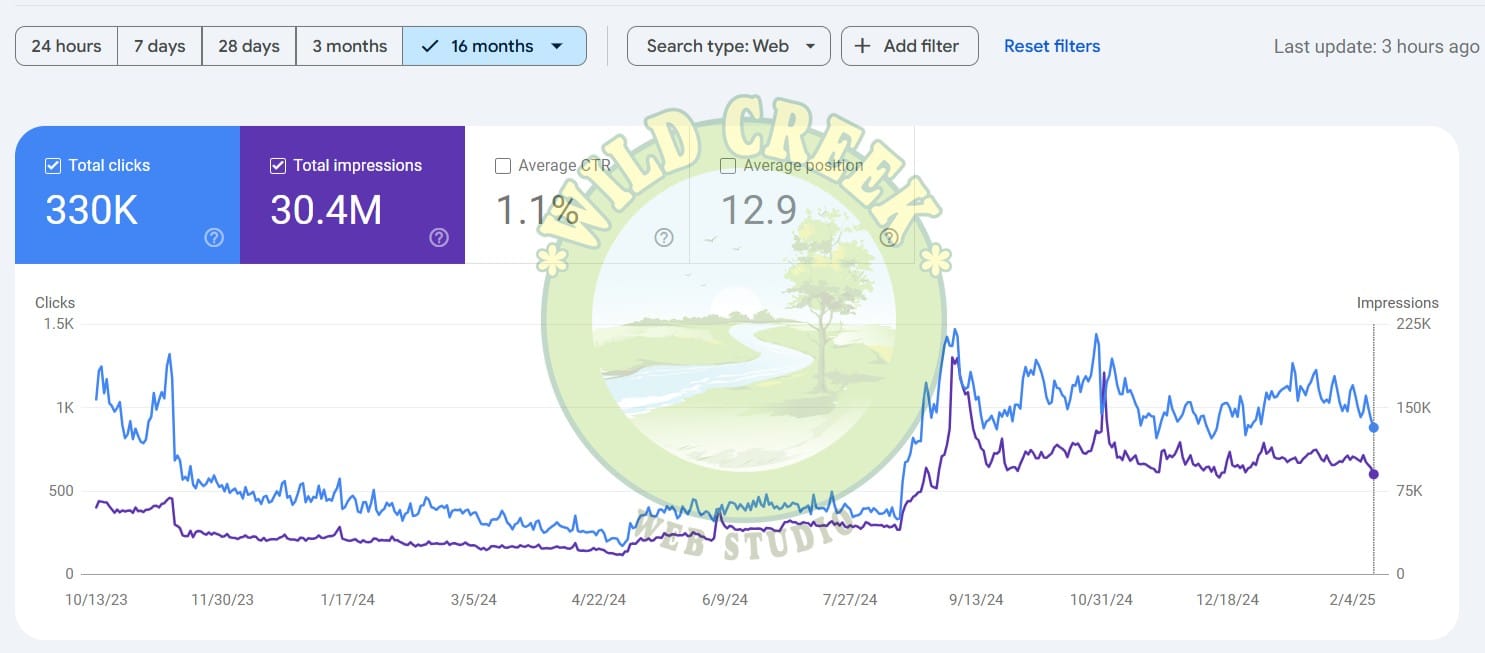
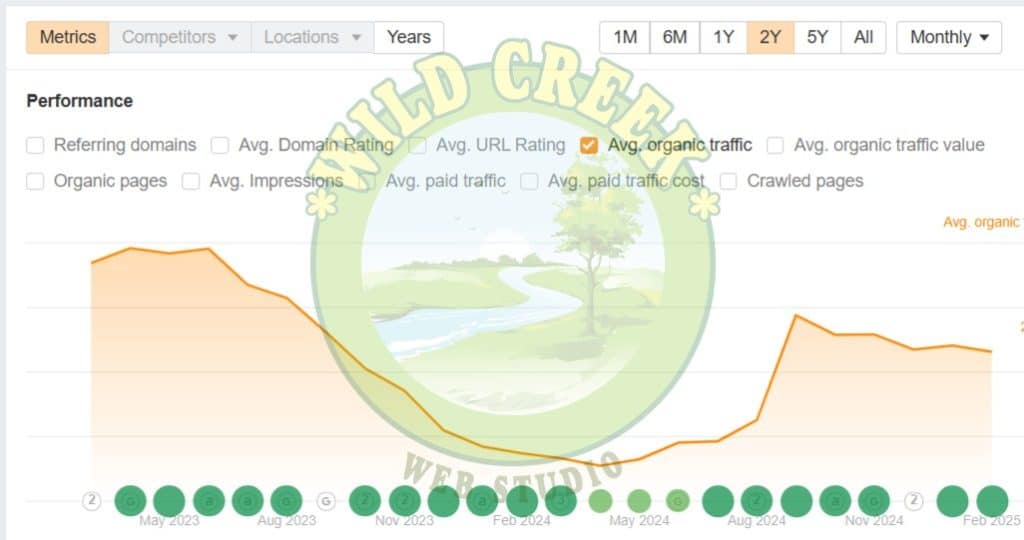
After many years of steady growth, their website lost 90% of its traffic suddenly because of a Google SPAM update. The fall was significant and impacted their leads, sales, and overall performance.

They got in touch with us feeling upset. They had already tried some common advice, such as:

  • “Share more content.”
  • “Focus on more keywords.”
  • “Post every day to stay in the game.”

None of it worked.

Rather than making more content, we chose a different way. We removed half of it.

In this Article

Toggle
  • The Challenge
  • The SEO Strategy That Worked
    • 1. Deleted 50% of the Website’s Content
    • 2. Optimized 25% of the Best-Performing Content
    • 3. Published Very Little New Content
  • The Results
  • Key Takeaways
  • Struggling with Traffic? Let’s Fix It.

The Challenge

When we checked the client’s website, we found that Google might have punished them for having low-quality content. The site had:

✅ A lot of thin or old pages
✅ Duplicate or overlapping content
✅ A weak internal linking structure
✅ Content that didn’t offer real value

Just posting more articles would not solve the problem. We needed to make the site easier to use, enhance the top content, and get rid of what wasn’t working.

The SEO Strategy That Worked

To make a change, we focused on three main actions:

1. Deleted 50% of the Website’s Content

We did a thorough check of our content and found pages that were:

  • Outdated or not needed (old statistics, expired trends)
  • Low-value (thin content with less than 500 words)
  • Duplicate or like other articles

These pages were not helping the client’s rankings. They were actually harming their SEO. So, we took them down.

This told Google that the site was neater, more trustworthy, and more specific.

2. Optimized 25% of the Best-Performing Content

We decided to improve the content that already had some ranking power. Instead of chasing new keywords, our focus was on this.

  • Updated old information
  • Added more detailed insights
  • Improved layout for better reading
  • Strengthened internal links to help SEO

By improving the current content instead of making new ones, we helped Google see the value of the site again.

3. Published Very Little New Content

Instead of the usual advice to “publish more,” we suggested the client to take a break from creating new content. They should focus on:

✅ Good, lasting content that will bring results over time. ✅ Smart publishing-only when needed, not just to increase numbers. ✅ Content with a clear reason (not just created to fill gaps).

This helped the site earn trust from Google again. It also avoided having too much content.

The Results

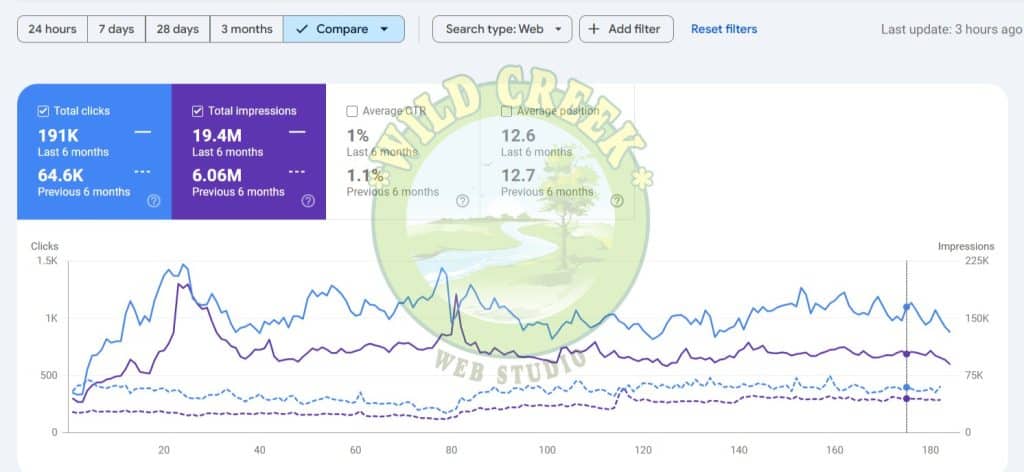
In a few months, the website began to get more traffic. The rankings for important pages got much better. The other content did better than before.

While we didn’t get all the lost traffic back, we did get 90% – a big win considering how bad the drop was.

Even better, the site is now simpler, stronger, and better for lasting results.

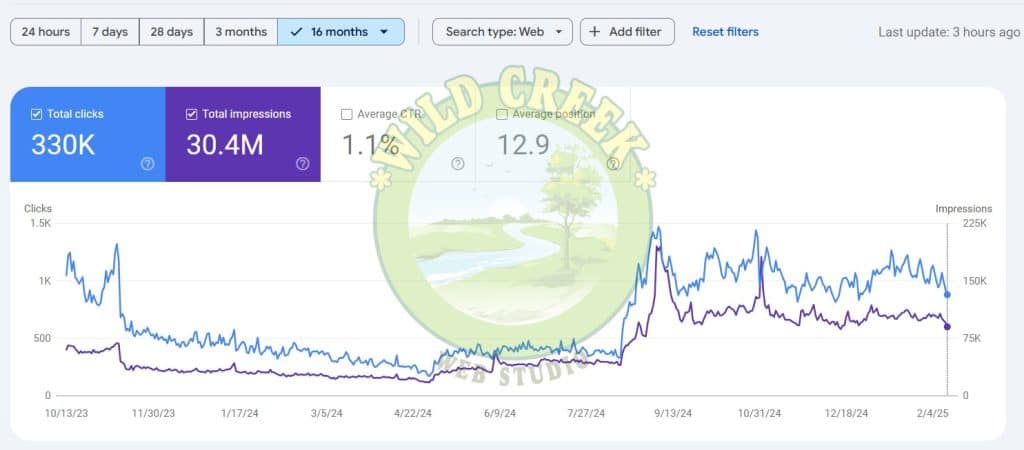
SEO Recovery Google Search Console

SEO Recovery Google Search Console

SEO Recovery Google Search Console Data Comparison

SEO Recovery Google Search Console Data Comparison

Traffic Recovery Ahrefs Screenshot

Traffic Recovery Ahrefs Screenshot

Key Takeaways

More content does not always lead to better rankings: A lot of low-quality content can do more damage to your site than good.

Quality > Quantity:  A few strong pages do better than many weak ones.

Google likes content that is well-organized and useful: Cleaning up and improving your site is better than just posting without thought.

Struggling with Traffic? Let’s Fix It.

If your website is getting less traffic or not ranking well, the solution isn’t just to “publish more.” Sometimes, you need to clean it up, make it better, and optimize it.

At Wild Creek Web Studio, we assist businesses in creating SEO plans that really work.

Need help turning your traffic around? Contact us today and let’s get started!

0 comments
Is Blogging Dead After ChatGPT

Is Blogging Dead After ChatGPT? Key Insights Revealed

The blogging industry is full of ideas about how new AI tools, like ChatGPT, will change things. As we approach 2025, we need to consider if blogging will disappear or change to do well in a world full of AI. The answer is not just a simple yes or no. The future of blogging will rely on our views toward content creation, how users act, and the good and bad sides of AI.

Is Blogging Dead After ChatGPT

In this Article

Toggle
  • Key Highlights
  • The Evolution of Blogging in the Age of AI
    • From Personal Diaries to Professional Platforms
    • How AI and ChatGPT are Changing the Game
  • The Current State of Blogging
    • Analyzing Reader Preferences and Trends
    • The Impact of Social Media and Video Content
  • The Role of Bloggers in an AI-Driven World
    • Creativity and Human Insight as Irreplaceable Assets
    • Opportunities for Collaboration with AI Technologies
  • Benefits of Blogging in the AI Era
  • Strategies for Adapting Your Blog in 2025 and Beyond
    • Incorporating AI Tools for Content Creation
    • Enhancing User Experience with Personalization
    • Focusing on Niche Topics for Deeper Engagement
    • Content marketing is still a king
    • Build a brand
    • Video consumption is growing rapidly
  • The Importance of Online Visibility and Credibility Through Blogging
  • Blogging Techniques That Are Becoming Obsolete
  • Conclusion
  • Frequently Asked Questions
    • How Can Bloggers Differentiate Their Content in the Age of AI?
    • What Are the Best AI Tools for Bloggers Right Now?
    • Is SEO Still Relevant for Bloggers in 2025?
    • How Can Bloggers Use ChatGPT Ethically and Effectively?
    • What Future Trends Should Bloggers Prepare For?
    • Adapting Content Strategies for Voice Search and Other AI Integrations

Key Highlights

  • Blogging is changing quickly. AI brings problems and new opportunities.
  • Even with AI growing, blogging will still be important in 2025 and beyond. It offers unique benefits for brands and people.
  • Creating good content is very important. Focusing on easy-to-read, high-quality blog posts is the way to succeed.
  • Smart use of AI tools can help make content easier to create and improve user experience.
  • To do well in blogging today, you need to use video content, build a strong brand, and really understand your niche.

The Evolution of Blogging in the Age of AI

Blogging has changed a lot since it started as a place for online diaries and personal ideas. Now, with social media growing and so much digital content out there, blogging takes hard work. It helps businesses and individuals reach their target audience, build trust, and earn money.

The digital world is changing quickly. New AI tools are changing what people want from blogging. This brings exciting new chances, but it also creates problems for bloggers.

From Personal Diaries to Professional Platforms

At first, blogging was a way for people to share their thoughts and experiences. They used sites like LiveJournal and Blogger. Then, social media, such as Facebook and Twitter, became popular. This changed blogging. It started to focus more on detailed content and meaningful conversations, rather than just short posts.

Blogging is crucial for digital marketing today. Companies and business owners use platforms like WordPress and Medium to share valuable content. This allows them to demonstrate their expertise and attract new customers. Content creation now goes beyond personal expression. It aims to tell stories that connect with specific groups of people and meet certain marketing goals.

How AI and ChatGPT are Changing the Game

The rise of smart AI tools like ChatGPT has sparked both excitement and worry among bloggers. ChatGPT can take simple prompts and generate text that seems real. Because of this, many people are curious about what will happen to human writers in the future.

Some people worry that AI might replace human bloggers. Others feel it could be a helpful tool. AI can make content creation easier. It can even improve SEO. This helps writers focus more on creative work. Bloggers should learn to use these changes for their future.

AI tools like ChatGPT have some limits. They can read and write text quickly based on what they know. But they lack the creativity and feelings that make writing resonate with people and hold their interest.

The Current State of Blogging

Analyzing what readers want is very important for blogging. We should not ignore how social media and video content affect this today. AI tools for content creation are changing how bloggers connect with their readers. Personalization helps to improve user experience and create a successful blog. Focusing on niche topics can attract a wider audience and increase engagement. Content marketing is still a strong way for bloggers to build a profitable business. Building a brand and focusing on video content are key for success in the changing world of blogging.

Analyzing Reader Preferences and Trends

Understanding what readers enjoy and what’s trending is key in blogging today. Using NLP tools can help us learn about user behavior. This way, we can create content that our target audience wants. By checking popular blog posts and search engine data, bloggers can adjust their plans to better meet what readers seek. Following trends, such as the growth of video content and the demand for personalized experiences, can help us keep and grow our audience now that ChatGPT is available.

The Impact of Social Media and Video Content

As social media changes the way we connect online, adding video content to your blog is important for attracting and maintaining a bigger audience. A lot of users now like visual content, making platforms like YouTube essential. Using video can enhance your user experience and boost your search engine traffic. Search engines are now giving preference to video in their results. By combining social media and video, bloggers can stay relevant and connect with the right people.

The Role of Bloggers in an AI-Driven World

In a time when AI tools like ChatGPT can quickly write articles, it might seem that human bloggers are in danger. But human writers have special skills. They blend creativity, critical thinking, and emotional insight in ways that AI cannot match.

Bloggers should see AI as a helpful tool, not something scary. They can use AI for things like keyword research, making outlines, and writing simple drafts. This saves them time. It lets bloggers focus on what they do best. They can put in their own style, creativity, and key ideas in their work.

Creativity and Human Insight as Irreplaceable Assets

Creativity is key for great content. Human bloggers have a strong edge here. AI can mimic writing styles and produce sentences that are correct. Still, it doesn’t have the unique touch of human creativity. It is crucial to tell engaging stories, add humor, and feel connected to readers.

Human bloggers share their real-life experiences and deep understanding of the world. AI cannot offer the same kind of knowledge. This allows bloggers to express their unique ideas. They can build strong connections and add authenticity to their writing. Readers feel a true bond with this personal touch.

AI can help with research and make content better. But, it is the special mix of creativity and human understanding that will make the best blog posts shine, compared to those made by AI.

Opportunities for Collaboration with AI Technologies

Smart bloggers don’t view AI as a rival. They understand that it can be very useful. AI tools can make content marketing easier. They help create great blog posts that attract readers’ attention.

AI keyword research tools help people find good niche topics and key words. This helps blog posts connect with the right audience. AI grammar and style checkers fix errors and make writing clearer. Content optimization tools check how easy text is to read. They show the best way to improve user experience.

Bloggers can make their content better and reach more people by using AI. This can help them build a stronger online presence. As a result, this may lead to a profitable business.

Benefits of Blogging in the AI Era

Blogging today, especially with AI, has many benefits for your personal and work goals. You can reach your audience in several new ways. AI can help create content, but it lacks the human emotions that bloggers express. This human touch helps build strong relationships with readers who share similar interests.

Blogging shows you know a lot about a topic. This makes people view you as an expert. Being viewed as an expert is important in today’s online world. AI tools assist bloggers in researching, improving their content, and engaging with readers. This helps bloggers have more time to be creative.

Using both human insight and AI makes blogging better. It helps share ideas more clearly in a world that is changing with technology.

Strategies for Adapting Your Blog in 2025 and Beyond

The digital world is always changing. Bloggers must be open and ready to try new strategies every single day. As we move toward 2025 and the future, just sticking to what has worked is not enough. It is important to come up with new ideas.

This text is about using AI wisely. Writing well is very important. This means being original and true to yourself. You also have to understand your audience. By combining technology with human creativity, bloggers can make their content interesting and effective for the future.

Incorporating AI Tools for Content Creation

Integrating AI tools into your content creation can simplify your work and improve your blog. AI writing helpers can suggest topics, create catchy headlines, and write parts of your blog posts in the style you like.

For bloggers in certain markets, AI research tools are very helpful. They can quickly go through a lot of data. This helps you find important trends and spot key influencers. These tools can also forecast future market changes. This way, you can plan your content more effectively.

AI tools can be helpful, but they should support human creativity, not replace it. Use these tools wisely to make your tasks easier. They can help you get past writer’s block and find useful insights from data. By doing this, you can focus on sharing your own voice and views in your writing.

Enhancing User Experience with Personalization

In a time with so much information, keeping readers’ attention is very important. You need to create a user experience that feels personal. This means understanding what your target audience likes. Know their interests and where they are in their buying process.

AI tools can help by looking at user data. This means checking what people have viewed before and how they engage with your content. With this info, you can recommend content, create special email campaigns, and even build websites that adjust based on each user’s likes.

When you make a user experience feel special and connected, bloggers can connect better with their readers. This can lead to more engagement. It can also change casual readers into loyal fans.

Focusing on Niche Topics for Deeper Engagement

In the big ocean of online content, trying to make everyone happy can lead to confusion. Instead, bloggers should choose a specific topic. This helps them become experts. It also allows them to connect better with their audience.

When bloggers choose a blogging niche, they can create content that answers specific questions. This helps to solve problems for their audience. A clear focus makes the content more helpful. It can also improve its ranking in search results for keywords related to that niche.

Better engagement leads to more comments, shares, and a stronger community. These things help a blog succeed. When readers feel that they are listened to and their needs are met, they can become loyal followers, supporters, and even customers.

Content marketing is still a king

Creating good blog content is very important today. Content marketing is still a strong way to connect with people and bring in visitors. By writing interesting and relevant posts, bloggers can reach their target audience effectively. They also build trust in their expertise and raise their brand’s visibility. Using new content marketing techniques and paying attention to what users like are key for having a successful blog, especially with the rise of AI and ChatGPT.

Build a brand

In a busy online world, having a strong brand is very important to be noticed. A brand is not just a logo or a fancy tagline. It is really about the overall experience you give to your audience. This includes your content, what you stand for, and how you interact with people. You need to create a unique voice for your brand. Be honest in what you say and stick to your promises. This builds trust and loyalty.

You should think about various ways to earn money. You can sell digital products or create online courses. You can also use affiliate links that match your niche. This will help you earn more money and prove that you know what you are talking about. Plus, it adds more value for your audience.

Creating a brand is an ongoing process that requires consistency and the establishment of genuine connections with your audience. Strive to provide your readers with a valuable and memorable experience at all times.

Video consumption is growing rapidly

With platforms like YouTube and TikTok growing fast, many people watch videos online. It is now important to add YouTube video content to your blog. You need this to stay current. Engaging visuals and interesting stories help hold people’s attention.

Think about starting a YouTube channel. You can share your videos and connect them to your blog posts. Using both platforms helps you reach more people. It allows you to give them helpful content in a fun way.

Video catches attention quickly. It also makes hard ideas simpler. This helps people remember information better. Videos show products in action. They connect with users more than text does. They also build trust with the audience. This can lead to more visitors and shares on a website. Videos are fun and entertaining for viewers. With more engagement, videos get shared more than text. They can improve your search engine rankings. This helps people find your blog easily. Finally, videos offer better storytelling. They show feelings, explain steps, and tell great stories in ways text can’t.

The Importance of Online Visibility and Credibility Through Blogging

In today’s internet world, it is very important for bloggers to be seen and trusted. A strong online presence helps you attract and keep your audience. It also improves your authority in your area. Blogging lets you share helpful information, connect with your readers, and show that you are an expert in your field.

By sharing helpful and high-quality blog posts that fit your audience’s needs, you can build trust. This helps you create a loyal community around your brand. Staying consistent with your blogging is also key. Posting regularly and having a well-organized blog can improve your search engine rankings. They show your audience that you are a trustworthy source of information.

Having a strong online presence can help you make more opportunities for collaboration, build connections, and expand your audience. A good blogging strategy plays a key role in achieving this. It is an important tool in your online resources.

Blogging Techniques That Are Becoming Obsolete

As the online world keeps changing, some blogging methods that were once great are now not helpful. One of these old methods is called keyword stuffing. This means bloggers stuff their text with too many keywords to try to rank higher on search engines. Now, search engines are smarter. They pay more attention to the quality and clarity of the content instead of just counting the keywords used.

Long writing can make readers feel bored. Today, people prefer short and eye-catching posts that offer quick value. They don’t want to read long articles filled with unnecessary details. Another trend that is disappearing is the use of common stock photos. Audiences now want real and relatable images that feel authentic and connect with them.

To succeed in blogging, it’s essential for bloggers to understand their audience and follow current trends, as many users consume content on smartphones. If a website isn’t optimized for mobile, it risks losing traffic and engagement. Therefore, focusing on mobile optimization is crucial.

Conclusion

In conclusion, blogging is changing because of AI and tools like ChatGPT. However, having real and engaging content is still very important for your WordPress blog. Your creativity and understanding as a person can help your blog stand out in this AI-driven world. It is smart to use AI tools for content creation and focus on improving user experiences. Finding niche topics and enhancing content marketing are also great ways to remain relevant in 2025 and beyond. By building a strong brand and adapting to new trends, like using videos and voice search, bloggers can succeed in this changing digital world. Stay creative, be genuine, and keep adjusting to new changes.

Frequently Asked Questions

How Can Bloggers Differentiate Their Content in the Age of AI?

The best way to stand out is by highlighting your unique voice. Use your writing skills to talk about topics you know well, things that AI cannot copy. Focus on sharing new ideas, telling interesting stories, and building real connections with your readers.

What Are the Best AI Tools for Bloggers Right Now?

Essential AI tools for bloggers encompass grammar and style checkers like Grammarly, as well as SEO optimization tools, including Yoast SEO. Additionally, content idea generators such as HubSpot’s Blog Ideas Generator may prove beneficial.

Is SEO Still Relevant for Bloggers in 2025?

Search engine optimization (SEO) is important for bringing readers to your blog for free. You need to know how people use Google Search. This knowledge will help you adjust your content to get more readers in 2025 and in the future.

How Can Bloggers Use ChatGPT Ethically and Effectively?

Utilize ChatGPT to generate ideas, conduct research, and overcome writer’s block. Avoid mimicking others’ work. Always verify your information, ensuring that the facts you gather are accurate, unique, and aligned with your brand’s style.

What Future Trends Should Bloggers Prepare For?

Bloggers must adapt to the latest technologies. They need to understand what Gen Z wants. It’s key to focus on visual content formats as well.

Adapting Content Strategies for Voice Search and Other AI Integrations

Use long-tail keywords and simple language in your content plans. This will help improve voice search. Keep looking into AI tools. These tools can make the user experience better, help create content, and give you detailed data analysis.

0 comments
Illustration of brand engagement concepts

The Significance of Brand Engagement in Marketing

In today’s tough market, understanding brand engagement is very important. Brand engagement goes beyond just people knowing a brand. It’s about how the brand connects and interacts with its target audience on an emotional level. When companies build strong brand engagement, they gain loyal customers. These customers are likely to buy from the brand again and share their positive experiences with others. This blog will talk about why brand engagement is important in marketing. It will explore how brand engagement affects customer actions, ways to boost engagement, how to measure success, challenges, future trends, and more.

Illustration of brand engagement concepts


In this Article

Toggle
  • Key Highlights
  • Understanding Brand Engagement
    • Defining Brand Engagement in Modern Marketing
    • The Evolution of Brand Engagement Practices
  • The Impact of Brand Engagement on Consumer Behavior
    • Enhancing Brand Loyalty Through Active Engagement
  • Strategies for Elevating Brand Engagement
    • Leveraging Social Media Platforms for Greater Visibility
    • Interactive Content: A Gateway to Deeper Consumer Connection
    • Personalization: Tailoring Experiences to Boost Engagement
  • Measuring the Success of Brand Engagement Efforts
    • Key Performance Indicators (KPIs) for Brand Engagement
    • Analyzing Engagement Metrics to Refine Marketing Strategies
  • Challenges and Solutions in Brand Engagement
    • Navigating the Pitfalls of Digital Overload
    • Crafting Authentic Messages in a Skeptical Market
  • Future Trends in Brand Engagement
    • The Rise of Augmented Reality (AR) and Virtual Reality (VR) in Branding
    • Embracing Sustainability and Social Responsibility for Better Engagement
  • Conclusion
  • Frequently Asked Questions
    • What role does social media play in brand engagement?
    • How can small businesses increase their brand engagement on a limited budget?
    • What are the common mistakes brands make with engagement strategies?
    • How does brand engagement influence customer loyalty?
    • Can brand engagement be measured in real-time, and how?
    • What are the emerging technologies that will shape the future of brand engagement?

Key Highlights

  • Brand engagement is important for good marketing and building customer loyalty.
  • Being active on social media and other digital platforms helps create better relationships with customers.
  • You can build brand loyalty by using interactive content and personalized experiences. This will help increase customer engagement.
  • To see if brand engagement is working, you can use key performance indicators. They can improve your marketing strategies for better results.
  • Successful brand engagement needs real messages that address issues like digital overload and doubt.
  • In the future, we will probably see more use of augmented reality and virtual reality in branding. There will also be a greater focus on sustainability for better engagement.

Understanding Brand Engagement

Brand engagement is the relationship between customers and a brand. It includes their thoughts, feelings, and actions. This connection goes deeper than just buying and selling. To understand brand engagement, we need to look at how customers feel about brands, what these brands stand for, and what makes brand engagement work well. When companies build brand loyalty, they gain fans who support their brand. A great way to engage customers is by making the brand stand out in the market. This approach leaves a strong impression on how customers see the brand.

Defining Brand Engagement in Modern Marketing

In digital marketing, it is important for brands to connect with people online. They can do this through social media platforms, interesting websites, and targeted email campaigns. These tools give them many ways to reach their target audience.

Customer engagement is about things like comments, shares, likes, and direct messages on social media. It also includes reading a blog post, watching a brand video, or joining an email newsletter. These interactions help brands address problems, collect feedback, and build better relationships.

The main goal is to do more than send messages. It is important to find ways for people to get involved and communicate. You can achieve this through fun polls, projects that let users create content, or by giving personal responses to customer questions.

The Evolution of Brand Engagement Practices

Brand engagement has changed a lot over the years. This change comes from new ways people shop and the growth of technology. At first, brand engagement mainly meant talking to customers through standard ads.

With the growth of digital marketing and social media platforms, brands want to give people more personal and fun experiences. This change means they are moving away from only talking to customers. Now, customers can join discussions about the brand and even help create content.

Successful brand engagement strategies aim to build strong relationships. They encourage customers to share their feedback and create lasting experiences. This method helps strengthen loyalty and advocacy. Brands are continually seeking new and creative ways to connect with their target audience in the digital age.

The Impact of Brand Engagement on Consumer Behavior

Effective brand engagement matters a lot for how customers act. When brands connect with their target audience on social media and other ways, customer engagement goes up. This gives consumers a positive experience. As engagement rises, brands can build loyalty. This helps them attract new audiences and keep repeat customers. People tend to stick with brands that share their values and stay connected with them. So, successful brand engagement can lead to more advocacy, better retention, and growth for the business.

Enhancing Brand Loyalty Through Active Engagement

Good brand engagement helps build more brand loyalty. When people feel appreciated and listened to by a brand, their loyalty to that brand increases.

Brands can grow a loyal customer base by giving consistent value. They need to fix problems fast and create fun experiences. When customers feel this way, they are more likely to pick their products or services over others.

Loyal customers are more likely to come back and make purchases again. They tend to be more understanding when something goes wrong. This willingness to overlook mistakes is valuable in today’s challenging market.

Strategies for Elevating Brand Engagement

To increase brand engagement, companies need to use social media platforms. These platforms make the brand easier to see and help connect with the target audience. Companies can run marketing campaigns that spark interest and use SEO tactics to enhance their online presence. Also, it is important to listen to customer feedback for continuous improvement.

Building good relationships with customers is very important. Companies should speak to customers in a personal way. They need to align their brand values with what customers want. Encouraging customers to promote the brand can really boost engagement levels. By using these methods, companies can grow customer loyalty and support their business growth.

Leveraging Social Media Platforms for Greater Visibility

In today’s online world, being active on social media platforms is very important. Brands use these platforms to find their target audience. They also join discussions and make connections with people.

  • Content Matters: Create engaging content that your target audience enjoys. This can be blogs, infographics, videos, or polls.
  • Stay Consistent: Posting regularly keeps interest alive. It helps keep your brand top of mind. Make a content calendar to organize your posts and maintain steady communication.
  • Get Involved, Not Just Share: Respond to comments, answer questions, and participate in discussions. Show your audience that you listen and appreciate their feedback.
  • Use the Right Hashtags: To boost the visibility of your content and connect with more people, use hashtags that suit your industry and are trending.
  • Check, Analyze, Change: Use social media analytics to see how well your posts do. Find out what your audience likes, and adjust your plans if needed.

Interactive Content: A Gateway to Deeper Consumer Connection

People want more than just to watch content. They want to take part and enjoy fun experiences.

You should offer quizzes, surveys, polls, and contests. These tools help engage people and learn about your customer base. This type of interaction creates stronger connections. It also gives you information to improve your future campaigns.

Creating interesting content takes imagination and knowing your audience. You should understand what they enjoy and the challenges they deal with. When brands focus on these needs in a fun way, they can build strong relationships.

Personalization: Tailoring Experiences to Boost Engagement

Personalization is key to improving engagement levels and building better relationships with the target audience. When brands change experiences to fit what customers like and need, they can connect more closely with them. This involves adjusting content, products, and services to meet each customer’s unique interests.

Using data from how customers interact helps brands make experiences that link with their audience. This personal touch boosts brand engagement and keeps customers loyal. It also makes customers feel happier. Additionally, it encourages them to come back and support the brand. All of this supports successful marketing efforts.

Personalizing marketing campaigns means breaking down audiences into different groups. These groups vary based on details like age, interests, or buying habits. When brands know what makes each group unique, they can make messages that really connect with them. There are many ways to personalize. This can include giving specific product suggestions, offering special deals, sending customized messages, and recommending products that match their needs.

In today’s busy market, shoppers get many similar ads. Personalization can help brands stand out. It does this by giving people relevant and meaningful experiences. When companies focus on personalization, they can increase customer engagement. This can lead to more sales and stronger bonds with their audience.

Measuring the Success of Brand Engagement Efforts

One important part of brand engagement is checking how effective it is. Marketers can look at key performance indicators, or KPIs. They use customer feedback and social media stats. Website analytics also help. These tools show the results of their strategies. By tracking engagement levels, customer retention rates, and brand visibility, they can gather key information. This tells them how well brand engagement is working. Understanding these metrics helps brands improve their plans. It also helps them build better customer relationships. It is essential to analyze the data to see how brand engagement initiatives are performing.

Key Performance Indicators (KPIs) for Brand Engagement

Engagement levels are very important for a brand’s success. Key Performance Indicators (KPIs) help us see how well brands connect with their customers. Metrics like customer retention, social media engagement, and brand advocacy show how strong the relationships are between brands and consumers.

It is key to analyze customer feedback and check a brand’s visibility on different platforms. Also, looking at the growth of brand loyalty, customer satisfaction, and mentions shows how effective brand engagement is. Marketers use these KPIs to improve their strategies and build better connections with customers.

Analyzing Engagement Metrics to Refine Marketing Strategies

Studying how people engage is key to making marketing plans better. When businesses look at data such as customer interactions, social media engagement, and traffic to their websites, they gain useful insights. Tools like analytics help them see how well their marketing campaigns are doing and understand customer behavior. By keeping an eye on engagement levels, businesses can make quick changes. This helps them connect better with their target audience. Checking metrics related to brand engagement is important too. It helps companies improve and build stronger customer relationships. A focus on data leads to using successful brand engagement strategies. Ultimately, this increases customer loyalty and boosts brand awareness.

Challenges and Solutions in Brand Engagement

Navigating brand engagement can be hard. It’s tough to keep everything consistent across different platforms. Standing out in a crowded market is also a challenge. Brand managers may struggle to change their plans to meet new customer needs. A strong solution is to use data analytics. It helps understand how customers act and creates better engagement strategies. Asking for customer feedback and acting on it can fix problems and build brand loyalty. By aligning internal and external brand engagement efforts, businesses can connect better with their audience. This connection helps them compete in the market.

Navigating the Pitfalls of Digital Overload

With many brands trying to stand out online, it is hard to get noticed.

Instead of trying to do too much, focus on what matters most. Put your effort into the social media engagement channels where your target audience spends their time.

To have real conversations, you need to reply to comments. Join important talks and share helpful, interesting content. Listen to your audience. Ask for customer feedback and be sure to respond to it.

Crafting Authentic Messages in a Skeptical Market

Crafting sincere messages in a uncertain market is very important for brands. It helps them gain trust and credibility. Using NLP in messaging can help connect with consumers on a deeper level. By looking at customer feedback and engagement levels, brands can change their messages to address specific concerns and preferences. Using social media platforms for open talks creates a sense of authenticity. Adding brand values and core beliefs to messages builds a real connection with the audience. Being consistent in messaging across different channels strengthens brand identity and trustworthiness. In a doubtful market, sharing honest and clear messages is key for building strong relationships with customers.

Future Trends in Brand Engagement

As technology changes, brand engagement will change too. Marketing strategies will adapt. Augmented Reality (AR) and Virtual Reality (VR) will change how brands connect with their target audience. They will offer exciting new experiences. Personalization through AI and machine learning will enhance customer engagement. This helps brands create interactions that fit people’s individual likes. Social media platforms will keep playing a big role in brand engagement. They will help build real relationships with consumers using genuine content. These new methods will shape the future of successful brand engagement.

The Rise of Augmented Reality (AR) and Virtual Reality (VR) in Branding

Augmented Reality (AR) and Virtual Reality (VR) are changing how brands connect with people. These tools help brands create fun experiences. They also help brands reach their target audience better. AR and VR are a great way to boost customer engagement through interactive and memorable moments. When brands use AR and VR, they stand out and build a stronger emotional bond with consumers. As AR and VR grow, using them in marketing campaigns will change how brands interact with their customers.

Embracing Sustainability and Social Responsibility for Better Engagement

In today’s market, it is very important to focus on sustainability and social responsibility. This helps brands connect with their customers better. When brands support environmental and social causes, they show that they understand thoughtful buyers. Joining in on sustainability shows that a brand wants to help make a positive change. This not only affects how customers see the brand but also helps build loyalty. A strong sense of social responsibility can improve a brand’s reputation. It also helps create honest relationships with their audience. A commitment to sustainability is good for everyone and makes a brand feel more credible and appealing. Companies that care about these topics are likely to attract and keep customers who value good practices and give back to the community.

Conclusion

In summary, brand engagement is very important in today’s marketing. Businesses can connect better with customers by using social media and providing good customer service. This keeps customers coming back and helps develop brand loyalty. It’s also key to monitor important performance indicators and look for new trends, like augmented reality, for successful brand engagement. When businesses focus on improving brand engagement, they can draw in new customers and build stronger relationships with their current ones. This leads to growth that lasts.

Frequently Asked Questions

What role does social media play in brand engagement?

Social media helps brands connect with the people they want to reach. It builds strong relationships and boosts customer engagement. When brands engage on social media, they also get more visibility. Plus, social media lets brands and customers communicate directly with each other.

How can small businesses increase their brand engagement on a limited budget?

Small businesses can save money easily. They can create helpful content and interact openly on social media. They can also team up with micro-influencers. This helps them connect better with their target audience.

What are the common mistakes brands make with engagement strategies?

  • Brands can make mistakes if they are not consistent or real.
  • They might ignore customer feedback.
  • They may chase trends without thinking carefully.
  • Lastly, wanting more instead of being better can lead to problems.

How does brand engagement influence customer loyalty?

Brand engagement helps create customer loyalty. It does this by building strong emotional connections. It goes beyond what customers expect and gives them great experiences. When customers feel loyal, they are more likely to return and buy more. They also share the brand with other people.

Can brand engagement be measured in real-time, and how?

You can easily measure parts of brand engagement. Use social media tools to check visitor stats on your website. Also, watch how customers get involved. These metrics show us how customers interact.

What are the emerging technologies that will shape the future of brand engagement?

New technologies like AR and VR provide enjoyable experiences. Chatbots that use AI make customer service feel more personal. These changes will change how brands connect with consumers in the future.

0 comments
SEO in 2025

Why SEO Matters in 2025 and Beyond: Key Insights

In today’s fast-moving world of digital marketing, staying updated is very important. A big area to pay attention to is Search Engine Optimization (SEO). Although the basic ideas of SEO remain the same, the ways to improve search results are changing fast. This blog talks about why SEO matters in 2025 and later. It will offer helpful tips and plans that you can use to succeed in the current digital market.

SEO in 2025


In this Article

Toggle
  • Key Highlights
  • The Evolution of SEO: Beyond Keywords
    • Understanding SEO’s Shift Towards User Intent
    • The Importance of Contextual and Semantic Search
  • The Multifaceted Nature of Modern SEO
    • Technical SEO: Foundation for Online Visibility
    • Content Is King: Quality Over Quantity
    • UX/UI: Enhancing User Experience for Better Ranking
  • SEO and Artificial Intelligence: The Future Is Now
    • How AI Is Reshaping Keyword Research and SEO Strategies
    • Machine Learning and Predictive Analytics in SEO
  • Voice Search Optimization: Preparing for the Conversational Future
    • The Rise of Voice Assistants and Its Impact on SEO
    • Optimizing for Natural Language and Long-Tail Keywords
  • Mobile SEO: Prioritizing the Majority of Internet Users
    • Mobile-First Indexing: What Does It Mean for Your Website?
    • Speed and Responsiveness: Critical Factors for Mobile SEO
  • Local SEO: Winning the Local Search Game
    • The Importance of Google My Business and Local Listings
    • Reviews and Ratings: Building Trust and Authority Locally
  • The Role of Video Content in SEO Strategy
    • Video as a Traffic Driver and Engagement Tool
    • Best Practices for Video SEO
  • E-commerce SEO: Tips for Online Retail Success
    • Optimizing Product Pages for Better Visibility
    • Leveraging Customer Reviews and Ratings in SEO
  • The Importance of Backlinks in 2025: Quality Over Quantity
    • Building a Natural Link Profile for SEO Success
    • Avoiding Black Hat Practices: Staying on Google’s Good Side
  • AI agents and AI brandbuilding
    • Using AI for more than just content creation
    • AI’s role in SEO
  • Conclusion
  • Frequently Asked Questions
    • Is SEO becoming obsolete?
    • How Does SEO Differ Now Compared to Previous Years?
    • Is Voice Search Optimization Crucial for SEO in 2025?
    • Can AI Replace Human SEO Experts?
    • How Important Is Mobile Optimization for SEO?
    • What Are the Emerging Trends in SEO for 2025 and Beyond?

Key Highlights

  • SEO is very important in 2025. Search is changing because of AI. It focuses on mobile-first indexing and voice search optimization.
  • Modern SEO is more than just keywords. It also looks at content quality, user experience, technical optimization, and using several channels.
  • AI is changing how we do keyword research, plan content, and use predictive analytics. This creates new opportunities for smart marketers.
  • Local SEO is essential. Google My Business, local listings, and customer reviews help bring in local customers.
  • To do well in a busy online world, video content and E-commerce SEO need special plans.

The Evolution of SEO: Beyond Keywords

Gone are the days when you could just pack your website with target keywords to rank well in search results. Now, SEO is more complicated. It needs a complete approach that focuses on user experience, quality content, and technical skills.

To succeed, you need to understand what users want. What are they really searching for online? To find this out, create content that uses certain keywords. This content should also address the actual needs of the users.

Technical details, like site speed and how well your site works on mobile devices, matter a lot. They greatly affect how easily people can find your website on search engines. This also influences its rank.

Understanding SEO’s Shift Towards User Intent

As search engines get better, they focus more on what users really want. It’s key to understand the “why” of a search. Are users looking for information, products, or nearby businesses? Knowing what users intend can help you create content and experiences that match their needs.

To meet user intent, you need to do more than just provide relevant information. You also need to create a good experience. This means having easy navigation on your site, engaging content that is easy to read, and fast loading times. When users can quickly find what they need, they are more likely to interact with your content. They will spend more time on your site and may become customers.

Ignoring user intent can lead to problems. When a user visits your page and finds content that doesn’t help, they will leave quickly. This tells search engines that your content is not a good fit. It can lower your rankings and make it harder for people to find you.

The Importance of Contextual and Semantic Search

The way search engines work has changed a lot. They now understand the meaning and context of words in a search. They no longer just look for exact keywords.

This change is important for content creators and website owners. They should stop keyword stuffing. This means they should not use too many keywords just to rank higher. Instead, they need to focus on creating quality content that deeply explores a topic.

Using different keywords that fit well can help search engines see what your page is about. This will make your page easier to find and improve its rank for many search queries.

The Multifaceted Nature of Modern SEO

To master SEO in 2025 and beyond, you need to focus on several important things. You should consider many factors that work together to boost your online presence. Paying attention to technical details is important. Also, creating great content is key. It should connect well with your target audience. Every part of this process matters.

The next parts will explore these topics. They will provide useful tips to help you enhance your seo strategy.

Technical SEO: Foundation for Online Visibility

Think of technical SEO as building a strong base for your online visibility. It’s key to make sure that search engines can easily find and read your website. This means you should have an organized site, clear code, a secure connection (HTTPS), and optimized images, along with other important elements.

One key part of technical SEO is site speed. In today’s fast world, people look for quick results. If your website takes too long to load, visitors may leave. This can lead to higher bounce rates. A high bounce rate can hurt your search rankings.

It is important to check your website’s technical SEO regularly. Doing this can help you find and fix problems that might lower your site’s performance. Tools like Google Search Console and other SEO tools can give you useful information about how your site is doing. They can help you see what needs improvement and avoid issues later on.

Content Is King: Quality Over Quantity

Technical SEO is important, but quality content is the main part of a good SEO plan. There is a lot of content online today. Writing articles is not enough anymore. You need to create high-quality content that really connects with your target audience.

To do this, you must know what your audience wants. You need to understand their problems and what interests them. Create content that gives solutions and answers questions. Sharing new ideas is important too. Articles that are well-researched, fun videos, and interactive content work best. These types of content add value and help keep people on your site longer.

Google and other search engines pay attention to content quality. When you consistently provide valuable content, your website earns trust as an expert in your field. This boosts your credibility and can improve your search rankings.

UX/UI: Enhancing User Experience for Better Ranking

User experience (UX) and user interface (UI) greatly affect SEO performance. A good website design with simple navigation and nice visuals makes visitors want to stay longer. This can help them connect more and possibly turn into customers. Search engines notice websites that provide a great user experience.

Improving UX is all about making your website easy to use. It should run smoothly on mobile devices. You also need to make sure your pages load quickly. Use simple language so that everyone can understand. When people enjoy their time on your site, they tend to stay longer. They leave less often, which helps boost search traffic. This is great for search engines.

A good user interface is very important. It should have a simple design and clear buttons. This setup helps visitors buy products or sign up for newsletters. In the end, focusing on the user when you create your website can improve your SEO performance and lead to better business results.

SEO and Artificial Intelligence: The Future Is Now

The world of SEO is changing quickly because of artificial intelligence (AI). This brings new chances and also some problems. AI tools are getting better at looking at data, understanding how people act, and even making content.

We have AI tools for keyword research. These tools show us what people search for. There are platforms that help make content simple and relevant. AI is improving SEO in many ways. As AI technology grows, it will play a bigger role in the future of SEO.

How AI Is Reshaping Keyword Research and SEO Strategies

Artificial intelligence is changing how we do keyword research and SEO strategies. AI tools can look at large groups of search queries. They find patterns and insights that regular keyword research could miss.

These tools do more than just check keywords. They explore search intent. This helps us understand what users really want. It lets marketers create content that focuses on and matches what the audience needs and likes.

AI helps marketers improve their content. It checks how well the content is performing. AI tools can point out what needs to be better. They can recommend keywords and phrases to use. This regular updating keeps the content fresh, interesting, and relevant to what people are looking for right now.

Machine Learning and Predictive Analytics in SEO

Machine learning is part of AI. It helps computers learn from data without special programming. In SEO, machine learning tools analyze a lot of data. They look at search results, user behavior, and what competitors are doing. This gives us useful insights. We can use these insights to improve our SEO efforts.

One key use of machine learning in SEO is predictive analytics. These algorithms review past data to identify trends and patterns. This helps marketers predict how search behavior may change later. They can then adjust their SEO strategies accordingly.

Using this active approach can help businesses stand out. It lets them enhance their content and website for the latest search trends. This helps them stay ahead in the market.

Voice Search Optimization: Preparing for the Conversational Future

The growth of voice assistants like Siri, Alexa, and Google Assistant has started a new way of searching. Many users now speak to find information and do tasks online. Because of this, it is very important to optimize for voice search. It is not just an option; it is a must.

Voice search often uses longer questions that feel like talking. This shift means that SEO strategies need to change. They must adapt to these more natural search queries.

The Rise of Voice Assistants and Its Impact on SEO

Voice search optimization (VSO) improves content for how people speak. It uses a technique called natural language processing (NLP) to understand user queries and provide correct answers. VSO focuses on using simple, common words. It also involves using long-tail keywords, which are detailed phrases that are longer. Lastly, it helps to organize content to answer common questions.

As we use voice search more every day, it affects SEO a lot. Businesses that change their SEO strategies for voice search can do a better job of connecting with users. This helps them reach more people.

Local businesses can gain a lot from voice search optimization. When people use their voice to find services or businesses close to them, being near is very important. This shows why local SEO is key. It helps customers easily find these businesses when they are in the area.

Optimizing for Natural Language and Long-Tail Keywords

Optimizing for voice search means we have to choose our words differently. We should focus on more than just exact keywords. Using natural language processing (NLP) is key. It helps computers understand and communicate more like people.

Voice search lets people ask questions or speak in full sentences. Because of this, long-tail keywords are used more frequently. Long-tail keywords are longer, specific phrases. They connect with a smaller group and feel more like how we speak in daily life. Adding long-tail keywords to your content can help it match voice search better. This can make your content more relevant and improve its ranking in various searches.

Using structured data markup on your website can help voice search. It helps search engines understand the content of your pages. This includes what your business does, details about products, and topics of your articles. When search engines understand this information, voice assistants can provide users with accurate answers.

Mobile SEO: Prioritizing the Majority of Internet Users

Most people use their phones and tablets to go online. Because of this, you need to make your website easy to use on mobile devices. It is no longer just an option. Google has seen this change. They now focus on mobile-first indexing. This means they look at the mobile version of your site to decide how to rank it.

Your website needs to be responsive. It should provide a smooth experience on all devices. This is important for maintaining or improving your search ranking.

Mobile-First Indexing: What Does It Mean for Your Website?

Google is now concentrating on mobile-first indexing. This means that the search engine checks your mobile site to determine your rankings. Therefore, having a mobile-friendly website is very important. It is not just a good idea; it is necessary for a strong online presence.

If your website’s mobile version is missing important content, takes a long time to load, or is hard to move around, Google will see this. It can hurt your rankings and decrease the number of people visiting your site. It’s important to pay attention to mobile SEO. This can keep your site easy to use and effective in today’s mobile-friendly world.

A mobile-friendly website is not just about making text smaller for screens. You also need to think about touch navigation and how quickly the site loads. It is important that text is easy to read on mobile devices. Investing in a responsive website design that fits different screen sizes is very important. This will help create a good user experience for users and search engines.

Speed and Responsiveness: Critical Factors for Mobile SEO

Site speed is very important for mobile SEO. Mobile users usually visit websites while they are moving around and using different internet speeds. A slow website can frustrate users. This can make them leave your site before it fully loads. A high bounce rate may occur, which leads to a bad user experience.

To increase the speed of your website, optimize your images and reduce the number of plugins to boost performance. Additionally, choose a reliable hosting provider and enable browser caching while minimizing redirects. Compressing your images can also significantly enhance loading times.

Making site speed and responsiveness a top focus helps mobile users reach your content faster. This leads to a better user experience and improves your SEO performance.

Local SEO: Winning the Local Search Game

For businesses that have a physical store or provide services in a specific area, local SEO is very important. If you want to reach local customers, you need a special plan. This plan will help your business show up in local search results.

  • You should update your Google My Business profile.
  • Create listings on local directories.
  • Remember to ask customers for reviews.

The Importance of Google My Business and Local Listings

Google My Business (GMB) is a free tool. It helps businesses control their online presence on Google. This includes Google Search and Google Maps. Having a complete and accurate GMB profile is very important for local SEO.

You need to share important details like your business name, address, phone number, website, hours of operation, and the right categories. It’s also smart to keep your GMB profile up to date with new photos and posts. Answering customer reviews can help you get noticed more and attract more local customers.

Building local citations is very important, just like having a Google My Business (GMB) listing. A citation is when your business name, address, and phone number appear on different websites. If these details are correct and the same on directories, social media, and other sites, it can boost your online authority. This can also help improve your rankings in local search results.

Reviews and Ratings: Building Trust and Authority Locally

Online reviews and ratings are very important for local businesses. When happy customers give positive feedback, it shows others that your business is reliable and can be trusted.

Encourage satisfied customers to post their feedback on platforms such as Google, Yelp, and other relevant review sites in your industry. Promptly and graciously respond to all reviews, regardless of whether they are favorable or unfavorable, as this demonstrates your concern for customers. Additionally, actively monitor online perceptions about your brand. Effectively addressing negative remarks can mitigate their effects and maintain a positive brand image. Positive reviews foster trust and enhance your local search rankings, making it simpler for potential customers to find you.

The Role of Video Content in SEO Strategy

Video content is very important in today’s digital world. It grabs people’s attention and lets you connect with your audience in an enjoyable way. If you include videos in your SEO strategy, you can raise your website traffic, get more people involved, and improve your online visibility.

Video content can help keep people on your site longer. It also shares your brand story more effectively. This allows you to connect better with your audience and boosts your SEO efforts.

Video as a Traffic Driver and Engagement Tool

  • Video content is a good way to bring people to your website and catch their attention.
  • Sites like YouTube are now strong search engines.
  • Many users look for information, entertainment, and product reviews on these video sites.

Adding useful videos to your website can help increase how long visitors stay. Good videos make people interested. They also encourage visitors to look at more of your content. When people stay longer, it sends positive signals to search engines. This can improve your website’s ranking.

Video content is easy to share. This is why it is a great tool for social media marketing. When people share your videos on their accounts, your audience grows. This helps more people see your brand and brings more visitors to your website.

Best Practices for Video SEO

Optimizing your videos for search engines is really important. It helps more people find your content. This brings in organic traffic. Video SEO works like SEO for text. You need to know the right keywords. You should create clear titles and descriptions. Also, make sure your viewers have a good experience.

When you upload videos to sites like YouTube or Vimeo, it’s key to have clear titles and descriptions. They should match the actual content of the video. Use keywords that people might search for. Adding exact closed captions can help more viewers watch your video. This also helps search engines understand it better.

Putting your videos on your website can improve your SEO performance. It’s key for your videos to play well on mobile devices. They should also load fast. Adding text, like transcripts or summaries, can help support your videos.

E-commerce SEO: Tips for Online Retail Success

For online retailers, e-commerce SEO is really important. It helps bring more visitors to their websites. This can lead to increased sales and growth over time. Shopping habits and search engine rules change often. To keep up, businesses need to adjust their strategies. They should follow best practices that are made just for e-commerce.

This means product pages need to be easy to find. It also means using customer reviews and ratings. Making the checkout process smooth and safe is important too. By addressing these challenges in e-commerce, businesses can connect with their target audience. This will help them increase sales and succeed in the competitive online retail market.

Optimizing Product Pages for Better Visibility

Product pages are key for your online store. They show each item you sell. It is important to make these pages appealing to both users and search engines. This will draw in more visitors and boost sales.

You need product descriptions that are clear and interesting. These descriptions should point out the main features, benefits, and key details of the product. This will help catch the attention of users and give them the info they need to decide to buy. Also, using good pictures, videos, and customer reviews can make the shopping experience better.

You should think about using schema markup. It helps to organize data for search engines to understand what is on your product pages. Schema markup provides key details about your products, like the price, stock levels, and reviews. This can improve the chances of your products showing up in search results and makes them easier to find.

Leveraging Customer Reviews and Ratings in SEO

In e-commerce SEO, customer reviews and ratings are very important. They help build trust with your customers. Additionally, reviews can greatly enhance your website’s SEO. This can improve online visibility and allow more people to find you.

Search engines pay attention to real customer feedback. Websites that have a lot of good reviews tend to appear higher in search results, especially for particular products. Positive reviews help search engines see that people enjoy your products and services. This helps make your site look more trustworthy.

Customer reviews are a good source of keywords for making your website easier to find. When customers write reviews, they often use important words related to your products. This helps search engines understand what you sell. It connects your website to the right search queries.

The Importance of Backlinks in 2025: Quality Over Quantity

Backlinks are links that other websites give to your site. They are important for SEO because they show that others support you. But now, the focus has changed. It’s not just about the number of backlinks you have. The quality of these links is also very important.

In the past, having a lot of backlinks from low-quality or unrelated websites could boost your rankings. Now, search engines prefer high-quality backlinks from trusted and relevant sites in your field.

Building a Natural Link Profile for SEO Success

Building a strong backlink profile is important for your long-term SEO success. Instead of using spammy ways, try to earn backlinks in a genuine way. You can achieve this by making quality content that people want to share.

  • You can write guest blogs on reliable websites in your area.
  • Join online groups and forums that discuss your topic.
  • Connect with influencers and leaders in your industry to share your work.
  • Building genuine relationships and helping others in your field can earn you better backlinks.

Having backlinks from several trusted sites is important. These links tell search engines that your website is a good source of information.

Avoiding Black Hat Practices: Staying on Google’s Good Side

Some websites attempt to trick Google’s search system for fast rankings. They use harmful methods called “black hat SEO.” These actions often go against Google’s rules. While they might give quick results, they can hurt your website’s reputation and cause penalties down the road.

Common black hat SEO actions include keyword stuffing, link farming, and cloaking. Keyword stuffing means using too many keywords in your content. Link farming is when you get backlinks from websites that are not trustworthy. Cloaking happens when you show different content to users and search engines. Google’s algorithm updates are improving. They can find and punish sites that use these bad tactics.

It’s important to focus on good SEO strategies. These strategies should really help users and follow Google’s rules. To have a strong online presence, you need to earn trust and authority. You can achieve this by using ethical and white-hat SEO practices.

AI agents and AI brandbuilding

The growth of AI agents is changing the digital world. They offer businesses new methods to create and manage their brands online. AI agents can handle tasks on their own, personalize experiences for users, and generate content. This lets human marketers concentrate on larger goals.

Businesses can use AI agents to look at data, follow keyword rankings, and come up with new content ideas for SEO. When they know how to use these AI tools well, companies can improve their SEO efforts, make marketing easier, and create stronger brands.

Using AI for more than just content creation

AI agents are improving at making content. But they can do much more than write blog posts or social media updates. In the fast-changing world of digital marketing, AI agents help with many tasks. This makes work simpler and helps campaigns run better.

AI agents can look at a lot of customer data to spot patterns and trends. This helps marketers create very specific and personal campaigns. They can also take care of dull tasks like email marketing, scheduling social media posts, and answering customer service questions. This lets human marketers spend more time on important and creative work.

AI agents can watch how campaigns do. They look at key numbers and make quick changes to get better results. Using data helps keep marketing campaigns flexible and in line with business goals.

AI’s role in SEO

Artificial Intelligence has become really important for SEO trends. It is changing the way marketers handle search engine optimization. As AI tools get better, they help SEO professionals in many ways. These tools can automate tasks, make understanding data easier, and improve websites more accurately.

AI tools for SEO make it easier to do tasks like keyword research, creating content, and reviewing technical SEO. These tools allow marketers to automate these jobs. This way, they can focus on bigger priorities, such as content strategy, link building, and enhancing user experience.

AI helps marketers create content that feels more personal. It adjusts user experiences based on what each person likes and how they search. By understanding user intent, AI shows relevant content. This makes users engage more and can lead to better sales.

Conclusion

As we look to the future of SEO in 2025 and after, many changes are happening quickly. It is important to know what users want and how they search. Focus on using AI, optimizing for mobile, improving local SEO, and creating good video content. To succeed, be ready to adapt to these new trends. Keep user experience and quality content as your main goals. Use new technologies like AI and encourage friendly conversations with your audience. By following these steps, you can build a strong online presence and do well in the changing world of SEO.

Frequently Asked Questions

Is SEO becoming obsolete?

No, SEO is still important. Even with new algorithm updates and the rise of AI, SEO experts believe that organic search is key for online visibility.

How Does SEO Differ Now Compared to Previous Years?

SEO has changed a lot. It now focuses more on what users want. It checks how good a website is and also its technical aspects. It isn’t just about having the right keywords anymore. Google search now values websites that offer valuable content and a good user experience.

Is Voice Search Optimization Crucial for SEO in 2025?

Optimizing for voice search is very important. More people are using voice search these days. Because of this, it is key to focus on using natural language. Think about the questions that users ask. This will help to ensure you show up in the search results that matter.

Can AI Replace Human SEO Experts?

AI tools are strong, but they cannot fully take the place of human SEO experts. AI can help with certain technical jobs and in content marketing. However, human abilities like creativity, planning, and solving complex issues are things that AI cannot replicate.

How Important Is Mobile Optimization for SEO?

Mobile optimization is very important. Google checks the mobile version of a website before anything else. A website that is easy to use on phones can boost your SEO performance. This change can enhance your online presence, search traffic, and user experience.

What Are the Emerging Trends in SEO for 2025 and Beyond?

Emerging SEO trends are looking at some key areas. First, AI-driven personalization is important. It helps make content fit users’ needs. Next, voice search is becoming more important. This means we should optimize content for spoken questions. Video content is also gaining popularity and has a strong online presence. Finally, a good user experience is crucial. It can boost search engine rankings and increase organic traffic.

1 comment
seo mistakes

Top SEO Mistakes to Avoid for Better Rankings

In today’s online world, search engine optimization (SEO) is very important. It helps people find your website more easily and brings in more visitors. A good user experience, along with smart SEO strategies, lets your site appear higher in Google search results. This helps you attract your target audience. If you stay away from common SEO mistakes, you can change from being unknown to reaching the top rankings.

In this Article

Toggle
  • Key Highlights
  • Key SEO Mistakes to Avoid for Enhanced Rankings
    • 1. Ignoring the Importance of Understanding Your Audience
    • 2. Not Developing a Comprehensive SEO Strategy
    • 3. Underestimating the Value of Original, High-Quality Content
    • 4. Utilizing Duplicate Content Across Pages
    • 5. Overlooking Meta Tags and Descriptions
    • 6. Neglecting the Need for High-Quality Backlinks
    • 7. Excessive Use of Internal Links
    • 8. Failing to Optimize for Mobile Users
    • 9. Ignoring Website Speed and Performance Issues
    • 10. Overlooking Social Signals and Their SEO Impact
    • 11. Not Leveraging Analytics to Track SEO Progress
    • 12. Overlooking Local SEO Opportunities
    • 13. Targeting Incorrect or Irrelevant Keywords
    • 14. Repetitive Use of Anchor Texts
    • 15. Prioritizing Quantity of Links Over Quality
    • 16. Ignoring Technical SEO and Website Health
    • 17. Not Optimizing External Links
    • 18. Underestimating the Power of Brand Awareness in SEO
    • 19. Not Focusing on Brand Searches
    • 20. Not Utilizing 301 Redirects Correctly
    • 21. Intrusive or Irrelevant Pop-Ups
    • 22. Misusing Canonical Tags
    • 23. Omitting Hreflang Tags for International SEO
    • 24. Not Securing Your Site with HTTPS
    • 25. The Absence of a Blog Section
    • 26. Lack of Effective Call-to-Actions (CTAs)
    • 27. Ignoring the Need to Update Old Content
    • 28. Not Optimizing Images for SEO
    • 29. URL Structures That Are Not SEO-Friendly
  • Conclusion
  • Frequently Asked Questions
    • What Is the Most Common SEO Mistake?
    • How Can Slow Site Speed Affect My Rankings?
    • Why Is Mobile Optimization Crucial for SEO?
    • How frequently should one audit their website for SEO mistakes?
    • How can one identify and rectify SEO mistakes on a website?

Key Highlights

  • It is important to know your target audience and what they search for. This helps create content that ranks well.
  • A good SEO strategy should include both on-page and off-page optimization.
  • You must create original and high-quality content. Duplicate content can hurt your rankings.
  • Technical SEO matters too. Site speed, mobile optimization, and the right URL structure are key for user experience and search engine visibility.
  • Regularly checking website data with tools like Google Analytics helps you see how your SEO is doing and find ways to improve.

seo mistakes

Key SEO Mistakes to Avoid for Enhanced Rankings

To get a better rank in search results, you need to understand SEO best practices. You also have to be committed to avoiding common mistakes. These mistakes can keep people from finding your website. This can hurt user experience and lower your success online.

You should pay attention to quality content and technical SEO. Don’t forget the importance of backlinks and social signals, either. Understanding these errors is important for building a strong SEO plan that works for the long term. Here are some common mistakes that can affect your website’s performance.

1. Ignoring the Importance of Understanding Your Audience

Before you make content or improve your website, you should really understand your target audience. This means you need to find out their age, what they like, the problems they face, and what they might want to find.

When you understand the search intent of what users are looking for, you can make content that provides helpful answers. This can help you appear higher in search results. If your content doesn’t match what users want, they might leave your site fast. This tells search engines that your website may not be suitable for the search.

When you know your audience, you can make their experience feel special. This helps you bond with them and create trust in your brand as a trustworthy source of information in your field.

2. Not Developing a Comprehensive SEO Strategy

A good digital marketing plan needs a strong SEO strategy. If you don’t have a solid plan, your work might get messy and unproductive. A complete SEO strategy should include on-page and off-page techniques.

On-page SEO focuses on making your website better. This means improving the quality of your content, using keywords effectively, optimizing meta tags, and organizing your site well. Off-page SEO is important for raising your website’s authority and reputation. You can achieve this through link building, social media efforts, and guest blogging.

By making a full SEO plan that includes every part of search engine optimization, you build a strong foundation. This helps you boost search visibility, attract more organic traffic, and reach more success online.

3. Underestimating the Value of Original, High-Quality Content

In SEO, quality content creation is key. However, it’s not enough to just post any content. Search engines, such as Google, seek original and high-quality content. This type of content truly benefits users.

If you share copied or poor-quality content, you might face a penalty from Google. This can damage your website’s ranking and its online reputation. Creating unique content that is well-researched and suited for your target audience helps in getting better rankings and attracting organic traffic.

Creating quality content shows what you can do. It builds trust with your audience. It also signals to search engines that your website deserves a good spot in the search results.

4. Utilizing Duplicate Content Across Pages

Reusing content on different pages of your website might feel simple. However, it can be bad for your SEO. Search engines, like Google, do not prefer duplicate content. This is because it makes it difficult for them to pick the best page to display in search results.

When several pages share the same or similar content, it can drop the ranking of each page. This situation can hurt your visibility in Google Search. To avoid this, it is important to create unique content for every page. Make sure each page provides something different for your visitors.

If you need to have similar content on your site, use canonical tags. These tags let search engines know where the original content comes from. This way, they can group the ranking signals together. It also protects you from penalties for duplicate content.

5. Overlooking Meta Tags and Descriptions

Meta tags, including the title tag and descriptions, are key for success with SEO, but many people ignore them. They provide brief summaries of what is on your webpages for search engines. This influences how your site appears in search results.

A good meta description can really increase click-through rates. It makes people want to pick your website over others. If you don’t improve your meta tags, you could miss out on attracting visitors. This can happen even if your website does well with relevant keywords.

Make sure your meta tags match your content. Use relevant keywords in a natural way. Make them interesting to encourage users to click. Keep them short and within character limits. This way, they will show up correctly in search results.

6. Neglecting the Need for High-Quality Backlinks

Backlinks are a key ranking factor for your website’s domain authority and how search engines see it. When you get quality backlinks from respected sites in your field, it tells Google that your content is valuable and reliable.

Creating a mix of different types of backlinks can make your website feel more trustworthy. This can help improve its search engine rankings. However, it is important to focus on the quality of the links rather than just getting a lot of them.

  • Try to get links from websites that have high domain authority and are related to your industry.
  • Avoid using black-hat SEO practices, such as buying links.
  • These actions can lead to penalties and damage your website’s reputation.

7. Excessive Use of Internal Links

Internal links are important for SEO. However, using too many of them can make the user experience worse and confuse search engines. You need to use internal links wisely. This will help visitors find related content and understand how your website is set up.

Having too many internal links can make your writing difficult to read. Users may feel it looks like spam. A lot of links on one page can overwhelm them. This can lead to a poor user experience and cause more people to leave your page quickly.

Instead of adding internal links everywhere, focus on creating a clear flow of information. Link to pages that really help and provide more context on the topic.

8. Failing to Optimize for Mobile Users

With more people using mobile devices to go online, it’s very important to ensure your website works well on phones and tablets. If you do not pay attention to mobile optimization, visitors might struggle to use your site. This can cause frustration for them.

When a website is not friendly for mobile devices, it can load slowly. It might be hard to find things and look strange on smaller screens. These issues can make users less interested and cause them to leave quickly. Mobile optimization means having a design that works well, fast loading times, easy buttons to click, and text that is easy to read. This helps visitors enjoy their time on your site, no matter what device they are using.

This helps users feel happy. It also shows search engines that your website gives a good mobile experience. This can help improve your rankings.

9. Ignoring Website Speed and Performance Issues

In today’s quick-paced digital world, people expect websites to load quickly. A slow site can make the user experience worse. This may cause more visitors to leave without doing anything. As a result, it can mean fewer sales and poorer search engine rankings.

Page speed is key for technical SEO. It influences how search engines view your website’s performance. To improve your site’s speed, you can compress images, use browser caching, reduce server response time, and remove extra code.

When you prioritize site speed, you improve the experience for your visitors. A fast site also helps your website perform better in search results. This can result in increased visibility and more organic traffic.

10. Overlooking Social Signals and Their SEO Impact

Social media is very important for SEO. It may not directly affect your ranking, but it can help more people see your website. Shares, likes, and comments on social media can improve your visibility. A strong social media presence can increase awareness of your brand and bring more visitors to your site.

When you post your content on social media, it hits a broader audience. This can help you gain more backlinks. It can also boost brand recognition and improve your search engine rankings.

To add social media to your SEO plan, you need to connect with your audience on the best platforms. Share useful content and encourage people to share it as well.

11. Not Leveraging Analytics to Track SEO Progress

Implementing SEO strategies without checking the results is like being lost without a map. Tools such as Google Analytics provide key information about your website’s performance. They help you understand how effective your SEO efforts are.

By looking at important numbers such as organic traffic, bounce rates, conversion rates, and keyword rankings, you can see where to make improvements. This will help you improve your strategies and increase your website’s search visibility.

Checking your website’s data can show you what works and what does not. You can also check how user actions align with your SEO goals. This practice directs your efforts. It helps you grow and improve your rankings as time goes on.

12. Overlooking Local SEO Opportunities

Local SEO is important for businesses that want to find customers in specific areas. If you ignore local SEO, you could lose chances to reach potential customers searching for products or services near you.

To boost your local search, you need to claim and set up your Google My Business listing. Also, make sure your website is listed in local directories. It’s important to use local keywords in your content and meta descriptions. When you pay attention to local SEO, you can rank higher in local search results. This can attract more customers to your physical store and improve your online presence.

Creating landing pages for different areas and asking for customer reviews can improve your visibility in local searches. This shows that your brand is a reliable choice in the community, especially if you use schema markup to provide structured information. As a result, it can help your business grow.

13. Targeting Incorrect or Irrelevant Keywords

Good keyword research is important for strong SEO. If you choose the wrong specific keywords or ones that don’t match your audience, it can harm your website’s rankings. This will make it difficult to attract the right visitors.

Doing keyword research well means understanding search volume. You should also know how difficult it is to rank for a keyword. Additionally, you must grasp what users mean when they search. It’s vital to discover the words your target customers use to find information about your products or services. This knowledge will help you create content that meets their needs.

When you research related keywords well, you can make your content strong with the right words. This helps you get better search visibility. It also brings in more relevant visitors and leads to more sales and growth for your business.

14. Repetitive Use of Anchor Texts

Using anchor texts that have a lot of keywords can be good for SEO. However, if you use them too often or make them look fake, this practice is known as keyword stuffing. This can create issues with search engines, potentially leading to a Google penalty, and lower your rankings.

Anchor texts should connect with the content they lead to. They need to provide context for both users and search engines. Using the same anchor text repeatedly, especially if it is full of keywords, can seem spammy. This practice can negatively affect the user experience.

Mix up your anchor texts. Use different forms of your target keywords. Make sure they match the text well. This will help improve the user experience. It will also help you avoid penalties for keyword stuffing.

15. Prioritizing Quantity of Links Over Quality

In backlinks, having quality links is more important than getting a lot. A large number of links can look nice, but it’s better to get them from strong and trusted websites.

Links from low-quality sites or sites that are not related to your business can harm your Google Search ranking. They may damage your website’s reputation and could lead to penalties. It’s better to work on connecting with high-quality websites that relate to your industry.

You can earn backlinks by making good content that draws in links on its own. You might also try guest blogging. Always practice fair link-building methods that focus on quality. Don’t take shortcuts.

16. Ignoring Technical SEO and Website Health

Technical SEO helps your website run smoothly in the background. It makes it easier for search engines to find, list, and understand your site’s content. If you overlook common technical SEO issues, it can cause issues that reduce your website’s performance and its rankings.

Doing a full technical SEO audit can help you find what needs fixing. This can include broken links, slow loading times, how well your site works on mobile, mistakes in the XML sitemap, and security issues. Fixing these SEO problems helps your site get noticed by search engines. It also makes it easier for people to use your site.

When your website works well technically, it sets a strong foundation for your SEO efforts. This helps search engines find, read, and understand your content better.

17. Not Optimizing External Links

Focusing on internal linking is important. Still, optimizing external links is also key to your link-building plan. External links act like votes of confidence from other websites. They can influence your domain authority.

When you add external links to your content, ensure they are related and trustworthy. They need to provide value for your users. Avoid using spammy or poor-quality sites. Linking to those can hurt your website’s reputation and may result in penalties from search engines.

To improve external links, look at the authority of the website. Use clear and useful text for anchor links. Also, ensure that links open in new tabs. This will help keep the browsing experience smooth for users on your website.

18. Underestimating the Power of Brand Awareness in SEO

A good brand can really boost your SEO. While technical SEO and quality content matter, don’t forget about brand awareness. Having a strong brand can improve your search engine rankings.

When people feel familiar with and trust your brand, they are more likely to click on your website when they see it in search results. This could happen even if your site isn’t the first one listed. This positive interaction tells search engines that users prefer your brand. As a result, your rankings may get better over time.

  • To increase brand awareness, you need to create helpful content.
  • Engage with people on social media.
  • Join events in your industry.
  • Continue to provide value to your audience.

19. Not Focusing on Brand Searches

Brand searches show how much people trust and remember your brand. When someone looks up your brand name, it means they know about it and want to learn more. If you overlook brand searches, you could miss opportunities to bring in new customers.

To make this better, ask your customers for good reviews and testimonials. They help you stand out in search results when people look for your brand. Spend time managing your online reputation. If you receive negative feedback, respond quickly and in a professional way. This can help build trust with future clients.

To make your brand stand out, tell an engaging story about its history and values. Share what makes it unique. This can help answer questions from users. It will also improve your brand’s visibility in search engine results.

20. Not Utilizing 301 Redirects Correctly

301 redirects help to keep your website user-friendly and good for SEO. They are especially important when you make changes. If you delete pages, change URLs, or reorganize your site, how you set up 301 redirects is very important.

When users or search engines find a 301 redirect, they are taken directly to the new URL. This practice maintains the value of links and prevents broken links. If you don’t use 301 redirects, it can create a poor user experience. It may also lead to 404 errors and cause you to lose valuable link strength, which can damage your rankings.

  • Always check that your 301 redirects are working correctly.
  • They should link to the best pages on your site.
  • This helps keep the value of your old pages.
  • It also helps users find the content they want easily, without confusion.

21. Intrusive or Irrelevant Pop-Ups

Pop-ups can help you get new leads or show your offers. However, if you use them too often, they can harm user experience. Annoying pop-ups can bother visitors. They can interrupt their browsing and make them want to leave your site.

Pop-ups that don’t fit what the user wants or don’t relate to the page can reduce conversion rates. They can also harm your website’s engagement. It is important to use pop-ups carefully. This way, you can maintain a good user experience.

  • Instead of using many pop-ups for visitors, focus on using pop-ups that are helpful and appear at the right times.
  • These pop-ups should give useful information or special offers.
  • They should also be easy to close so visitors won’t feel bothered during their time on your site.

22. Misusing Canonical Tags

Canonical tags matter for search engine optimization. They are helpful for websites with a lot of duplicate content. When used correctly, these tags show search engines which version of a page is the main one. This can improve your rankings and protect you from penalties due to duplicate content.

But if you use canonical tags incorrectly, it can confuse search engines. For instance, if you link them to the wrong pages or use them for pagination, this can lead to indexing issues and lower your rankings.

To prevent these problems, it’s important to learn how to use canonical tags correctly. Talking to an SEO expert can help you use them effectively. This will make your website better for search engines.

23. Omitting Hreflang Tags for International SEO

Hreflang tags are key for websites aiming to connect with people who speak various languages or reside in different places. These tags assist search engines in understanding the language and location of each webpage. This helps ensure that the right content appears for the right users.

If you don’t use hreflang tags, you might face issues with international SEO. This is important if your site has similar content in different languages. Without these tags, search engines may struggle to understand your content. They might show users the wrong language version. This can result in a poor user experience and missed chances for conversions.

To use hreflang tags correctly, add them to the HTML code of each version of your page. You should state the target language and region. This practice helps search engines direct users to the best version of your website. It also improves user experience and helps you reach more people around the world.

24. Not Securing Your Site with HTTPS

Website security is very important today, especially for SEO. Google looks at HTTPS (Hypertext Transfer Protocol Secure) when ranking sites. This means sites with HTTPS get ranked higher. HTTPS keeps data safe between a user’s browser and your website. It protects important information and helps build trust with visitors.

If a website does not use HTTPS, it might show a “not secure” warning in the browser. This can stop people from visiting your site and hurt your search ranking. A secure site is important for keeping user data safe and maintaining a good online reputation.

Moving your website from HTTP to HTTPS is a simple but important step. It makes your site safer. It also shows search engines and visitors that you care about their privacy and safety while online.

25. The Absence of a Blog Section

Blogs are essential for boosting organic traffic and enhancing SEO. If you skip having a blog on your website, you lose a valuable chance. A blog helps you create content, reach target keywords, and engage with your target audience.

When you often share high-quality blogs, you can cover various topics in your area. You can also address common questions from customers. By using relevant keywords naturally, you create new and helpful content. This content attracts backlinks, boosts your site’s authority, and keeps users engaged.

Blog posts also let you share internal links to other important pages on your site. This practice helps make your website better. It also makes it easier for people and search engines to navigate through.

26. Lack of Effective Call-to-Actions (CTAs)

Not using strong call-to-actions (CTAs) can hurt how users engage with your site. It can also lower your conversion rates. CTAs guide visitors on what to do next. This can lead to better results. When CTAs are not clear, users may feel lost. This makes their experience less enjoyable. Placing relevant CTAs carefully on your website can boost user engagement. It can also encourage the actions you want them to take. It is important to ensure CTAs match user intent. You should change them to get more clicks. This way, you can increase conversions and meet your SEO goals. In simple words, if you miss out on good CTAs, you might miss chances to improve conversions.

27. Ignoring the Need to Update Old Content

Content freshness is very important in SEO. Search engines prefer websites that regularly update their content. This makes the information current and helpful for users.

If you don’t keep your old content updated, it can show wrong information, broken links, and lower search engine rankings. By checking and updating your website’s content, you can keep it correct, interesting, and valuable for your audience.

You can make user experience better by updating older blog posts. Adding new facts, including recent events, and refreshing images can help show search engines that your website is cared for and up to date.

28. Not Optimizing Images for SEO

Images are crucial for attracting people and improving your website’s appearance. But if they are not handled properly, they might harm your SEO. To optimize images, you should compress them to make your page load faster. Also, use clear and descriptive file names, and remember to add alt text. Alt text is a short description of an image that appears if the image fails to load. It helps screen readers describe the image to users who cannot see.

Using relevant keywords and good descriptions in alt text can help your website appear more often in image search results. When you optimize your images, you make it easier for users to enjoy your site. This also ensures everyone can access your content. As a result, your online presence can grow more effectively.

29. URL Structures That Are Not SEO-Friendly

A good URL structure is important for both users and search engines. It helps people easily understand what a web page is about. A URL that is too long or has random characters can hurt user experience. It may also affect SEO if it doesn’t use relevant keywords.

A good URL for SEO includes relevant keywords. It should be clear and easy to read. A URL that describes the content on the page well helps search engines sort your website’s pages. This way, your site can appear better in search results.

Clear URLs help users to browse a site easily. They can see where they are and find the information they want without any hassle.

Conclusion

In conclusion, it’s very important to avoid common SEO mistakes. This will help you get better search engine rankings. First, you need to understand your audience. Creating original content is key. Optimizing for mobile is a must, too. Quality backlinks are also crucial for SEO success. If you ignore technical details, keyword relevance, and user experience, your site might not perform well.

By focusing on a full SEO strategy and checking your analytics often, you can boost your online visibility and grow organic traffic. Remember, SEO is an ongoing process. It requires attention to detail and the ability to adapt to new trends. Stay active in fixing any mistakes. This will help you improve your search engine rankings effectively.

Frequently Asked Questions

What Is the Most Common SEO Mistake?

One common problem in technical SEO is keyword stuffing. This happens when a webpage uses too many keywords. It can lead to a poor user experience and damage your rankings.

How Can Slow Site Speed Affect My Rankings?

Slow site speed can make it hard for people to enjoy using your website. It is also key for how search engines decide your site’s rank. When your site has slow speed, it can be a significant SEO issue that causes visitors to leave fast. This leads to higher bounce rates. A high bounce rate can mean fewer conversions. Search engines pay attention to this and view your site as not being user-friendly.

Why Is Mobile Optimization Crucial for SEO?

Mobile optimization is essential for SEO. Google looks at mobile versions of pages first when ranking them. A website that works well on mobile devices gives users a good experience. This is a major factor in Google search rankings.

How frequently should one audit their website for SEO mistakes?

Doing an SEO audit twice a year is good. It helps find and fix technical issues that can hurt your search visibility. However, it’s even better to do these audits every three months. This is very important for websites that are changing a lot.

How can one identify and rectify SEO mistakes on a website?

Regular check-ups on your site with tools like Google Search Console are very important. A site audit helps you find any technical issues. Google Search Console shows how visible your site is in search results. It also tells you about any problems that could affect your website’s performance.

0 comments
digital marketing framework

Stay Ahead with Modern Digital Marketing Frameworks

In today’s world, online marketing is very important for any business that wants to do well. Technology changes all the time, as do the ways to connect with customers. A strong content marketing strategy includes several ways to engage people on different online platforms, emphasizing digital content. It puts a big focus on video content and content creation. This article will look at new trends that are shaping digital marketing. It will also share tips on how businesses can adapt to thrive in this changing digital world.

digital marketing framework

In this Article

Toggle
  • Key Highlights
  • The Evolution of Digital Marketing in 2025
    • From Traditional to Digital: The Shift in Marketing Strategies
    • Key Trends Shaping the Future of Digital Marketing
  • Understanding Modern Digital Marketing Frameworks
    • The Role of AI and Machine Learning in Digital Marketing
    • Incorporating Big Data for Personalized Marketing
  • Core Components of a Successful Digital Marketing Strategy
    • Audience Analysis and Segmentation Techniques
    • Crafting Compelling Content Strategies for Engagement
  • Leveraging Technology in Digital Marketing
    • The Impact of Blockchain on Digital Advertising
    • Virtual and Augmented Reality: Enhancing Customer Experiences
  • Advanced Digital Marketing Tactics to Implement
    • Effective Use of Chatbots for Customer Service and Engagement
    • Email Marketing: Personalization and Automation Strategies
  • Measuring Success in Digital Marketing
    • Key Performance Indicators (KPIs) for Digital Marketing
    • Utilizing Analytics for Strategy Optimization
  • Conclusion
  • Frequently Asked Questions
    • What are the most effective digital marketing frameworks in 2025?
    • How has AI transformed digital marketing strategies?
    • What role does data analytics play in shaping marketing campaigns?
    • Can small businesses benefit from advanced digital marketing tactics?
    • How to measure the ROI of digital marketing campaigns?
    • Preparing for the Future: Adapting to Changes in Digital Marketing
    • Continuous Learning and Adaptation in the Digital Age

Key Highlights

  • See how modern digital marketing is changing old marketing methods.
  • Understand how AI, machine learning, and big data create good marketing campaigns.
  • Learn why personalized marketing and using customer data matter for better engagement.
  • Discover smart tools like chatbots, email marketing, and virtual/augmented reality that improve customer interactions.
  • Find out how to measure success using key performance indicators and analytics for better plans.
  • Stay up-to-date in the digital marketing world by adapting to new technology and market changes.

The Evolution of Digital Marketing in 2025

The digital marketing world in 2025 is changing fast and has a lot of new ideas. Marketers must pay attention to these changes. They need to adjust their plans based on what they observe.

As artificial intelligence (AI) gets bigger, personalization and data privacy are more important. Digital marketing now pays more attention to customers. To succeed in this new world, businesses need to know and use these trends.

From Traditional to Digital: The Shift in Marketing Strategies

Traditional marketing relied a lot on print, TV, and radio. Now, these methods matter less. This shift is because we need to focus on how well we reach people who spend more time online.

Digital marketing uses data to help marketers see how well their campaigns are doing. This lets businesses make their marketing efforts even better. In turn, they can earn more from their investment.

Digital marketing helps brands connect with people all over the world. Brands can find their target audiences easily, no matter where they are. This smart way of marketing has created new chances for brand awareness and customer engagement.

Key Trends Shaping the Future of Digital Marketing

The future of digital marketing is influenced by important trends. These trends include personalization, automation, and making decisions based on data. Social media marketing is constantly evolving. Platforms are getting better at reaching users. They provide brands with new chances to connect with their audiences.

Content marketing is still important for online strategies. It focuses on making useful content that draws in specific audiences. Customers want more personal experiences. Because of this, marketers use data to customize their content and offers based on different likes.

User experience (UX) is key for success in digital marketing. Websites and online platforms should be easy to use. They also need to work well on mobile devices. This helps keep the audience engaged.

Understanding Modern Digital Marketing Frameworks

Modern digital marketing frameworks offer an easy way to handle various aspects of digital marketing. These frameworks involve making a plan, launching campaigns, tracking the results, and improving based on what you learn.

By having a complete framework, businesses can link their marketing goals with the right ways to achieve them. A good framework helps teams work well together. It simplifies processes and allows marketers to change their strategies based on data insights.

The Role of AI and Machine Learning in Digital Marketing

Artificial intelligence (AI) and machine learning are transforming digital marketing. They assist businesses in automating jobs and offering personalized experiences for customers. AI tools can review huge amounts of data to find patterns and trends. This provides key insights into how consumers behave.

Machine learning can improve marketing campaigns while they are happening. It can change bids, target different people, and adjust content based on how well it’s performing. This automation lets marketers focus on important tasks and creative work that require human skills.

The use of AI in digital marketing will grow in the next few years. Marketers must use these tools to stay competitive. This will help them provide better experiences for their customers.

Incorporating Big Data for Personalized Marketing

Big data is very important in digital marketing today. It helps marketers understand consumers better. This way, they can create personal experiences for each user. Businesses gather data from several sources, such as website visits, social media activity, and shopping history. By collecting this information, they discover what their target audience likes and wants.

Personalized marketing uses data to give special content, offers, and suggestions for each customer. This helps make the experience better and more enjoyable. When businesses get this right, it can improve how customers feel, increase sales, and create stronger links with them.

To use big data effectively for personalized marketing, companies must handle their data well. They need good skills in analyzing that data. It is also important to respect consumer privacy and ensure that the data is secure.

Core Components of a Successful Digital Marketing Strategy

A good digital marketing strategy is like a roadmap for businesses. It helps them reach their marketing goals. This approach ensures they earn a strong return on investment (ROI) online. The strategy includes key elements that work together. These parts form a clear and effective plan.

The main parts of this strategy have several steps. First, you should set clear goals. Second, you need to understand your target audiences. Third, pick the right marketing channels. Fourth, create good content. Lastly, use data analytics to track your progress. This way, businesses can make better decisions.

Audience Analysis and Segmentation Techniques

A key part of a good digital marketing plan is knowing your target audience by using buyer personas. Audience analysis looks at details like who they are, what they like, how they act online, and what they do in organic search. This information helps businesses set up their marketing activities and conduct a content audit to match what their ideal customers want. By doing this, they can reach the goal of SEO.

Segmentation techniques really help with this process. They break the target audience into smaller groups. These groups share similar traits. This can be based on age, interests, or how they behave online, along with other factors.

Businesses can improve their marketing efforts by targeting specific groups with special messages. This focus helps them reach more people and keeps interest alive. A clear strategy lets businesses use their resources effectively.

Crafting Compelling Content Strategies for Engagement

Good content is key for a successful digital marketing plan. A strong content strategy aims to create valuable and engaging content. This content needs to connect with the target audience. It should also motivate them to take action.

To do this, you need to know what the audience cares about. You should understand their pain points. It is important to find out how they like to enjoy content. Using a mix of content types is the best way to satisfy different tastes. This can include blog posts, videos, infographics, and interactive content.

Engagement matters a lot. A good content strategy wants to get people to interact. This means comments, likes, and shares. When businesses post high-quality content that offers real value regularly, they can lead their industry. This strategy helps build brand loyalty and boosts conversions.

Leveraging Technology in Digital Marketing

In today’s tech world, keeping up with new tools like generative AI and Google Ads is important for success in digital marketing and content creation. Using marketing automation tools helps businesses work more efficiently. They can plan their keyword research better, leading to improved search results. This gives them time to focus on their strategies. AI analytics tools offer valuable insights into campaign performance and customer behavior. This helps companies make smart choices based on data.

New technologies such as blockchain and virtual reality (VR) are creating fresh chances in digital marketing. Blockchain helps make ads clearer and reduces fraud. VR offers fun experiences that help customers feel more engaged. By using these tools, businesses can stay ahead and do better in the market.

The Impact of Blockchain on Digital Advertising

Blockchain technology is changing digital advertising. It makes things clearer, safer, and better. In the past, this industry had problems with ad fraud and complicated supply chains. Now, blockchain gives a secure and shared record that tracks ad views and transactions. This builds more trust among customers.

With blockchain, advertisers can see where their ads are displayed and how much they spend on them. This removes middlemen and lowers the chance of fraud. It also helps advertisers target their campaigns more effectively. They receive clearer details about how well their ads perform.

Blockchain helps people handle their data better. It lets them choose if they want to see ads to get rewards or benefits.

Virtual and Augmented Reality: Enhancing Customer Experiences

Virtual reality (VR) and augmented reality (AR) are changing how businesses interact with their customers. These technologies provide fun experiences. They help people feel more involved and leave strong memories.

With VR, people enter a digital world. They can try out products or services in this imagined space. For example, stores can set up virtual showrooms. Customers can try on clothes or see how furniture would look in their homes.

AR works in a special way. It combines digital features with the real world around us. This makes experiences better for customers. It achieves this by providing interactive product demos, virtual tours, or enjoyable games.

These technologies help to increase customer engagement. They also give valuable information about how people act, what they like, and how they decide what to buy.

Advanced Digital Marketing Tactics to Implement

To do well in the digital world now, businesses need smart digital marketing. Their marketing strategies should match current trends and what people want. Fun content, such as quizzes, polls, and surveys, can boost engagement. It also helps gather useful data.

Trying new social media platforms can make your brand stand out. Influencer marketing helps you connect with more people. It’s also good to make things feel personal and to use automation. Marketing tools and AI chatbots can help create smooth, personalized experiences for customers. This can bring better results.

Effective Use of Chatbots for Customer Service and Engagement

Chatbots are important tools for better customer service. They help keep people engaged and offer quick assistance. These AI helpers can answer different customer questions. They can handle simple inquiries as well as product recommendations.

Chatbots make customer service tasks easier. This allows human agents to focus on tougher issues. Because of this, things work better and responses are quicker. Chatbots can also interact with visitors on the website. They provide answers and guide people through their customer journey.

Their skill in providing personal advice and gathering key customer information helps them improve customer service and increase sales.

Email Marketing: Personalization and Automation Strategies

Email marketing is still a great way to reach and connect with your audience. This remains true, even with new digital channels appearing. To improve your email marketing, focus on making it feel personal and use automation.

By dividing email lists and changing the content based on what subscribers enjoy, how they act, and where they come from, businesses can create an effective marketing funnel. This way, they can send important messages to their audience. As a result, the number of people who engage with the content goes up. Marketing automation tools help with this process. They start automatic email sequences when people take actions like visiting a website, downloading something, or buying a product.

These automated email flows keep leads interested. They help leads progress through the sales process and provide personalized content at every stage. When businesses use personalization and automation, they can get the best results from email marketing.

Measuring Success in Digital Marketing

Tracking the success of your digital marketing is very important. It helps you see what is working, where you can improve, and how valuable your efforts are. Key Performance Indicators, or KPIs, give you clear numbers that link to your business goals. This information helps you know how near you are to reaching those goals.

By checking the data often, you can change your plans to get better results. It also helps you see how much you earn back from your digital marketing campaigns. When you track and study the right numbers, you can make your strategies better, use your resources well, and keep growing your business.

Key Performance Indicators (KPIs) for Digital Marketing

Key performance indicators, or KPIs, are very important to check how well your digital marketing channels are performing. You need to look at conversion rates, click-through rates, and customer acquisition costs. These will help you see your success. It’s also good to track social media engagement, email open rates, and website traffic. This helps you know how well your marketing channels are working. By looking at these KPIs, you can make smart choices. This way, you can improve your digital marketing strategies and get better results. Don’t forget to connect your KPIs with your marketing goals. This is key to know how well your digital marketing framework is working.

Utilizing Analytics for Strategy Optimization

Analytics tools, like Google Analytics, provide a lot of helpful information. This information can help improve business plans. By checking website traffic, how users behave, and conversion rates, businesses can see what needs to be improved. This helps them make smart choices.

Understanding numbers such as bounce rate, time on site, and conversion paths helps businesses improve their websites. It helps them make better content that gets more engagement. They can also spot issues in their conversion funnels for prospective customers, even by using customer testimonials. Keeping track of the number of leads shows how well these strategies are working. This can help support business growth. A/B testing allows businesses to try out different versions of their website or landing pages. They do this to see which parts attract their audience the most.

Metric

Description

Optimization Strategies

Bounce Rate

Percentage of visitors who leave after one page

Improve page load speed, relevance, and clarity

Time on Site

Average time spent by visitors on the website

Create engaging content, improve navigation, and internal linking

Conversion Rate

Percentage of visitors who complete a desired action

Optimize calls to action, simplify forms, and improve website flow

Conclusion

In conclusion, to succeed in digital marketing, you need fresh ideas and modern strategies. Tools like AI, machine learning, big data, and personalized marketing help businesses connect more with their audiences. New tech like blockchain, virtual reality, and chatbots also make customer experiences better and support brand growth. By studying your audience and creating engaging content, companies can track their success and improve their plans for better results. To thrive in the changing digital marketing landscape, you must keep learning and adapting. Are you ready to change your digital marketing strategy? Take the next step and use these new methods to boost your brand.

Frequently Asked Questions

What are the most effective digital marketing frameworks in 2025?

Effective digital marketing plans in 2025 will focus on data and putting customers first. This way, businesses can create strong strategies. It is important to use smart insights along with a complete marketing plan. This helps in building a strong online presence.

How has AI transformed digital marketing strategies?

AI is changing digital marketing. It helps automate tasks and makes content feel personal. Chatbots that use AI improve the customer experience. AI also makes marketing campaigns better by automating them. With predictive analytics, we can make smarter choices.

What role does data analytics play in shaping marketing campaigns?

Data analytics is important for making marketing campaigns. It gives businesses valuable information about their audience. This method helps companies create ads that reach the right people. They can also improve their decisions and boost their marketing efforts for better results.

Can small businesses benefit from advanced digital marketing tactics?

Yes, small businesses can gain many benefits from digital marketing. They can use low-cost methods like social media marketing, content marketing, and local SEO. These marketing tactics help them get seen and reach a larger audience.

How to measure the ROI of digital marketing campaigns?

Measuring how well digital marketing campaigns work means tracking a few important things. You need to check how much money you make, how many customers respond, and how much you spend in total. By looking at these key performance indicators, businesses can see how well their campaigns do. This knowledge helps them make better choices for better results.

Preparing for the Future: Adapting to Changes in Digital Marketing

Adapting to changes in marketing means looking at new technology and the needs of the market. Businesses should embrace new tools. They must analyze trends and understand people’s behavior. This will allow them to create flexible plans. Those plans will help them succeed in the future.

Continuous Learning and Adaptation in the Digital Age

In today’s digital world, learning new things and improving skills is important to stay ahead. Marketers should keep up with industry trends, use new technology, and stay adaptable. This will help them handle changes and reach long-term success.

0 comments
Does SEO increase Sales

10 Ways SEO Can Skyrocket Your Sales

Search engine optimization, or SEO, is key for digital marketing. It helps you reach your sales goals by boosting your online presence. When you optimize your business website for search engines, your website shows up higher in search results. This means more visitors can find your site. You connect with the right people at the right time. A targeted strategy like this can really help your business grow.

Does SEO increase Sales

In this Article

Toggle
  • Key Highlights
  • 10 Effective SEO Strategies to Boost Your Sales
    • Optimizing for Local SEO to Attract Nearby Customers
    • Leveraging High-Volume Keywords to Increase Website Traffic
    • Improving Site Speed for Enhanced User Experience
    • Creating Quality Content That Addresses Customer Pain Points
    • Utilizing Internal Linking to Keep Users Engaged
    • Building Backlinks to Improve Domain Authority
    • Optimizing for Mobile to Reach a Wider Audience
    • Using Social Media to Enhance Visibility and Engagement
    • Implementing Structured Data to Stand Out in SERPs
    • Analyzing Competitor SEO Strategies to Identify Opportunities
  • Advanced SEO Techniques to Stay Ahead
    • Integrating AI and Machine Learning for Predictive SEO
    • Exploring Voice Search Optimization for Future-Proofing
  • Overcoming Common SEO Challenges
    • Navigating the Complex Landscape of Multilingual SEO
    • Addressing the Impact of Frequent Algorithm Updates
  • Measuring the Success of Your SEO Efforts
    • Key Performance Indicators (KPIs) to Track
    • Tools and Technologies for SEO Analytics
  • Conclusion
  • Frequently Asked Questions
    • How Long Does It Take to See Results from SEO?
    • Can SEO Alone Drive Sales?
    • Is Investing in SEO More Cost-Effective Than Paid Advertising?
    • How Do I Keep Up with SEO Changes and Trends?

Key Highlights

  • More Organic Traffic: SEO helps bring more customers to your website. This increases visibility and brand awareness.
  • Better User Experience: By improving your website’s setup, content, and speed, you create a smooth and friendly experience. This can lead to more sales.
  • Higher Conversion Rates: SEO lets you focus on specific keywords and target the right people. This way, you attract an audience that is likely to convert.
  • Long-Term Growth: SEO creates lasting value. Even if you stop your SEO efforts, you can still enjoy the benefits for months or years.
  • Cost-Effective Marketing: SEO takes time and resources but provides a better return on investment (ROI) than short-term paid ads.

10 Effective SEO Strategies to Boost Your Sales

Optimizing for Local SEO helps you bring in customers from nearby areas. This can lead to more visitors and higher sales. Using High-Volume Keywords can increase the number of people visiting your website. This makes it easier for users to find you. Improving Site Speed also boosts User Experience. A faster site helps keep visitors on your page. Creating Quality Content that solves Customer Pain Points shows your brand is knowledgeable. This builds trust and loyalty with customers. Finally, using Internal Linking and optimizing title tags makes navigating your site easier. This encourages users to explore more, which can lead to increased sales and conversions.

Optimizing for Local SEO to Attract Nearby Customers

To bring in customers close by, optimising for local SEO in your local area is very important. You should use keywords that focus on your location and keep your business listing updated. Getting good customer reviews helps your website appear in local search results. Using Google My Business and ensuring your Name, Address, and Phone Number (NAP) are correct will help people find you more easily. You can also participate in local events and create content that connects to your area. Local SEO tactics help you get more visitors to your business and increase online sales. This makes local SEO a key part of any good SEO strategy.

Leveraging High-Volume Keywords to Increase Website Traffic

One good way to increase traffic to your website and boost sales is to use high-volume keywords. When you focus on keywords many people search for, including relevant search terms, your site is more likely to appear in top search engines. This better visibility can lead to more clicks and organic traffic to your site. It is important to do keyword research to find the right keywords that match what your target audience is searching for. By wisely adding these keywords to your content, you can attract more people interested in your offer.

Improving Site Speed for Enhanced User Experience

Your site’s loading speed is very important for user experience. It can help keep visitors on your site and increase conversion rates. Users may feel frustrated and leave your site if your pages load slowly. To make your site faster, you can try several strategies. These include using browser caching, optimizing images, and reducing CSS size. A quicker website makes users happy and helps improve your search engine rankings. Focusing on site speed shows that you care about giving people a smooth browsing experience, which can lead to higher sales.

Creating Quality Content That Addresses Customer Pain Points

To improve your SEO, create interesting content that speaks to your audience’s needs and faces. When you address their problems in your writing, you build trust and show you know what you’re talking about. This can lead to more engagement and sales. Find the common problems your target market has and adjust your content to give valuable solutions. Use relevant keywords to help people find you more quickly and increase organic traffic. Good content helps with your search engine rankings and builds strong relationships with your customers, which can lead to more sales.

Utilizing Internal Linking to Keep Users Engaged

Internal linking is beneficial for improving the user experience on your website. When you create links to related pages, you help users discover more content. This practice can also help with your site’s SEO. It spreads link value among different pages and encourages visitors to spend more time on your site. This can lower bounce rates. A good internal linking plan can improve how easily your site is to use and how well it appears in search engines.

Building Backlinks to Improve Domain Authority

Building backlinks through link-building strategies is essential to improving domain authority. Backlinks from trustworthy sites show search engines that your website is credible. This can improve your site’s visibility and trust, which helps you rank higher. Good ways to get backlinks include guest posting, working with influencers, and submitting to directories. Quality backlinks boost your domain authority and bring in organic traffic. By using different anchor texts and getting backlinks from related sites, you improve your site’s SEO and increase your chances of more sales.

Optimizing for Mobile to Reach a Wider Audience

With more people using mobile internet, making your website work well for mobile internet users on mobile devices is essential. This helps you reach more people. Mobile optimization gives users a smooth experience on smartphones and tablets, and it can make your site easier to find on search engines. By focusing on mobile responsiveness and user-friendly design, you can catch the attention of on-the-go people. Google also looks at mobile sites first, which means mobile optimization is key for better search engine rankings. Embrace mobile optimization to connect with more people quickly.

Using Social Media to Enhance Visibility and Engagement

Engage your audience well by using social media to increase visibility and interaction. Make interesting posts and build community ties to raise brand awareness and strengthen customer connections. Use analytic tools to examine how your social media campaigns are doing in conjunction with email marketing. This can help you adjust your plans for the best results. Use social media marketing to spread your brand message and increase conversions. This can lead to more sales and help your business grow.

Implementing Structured Data to Stand Out in SERPs

Implementing structured data is crucial to improving how people see your site in search results. Using schema markup to organize your content, you give search engines helpful details about your website. This makes it easier for search engines to understand your content. As a result, you get rich snippets and better click-through rates. It also makes your website stand out in search results. This increases the chances of drawing clicks from potential customers looking for the correct information. Structured data is a strong tool for your SEO needs. It raises your online visibility and can greatly boost your organic traffic.

Analyzing Competitor SEO Strategies to Identify Opportunities

Analyzing what your competitors do for SEO is important. It helps you find chances to improve your own SEO plan. By looking at their successful strategies, you can learn about new tactics, keywords, or content ideas you might not have thought of before. Knowing the competitive landscape helps you stay on top of search engine results. This way, you can make informed choices to boost your online visibility. It also helps you tweak your SEO strategies for better performance and to get more sales.

Advanced SEO Techniques to Stay Ahead

As you learn SEO, checking out advanced techniques can help you stand out online and boost your sales. It is important to keep changing your strategies because the online world is always changing.

With good SEO, your business can stay strong and reach your target audience better, helping you grow for a long time.

Integrating AI and Machine Learning for Predictive SEO

AI and machine learning are making big changes in digital marketing. They provide businesses with powerful tools to boost their SEO efforts.

With predictive SEO, you can use AI and machine learning to check data for trends and patterns. This lets you predict how people might search in the future. You can then change your content to meet those needs.

When you know how users search for information and guess what they might do next, you can adjust your content plans. This helps you stay ahead of others in the market.

Exploring Voice Search Optimization for Future-Proofing

With more people using voice assistants, it’s important to adjust your website for voice search as part of your SEO plan. This will help you keep up in today’s digital world.

Voice search questions are often longer and more like a conversation than text searches. These questions also depend a lot on where you are. Because of this, you need to adjust your technical SEO and content to meet voice search needs.

You should work on featured snippets to boost your chances in voice search results. Also, pay attention to local SEO. Lastly, ensure that your technical SEO is effective.

Overcoming Common SEO Challenges

Navigating the world of multilingual SEO is very important for reaching global audiences. Understanding how frequent algorithm updates can affect your online presence is essential. Keeping up with the latest trends is key to facing these challenges. With these updates, businesses can keep their organic traffic and rankings steady by changing their strategies. Working with experts and staying informed about new SEO methods are important steps to deal with common issues in digital marketing.

Navigating the Complex Landscape of Multilingual SEO

Ensuring your SEO strategy reaches people who speak different languages is crucial for a global impact. Multilingual SEO means you adjust content for several languages and regions. You must think about cultural details and local search habits. Use hreflang tags to tell search engines about language differences. This helps show the correct version to users. It is key to do careful keyword research for each area and use the proper language meta tags. Using native speakers or translation services can improve content quality and user experience. This can lead to better rankings and more organic traffic.

Addressing the Impact of Frequent Algorithm Updates

Navigating the constantly changing world of SEO optimization means you must know and adjust to regular algorithm updates. These updates, usually from search engines like Google, can significantly affect your website’s ranking and visibility. Keeping up with the latest changes is important to ensure your SEO strategies work well. By checking industry news, talking with SEO experts, and constantly improving your methods, you can handle the effects of these updates and stay ahead in the online market. You must be quick and flexible to keep your search engine performance strong.

Measuring the Success of Your SEO Efforts

You must check your SEO strategies often to determine their effectiveness. By examining key performance indicators (KPIs), you can determine whether your efforts are successful and what changes you should make.

Tracking your progress often helps you notice what methods work well and which ones need changes. It also shows how your website’s performance aligns with your business goals.

Key Performance Indicators (KPIs) to Track

Organic traffic, conversion rates, and keyword rankings are vital things to watch in SEO work. More organic search results, better rankings for important keywords, and higher click-through rates on search engine result pages mean effective SEO. Checking how users act on landing pages with Google Analytics helps us learn about user experience and find ways to improve it. By focusing on these important points, businesses can connect their SEO plans to sales goals, as the ultimate goal is to get noticed online more and boost sales.

Tools and Technologies for SEO Analytics

SEO analytics relies on using the right tools and technologies. These tools help you collect, examine, and make sense of data. Many powerful tools can assist with your SEO efforts.

Google Analytics is an important tool for any SEO expert. It provides much information about website visitors, their actions, and how your conversions are performing. Using Google Analytics can help you discover valuable details about your SEO performance.

You can use other useful tools like SEMrush, Ahrefs, and Moz. Each tool offers different features. They help with keyword research, competitor analysis, technical SEO audits, and more. Using these tools can make your website easier to find in search results.

Conclusion

In conclusion, using good SEO strategies can really boost your sales. They help you attract more customers and improve user experience. Focus on local SEO and use popular keywords. Creating quality content will also meet customer needs and increase your site’s traffic.

Using new tools like AI and voice search can help you stay ahead. To do well, it’s key to face challenges such as multilingual SEO and changes in algorithms. Always look at how your work is performing with KPIs and analytics tools. Stay alert and change with new SEO trends to keep increasing your sales.

Frequently Asked Questions

How Long Does It Take to See Results from SEO?

SEO is a strategy that takes time to show results. How long it takes can vary based on several factors. These include the competition in your industry and how effective your strategy is. Typically, you can see good improvements in your organic traffic and search engine rankings after 4 to 6 months of consistent SEO efforts.

Can SEO Alone Drive Sales?

SEO is a powerful method for attracting more visitors and generating leads. But it should not be the only way to make sales. SEO works best alongside other marketing efforts that match your business goals. A good sales team, appealing products, and a smooth user experience are very important. These elements help turn leads from SEO into real customers.

Is Investing in SEO More Cost-Effective Than Paid Advertising?

SEO and paid ads are important for a complete digital marketing strategy. Paid ads can show results quickly. On the other hand, SEO is less costly and is better for a long period, especially for small businesses. SEO helps to build lasting organic traffic. Over time, this can give you a better return on investment.

How Do I Keep Up with SEO Changes and Trends?

The world of digital is always shifting, and SEO changes with it. To keep up, read industry news, attend webinars, and connect with SEO experts. Regularly updating your digital marketing strategy and following the latest SEO trends is essential to maintaining a strong online presence.

0 comments
5P Framework

Exploring the 5P Framework in Marketing Strategies

In today’s fast-changing world of generative AI and technology, companies must stand out from their competition. A strong marketing plan is essential to handle these changes. It is not just nice to have; it is necessary. This is where the 5P Framework helps. It provides businesses with a clear way to succeed in marketing.

In this Article

Toggle
  • Key Highlights
  • Understanding the 5P Framework in Marketing
    • The Evolution and Importance of the 5P Framework
    • Core Components of the 5P Framework
  • Practical Applications of the 5P Framework
    • Tailoring the 5P Framework for Your Business Objectives
    • Case Studies: Successful Implementations of the 5P Framework
  • The First P: Product Strategies in the Digital Age
    • Identifying Your Product’s Unique Selling Proposition (USP)
    • Leveraging Technology to Enhance Product Offerings
  • The Second P: Price Strategies for Competitive Advantage
    • Pricing Models That Work in Today’s Market
    • The Psychology Behind Pricing and Consumer Behavior
  • The Third P: Place Strategies for Maximum Reach
    • Optimizing Distribution Channels for Online and Offline Sales
    • The Role of E-commerce in Expanding Market Presence
  • The Fourth P: Promotion Strategies in the Era of Digital Marketing
    • Crafting Effective Digital Marketing Campaigns
    • Integrating Traditional Marketing With Digital Strategies
  • The Fifth P: People Strategies for Building Customer Relationships
    • Training Your Team for Exceptional Customer Service
    • Utilizing Customer Feedback for Continuous Improvement
  • Leveraging the 5P Framework for SEO and Digital Marketing Success
    • SEO Best Practices and the 5P Framework
    • Content Marketing Strategies Within the 5P Framework
  • Overcoming Challenges When Implementing the 5P Framework
    • Identifying and Addressing Common Pitfalls
    • Strategic Planning for Long-Term Success
  • Measuring the Impact of the 5P Framework on Marketing Strategies
    • Key Performance Indicators (KPIs) for the 5P Framework
  • Conclusion
  • Frequently Asked Questions
    • What is the most challenging aspect of implementing the 5P Framework?
    • How does the 5P Framework adapt to digital marketing trends?
    • Can small businesses effectively utilize the 5P Framework?
    • How often should a business revisit its 5P strategy?
    • Are there any industries where the 5P Framework is more effective?

Key Highlights

  • This blog talks about the 5P Framework and its importance in today’s marketing strategies.
  • You can learn how to apply the 5Ps – Product, Price, Place, Promotion, and People – for better marketing outcomes.
  • The blog shares true stories from major companies like Amazon and Google, showing how the 5P Framework is used.
  • It also explores each “P” in the context of digital transformation and gives easy tips for modern marketers.
  • You will discover how to identify your product’s unique selling point, improve pricing plans, and reach more people through better distribution.

Understanding the 5P Framework in Marketing

The 5P Framework is key to a good marketing strategy. It guides teams in creating and executing marketing plans effectively. This approach is not just about a single action. It encourages businesses to think about how each part connects with the others. This way, it can help make a brand stronger in the market and lead to success.

The framework views marketing in a big picture. It makes sure that every part, from making a product to helping customers, matches your main business goals. It helps marketers understand their target audience, the competition, and what they have. This way, they can make smarter choices that lead to true success.

The Evolution and Importance of the 5P Framework

The 5P Framework has been useful for many years. It evolves with the marketing world. It started as the 4Ps in the 1960s. Later, it added “People” to show how important people are in business. This change shows that the framework can adjust.

Today, digital marketing is changing fast. The 5P Framework is a handy tool for businesses facing challenges. It helps companies stay flexible and handle changes more easily. This allows them to adjust their plans based on new market trends and technologies.

The 5P Framework is a tool that helps businesses make smart choices. It offers a clear plan, while also being adaptable. This allows companies to use their resources effectively. They can keep their eyes on their marketing goals.

Core Components of the 5P Framework

Product, Price, Place, Promotion, and People are the 5P Framework in marketing. Each part plays a key role in building a good marketing plan.

  • Product is what you offer. It can be a good or a service.
  • Price is about choosing a pricing strategy that is fair and makes money.
  • Place means how you get your product to customers.
  • Promotion is how you talk to your target audience.
  • People are about knowing customer behavior and likes. This helps keep customers as the focus of your marketing.

These parts work together to create a solid framework for effective marketing campaigns.

5P Framework

Practical Applications of the 5P Framework

The 5P Framework is not just a theory. It works well in many fields and for businesses of all sizes. When companies use these five key parts wisely, they can create a strong base for their marketing strategies. This helps them achieve better results from their marketing spending.

The 5P Framework is great for any business. It doesn’t matter if you are starting a new company or have an established one. This framework allows you to tailor your approach. It also pushes you to check and change your plans often. By doing this, your marketing will remain flexible and match your changing goals.

Tailoring the 5P Framework for Your Business Objectives

The main ideas of the 5P Framework remain the same. But, you need to adapt the way you use it to fit your audience, industry, and goals. This is not a solution that works for everyone. It is more like advice that should be changed to suit your needs.

A B2B company may use content marketing and LinkedIn ads to advertise itself. A B2C company might focus more on social media and partner with influencers to reach people. It is essential to select methods that match the interests and behavior of your target audience.

Being flexible is very important when you use the 5P Framework. Keep an eye on changes in the market. Notice what your competitors are doing and listen to what customers are saying. This will help you adjust when needed. By doing this, your marketing plan will stay up-to-date and fit well with your changing goals.

Case Studies: Successful Implementations of the 5P Framework

Many companies have used the 5P Framework. It has helped them do well in marketing and make more money. Here are two well-known examples:

  • Amazon: This large online shop uses the 5P Framework effectively. You can notice this through its wide range of products, smart pricing strategies, and excellent delivery system. Amazon Prime shows how much they care about keeping customers satisfied.
  • Google: Google’s clever search engine and ads show it grasps the 5P Framework. By providing both free and paid services, Google meets the needs of many different users successfully.

Element

Amazon

Google

Product

Extensive product range, Amazon Prime

Search engine, Google Ads, Android OS

Price

Competitive pricing, dynamic pricing models

Freemium model, tiered pricing for premium features

Place

Global distribution network, strategic partnerships

Online platform, mobile apps, global presence

Promotion

Targeted advertising, personalized recommendations

Content marketing, SEO dominance, brand partnerships

People

Customer-centric culture, robust customer service

Talent acquisition focus, innovation-driven culture

The First P: Product Strategies in the Digital Age

In today’s online world, new ideas are very important. Companies need to have flexible plans for their products. They should focus on what users want and quickly adapt to new technology. It’s not enough for companies to just sell a product or service anymore. They must create complete experiences that connect with their target audience.

Pay attention to how the product looks and feels. Make suggestions that feel personal to the user. Improve regularly by listening to user feedback. Also, make sure everything works well with digital platforms and devices.

Identifying Your Product’s Unique Selling Proposition (USP)

When you explain what makes your product special, use simple language that your target audience can relate to. Generative AI can help you write better content and show your product online. This way, your message is clear and easy to follow. By checking ai readiness and trust insights, you can find ways to stand out and improve your unique selling point (USP). Consider using social media and email to connect with your stakeholders more effectively. Look at important performance measures like profitability and audience engagement to build a strong USP. Also, using change management methods inspired by AI can help you make your USP even better for great results.

Leveraging Technology to Enhance Product Offerings

Technology is very important for creating new products and bettering old ones. You should welcome digital transformation by using data analysis, artificial intelligence, and machine learning tools. This will help you understand your customers better and monitor what is going on in the market.

  • Use this information to suggest products that meet customers’ needs.
  • Create new features and improve your existing products.
  • This will keep your product useful and popular.
  • Spend money on research and development.
  • This will help you keep growing and improving your products.
  • Make sure to meet the changing wants of your customers.

When you use technology wisely, you can make products that work well. This provides a great experience for users. A good user experience can create loyalty among your customers. This loyalty can help your business grow.

The Second P: Price Strategies for Competitive Advantage

Price is very important in marketing. It affects how people see your brand and how much money you make. It is key to find the right balance. You should earn a profit while giving good value to your customers. This balance matters a lot for getting a competitive advantage.

You need to do good market research. This will help you know the pricing options of your competitors. You should also check how your target audience responds to prices. Make sure your pricing model fits the brand image you want to build.

Pricing Models That Work in Today’s Market

The digital age has brought new ways to set prices. These new pricing models have changed how we used to set prices before. Now, you can find subscription services, free options, and prices that change based on what you view or purchase.

Businesses must keep up with market trends. They need to change their pricing strategies to stay competitive. One way to do this is by using value-based pricing. This looks at how much customers feel the product is worth when setting prices. Another option is premium pricing. A higher price can make a product seem special or show that it is better in quality.

It’s really important to show your prices clearly. In our online world, people can compare prices quickly. You should share your pricing details, any sales or special offers, and the value customers get for their money. This helps to build trust with your customers.

The Psychology Behind Pricing and Consumer Behavior

Understanding why people buy things and how they feel about prices is important for making better pricing choices. You can use easy tricks to help with this. One trick is charm pricing. This means setting prices that end in .99. Another trick is anchoring. This is when you put a high-priced item next to a lower-priced one. This method helps customers view them differently.

  • Consider providing several types of products.
  • This will help cater to different budgets and needs.
  • Customers can choose what fits them best.
  • They can also pick how much they want to pay.
  • This approach can boost your sales.
  • It can also make your customers feel better.

Building trust with clear pricing is really important. You should clearly explain any changes in prices. If possible, offer a price-matching guarantee. To support your pricing decisions, share customer testimonials or data that highlight how valuable your product is.

The Third P: Place Strategies for Maximum Reach

Place in the 5Ps is about how you share your product or service. Doing this well helps your target audience find and reach what you offer. You need to choose and manage your distribution channels wisely. These channels can be online or offline.

In today’s world, being online is very important. You can use e-commerce sites, social media, and SEO to reach more people. This makes it easier for customers to find and connect with your brand.

Optimizing Distribution Channels for Online and Offline Sales

A good “Place” strategy is all about knowing your target audience. You need to think about how they like to shop. This will help you create the right ways to get your products to them. For example, if your target audience is tech-savvy millennials, you should have a strong online presence. Make sure to offer great e-commerce options to meet their needs.

If your products are designed for a local audience or need engagement, you should use both online and offline ways to reach people. This can include having physical stores, pop-up shops, local delivery services, and a basic website or mobile app for browsing and placing orders.

  • Look at your distribution channels often.
  • Watch the market trends carefully.
  • Pay attention to what customers say.
  • Review your sales data to make it better.

The Role of E-commerce in Expanding Market Presence

In today’s online world, e-commerce is important for businesses that want to grow beyond their local area. A good e-commerce platform helps you reach people all over the globe. This can boost your brand’s visibility and improve your chances of making sales.

Having a website alone is not enough. You need to use smart digital marketing strategies to be successful. This means using search engine optimization (SEO), social media marketing, and paid ads. These methods can help bring visitors to your site and turn them into buyers.

  • Pay attention to user experience design for your e-commerce site.
  • Make it easy to navigate.
  • Include secure payment options.
  • Ensure it works well on mobile devices.
  • A good experience makes shopping simple and fun for customers.
  • A good experience can bring them back for more.
  • It also improves how people see your brand.

The Fourth P: Promotion Strategies in the Era of Digital Marketing

The digital age has changed how businesses connect with their target audience. They do not just depend on traditional advertising anymore. Now, they use different methods for digital marketing, create content, and engage with social media.

To do well today, you need to know your target audience. Learn how they act online and how they like to communicate. Make interesting content that grabs their attention. Strengthen your brand on social media. Use targeted ads to connect with the right people.

Crafting Effective Digital Marketing Campaigns

A good digital marketing plan includes many methods. Some of these are SEO, content creation, social media, email marketing, and paid ads. First, you need to find out which online platforms your target audience uses the most.

Create content that is helpful, engaging, and fun. It should match what your audience wants and needs. Use different types of content, like blog posts, videos, infographics, and quizzes. This will keep people interested and encourage them to return.

  • Use social media to help more people know about your brand.
  • Build a community around your brand.
  • Engage your followers by sharing fun content, hosting contests, asking polls, and having Q&A sessions.

Integrating Traditional Marketing With Digital Strategies

Digital marketing is popular now, but traditional marketing is still important. When you use both methods together, you can connect with more people. This can help you improve your brand message in many ways.

You can plan an event or workshop and tell people about it online and offline. Use social media to get everyone excited before the event. Also, prepare some printed materials to give out when people arrive. By using both old and new methods, you create a complete brand experience.

Another helpful strategy is online-to-offline (O2O) marketing. This means you use online marketing to bring customers to your physical stores or events. You can offer special discounts online that can only be used in-store. This can encourage customers to share their experiences on social media. It’s a good way to increase your reach and attract more attention to your brand through content made by users.

The Fifth P: People Strategies for Building Customer Relationships

In our world today, the “People” part of the 5P Framework is very important. To create strong and lasting bonds with customers, you must do more than simply sell to them. It is important to build experiences that connect with them on a personal level.

To achieve this, you need to build a culture that puts customers first in your organization. This means allowing your team to deliver great service. It also involves gathering feedback from customers to learn how you can improve things.

Training Your Team for Exceptional Customer Service

Your team’s talk with customers is very important. It can change how customers see your brand. You should focus on training for good customer service. These programs will help your staff learn to answer questions, solve problems quickly, and provide a good experience for customers every time.

  • Motivate your team to understand customers and listen carefully when they talk.
  • Inspire them to go beyond the usual ways to fix issues.
  • Help them find ways to pleasantly surprise customers.
  • Teach them how to change difficult situations into opportunities for building better relationships.

Think about using customer relationship management (CRM) systems. These systems keep customer information in one place. They track interactions and help make communication feel more personal. This helps you understand what customers need and want better.

Utilizing Customer Feedback for Continuous Improvement

Customer feedback matters a lot. It can help improve your business. You should find ways to ask for, collect, and analyze feedback from your customers. You can gather this information from surveys, reviews, social media interactions, and customer service calls.

Use this feedback to find areas to improve. This might mean fixing your product or service. It could also mean making your website easier to use or changing how you handle customer service. Acting on this feedback shows that you care about giving good value. It helps you build trust and loyalty with your customers.

  • Make customer feedback a key part of your quality control.
  • Check feedback regularly to find common problems and areas for improvement.
  • This can help you make better choices and enhance the overall customer experience.

Leveraging the 5P Framework for SEO and Digital Marketing Success

The 5P Framework and SEO work well together. They help each other in several ways. If you add the 5P principles to your SEO strategy, you can boost your digital marketing. This will help you draw in more organic traffic and reach your target audience.

Knowing your “Product” and what makes it special can help you pick the right keywords. This makes your content rank better on search engines. Your “Place” plan, or where you sell online, also changes how your website is set up. This is key for boosting local SEO too.

SEO Best Practices and the 5P Framework

When you create your SEO plan, think about the 5Ps. First, know your “Product” and who your target audience is. This will help you with your keyword research. Use keywords that feel right in your website text, in meta descriptions, and in image alt tags. This will help your site rank higher in search engines.

Your “Place” strategy matters a lot for local SEO. Make sure your website includes the correct business information, like your address, phone number, and open hours. Register your site on key online directories. Use Google My Business to help people find you when they search in your area.

Lastly, use your “Promotion” plan to get good backlinks. You can write guest blog posts on trusted websites related to your work. Joining online forums can help, too. Using social media will boost your website’s authority. This can improve your ranking on search engines.

Content Marketing Strategies Within the 5P Framework

Content marketing is important in the 5P Framework. It helps you reach your target audience, build trust in your brand, and increase sales. When you plan your content marketing, think about each “P” for ideas and help.

  • Make content that shows what makes your product unique.
  • Highlight the benefits it brings to customers.
  • Describe how it can help solve their problems.
  • Use your pricing strategy to do price comparisons.
  • Share reviews to show how valuable your products are.

Share your content in a smart way using the best channels you find in your “Place” analysis. You can post blog posts on social media. You could also make videos for YouTube or write helpful articles for industry sites. This will help your target audience find and enjoy your content easily.

Overcoming Challenges When Implementing the 5P Framework

Using the 5P Framework for marketing is helpful as it offers a straightforward method. However, it also faces some issues. A major problem is weak communication and not enough teamwork among various sections of a company.

Another issue is not changing the framework when it’s necessary. The market is always changing. Sticking to the same plan can lead to mistakes. It is important to check your progress regularly. You need to look at the data and be prepared to adjust your methods. This should depend on what is happening in the market and what customers are saying.

Identifying and Addressing Common Pitfalls

Using the 5P Framework well depends on identifying and solving common problems early. For instance, if goals are not clear, mistakes can happen. This may cause efforts to go off track and slow down progress.

Not doing enough market research is a big problem. If you do not know your target audience or your competition, your plans may fail. This can waste your time and money. It can also cause you to miss good chances.

To solve these problems, you should use data for help. Set clear key performance indicators (KPIs) to track your progress. This way, you can see where you need to improve and make changes. It is also important to create a culture that values learning all the time. Stay quick and be ready to adjust to changes in marketing.

Strategic Planning for Long-Term Success

Using the 5P Framework is not just a one-time task. It’s something to keep working on over time. You need to plan well and check your progress regularly. A clear vision of your future is very important. Review your 5Ps often to ensure they still matter. The market can change. Customers may want different things, and new technologies can appear.

  • Hold regular meetings with your team.
  • Discuss new opportunities and how to fix issues.
  • Collaborate by sharing ideas and giving feedback.
  • This will help everyone stay on track with the same marketing goals.

The 5P Framework is important. You can’t overlook it. This tool can grow as your business grows. Be prepared to change when needed. Use data to learn more and always look for ways to get better. If you do this, you will succeed in marketing for many years.

Measuring the Impact of the 5P Framework on Marketing Strategies

Evaluating your marketing is important. It tells you how much return you get on your investment (ROI). This shows you where you can improve. To measure the success of the 5P Framework, you need to set clear key performance indicators (KPIs). These KPIs should match your business goals.

Some useful KPIs to track are website traffic, conversion rates, customer acquisition cost (CAC), customer lifetime value (CLTV), brand awareness, and social media engagement. By keeping an eye on these figures over time, you can see how well your 5P strategies are working. Then, you can make changes to boost your performance.

Key Performance Indicators (KPIs) for the 5P Framework

Key performance indicators, or KPIs, are important for checking how your marketing plan is working within the 5P Framework. Metrics like the cost to acquire a customer, conversion rates, and customer retention provide good insights into your campaigns. By tracking social media engagement, website traffic, and email open rates, you can understand how customers connect with you. Looking at these KPIs helps you make smart choices to improve your marketing, engage customers better, and increase brand visibility. Keeping an eye on these indicators makes sure your marketing plans match your business goals and support your growth over time.

Conclusion

The 5P Framework in marketing is a useful tool for planning successful marketing campaigns. It includes five key parts: Product, Price, Place, Promotion, and People. This helps businesses create plans that fit their goals and improve connections with customers. By using new technology and trends in these areas, businesses can gain an edge over their competitors. To achieve lasting success, companies should regularly check how well the 5P Framework is performing. They can do this by reviewing important performance indicators and making new plans. By recognizing challenges, businesses, whether big or small, can use this framework to grow and succeed in today’s changing market.

Frequently Asked Questions

What is the most challenging aspect of implementing the 5P Framework?

One big challenge is making sure everyone in the organization is ready. This means getting support from stakeholders. It also means giving enough resources. Finally, it is about managing how to align all five elements smoothly.

How does the 5P Framework adapt to digital marketing trends?

The framework is easy to change. It uses new digital technology without trouble. For instance, “Promotion” now has social media and AI tools. Also, “Place” now uses online shopping strategies.

Can small businesses effectively utilize the 5P Framework?

The 5P Framework is a useful tool for any business. It helps small businesses focus their resources better. They can achieve this by identifying their target audience and setting clear goals.

How often should a business revisit its 5P strategy?

Regular strategy reviews are very important. It is a good idea to check your 5P strategy every three months or at least twice a year. This practice helps you be flexible, improve, and make adjustments based on market updates or feedback.

Are there any industries where the 5P Framework is more effective?

The 5P Framework is useful in many industries. Its main ideas are important and can help. But, how you use these ideas can change. What works best depends on what is unique to each industry.

0 comments
Newer Posts
Older Posts

Recent Posts

  • Free SEO Audit Tools: Which Ones Actually Help You Grow?

  • Bing vs Google: Which Search Engine Delivers Better Results Today?

  • What Is SaaS SEO and How Can It Grow Your Software Business?

  • What Is AEO and How It Influences AI Search Results?

Recent Case Studies

  • [Case Study] How We Helped a Website Get Back 90% of Lost Traffic by Removing Half Its Content

  • [SEO Case Study] How Wild Creek Web Studio Transformed a Banking Client’s Online Presence

  • [SEO Case Study] How We Drove Growth for a B2B Industrial Client

  • SEO Case Study: How We Boosted Organic Traffic by 49.92% for a Leading Metal Fabrication Manufacturer

Wild Creek Web Studio

Wild Creek Web Studio

With over 18+ years of industry expertise and a roster of 100+ satisfied clients, we specialize in providing top-notch SEO services, SEO consulting, and PPC services.

More About Us
  • Services
    • SEO Services
    • Paid Marketing
    • Social Media Marketing
    • Consulting & Strategy
  • Human Algorithm
  • Free SEO Tools
    • Word and Character Counter
    • Case Converter Tool
    • Color Converter Tool
    • JavaScript Compress Tool
More Web Tools

Latest Blogs

Free SEO Audit Tools: Which Ones Actually Help You Grow?
Bing vs Google: Which Search Engine Delivers Better Results Today?
What Is SaaS SEO and How Can It Grow Your Software Business?
What Is AEO and How It Influences AI Search Results?

© 2025 – All Right Reserved. Wild Creek Web Studio.

Facebook Twitter Linkedin
  • Privacy Policy
  • GDPR Policy
  • Cookie Policy
  • Disclaimer
  • SCAM Alert
  • About Wild Creek
    • Awards
    • Case Studies
    • Portfolio
    • Testimonials
  • Services
    • SEO Services
    • Paid Marketing Services
    • Social Media Marketing
    • Consulting and Strategy
  • Resources
    • Blogs
    • Free SEO Tools
    • Digital Marketing Glossary
  • Contact