Key Highlights
- Understand the importance of knowing your audience’s preferences and behaviours for effective targeting.
- Craft engaging, valuable content that supports SEO and social media strategies.
- Leverage SEO techniques to increase visibility and improve search engine rankings.
- Use social media platforms to build brand loyalty and engage with potential customers.
- Measure digital marketing success with key performance indicators (KPIs) and conversion tracking.
- Avoid common mistakes like a lack of strategy, ignoring mobile optimisation, and neglecting customer feedback.
- Stay adaptable by continually learning and adjusting your strategies based on insights.
- Leverage AI tools to enhance efficiency, but remember the importance of human decision-making.
Businesses often face the challenge of standing out in a crowded digital landscape. With so many brands competing for attention, it’s tough to capture the interest of the right audience. Whether you’re trying to drive traffic, generate leads, or build brand loyalty, digital marketing can quickly feel overwhelming if there’s no clear direction.
As marketing tactics evolve, many businesses struggle to adapt and often waste time and resources on strategies that don’t deliver results. The lack of a defined approach can lead to confusion, poor performance, and missed opportunities, making it harder to achieve measurable success.
This blog will explore the key factors that lead to digital marketing success. We’ll cover everything from identifying your audience and creating compelling content to mastering SEO and social media strategies, giving you actionable steps to optimise your marketing efforts and achieve tangible results.
What Does Success Look Like in Digital Marketing?
Success in digital marketing is about more than just achieving short-term goals. It’s about measurable outcomes and aligning efforts with business objectives.
- Brand Awareness: Increased visibility and engagement.
- Conversions: Boosting sales or leads through effective strategies.
- Website Traffic: More visitors from organic, paid, and referral channels.
Long-term success also relies on:
- Brand Perception & Sentiment: Positive customer perception builds trust, leading to loyalty and advocacy.
- Trust: Strong trust enhances customer retention and engagement.
Effective goal-setting extends beyond KPIs to include:
- Long-Term Value: Focus on sustainable growth and impact.
- SMARTIE Goals: Specific, Measurable, Achievable, Realistic, Time-bound, Inclusive, and Equitable goals that ensure long-term, inclusive growth.
Success in digital marketing isn’t just about short-term results, but building a sustainable presence that continues to deliver value over time.
What Are the Key Factors Driving the Success of Digital Marketing?
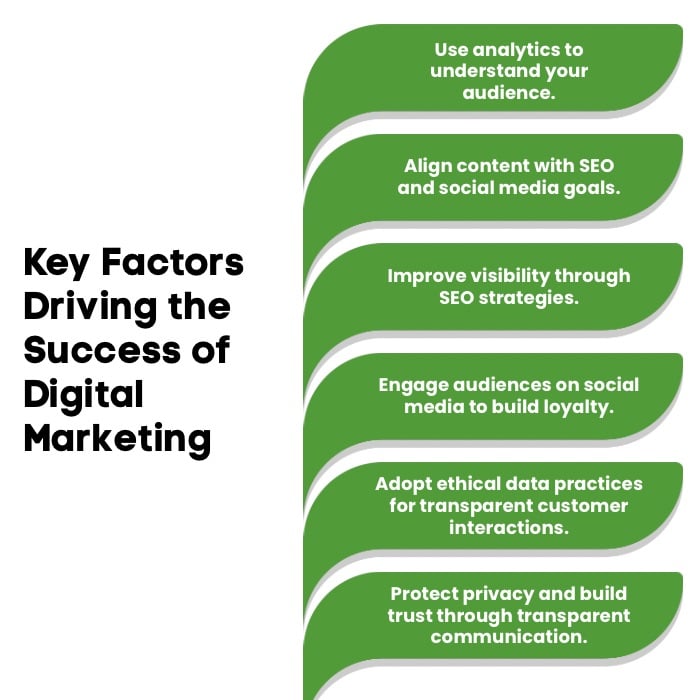
An Infographic on Key Factors Driving the Success of Digital Marketing
To succeed in digital marketing, it’s crucial to focus on understanding your audience, creating valuable content, optimising for SEO, and leveraging social media engagement. These factors help create a solid foundation for any digital strategy, driving measurable results and business growth.
Let’s explore these crucial factors in more detail.
1. Targeted Audience Identification
Understanding your audience’s preferences, behaviours, and demographics is essential for effective targeting. Using tools like Google Analytics and social media insights ensures that your campaigns connect with the right people at the right time.
2. Effective Content Strategy
Crafting relevant, engaging, and valuable content that aligns with your SEO and social media goals builds a strong brand presence. Storytelling and personalisation deepen the connection with your audience, turning visitors into loyal followers.
3. Utilising SEO to Increase Visibility
SEO practices boost your website’s visibility and organic reach. By focusing on keyword research and both on-page and off-page SEO, you drive traffic and increase online visibility across organic, paid, and referral channels, ensuring a broader audience.
4. Social Media Engagement
Social media platforms like Instagram, Facebook, LinkedIn, and Twitter are key to building brand loyalty and expanding your reach. Creating shareable content grows your social media presence, contributing to higher engagement and visibility.
5. Ethical Data Practices
Responsible data collection and usage are fundamental for building trust with your audience. Adopting transparent practices ensures you handle customer information ethically and comply with regulations like GDPR.
6. Privacy and Trust
Protecting user privacy and building trust are essential for long-term customer loyalty. Transparent communication, respecting user data, and providing control over personal information foster strong, lasting relationships with your audience.
Focusing on these core factors, like audience understanding, content creation, SEO, and social media engagement, ensures your digital marketing strategy stays on track and drives success.
What Are the Tools and Techniques for Measuring Digital Marketing Success?
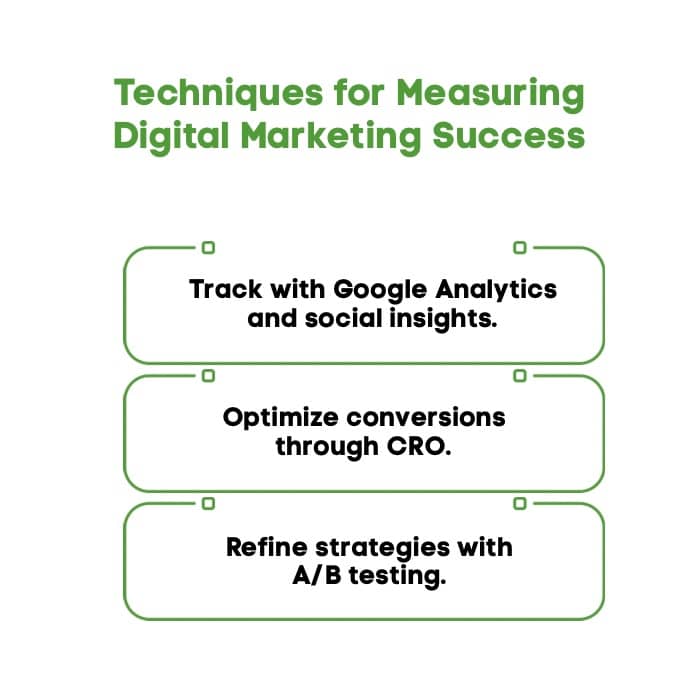
An Infographic on Techniques for Measuring Digital Marketing Success
Measuring the effectiveness of your digital marketing efforts is essential for ensuring your strategy is working. By using various tools and techniques, you can track performance, optimise conversions, and continually improve your marketing efforts.
Let’s dive into the key tools and techniques that help measure success.
1. Analytics and Tracking
Tools like Google Analytics and social media insights allow you to track the effectiveness of your digital marketing campaigns. These tools provide valuable data, such as website traffic, user behaviour, and engagement rates, which help you measure your success and identify areas for improvement. Tracking digital marketing success metrics helps gauge performance and ensures that you’re meeting your goals.
2. Conversion Rate optimisation (CRO)
Improving conversion rates on landing pages, emails, and CTAs is crucial for maximising results in your digital marketing campaigns. By focusing on factors like page design, messaging, and user experience, you can optimise your content to drive more conversions and achieve better ROI.
3. A/B Testing
A/B testing allows you to compare different versions of your marketing strategies and digital content to see which one resonates best with your audience. This method helps you refine your approach and make data-driven decisions that improve engagement and performance.
By utilising these tools and techniques, you can measure and optimise your digital marketing efforts, ensuring that your strategies deliver maximum success.
What Are the Best Practices for Achieving Digital Marketing Success?
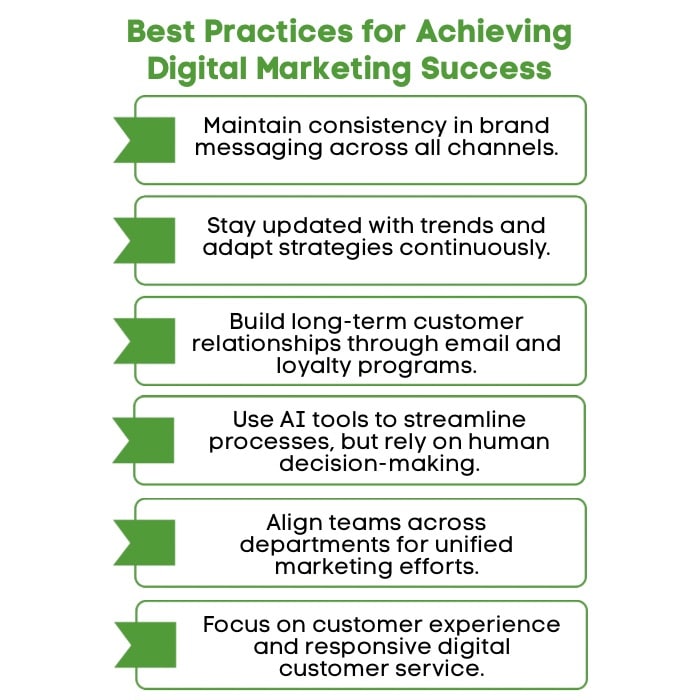
An Infographic on Best Practices for Achieving Digital Marketing Success
Achieving success in digital marketing requires a strategic approach that focuses on consistency, adaptability, and long-term relationship building. By following best practices, you can strengthen your digital marketing efforts and ensure sustained growth.
Let’s explore the key practices that drive success.
1. Consistency in Brand Messaging
Maintaining consistent messaging across all marketing channels is vital to ensure that your brand remains recognizable and trustworthy. Whether through your website, social media, or email campaigns, consistency helps reinforce your brand identity, making it easier for customers to connect with your message and values.
2. Continual Learning and Adaptation
The digital marketing landscape is constantly evolving. Staying up-to-date with the latest trends, tools, and best practices allows you to stay competitive. By continuously learning and adapting your strategies, you can effectively respond to new challenges, seize emerging opportunities, and maintain an edge over competitors.
3. Fostering Customer Relationships
Building long-term relationships with your audience is crucial for sustained success. You can do this through email marketing, loyalty programs, and personalised experiences that make customers feel valued. Additionally, robust customer service processes play a key role in enhancing trust and brand loyalty, ensuring that customers feel heard and appreciated throughout their journey.
4. Leveraging AI Tools for Efficiency and Insights
AI tools can greatly enhance efficiency in digital marketing by automating tasks and providing valuable insights. From content recommendations to predictive analytics, AI streamlines processes. However, it’s essential to remember that human decision-making is key. Critical thinking ensures that data is interpreted correctly and strategies are aligned with the brand’s unique goals.
5. Internal Alignment and Cross-Team Collaboration
For digital marketing success, it’s crucial that all teams, from marketing to sales to customer service, are aligned and working toward shared objectives. Cross-team collaboration ensures that messaging is consistent, strategies are unified, and all departments contribute to the overall success of marketing campaigns.
6. Customer Experience and Digital Customer Service
A seamless and personalised customer experience is key to building brand loyalty. Digital customer service, including quick response times and effective issue resolution, enhances the overall customer journey and directly influences marketing success. Providing excellent service strengthens trust, increases satisfaction, and fosters long-term loyalty.
By prioritizing consistency, ongoing learning, and customer relationships, you lay a strong foundation for long-term success in digital marketing.
Want to learn how AI is revolutionizing digital marketing? Check out our blog on how AI-powered SEO agents are changing the landscape of digital marketing.
What Are the Common Mistakes That Hinder the Success of Digital Marketing?
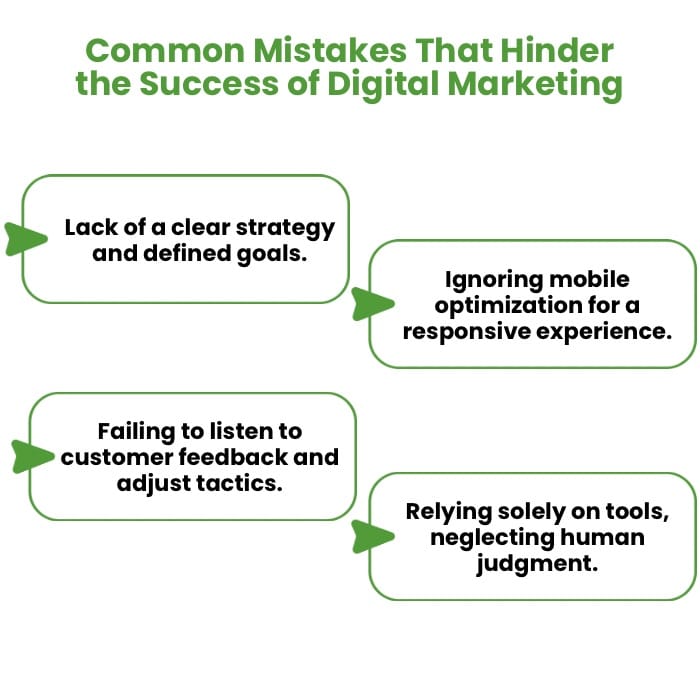
An Infographic on Common Mistakes That Hinder the Success of Digital Marketing
Avoiding common mistakes in digital marketing is essential for ensuring the effectiveness of your strategy. Inadequate planning, neglecting mobile optimisation, and failing to listen to your audience can hold back your success.
Let’s take a look at these pitfalls and how to avoid them.
1. A Lack of Clear Strategy
A well-defined digital marketing plan is essential for guiding your efforts and achieving long-term success. Without a clear strategy, you risk wasting time and resources on tactics that don’t align with your goals. Ensure that your plan is comprehensive, with measurable objectives, defined KPIs, and a clear understanding of your target audience.
2. Ignoring Mobile optimisation
In today’s mobile-first world, ignoring mobile optimisation can severely impact your digital marketing success. A mobile-friendly website and content are critical for reaching users who browse and shop on their smartphones. Ensure that your site loads quickly, is responsive, and provides an excellent user experience across all devices.
3. Neglecting Customer Feedback
Customer insights and reviews provide valuable information to refine your marketing tactics and improve engagement. Listening to your customers helps you understand their pain points and preferences, enabling you to adjust your content and strategy to meet their needs. Additionally, customer service processes, like handling online inquiries promptly, are essential in building trust and loyalty.
4. Relying Solely on Tools
While digital marketing tools like AI, analytics, and automation are incredibly helpful, relying solely on them can lead to missed opportunities. Human intelligence, creativity, and critical thinking are essential for interpreting data and making strategy adjustments based on real-world insights and context. Use tools to enhance your efforts, but never replace human judgment entirely.
Avoiding these common mistakes ensures your digital marketing strategy stays on track and delivers the desired results.
Why Businesses Trust Wild Creek Web Studio for Digital Marketing Success?
At Wild Creek Web Studio, we don’t just focus on tools; we combine cutting-edge technology with human expertise to drive results-driven strategies for long-term growth. With over 18 years of experience and a track record of success for 100+ clients, we tailor our approach to meet your unique business needs.
What sets us apart?
- Custom Strategies: Tailored solutions designed to align with your business goals.
- Human Decision-Making: We combine data-driven insights with critical thinking, ensuring that tools are used to enhance, not replace, strategy.
- Measurable Results: We track KPIs to ensure every campaign drives maximum ROI.
- Sustainable Growth: Strategies built for long-term success and continuous optimisation.
Ready to elevate your digital marketing? Contact us today and let’s build a strategy that drives your success.
Conclusion
Digital marketing success isn’t achieved overnight. It requires a well-thought-out strategy, the right tools, and continuous effort to engage with your audience effectively. By focusing on key factors like audience targeting, content strategy, SEO, and social media engagement, you can drive measurable results that align with your business goals. Avoid common pitfalls and stay adaptable, and your digital marketing efforts will lay the foundation for long-term growth and success.
Frequently Asked Questions
How to be successful in digital marketing?
Success in digital marketing involves creating relevant content, using search engine optimisation (SEO) to improve your search engine rankings, and optimising your online presence. Consistently analysing key performance indicators (KPIs) and refining your strategies will lead to continuous improvement and higher engagement.
What is the importance of digital marketing for the success of a business?
Digital marketing helps businesses reach potential customers through various channels like social media posts, blog posts, and Google Ads. It’s vital for increasing visibility, driving organic traffic, and staying competitive in an increasingly online marketing-driven world.
How to increase visibility in digital marketing?
Increasing visibility in digital marketing involves optimising content for search engines, using paid ads like PPC advertising and Google Ads, and engaging with your audience via social media posts. Creating relevant content that resonates with your audience will also boost search engine results.
Can a company succeed purely on digital marketing?
While digital marketing is crucial, a company’s success often depends on combining online marketing strategies with strong products and customer service. A solid online presence paired with effective content marketing and search engine optimisation can drive long-term success.
What are the different types of visibility in digital marketing?
Digital marketing offers several types of visibility: organic search results through SEO, paid visibility through Google Ads and PPC advertising, and social visibility via platforms like Facebook and Instagram. Each type targets different stages of the customer journey and boosts search engine rankings.
How does visibility impact the overall success of digital marketing?
Visibility directly impacts a business’s ability to attract potential customers. A strong search engine presence in search results and engaging content across platforms helps drive traffic, build trust, and enhance brand recognition, leading to increased conversions and long-term growth.