Did you know that 38% of users will only engage with a website if they find the content or layout attractive?
The design of your website is crucial for its success, and UI and UX play a significant role in this. But how exactly do these elements impact your website’s performance?
In this discussion, we will explore the potential impact of UI vs UX on your website’s success. From reducing bounce rates to improving brand perception and SEO performance, we will uncover the secrets behind creating a website that captures attention and keeps users returning for more.
Get ready to discover the power of UI and UX in enhancing your website’s performance.
UI Vs UX: The Impact on Website Performance
Reduced Bounce Rates
Good user interface (UI) and user experience (UX) design can significantly reduce bounce rates on your website. Users quickly decide whether to stay or leave when visiting a website. Suppose your website has a poor UI/UX design. In that case, users may become frustrated or confused, causing them to bounce back to search results or navigate away quickly.
However, with a well-structured and engaging UI/UX design, you can keep users interested and involved, ultimately reducing bounce rates.
Websites with robust UI/UX design tend to have lower bounce rates. When users have a positive experience navigating your website, they will stay longer and explore further. Good UI design ensures that your website is visually appealing and easy to navigate, making it enjoyable for users. Meanwhile, UX design focuses on the overall user experience, ensuring that the website is efficient, relevant, and meets users’ needs. Incorporating effective web design is crucial for reducing bounce rates and keeping users engaged on your website.
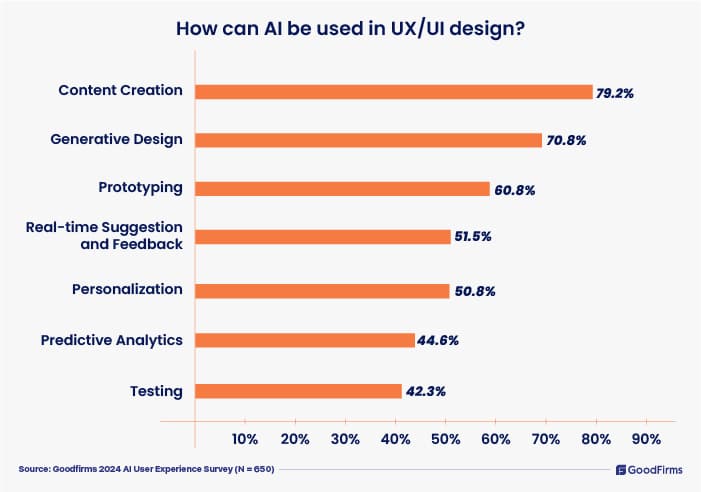
Uses of AI in UX/UI Design – Survey
Brand Perception and Credibility
UI and UX design are crucial in shaping brand perception and credibility. A website with a well-designed UI and UX creates a visually appealing and easy-to-navigate interface. This consistency in design elements enhances the brand’s image and trustworthiness, making it appear more professional and reliable. This is where graphic design and visual design principles, such as typography, come into play, as they help to create a cohesive and visually appealing look and feel of the product, incorporating critical visual elements. To ensure product and brand consistency, UI designers follow a specific UI design process, starting with research to understand user needs and expectations. This research is then used to determine the best colour palettes, patterns, fonts, and other visual elements to incorporate into the design to create a good user experience. By following a structured UI design process and utilizing design systems, designers can create a consistent and visually appealing interface that enhances brand perception and credibility, resulting in a positive user experience. Additionally, UI designers must prepare a UI style guide with all the necessary documentation, components, and references for better collaboration with multiple stakeholders. This ensures that the design remains consistent and aligned with the brand’s overall aesthetic and messaging.
Furthermore, a good UI and UX design can increase user confidence in the website and the brand. When users have a positive experience interacting with a website, they trust its functionality and reliability. This trust translates into confidence in the brand, leading to repeat visits and conversions.
A professional-looking UI and UX design can also establish brand credibility and reliability. When a website has a polished and professional design, it conveys the impression that the brand is trustworthy. Users are more likely to engage with a brand that invests in creating a visually appealing and user-friendly website.
SEO Performance
UI and UX design are crucial for optimizing the SEO performance of a website. When it comes to search engine optimization, search engines consider factors such as user experience, website accessibility standards, and overall website performance.
A well-designed UI and UX can significantly improve these aspects, leading to better website ranking and visibility on search engine result pages.
Search engines consider user experience an important factor in determining website rankings. Websites with good UI and UX tend to have lower bounce rates, meaning that users stay on the website for more extended periods. This tells search engines that the website is relevant and valuable, improving SEO performance.
In addition, a well-designed UX can make it easier for users to convert. By removing barriers and guiding users towards desired actions, a good UX can increase the likelihood of users completing actions such as purchasing or filling out a form. This improves the overall user experience and increases the chances of achieving conversion goals, including a smooth and efficient checkout process, which further boosts the website’s SEO performance and app usage through design thinking methodology.
Furthermore, mobile responsiveness is crucial for website performance. With the increasing use of mobile devices for internet browsing, search engines prioritize websites optimized for mobile devices. By ensuring that the UI and UX are tailored for mobile users, websites can reduce bounce rates and increase engagement, ultimately improving their SEO performance.
Conversion Rates
To improve conversion rates, it’s crucial to have a well-designed user interface (UI) and user experience (UX). The impact of UI and UX on conversion rates can’t be overstated.
Here are three critical ways in which UI and UX design can positively influence conversion rates:
- Increased customer satisfaction and retention: A visually appealing and user-friendly interface, combined with a seamless user experience, can enhance customer satisfaction, leading to improved conversion rates. When users find websites easy to navigate and interact with, they’re more likely to stay, explore further, and ultimately convert.
- Competitive advantage: Well-designed UI and UX can make a website stand out from competitors. Businesses can gain preference and attract more conversions by creating a unique and enjoyable user experience.
- Enhanced brand perception and credibility: A professional-looking website with good UI and UX design instils trust and confidence in users. This positive perception of the brand can directly impact conversion rates, as users are more likely to engage and convert on a website they perceive as trustworthy.
Mobile Responsiveness
Mobile responsiveness is essential for ensuring a website functions smoothly and adapts well to different mobile devices. In today’s mobile-centric world, prioritizing mobile responsiveness is crucial for improving website performance and user satisfaction. Optimizing the user interface and experience for mobile devices helps reduce bounce rates and increase engagement, leading to improved conversion rates.
When a website isn’t mobile responsive, users may struggle to navigate and interact with the interface, resulting in a frustrating experience that can drive them away. A mobile-friendly website enhances user experience and allows for a wider reach, as more and more people primarily access the internet through their smartphones and tablets.
Addressing Negative User Feedback
When users provide negative feedback, listening to and addressing their concerns is essential to improve the overall user experience. By addressing negative user feedback, you can enhance the design of your website and ultimately improve its performance.
Here are some critical steps to effectively address negative user feedback:
- Actively listen and identify recurring issues: Take the time to understand users’ specific problems and look for patterns in their feedback. This will help you identify the most critical issues that need to be addressed.
- Prioritize feedback based on impact: Not all negative feedback will have the same effect on the user experience. Prioritize the problems that have the most significant impact on design and address them first.
- Implement iterative design improvements: Use the feedback received to make iterative design improvements. Test and implement changes that address the identified issues and enhance the website’s usability.
Frequently Asked Questions
What Is the Impact of User Experience on Website Performance?
User experience plays a crucial role in determining the performance of a website. It directly influences user engagement, conversion rates, and overall satisfaction. When businesses prioritize creating a seamless and enjoyable experience for their users, they can significantly increase customer satisfaction and retention, giving them a competitive edge in the market. By understanding the needs and preferences of their audience, staying up-to-date with current trends, and using clear and straightforward language, businesses can enhance the user experience on their websites and achieve better results.
What Is the Difference Between UX and UI Website?
The difference between UX and UI on a website lies in their respective focuses. UX, or user experience, is concerned with the user’s overall experience, including factors such as usability and satisfaction. On the other hand, UI, or user interface design, is focused on creating visually appealing and user-friendly interfaces that facilitate easy navigation for digital products. In simpler terms, UX is about how the website feels, while UI is about how it looks and how users interact with it in digital product design. Understanding the key differences between UX and UI is crucial for creating a successful and high-performing website that incorporates effective digital design.
What Is the Difference Between UI and UX, and Tell Us About the Factors that impact UX in General.
UI and UX are both essential for the optimal performance of a website. UI, or User Interface, creates visually appealing and aesthetically pleasing interfaces. On the other hand, UX, or User Experience, considers users’ overall experience while interacting with a website.
Several factors impact the UX of a website. One of the critical factors is ease of use. Users should be able to navigate the website effortlessly, finding the information they need and completing tasks without confusion or frustration. Efficiency is another important aspect of UX. Users expect websites to be fast and responsive, with quick loading times and smooth interactions. Relevance is also crucial for a positive user experience. The content and features of a website should be tailored to the needs and interests of the target audience, providing them with value and meaningful experiences.
By combining UI and UX effectively, websites can achieve better user engagement, higher conversion rates, and increased user satisfaction. A visually appealing and intuitive interface and a seamless and enjoyable user experience create a positive impression and encourage users to spend more time on the website, explore its offerings, and take desired actions. This includes menu bars, buttons, icons, and, most importantly, colour palettes, crucial in creating an aesthetically pleasing and user-friendly interface. However, it is essential to consider the best practices of UX design, such as using a flat design, proper image icons, and eliminating unnecessary pages, to ensure the best overall product and user experience.
What Is the Impact of UX UI Design?
The impact of UX/UI design is significant as it enhances the performance of websites. By creating visually appealing interfaces and improving user experience, UX/UI design leads to higher engagement, conversion rates, and overall satisfaction for website visitors. This improvement in website performance is crucial for businesses looking to succeed in the competitive digital world. Understanding the nuances of UX/UI design and its implications is essential as it continues to make significant strides in improving website efficiency and requires strong design skills. Through clear and straightforward language, UX/UI design ensures that even users with limited knowledge can navigate websites effectively. Overall, UX/UI design plays a crucial role in elevating the user experience and driving the success of websites in today’s ever-evolving digital landscape. With the growing demand for UX/UI design skills, individuals need to develop and hone their design skills to stay competitive in the job market and contribute to the success of businesses in the digital world.
UI vs UX Design: Which Career Option Should You Choose?
UI (User Interface) and UX (User Experience) design are essential to creating successful digital products. Still, they focus on different elements of the design process.
UI design primarily concerns a product’s visual and interactive elements, including layout, colours, typography, and overall aesthetic. UI designers are responsible for creating visually appealing and user-friendly interfaces that make it easy for users to interact with a product.
On the other hand, UX design, or user experience design, is focused on users’ overall experience when using a product. This includes factors such as ease of use, efficiency, accessibility, and satisfaction. UX designers research to understand user needs and behaviours, create user personas and user flows, and prototype and test designs to ensure a positive user experience.
UI and UX design are crucial for creating successful digital products; many professionals work in both areas. However, I enjoy working more with visual design and have a strong sense of aesthetics. UI design may be a better fit. Suppose you are more interested in understanding user behaviour and designing intuitive experiences. In that case, UX design may be the right career path.
Ultimately, the choice between UI and UX design depends on your interests, skills, and career goals. It can also be helpful to gain experience or take courses in both areas to develop a well-rounded skill set.
How important is it for developers to have a strong understanding of both UI and UX?
Developers must understand UI (User Interface) and UX (User Experience). UI includes visual design and layout, while UX focuses on the overall experience. Understanding UI helps developers create visually appealing interfaces that are easy for users to navigate. This involves designing buttons, menus, and forms, understandably.
UX is about creating a positive user experience. This includes ease of use, efficiency, and accessibility. Developers with strong UX knowledge can ensure applications meet the needs of their target audience.
Knowledge in UI and UX enables developers to create products that look great and have a seamless user experience. This increases user satisfaction and engagement, leading to a successful product.
Conclusion
In summary, incorporating effective UI and UX design principles into your website can significantly impact its performance.
Creating visually appealing and user-friendly interfaces can reduce bounce rates and increase user engagement. This, in turn, enhances brand perception and credibility.
Additionally, implementing good UI and UX practices can improve your website’s SEO performance, leading to higher visibility and organic traffic.
Furthermore, a well-designed website with a seamless user experience can increase conversion rates and drive more sales or leads.
It’s also essential to promptly address any negative user feedback to maintain a positive user experience.
By prioritizing UI and UX design, you can create a website that looks great and provides an excellent experience for your visitors on desktop and mobile devices.



4 comments
I love this post. The thing I like in your posts is that everything is in a detailed and learning manner.
Thank you for sharing your thoughts! I completely agree with your points and appreciate your clarity on the subject.
The article provides a solid foundation for understanding UI/UX design, effectively outlining the core principles and their impact on user satisfaction. The emphasis on user-centered design and iterative processes is crucial for creating successful products.
To further enhance the article, I would suggest adding a section on the role of emerging technologies like artificial intelligence and virtual reality in shaping the future of UI/UX design. Additionally, exploring the importance of accessibility and inclusive design would broaden the article’s scope and strategies for seamless experiences of UI UX Design.
It was such a great article which was on UI/UX design and Development services. Here, I would like to add some easy points in your blog which are as follows.
1. Makes website easy to use
2. Speeds up page loading time
3. Increases customer engagement
4. Reduces bounce rate
5. Builds trust with visitors
I hope these points might help your readers.