
Key Highlights
- Digital marketing performs better when execution follows a structured, repeatable checklist instead of ad hoc tactics.
- Strong foundations around goals, audience clarity, and channel selection prevent wasted effort and misaligned campaigns.
- Website readiness, SEO, and paid marketing must work together to drive qualified traffic and conversions.
- Content, email, and social media are most effective when aligned to buyer intent and measured consistently.
- Tracking and analytics turn marketing from guesswork into informed decision-making.
- Ongoing Optimisation and scaling ensure long-term growth rather than short-term wins.
Digital marketing often feels overwhelming. Between SEO, ads, content, email, social media, and analytics, it is easy to lose track of what needs to be done and what actually moves the needle. Many businesses invest time and budget into marketing but still struggle to see consistent results.
The problem usually is not effort. It is a lack of structure. Campaigns are launched without clear goals, important steps get skipped, and teams jump from one tactic to another without a clear plan. Over time, this leads to scattered execution, wasted spend, and frustration over unclear performance.
This blog introduces a practical digital marketing checklist designed to bring clarity and direction to your efforts. Instead of guessing what to do next, you will follow a clear, step-by-step framework that helps turn strategy into action and keeps your marketing focused, measurable, and effective.
How A Digital Marketing Checklist Turns Strategy Into Action?
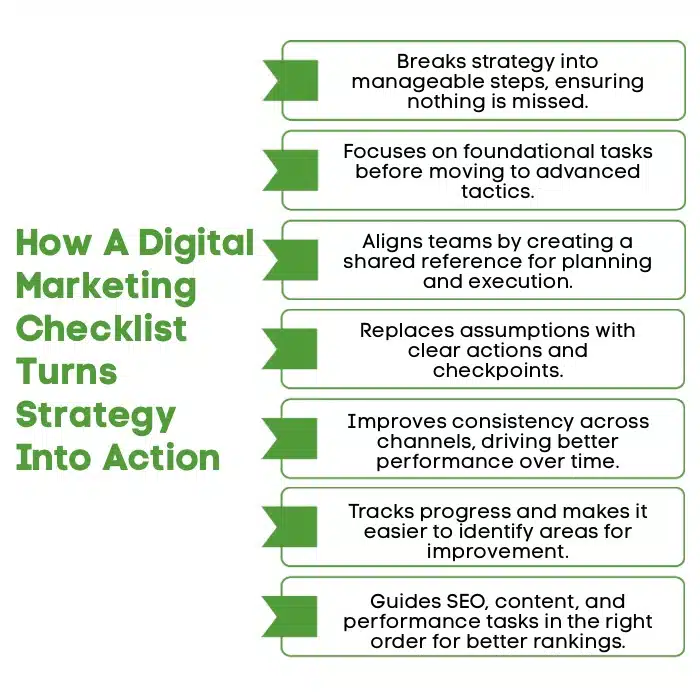
A digital marketing strategy often looks great on paper but falls apart during execution. A checklist bridges that gap by turning ideas into clear, repeatable actions that teams can actually follow.
Here’s how a digital marketing checklist helps business owners turn planning into consistent execution:
- Brings structure to your efforts by breaking strategy into manageable steps, so nothing important gets overlooked.
- Helps prioritise what matters most, ensuring foundational tasks are completed before moving to advanced tactics.
- Keeps teams aligned by creating a shared reference point for planning, execution, and review.
- Reduces guesswork by replacing assumptions with clear actions and checkpoints.
- Improves consistency across channels, which leads to stronger performance over time.
- Makes optimisation easier by clearly showing what has been done and what needs improvement.
- Acts as a digital marketing checklist for improving ranking by ensuring SEO, content, and performance tasks are addressed in the right order.
When strategy is supported by a checklist, execution becomes focused, measurable, and far easier to scale.
What Are the Essential Digital Marketing Foundations? A Complete Checklist
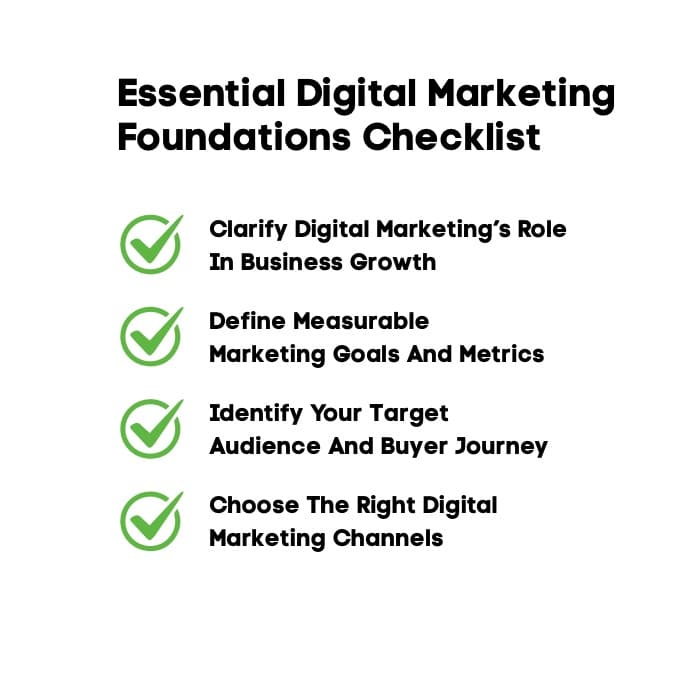
Digital marketing only delivers results when it is built on the right foundations. Without clarity around goals, audiences, and channels, even well-executed campaigns can fall flat.
Here are the essential digital marketing fundamentals you need to get right before moving forward with the checklist.
1. Clarify How Digital Marketing Supports Your Business Growth
Start by defining what digital marketing is expected to achieve for your business. This could mean increasing brand visibility, generating qualified leads, driving online sales, or supporting customer retention. When these expectations are clear, your digital marketing strategy checklist for enhancing your digital presence becomes easier to follow and far more effective.
2. Define Measurable Marketing Goals And Tracking Metrics
Turn your broader business objectives into specific marketing goals you can measure. Decide what success looks like and how it will be tracked, whether that is traffic growth, lead volume, conversion rates, or revenue contribution. Clear metrics make it easier to evaluate performance and adjust quickly when something is not working.
3. Pinpoint Your Target Audience And Map Their Buyer Journey
Identify who you are trying to reach before creating content or launching campaigns. Understand their needs, challenges, and decision-making process at each stage. Mapping the buyer journey helps you deliver the right message at the right time and prevents wasted effort on generic or poorly targeted marketing.
4. Choose Digital Marketing Channels That Match Your Goals
Focus only on channels that align with your audience and objectives as part of your social media marketing strategy. Instead of trying to be everywhere, prioritise platforms where your potential customers already spend time. This keeps your efforts efficient and ensures your resources are invested in channels that can actually drive results.
What Does a Website Readiness And Performance Checklist Include?
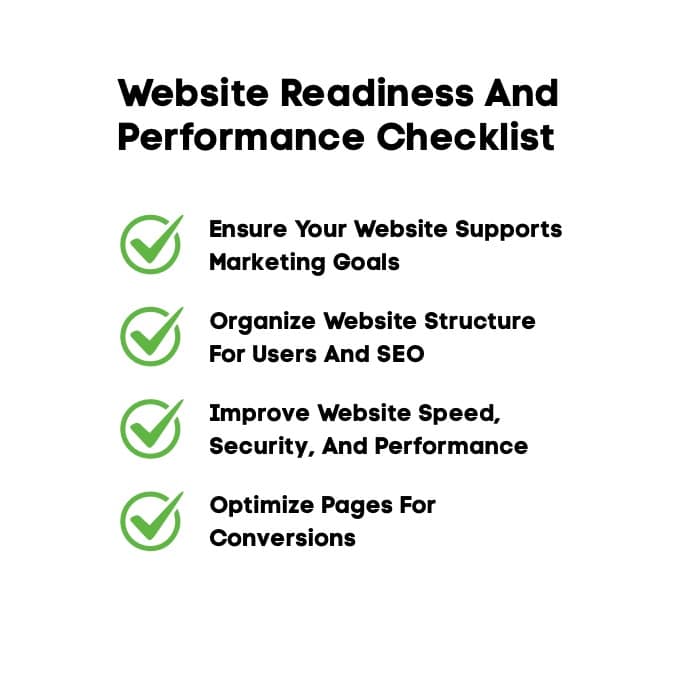
Your website is the foundation of every digital marketing effort. If it is slow, confusing, or not built to convert, even strong campaigns will struggle to deliver results.
Here are the website essentials you need to check before scaling your digital marketing efforts.
5. Make Sure Your Website Supports Your Marketing Goals
Start by checking whether your website aligns with what you want visitors to do. This could be filling out a form, booking a call, making a purchase, or signing up for updates. Every key page should guide users toward a clear action instead of leaving them unsure of the next step.
6. Organise Your Website Structure For Users And Search Engines
Your website should be easy to navigate for both visitors and search engines. Pages should be logically grouped, menus should be simple, and important content should never be buried too deep. A clean structure improves user experience and helps search engines understand and rank your pages more effectively.
7. Improve Website Speed, Security, And Technical Performance
Slow load times and technical issues can quickly drive users away. Check your page speed, mobile responsiveness, and site security to ensure everything works smoothly across devices. A technically sound website creates trust and reduces friction throughout the customer journey.
8. Optimise Pages To Turn Visitors Into Leads Or Customers
Traffic alone does not drive growth. Review key pages to see if messaging is clear, calls to action are visible, and forms are easy to complete. Small improvements in layout, copy, and page flow can significantly improve conversion rates without increasing traffic.
What Should Be Included In Your Search Engine Optimisation Checklist?
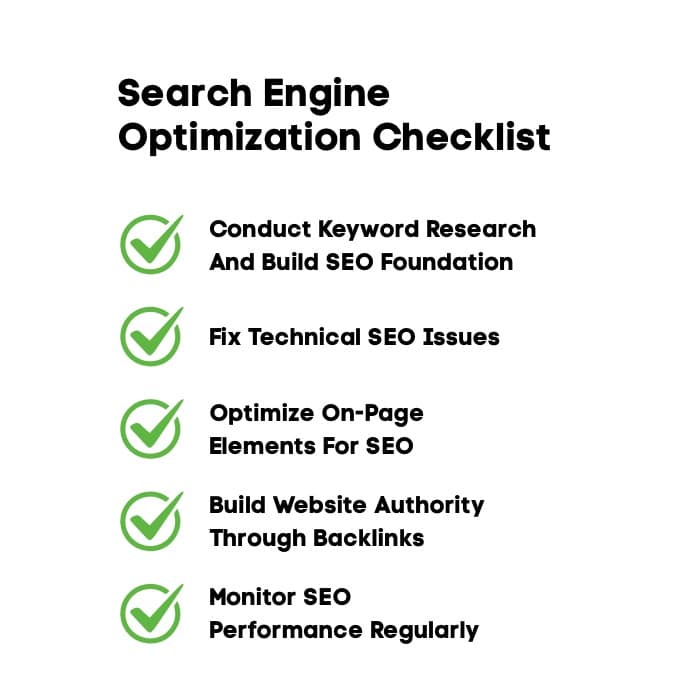
Search engine Optimisation helps your business get discovered by people who are actively looking for what you offer in search results. Without a clear SEO foundation, even high-quality content and great websites struggle to gain visibility.
Here are the SEO essentials you need to check to improve rankings, traffic, and long-term organic growth.
9. Build A Strong SEO Foundation
Start with keyword research that focuses on search intent, not just volume. Identify the relevant keywords and terms your audience actually uses when searching for solutions like yours. This ensures your content aligns with what people want to find and sets the stage for sustainable organic traffic.
10. Fix Technical SEO Issues That Limit Visibility
Check your website for technical issues that can block search engines from properly crawling and indexing your pages. This includes site speed, mobile usability, broken links, duplicate content, and indexing errors. Fixing these issues helps search engines access and understand your site more easily.
11. Optimise On-Page Elements For Search And Users
Review key on-page elements such as page titles, meta descriptions, headings, internal links, and content structure. Treat this step like an on-page SEO checklist that digital marketing teams can follow to ensure every page is optimised for both visibility and usability.
12. Strengthen Off-Page Signals And Website Authority
Build credibility by earning high-quality backlinks from relevant and trusted sources. Focus on quality over quantity and avoid shortcuts that can harm your site. Strong off-page signals help search engines trust your website and improve its ability to rank competitively.
13. Review SEO Performance And Run Regular Audits
SEO is not a one-time task. Monitor local SEO rankings, traffic trends, and technical health on a regular basis. Running SEO audits helps you catch issues early, track progress, and continuously improve your results over time.
What Should Be On Your Paid Marketing And Advertising Checklist?
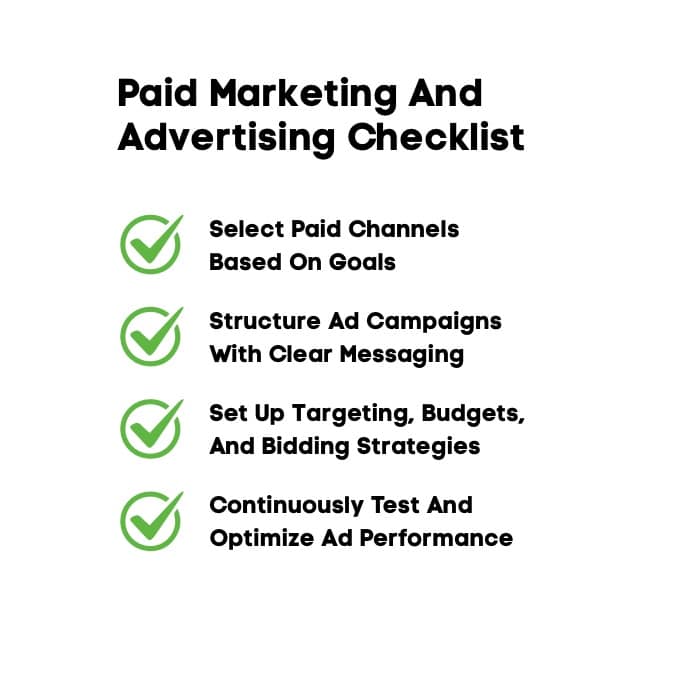
Paid marketing helps you reach the right audience faster, but only when campaigns are structured with clear goals and controls. Without a plan, ad spend can disappear quickly with little to show for it.
Here are the paid marketing essentials you need to review before launching or scaling advertising campaigns. Treat this as a practical checklist for digital marketing campaign planning and execution.
14. Choose Paid Channels That Align With Your Business Goals
Start by selecting ad platforms based on where your audience spends time and how they search or browse. For small businesses, search ads, social ads, and display ads each serve different purposes. The right channel choice ensures your budget is focused on impact rather than experimentation.
15. Build Ad Campaigns With Clear Structure And Messaging
Organise campaigns around specific goals, audiences, and offers. Each ad group should have focused messaging that matches user intent and landing page content. A clear structure improves relevance, quality scores, and overall performance.
16. Control Targeting, Budgets, And Bidding Strategies
Define who should see your ads and how much you are willing to spend to achieve results. Review audience targeting, daily budgets, and bidding methods regularly. This helps prevent wasted spend and keeps campaigns aligned with performance goals.
17. Test, Measure, And Improve Ad Performance Continuously
Run ongoing tests on ad copy, creatives, audiences, and landing pages. Track key metrics such as click-through rates, cost per conversion, and return on ad spend. Continuous testing helps you improve results over time instead of relying on assumptions.
What Should Be Included In Your Content Marketing Checklist?
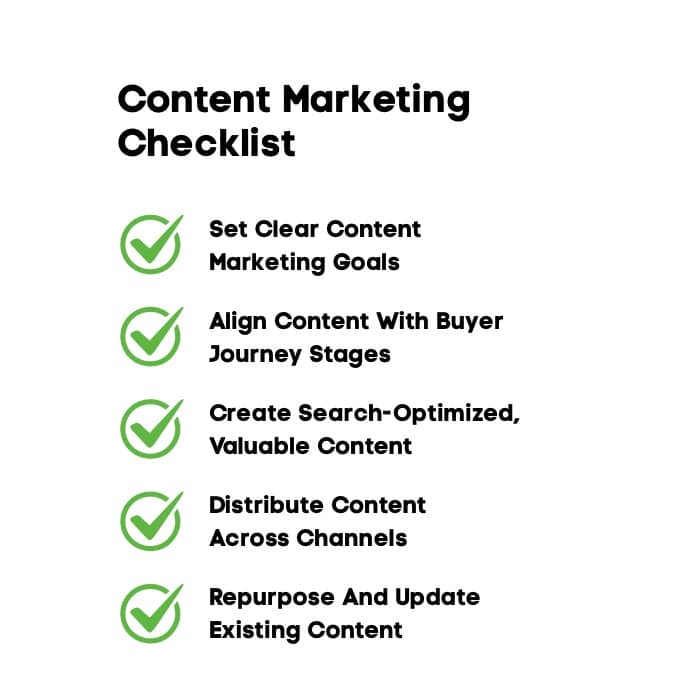
Content marketing works when it is intentional and audience-focused. Publishing without a plan often leads to inconsistent results and wasted effort.
Here are the content marketing essentials you need to check to create content that attracts, engages, and converts.
18. Set Clear Goals For Your Content Marketing Efforts
Start by defining what you want your content to achieve. This could include increasing organic traffic, generating leads, building authority, or supporting sales. Clear goals help guide content topics, formats, and distribution choices.
19. Align Content With Each Stage Of The Buyer Journey
Different content serves different purposes depending on where your audience is in the decision process. Educational content supports awareness, comparison content helps with consideration, and conversion-focused content supports decision-making. This alignment improves relevance and engagement.
20. Create Content That Is Useful, Relevant, And Search Friendly
Focus on solving real problems your audience cares about and creating relevant content. Structure content clearly, use simple language, and optimise for search without forcing keywords. High-quality content performs better across organic search, social, and email.
21. Promote And Distribute Content Across The Right Channels
Creating content is only half the work. Share it through channels where your audience already engages, such as search, social media, email, or partnerships. Consistent distribution increases reach and long-term value.
22. Review, Update, And Repurpose Existing Content
Audit older content to see what can be improved or reused. Updating outdated information and repurposing strong pieces helps you get more value from content you have already created.
What Should Be Included In Your Email Marketing Checklist?
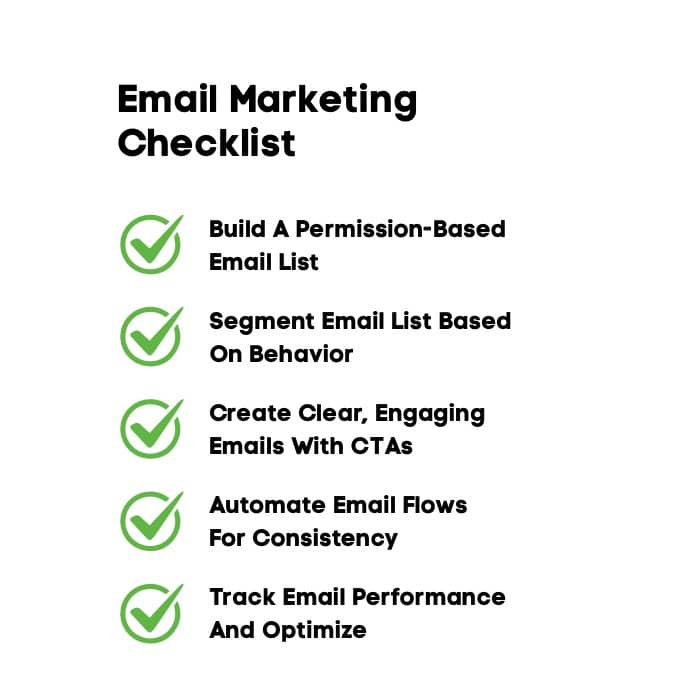
Email marketing remains one of the most effective channels for nurturing leads and retaining customers when it is done with intention. This is especially true when email supports a broader B2B digital marketing checklist focused on long-term relationship building.
Here are the email marketing essentials you need to check to drive engagement and consistent results.
23. Build A Clean And Permission-Based Email List
Focus on growing an email list with users who have actively opted in. Avoid purchased lists and outdated contacts. A clean list improves deliverability, engagement, and long-term performance.
24. Segment Your Email List Based On User Behavior
Not every subscriber should receive the same message. Segment your list based on actions, interests, purchase history, or stage in the customer journey. Segmentation helps you send more relevant emails that feel timely and personal.
25. Create Emails With Clear Value And Strong Calls To Action
Every email should have a clear purpose, whether it is to educate, promote, or re-engage subscribers. Keep messaging focused, subject lines clear, and calls to action easy to spot so readers know exactly what to do next.
26. Automate Email Flows To Save Time And Improve Consistency
Use automation for welcome emails, follow-ups, abandoned carts, and re-engagement campaigns. Automated flows ensure timely communication without manual effort and help maintain consistency across touchpoints.
27. Track Email Performance And Optimise Over Time
Monitor metrics such as open rates, click rates, and conversions to understand what works. Use this data to refine subject lines, content creation, and timing so your email marketing continues to improve with each campaign.
What Should Be Included In Your Social Media Marketing Checklist?
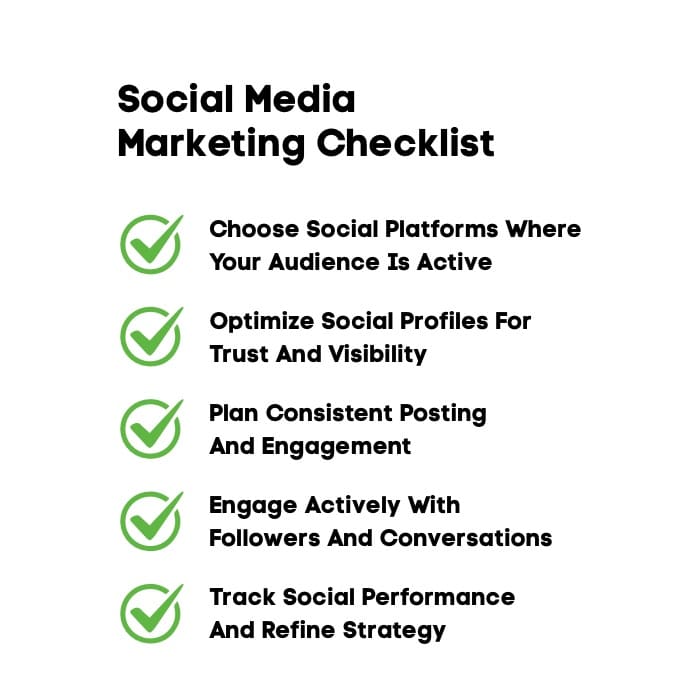
Social media plays a key role in building brand awareness, trust, and engagement. Without a clear plan, posting can quickly become inconsistent and ineffective.
Here are the social media essentials you need to check to build a consistent and results-driven presence.
28. Select Social Platforms Based On Where Your Audience Is Active
Focus on platforms that align with your audience demographics and content style. It is better to perform well on a few relevant platforms than to spread efforts thin across too many.
29. Optimise Social Profiles For Visibility And Credibility
Review profile bios, images, links, and descriptions to ensure they clearly communicate what your brand offers. Well-optimised profiles make a strong first impression and encourage users to follow or engage.
30. Create A Consistent Posting And Engagement Plan
Decide how often you will post and what types of content you will share. Balance promotional posts with educational and interactive content. Consistency helps build familiarity and keeps your brand top of mind.
31. Actively Engage With Your Audience
Social media is not just about publishing content. Respond to comments, messages, and mentions regularly. Active engagement builds relationships and improves trust over time.
32. Track Social Media Performance And Adjust Strategy
Monitor metrics such as reach, engagement, clicks, and conversions. Use performance data to refine content formats, posting times, and platform focus for better results.
What Should Be On Your Analytics, Tracking, And Optimisation Checklist?
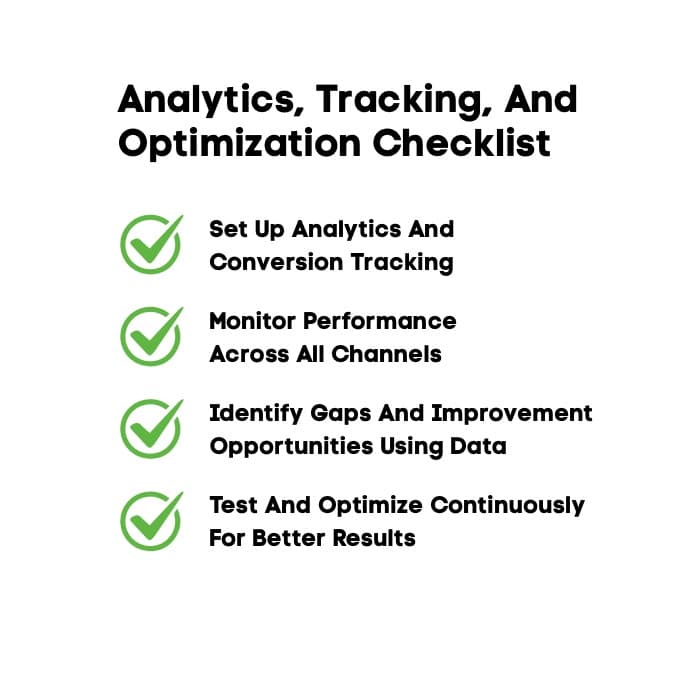
Marketing decisions are only effective when they are backed by data. Without proper tracking, it becomes difficult to understand what is working and where improvements are needed.
Here are the analytics and Optimisation essentials you need to check to measure performance and improve results consistently.
33. Set Up Analytics And Conversion Tracking Correctly
Start by ensuring analytics tools are properly installed across your website and key platforms. Track important actions such as form submissions, purchases, downloads, and sign-ups. Accurate tracking creates a reliable foundation for performance analysis.
34. Monitor Performance Across All Marketing Channels
Review data from SEO, paid ads, email, social media, and content marketing in one place. Look for patterns that show which channels drive the most traffic, engagement, and conversions. This helps you allocate time and budget more effectively.
35. Use Data To Identify What Needs Improvement
Analyse performance metrics to uncover weak spots and opportunities. Pages with high traffic but low conversions, ads with strong clicks but poor results, or emails with low engagement all point to areas that need attention.
36. Continuously Test And Optimise For Better Results
Optimisation should be an ongoing process. Test changes to landing pages, ads, emails, and content formats. Small improvements made consistently can lead to significant gains over time.
What Should Be Included In Your Ongoing Optimisation And Scaling Checklist?
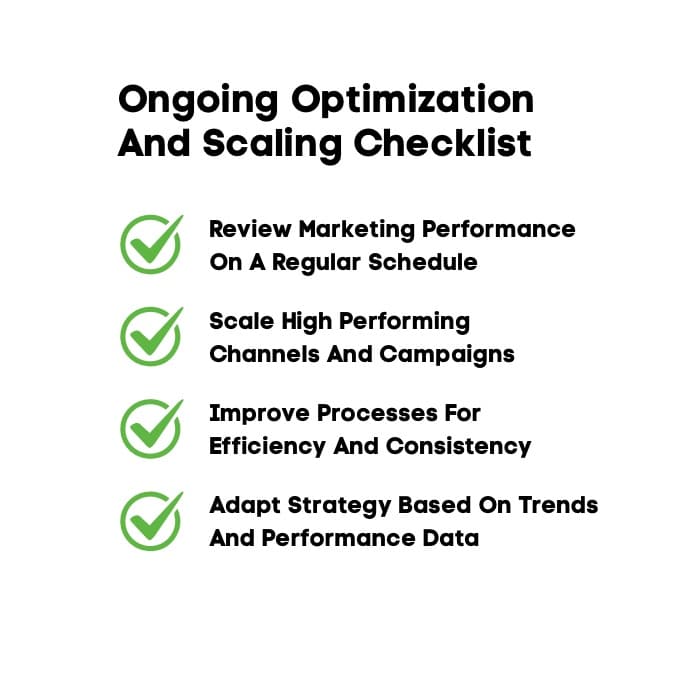
Digital marketing does not stop once campaigns are live. Long-term success depends on regular reviews, smart adjustments, and knowing when to scale what is working.
Here are the optimisation and scaling essentials you need to check to sustain growth over time.
37. Review Marketing Performance On A Regular Schedule
Set aside time to review performance weekly, monthly, and quarterly. Regular reviews help you spot trends early, catch issues before they grow, and keep your strategy aligned with business goals.
38. Identify High-Performing Channels And Double Down
Look closely at which channels, campaigns, or content pieces are delivering the best results. Allocate more budget, time, and resources to what is already working instead of constantly chasing new tactics.
39. Optimise Processes To Improve Efficiency And Consistency
As your marketing grows, manual tasks can slow you down. Streamline workflows, document processes, and use automation where possible. This helps maintain quality while scaling efforts.
40. Adapt Your Strategy Based On Trends And Performance Data
Digital marketing changes quickly. Stay aware of platform updates, audience behavior shifts, and performance trends. Adjust your strategy based on real data so growth remains sustainable and competitive.
Why Choose Wild Creek Web Studio for Your Digital Marketing?
When it comes to driving online growth, Wild Creek Web Studio stands out as a proven leader. With over 18 years of experience and a focus on measurable, ROI-driven results, here’s why we should be your digital marketing partner:
- Proven Expertise: We bring years of successful digital marketing experience across a variety of industries.
- Custom-Tailored Strategies: No cookie-cutter solutions; our strategies are built specifically around your business to drive measurable impact.
- Comprehensive SEO Services: Get found online with our robust SEO strategies, including technical optimisation, high-quality content, and link-building.
- ROI-Focused Paid Marketing: Maximise every ad dollar with our performance-driven campaigns on Google, Facebook, and other platforms.
- Engagement-Driven Social Media: Build trust and loyalty with social media strategies that engage and resonate with your audience.
- Client-Centric Approach: We are transparent, collaborative, and always focused on your goals.
- Human-Driven SEO: While tools are helpful, we believe human decision-making is essential to crafting strategies that truly work. We don’t just rely on algorithms; we think critically, analyse data from a business perspective, and adjust strategies for real-world success.
At Wild Creek Web Studio, we’re not just about digital marketing; we’re about delivering long-term results that grow with your business. Ready to elevate your digital strategy? Contact us today and let’s create a custom strategy that drives results for your business!
Conclusion
Digital marketing works best when the right actions are repeated consistently. With multiple channels and moving parts, a clear checklist helps you stay focused on what actually drives results instead of reacting to every new tactic.
Using this framework as a digital marketing daily checklist keeps execution organised, progress measurable, and strategy aligned with business goals as your marketing efforts grow.
Frequently Asked Questions
What is the checklist for a digital marketer to know?
A digital marketer should follow a comprehensive checklist covering goal setting, audience research, SEO, content planning, paid campaigns, and performance tracking. Regular reviews and adjustments ensure your efforts remain focused, measurable, and aligned with business objectives.
What are the most common mistakes to avoid when using a digital marketing checklist?
Avoid skipping foundational steps like audience research, neglecting performance tracking, or overcomplicating processes. Focus on creating a clear, actionable digital marketing daily checklist that balances strategy with consistent execution. Stay aligned with goals to ensure sustained success.
What should be on a B2B end-of-year digital marketing checklist?
A B2B end-of-year digital marketing checklist should include a review of SEO performance, lead generation metrics, content engagement, and CRM data. Plan for content updates, optimise paid campaigns, and ensure you’re ready for new trends and strategies in the coming year.
What are the must-have elements in a digital marketing checklist for SMEs?
For SMEs, key elements should include a clear understanding of the target audience, cost-effective SEO strategies, social media engagement, and email marketing campaigns. Include tracking and review of key performance indicators (KPIs) on your local business digital marketing checklist to maximise ROI.
How can I create a digital marketing strategy checklist for agencies?
To create a digital marketing strategy checklist for agencies, start with clear client goals, audience research, and defining key digital channels. Ensure regular tracking and optimisation. Include campaign performance reviews, budget allocation, and a roadmap for scaling client success with data-driven actions.


