Key Highlights
- Many companies struggle on social media due to repeated mistakes that limit reach and engagement.
• Issues like poor audience understanding, inconsistent posting, and weak branding reduce impact over time.
• Overly promotional content and lack of interaction often lead to declining trust and visibility.
• Ignoring trends, feedback, and analytics results in missed opportunities for improvement.
• Adapting content to each platform plays a key role in maintaining relevance and connection.
• Correcting these mistakes helps businesses strengthen their presence and achieve more consistent growth.
Social media often feels simple on the surface. Post regularly, follow trends, and expect engagement to grow. Yet many companies put in consistent effort only to see low reach, weak interaction, or little impact on real business goals.
The problem is rarely effort. It is usually a series of small, repeated mistakes such as posting without direction, overpromoting, or ignoring feedback. This blog breaks down the most common social media mistakes by companies and shows how to fix them, helping your social media activity drive clearer messaging, stronger engagement, and long-term growth.
What Are the 10 Most Common Social Media Mistakes by Companies?
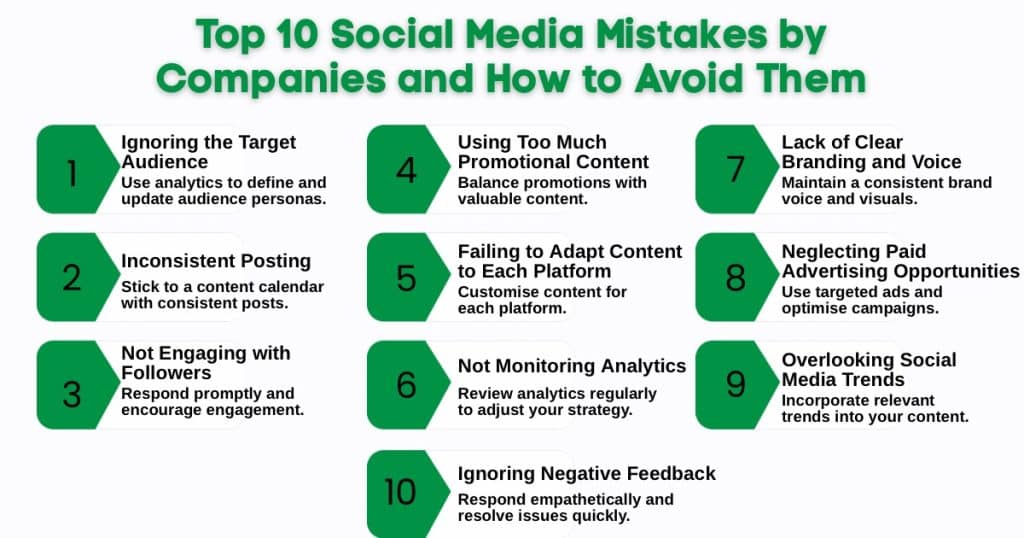
An Infographic on Top 10 Social Media Mistakes by Companies and How to Avoid Them
Social media is a powerful tool for businesses to engage their audience and drive growth. However, many companies fall into common marketing mistakes in social media that hinder their progress and reduce effectiveness, leading to missed opportunities and slow growth.
Below we’ll look at the 10 most common social media mistakes to avoid and also provide actionable solutions to help optimise your strategy and boost success.
Mistake 1: Ignoring the Target Audience
One of the most significant mistakes companies make on social media is failing to understand their audience. Without a clear understanding of their followers’ needs, preferences, and behaviours, businesses can end up creating irrelevant content that doesn’t resonate with their target market.
Solution: Define and Understand Your Target Audience
Use analytics tools to gather data on your audience’s demographics, interests, and behaviours, then create customer personas. Regularly update these insights to ensure your content stays relevant and engaging.
Mistake 2: Inconsistent Posting
Posting too frequently or too infrequently can cause problems. If you post too often, your followers might feel overwhelmed or annoyed. On the other hand, posting too infrequently can lead to your audience forgetting about your brand. Consistency is key to maintaining interest and engagement.
Solution: Create a Consistent Content Calendar
Develop a content calendar to plan and schedule posts regularly, aiming for 2-3 posts a week. Mix promotional, educational, and entertaining content to keep your audience engaged without overwhelming them.
Mistake 3: Not Engaging with Followers
Ignoring comments, messages, and feedback can severely damage your relationship with your followers. Social media is not just about broadcasting your message; it’s about building a community. If you neglect to engage with your audience, they may feel overlooked and lose interest.
Solution: Actively Engage with Your Audience
Respond promptly to comments and messages. Use polls, surveys, and calls to action to spark conversations, and encourage user-generated content to create a more engaged community.
Mistake 4: Using Too Much Promotional Content
Overloading your social media feeds with sales-focused posts can quickly turn followers away. When every post pushes a product or service, audiences stop engaging because they do not see enough value in staying connected. This often results in declining reach and weaker long-term brand trust.
Solution: Balance Promotional And Value-Driven Content
Balance promotional posts with educational, entertaining, or inspiring content. Share industry tips, customer stories, behind-the-scenes updates, or light, relatable posts to keep your content helpful, engaging, and less sales-driven.
Mistake 5: Failing To Adapt Content To Each Platform
Using the same content across every platform is a common mistake that often leads to lower engagement. Each social media channel has its own audience expectations, formats, and content styles. Ignoring these differences can make your brand feel out of place or disconnected.
Solution: Customise Content For Each Platform
Tailor your content to suit each platform’s format and audience. Adjust your messaging based on whether the platform is more professional or casual, and use features like stories, live sessions, and hashtags to improve online visibility and interaction.
Mistake 6: Not Monitoring Analytics
Posting content without tracking performance makes it difficult to understand what is actually working. Without clear insights, businesses risk repeating ineffective strategies and missing growth opportunities. Over time, this leads to wasted effort and slower results.
Solution: Regularly Review Social Media Analytics
Use analytics tools to track engagement, reach, and conversions. Monitor key metrics such as impressions, click-through rates, and audience behaviour, then refine your content strategy based on these insights.
Mistake 7: Overlooking Social Media Trends
Ignoring popular trends, hashtags, or conversations can make your brand appear outdated. Audiences expect brands to stay current, and missing timely trends can reduce visibility and engagement. Over time, this can create a disconnect between your brand and your audience.
Solution: Stay Updated And Incorporate Trends
Regularly monitor trending topics, hashtags, and platform-specific challenges. Join relevant conversations creatively while ensuring the trends align with your brand voice so your content stays authentic and engaging.
Mistake 8: Ignoring Negative Feedback
Failing to address negative comments or complaints can quickly damage your brand’s reputation. When customers feel unheard, issues can escalate and spread publicly. This often leads to loss of trust and credibility.
Solution: Address Negative Feedback Constructively
Acknowledge feedback promptly and respond with empathy and professionalism. Offer clear solutions where possible, and take conversations offline when needed to resolve issues privately and effectively.
Mistake 9: Lack Of Clear Branding And Voice
Inconsistent messaging and an unclear brand voice can confuse followers. When your tone and visuals change frequently, it becomes harder for audiences to recognise and remember your brand. This weakens overall brand identity.
Solution: Develop And Maintain A Strong Brand Voice
Define a clear brand voice and apply it consistently across all content. Maintain visual consistency with colours, fonts, and design, and create simple messaging guidelines to keep communication aligned.
Mistake 10: Neglecting Paid Advertising Opportunities
Relying only on organic reach can limit growth as social media algorithms continue to evolve. Many companies miss valuable opportunities by not investing in paid promotions. This often results in slower reach and reduced visibility.
Solution: Leverage Paid Advertising Strategically
Use targeted social media ads to expand reach and drive conversions. Test different creatives and audiences through A/B testing, then refine campaigns based on performance to maximise return on investment.
Also read our blog on how to build strong brand awareness to boost your marketing strategies in 2026.
Which Brands Made Major Social Media Mistakes And Why?
Even well-known brands can make costly social media errors when context, tone, or audience sentiment is overlooked. A single post or campaign can quickly shift public perception and spark backlash.
These examples highlight how common social media mistakes by companies play out in real situations and what businesses should do differently.
1. Pepsi And The Kendall Jenner Ad
Pepsi faced intense criticism after releasing an advert featuring Kendall Jenner that appeared to reference social justice movements. The campaign was widely perceived as tone-deaf and was withdrawn shortly after launch.
What Went Wrong?
- Used a sensitive social issue for commercial messaging.
- Failed to understand audience sentiment and cultural context.
- Prioritised brand visibility over authenticity and empathy.
What Should Be Done Instead?
- Avoid commercialising serious social or political issues.
- Conduct cultural sensitivity reviews before campaign launches.
- Focus on brand values that align naturally with messaging.
2. McDonald’s And The #McDStories Campaign
McDonald’s introduced the hashtag #McDStories to encourage customers to share positive experiences. Instead, users used it to highlight negative feedback, turning the campaign into a public relations issue.
What Went Wrong?
- Used an open-ended hashtag without anticipating criticism.
- Underestimated public willingness to share negative experiences.
- Lacked a clear moderation or response plan.
What Should Be Done Instead?
- Test campaign hashtags for potential risks before launch.
- Prepare response and moderation guidelines in advance.
- Use more guided prompts to help shape conversations.
3. Burger King UK And The International Women’s Day Tweet
Burger King UK faced backlash after posting “Women belong in the kitchen” to promote a scholarship initiative for female chefs. The intended message was overshadowed by the initial phrasing.
What Went Wrong?
- Relied on shock value without immediate context.
- Failed to consider headline-only consumption behaviour.
- Misjudged audience sensitivity around gender-based messaging.
What Should Be Done Instead?
- Lead with clarity before creativity or shock tactics.
- Test messaging across diverse audience perspectives.
- Ensure intent is clear within the first line of communication.
These examples show that even established brands can stumble when context, clarity, and audience sentiment are overlooked, reinforcing the need for thoughtful planning and responsible decision-making in social media marketing.
Want to turn smarter social media decisions into real results? Read our guide on How to Effectively Allocate Your Social Media Budget to maximise impact and avoid wasted spend.
Conclusion
Avoiding common social media mistakes by companies is not about being perfect but about being intentional and open to improvement. Small changes, such as refining your approach, staying consistent, and learning from performance data, can significantly strengthen your social media presence over time.
A thoughtful social media marketing approach should support your overall marketing strategy and adapt to each social media platform. By following best practices and creating meaningful social media content, brands can build visibility, trust, and long-term growth without not focusing on audience social media mistake.
Frequently Asked Questions
What is the right way to avoiding social media marketing mistakes?
The right approach starts with understanding common social media marketing mistakes to avoid and setting clear goals early. A focused social media strategy helps guide decisions, keeps messaging consistent, and ensures every post supports measurable outcomes rather than random activity.
What mistakes should businesses avoid on social media?
Businesses should avoid social media marketing mistakes like inconsistent posting, copying competitors blindly, or assuming one message fits different audiences. Brands that use social media without adapting tone or content often struggle to connect meaningfully with the people they want to reach.
How do social media mistakes affect my marketing results?
Social media mistakes directly impact social media performance by reducing engagement, reach, and conversions. When content lacks direction or insight, marketing campaigns become less effective, making it harder to learn what works and achieve better results consistently.
What social media practices should I stop to improve my brand image online?
To protect brand awareness and build brand loyalty, stop ignoring feedback, overpromoting products, or posting without purpose. These habits can push potential customers away across social platforms and make your brand appear disconnected or untrustworthy.
How can I prevent making costly errors in my social media marketing campaigns?
A strong social media marketing strategy backed by a clear strategy helps small businesses avoid costly errors. Regular reviews, testing content, and not focusing on audience social media mistake ensure campaigns stay aligned with goals and deliver consistent value over time.