Key Highlights
- Blogging is a powerful way to boost your search engine optimisation and improve your online presence.
- It helps you drive organic traffic to your website, attracting more potential customers without paying for ads.
- By sharing valuable content, you can build trust and establish your brand as an authority in your industry.
- A business blog is an effective tool for increasing brand awareness and standing out from the competition.
- Ultimately, a consistent blogging strategy supports long-term business growth by converting visitors into loyal customers.
Launching a business website and not seeing the website traffic you hoped for can feel frustrating and discouraging. Many businesses struggle to stand out online and attract the right audience.
To overcome that challenge, you need a reliable way to build visibility, earn trust, and turn visitors into customers rather than watching them leave without taking action.
In this blog, you will learn how business blogging strengthens your online presence, connects with your audience, and becomes a powerful engine for long term growth and engagement.
What Are The Top 15 Benefits Of Blogging For Businesses In India?
Blogging is one of the most powerful ways for businesses in India to increase online visibility, attract website visitors, build trust, and grow sustainably. It helps brands compete digitally, improve search engine optimization, and connect with audiences more meaningfully. Below are the fifteen most impactful advantages for business growth.
1. Turns Your Blog Into a Conversion Powerhouse
Blogging isn’t just about attracting visitors; it’s about turning those visitors into paying customers. By offering solutions to real customer problems, your blog acts as a tool that nurtures leads. Through thoughtful content, clear calls to action (CTAs), and strategic offers, your blog becomes a long-term driver of conversions, turning readers into loyal customers.
In India: With consumers becoming more discerning, a well-crafted blog can address their specific needs, helping them make informed decisions. This kind of engagement is essential in a market where personalized solutions matter.
2. Creates Long-Term Value for Small Businesses
In the world of digital marketing, few tools offer the lasting value that blogging can. Once a blog post is published, it remains online, continuing to attract traffic, build trust, and generate leads long after. For small businesses in India, this is especially beneficial, as it provides a cost-effective, long-term strategy for growth without relying on recurring ad spend.
In India, small businesses, especially in smaller cities, can use blogging to gain visibility without breaking the bank. It’s an investment that continues to give back as your content ranks and draws in more organic traffic over time.
3. Educates Your Audience and Builds Authority
Blogs allow you to educate your customers in ways that traditional ads can’t. Whether it’s tutorials, how-to guides, or industry insights, your blog becomes an expert resource that helps customers understand your products or services better. By offering valuable, solution-oriented content, you position your brand as a knowledgeable authority, gaining the trust of your audience.
In India, with an increasing number of internet users looking for answers to their questions online, educating them through blogs helps you stand out as an authority in your field. It fosters trust, something that is crucial when consumers have numerous choices.
4. Converts Traffic into Leads, Effortlessly
Blogging is an inbound marketing strategy that works. By providing your audience with valuable, engaging content, you naturally guide them towards taking action, whether it’s signing up for your newsletter, downloading a free resource, or making an inquiry. With strategic CTAs, your blog becomes a conversion engine that nurtures leads without being pushy.
In India, with the country’s diverse demographics, businesses can use blogs to nurture leads at every stage of the funnel. From providing initial value to final purchase decisions, blogs cater to all types of customer journeys in a scalable manner.
5. Boosts Your SEO Efforts
Every blog post you publish is a new indexed page, increasing your website’s visibility on search engines. By focusing on the keywords and questions your target audience is searching for, blogging optimizes your site’s SEO, helping you rank higher in search results and attract organic traffic.
In India, with more and more users accessing the internet via mobile devices, search engines like Google are the primary way people find businesses. By blogging consistently, businesses in India can improve their search rankings, ensuring they are visible to users searching for relevant products or services.
6. Generates Traffic Without the Need for Ads
While paid advertising has its place, blogging gives businesses the ability to generate high-quality traffic without constantly opening their wallet. By offering value-driven content, blogs attract organic traffic that grows over time, creating a steady stream of new visitors to your site.
In India, with rising costs of digital advertising, businesses, especially those in tier-2 and tier-3 cities, can use blogging to generate valuable traffic at a fraction of the cost of paid ads. Blogging enables businesses to reach their target market organically, whether it’s a local neighbourhood or a nationwide audience.
7. Works for You 24/7
Unlike social media posts or ads that have a short shelf life, blogs continue working for you long after they’ve been published. They draw in traffic, generate leads, and build credibility around the clock, allowing your business to scale even while you sleep.
In India, as businesses expand their reach across different time zones in the country, blogs ensure that your business is visible to new customers 24/7, especially those who might be browsing after hours.
8. Builds Trust and Establishes Credibility
Every time you share valuable, insightful content through your blog, you earn the trust of your audience. Over time, consistent blogging showcases your expertise, making your brand a trusted resource. When customers trust your brand, they are more likely to buy from you and more likely to return.
In India: In a market with a mix of both traditional and online shopping habits, trust is a key factor for Indian consumers. Blogs provide transparency and valuable insights that help build trust, particularly when it comes to local businesses looking to engage a wider audience.
9. Gives Your Brand a Permanent Online Presence
Blogs are evergreen. Once you publish a post, it stays on your website, continually adding value and reinforcing your brand’s authority. This is unlike fleeting social media posts that disappear after a while. Your blog serves as a central hub where visitors can explore everything your brand has to offer.
In India, for businesses expanding into diverse markets, especially in different states with varying consumer behavior, having a centralized blog can be a valuable asset in connecting with regional audiences, offering content that resonates with their unique needs.
10. Supercharges Your Social Media Strategy
Blogging and social media go hand-in-hand. Blogs provide endless content for your social media channels. Whether you’re turning a post into an infographic, creating social media snippets, or sharing quotes, your blog can fuel your social media content for weeks.
In India, Social media is a powerful tool in India, and blogging provides consistent, high-quality content that fuels social media posts. Whether it’s Facebook, Instagram, or LinkedIn, your blog content amplifies your reach and engagement across platforms.
11. Fosters Strong Client Relationships
Blogs help build relationships with existing customers by offering them content that adds value. Whether it’s sharing tips, case studies, or behind-the-scenes stories, your blog keeps clients engaged, increasing loyalty and customer retention.
In India, Indian businesses, particularly those in the service and retail industries, can leverage blogging to connect with their existing customer base, making them feel valued and more likely to return.
12. Helps Differentiate Your Brand from Competitors
Blogging allows you to share your unique perspective, experiences, and insights, setting you apart from competitors. Thought leadership and authenticity are key in differentiating your business in India’s crowded marketplace, and blogs are the ideal medium for showcasing these qualities.
In India: With the sheer volume of competition in sectors like e-commerce, real estate, and tech, blogging helps businesses stand out. It gives you the space to highlight your unique approach and showcase your brand personality.
13. Grows Your Email List with Captivating Content
Blogs act as lead magnets, offering valuable content in exchange for email sign-ups. With compelling offers or exclusive insights, your blog encourages readers to subscribe to your email list, which is an excellent resource for future marketing campaigns.
In India, as email marketing continues to be a powerful tool in India, blogging helps businesses grow their email lists, giving them a direct communication line with their audience for promotions, updates, and personalized content.
14. Maximizes Content Repurposing for Efficiency
A single blog post can be repurposed into various types of content, social media posts, podcasts, videos, or even email newsletters. This makes your content strategy more efficient and saves time while maintaining a consistent brand voice across different platforms.
In India, with diverse audiences spread across different regions, businesses in India can take their blog posts and repurpose them into formats that appeal to varying demographics, whether through regional language videos, infographics, or social media posts.
15. Boosts Organic Brand Promotion with Minimal Investment
Blogging is a cost-effective strategy for promoting your brand online. It allows you to showcase your products, services, and expertise without the need for hefty advertising budgets. By creating engaging and informative blog posts, businesses in India can gain organic exposure that helps build their reputation and visibility over time.
In India, with the Indian digital space becoming more competitive, blogging offers businesses a chance to boost brand awareness without breaking the bank on paid ads. It’s an investment that pays off with increased organic reach, long-term visibility, and loyal customers.
How Do You Start a Successful Business Blog for Your Brand?
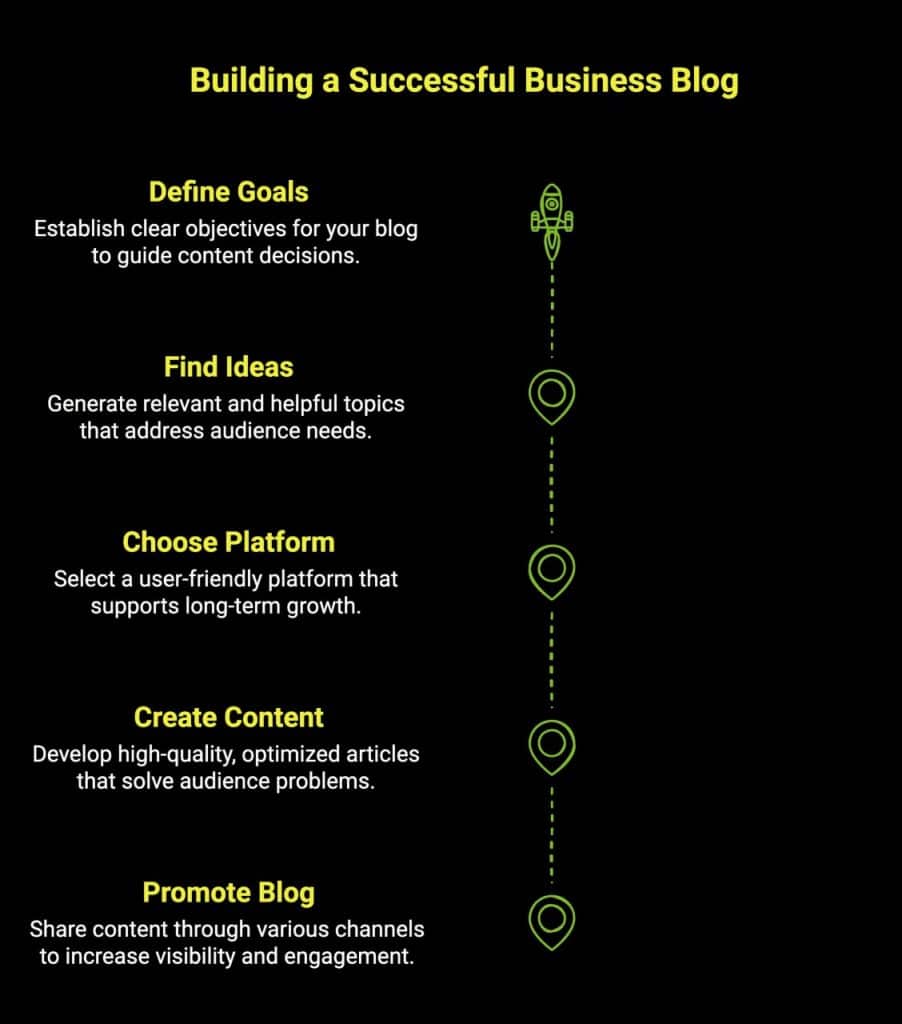
Infographic showcasing the steps to start a business blog
You can start a successful blog by setting clear goals, understanding your audience, and consistently creating helpful content that solves real problems. A thoughtful blog builds trust, increases website visitors, and strengthens your content strategy. Understanding the importance of blogging for business helps you see how powerful long-term content can be.
1. Define Your Blogging Goals and Audience
Begin by identifying the purpose of a blog for business and the outcomes that matter most. Decide whether you want more traffic, stronger lead generation, or improved brand authority. Understand who you are writing for and what common questions they have. Clear goals guide smart content decisions.
2. Find Engaging Business Blog Post Ideas
Think about what is a blog used for in business and choose topics that genuinely help your readers. Use keyword research and industry insights to create content that aligns with real needs. Writing about relevant questions and customer challenges builds trust and provides meaningful value.
3. Choose the Right Blogging Platform
Select a platform that supports long-term growth and an easy user experience. Beginner-friendly builders like Wix or Squarespace make setup simple, while WordPress offers more flexibility and control. Choose one that supports landing pages, analytics, and customisation as your content expands.
4. Create and Optimise High Quality Blog Content
Write helpful, well-structured articles that reflect your brand voice and solve problems your audience cares about. Naturally incorporate keywords and focus on clarity, accuracy, and strong formatting. Update older posts to improve search ranking and demonstrate how blogging helps your business deliver ongoing value.
5. Promote Your Blog for Maximum Reach
Share your content through social media, newsletters, and collaborations. Repurpose articles into short videos, graphics, and quotes to reach new audiences. Promotion increases visibility and proves why your business needs a blog by showing measurable engagement and stronger customer relationships.
Blogging success grows step by step. Choose your next step today and keep building new content that informs, connects, and inspires. Each post strengthens your brand and moves you closer to meaningful results.
What Are the Advantages and Disadvantages of Blogs in Business?
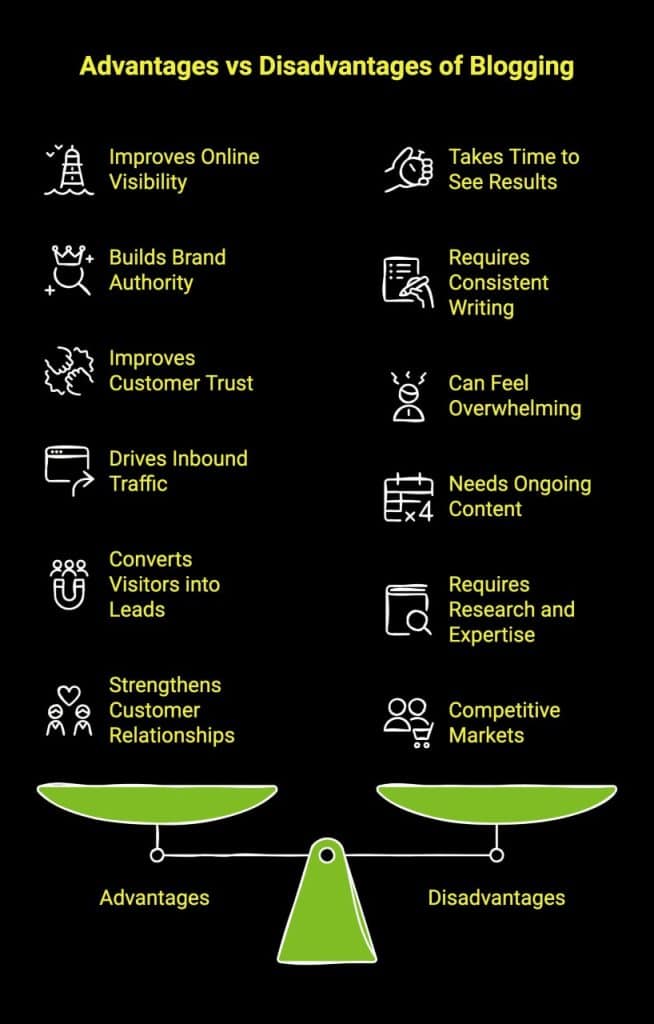
Infographic showcasing the advatages vs the disadvantages of blogging
Blogs can be a powerful asset for businesses by improving visibility, building trust, and nurturing customer relationships. At the same time, blogging requires consistency, time, and a thoughtful strategy to deliver results. Understanding both sides helps you plan smarter and set realistic expectations.
Below is a simple comparison table outlining the key advantages and disadvantages of business blogging to guide your decision-making.
| Advantages of Business Blogs | Disadvantages of Business Blogs |
| Helps improve online visibility and organic search performance | Takes time to see measurable results |
| Builds brand authority and credibility through valuable insights | Requires consistent writing and planning |
| Improves customer trust by educating and solving real problems | Can feel overwhelming without a strategy |
| Drives inbound traffic without high advertising costs | Needs ongoing content creation and updates |
| Converts visitors into leads through CTAs and resources | Requires research and expertise to maintain quality |
| Strengthens customer relationships through transparency | Can become ineffective if content lacks focus |
| Supports social media with reusable content | Competitive markets require strong differentiation |
A balanced approach makes blogging more effective. Focus on value, consistency, and meaningful engagement and the long-term rewards will follow.
Why Partner With Wild Creek Web Studio to Grow Your Digital Presence?
If you are ready to scale your content as business owners, strengthen your brand visibility, and drive meaningful business results, Wild Creek Web Studio can help you get there. With 18 years of experience and 100+ clients, we bring strategy, creativity, and execution together under one roof.
From corporate brands to SMEs and entrepreneurs, we provide full digital support grounded in transparency, promise delivery, and a client-first approach. Our team combines smart technology with human insight to build digital ecosystems that actually perform and grow with you.
Ready to take the next step toward sustainable digital success? Book your strategy session with Wild Creek Web Studio today and start building your next phase of growth with confidence
Conclusion
Blogging is a powerful growth tool that drives conversions, builds authority, and improves SEO while strengthening trust with your audience. Success comes from consistency, value, and clear purpose. Choose your next step today, whether it is planning topics, writing your first post, or improving existing content. Start now and watch your business grow.
Frequently Asked Questions
How Often Should A Business Publish Blog Posts?
A business should publish weekly or biweekly to improve search engine results, strengthen content marketing, deliver relevant content, match Google search intent, support marketing efforts, boost social media marketing, target relevant keywords, and follow industry trends.
Can Blogging Help A Business Build Stronger Relationships With Its Audience?
A business builds trust by sharing relevant content, improving search engine results, supporting content marketing, answering Google search questions, strengthening marketing efforts, extending social media marketing, using relevant keywords, and tracking industry trends.
What Is The 80/20 Rule For Blogging?
The 80/20 rule balances content marketing, where businesses publish relevant content that improves search engine results, satisfies Google search intent, supports marketing efforts, fuels social media marketing, uses relevant keywords, follows industry trends, and remains a great way.
What Is The Importance Of Blogging In The Field Of Business?
Blogging matters in business because it improves search engine results, strengthens content marketing, shares relevant content, answers Google searches, supports marketing efforts, enhances social media marketing, targets relevant keywords, follows industry trends, and remains a great way forward.
How Does Blogging Help Increase Business Sales?
Blogging increases sales by improving search engine results, guiding buyers with relevant content, powering content marketing, capturing Google search demand, supporting marketing efforts, amplifying social media marketing, ranking relevant keywords, tracking industry trends, and making it a great way.
Is Blogging Suitable For Small Businesses In India?
Blogging helps small businesses in India improve search engine results, use content marketing, share relevant content, reach Google search users, strengthen marketing efforts, support social media marketing, rank relevant keywords, follow industry trends, and remain a great way.
What Are The Best Business Blog Post Ideas For Beginners?
Beginners can start blogging with ideas that improve search engine results, support content marketing, deliver relevant content, answer Google search needs, strengthen marketing efforts, fuel social media marketing, include relevant keywords, and track industry trends.
Are There Examples Of Businesses That Have Succeeded With Blogging?
Many brands succeed by blogging, achieving search engine results, using content marketing, publishing relevant content, attracting Google search traffic, scaling marketing efforts, integrating social media marketing, and targeting relevant keywords.
What Are The Benefits Of Making A Blog For A Business?
A business blog improves search engine results, supports content marketing, shares relevant content, attracts Google search visitors, strengthens marketing efforts, boosts social media marketing, ranks relevant keywords, tracks industry trends, and remains a great way to build trust.