Wild Creek Web Studio
  • About Wild Creek
    • Awards
    • Case Studies
    • Portfolio
    • Testimonials
  • Services
    • SEO Services
    • Paid Marketing Services
    • Social Media Marketing
    • Consulting and Strategy
  • Resources
    • Blogs
    • Free SEO Tools
    • Digital Marketing Glossary
  • Contact
Banner image showcasing how to harness human intelligence in the age of AI

How to Harness Human Intelligence in the Age of AI?

In this Article

Toggle
  • Key Highlights
  • Why Do We Need to Rethink Intelligence in the Age of AI?
  • What Does It Really Mean to Harness Human Intelligence?
  • How AI Can Work With Us to Boost Our Intelligence, Not Replace It?
    • 1. Pattern Recognition Versus Understanding
    • 2. Mathematical Prediction Versus Emotional Reasoning
    • 3. The Responsibility Gap And Ethical Implications
  • How Does AI Simulate Human Intelligence, and Where Does It Struggle to Match Human Ability?
      • 1. AI tools for boosting productivity
      • 2. Redefining job roles through human-AI collaboration
      • 3. Building a superagency workforce with AI integration
  • What Real-World Example Proves the Value of Human + AI Partnership?
  • What Framework Can Leaders Use to Build Hybrid Intelligence Systems?
    • 1. Define, Explore, Distil, Decide, Reflect
    • 2. AI Supporting Possibilities, Humans Determining Direction
    • 3. Turning Data Into Meaning And Wisdom
  • What Is At Risk When We Stop Thinking For Ourselves?
    • 1. The Quiet Impact of AI on Our Creativity and Problem-Solving Skills
    • 2. The Gradual Loss of Intellectual Independence Through AI Dependency
    • 3. The Risk of Losing Brand Authenticity and Trust with Over-Automation
    • Partner With Wild Creek Web Studio To Combine Human Wisdom With AI Strength
  • Conclusion
  • Frequently Asked Questions
    • Does research show that AI works better as a complement to human intelligence than as a replacement?
    • What are the main ways individuals can use AI to unlock their full potential?
    • Could symbolic AI be key to future breakthroughs in human-like machine intelligence?
    • How can AI help humans enhance their intelligence and unlock their full potential?
    • What are some best practices for using AI to augment rather than replace human intelligence?
    • What are the four types of human intelligence?
    • Could symbolic AI unlock human-like intelligence?
    • What is the impact of AI on human cognitive processes and consciousness?
    • What bioethical concerns arise as AI continues to impact human society?

Key Highlights

  • The rise of AI technology, including generative AI, encourages us to rethink the value of human intelligence.
  • Harnessing human intelligence means focusing on skills AI cannot replicate, like creativity and emotional reasoning.
  • A partnership between humans and AI leads to better outcomes than relying on either one alone.
  • Human agency is critical for guiding AI development and ensuring ethical outcomes.
  • Businesses can build a stronger workforce by integrating AI to support human workers, not replace them.

While AI can provide quick answers, many wonder if it will cause us to lose the ability to think critically and creatively. How do we ensure we use AI to enhance, rather than replace, our thinking?

We are living in a time where artificial intelligence and machine learning are transforming how we work, learn, and make decisions. As these technologies continue to evolve, there’s growing concern that relying on fast, automated solutions could weaken our capacity for deep, creative thought.

The real worry isn’t that AI will replace human intelligence, but that we may stop exercising our ability to reason and innovate. This blog explores how we can use AI as a supportive partner, one that strengthens critical thinking, problem-solving, and meaningful human insight.

Why Do We Need to Rethink Intelligence in the Age of AI?

As AI takes over repetitive tasks, it becomes more crucial to recognize what makes human intelligence unique and why it still matters. While machines excel at handling analytical and data-heavy tasks, it’s human qualities like empathy, intuition, and ethical judgment that drive meaningful decision-making.

For example, in healthcare, AI can analyze medical data to identify trends and predict outcomes, but it’s the human element that ensures those insights are applied in ways that consider the patient’s emotional well-being and personal values

According to ResearchGate, studies show that when humans and AI work together, problem-solving and innovation improve instead of getting weaker.

Here’s what rethinking intelligence truly requires:

  • Emphasising creativity that goes beyond pattern-based logic
  • Strengthening emotional understanding and empathy in human interactions
  • Developing advanced critical thinking for complex, ambiguous challenges
  • Cultivating ethical judgment and decision-making beyond data
  • Building adaptability and resilience in a constantly evolving world

By redefining intelligence through a human lens, we position ourselves not to compete with AI, but to build a future where technology elevates human potential rather than replaces it.

What Does It Really Mean to Harness Human Intelligence?

What happens when AI starts to outpace human judgment? To ensure that artificial intelligence enhances our lives, rather than replacing human insight, we must rely on our uniquely human strengths, values, ethics, intuition, and emotional depth, to guide technology toward responsible and meaningful outcomes.

Here’s how harnessing human intelligence truly works:

  • Using emotional awareness and empathy to shape decisions and collaboration
  • Applying ethical reasoning where data alone cannot determine the right path
  • Exercising strategic and big-picture thinking beyond algorithmic limits
  • Combining creativity and imagination to innovate beyond existing patterns
  • Leveraging AI to remove routine tasks and free time for higher-level work

Ultimately, true progress comes from leading technology with human intelligence, ensuring that advancements are guided by purpose and values, not just efficiency.

How AI Can Work With Us to Boost Our Intelligence, Not Replace It?
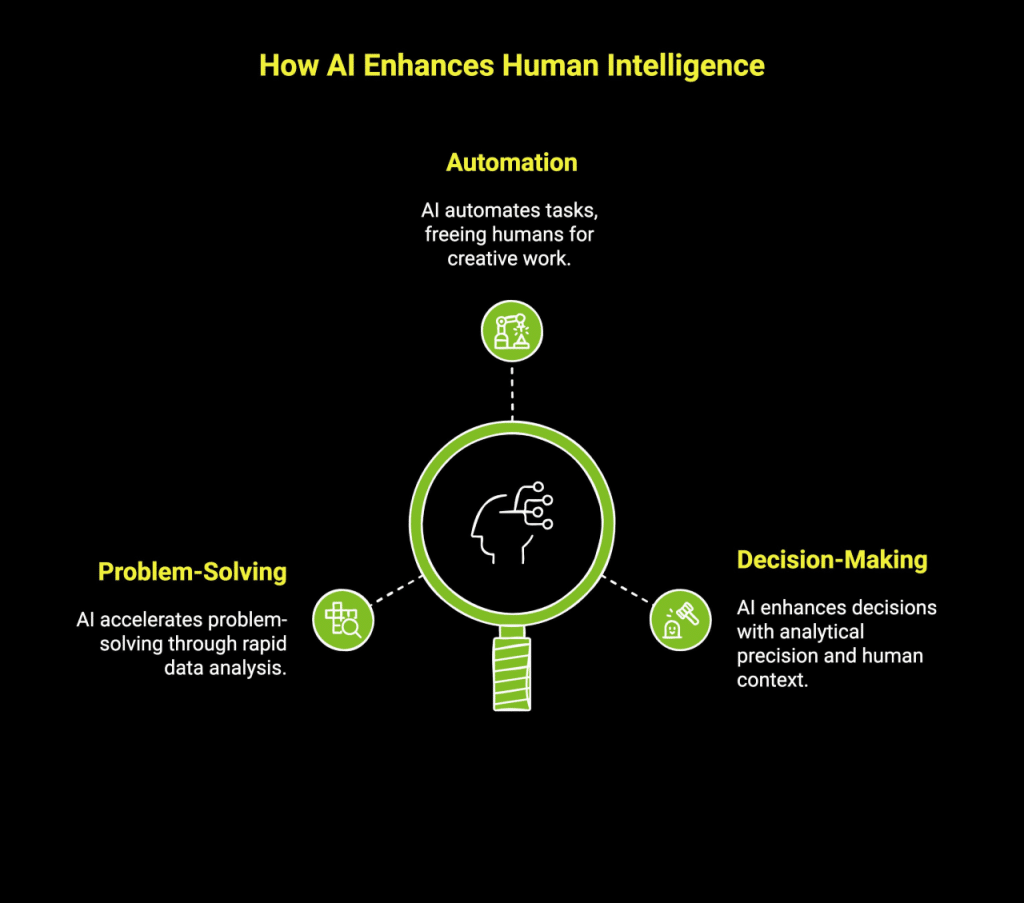
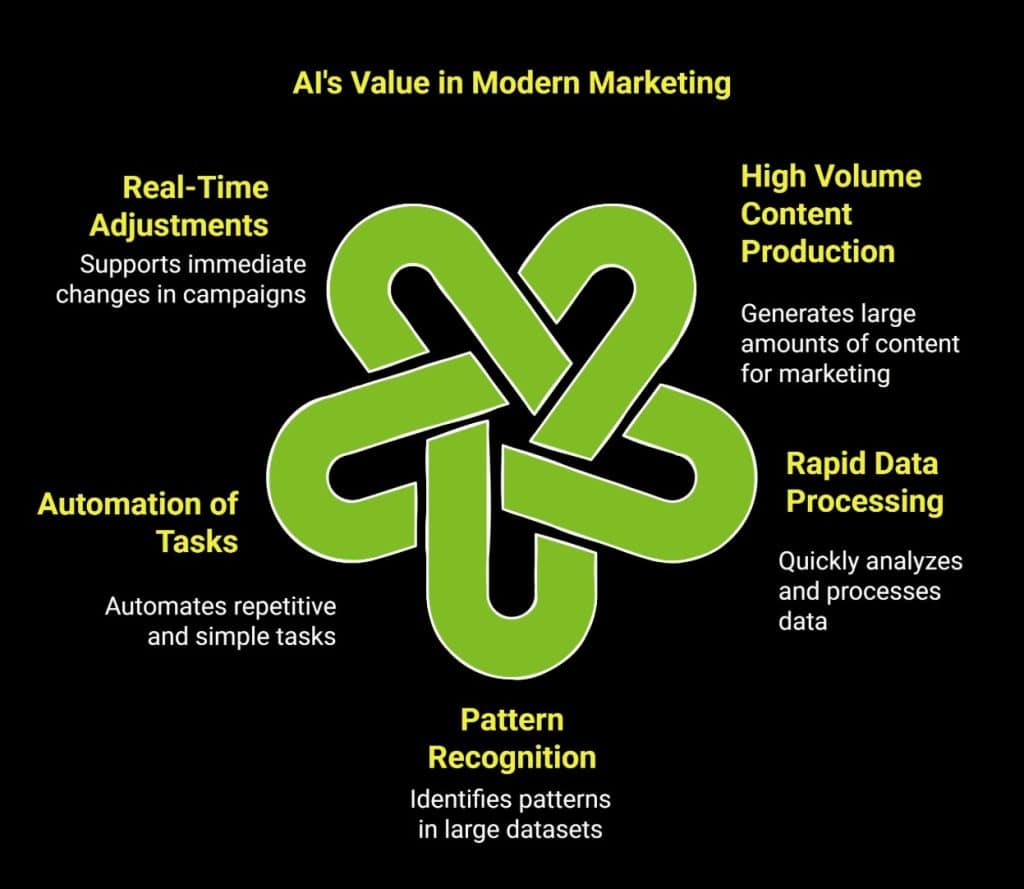
Infographic showcasing how AI enhances human intelligence

Infographic showcasing how AI enhances human intelligence

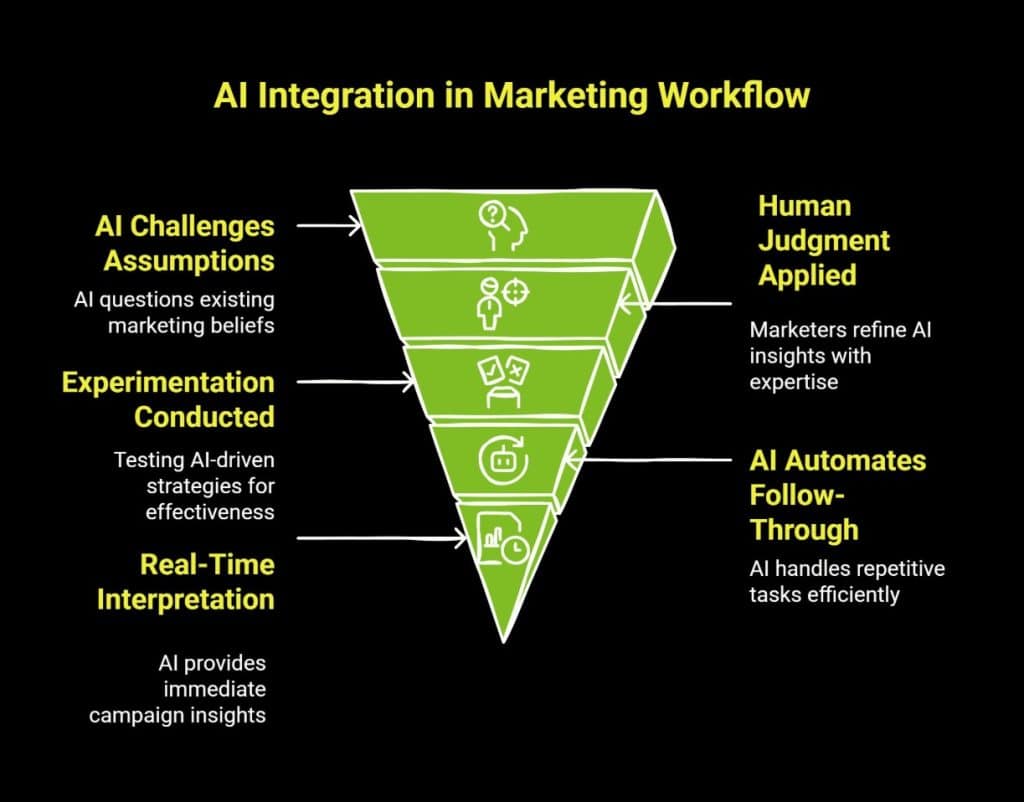
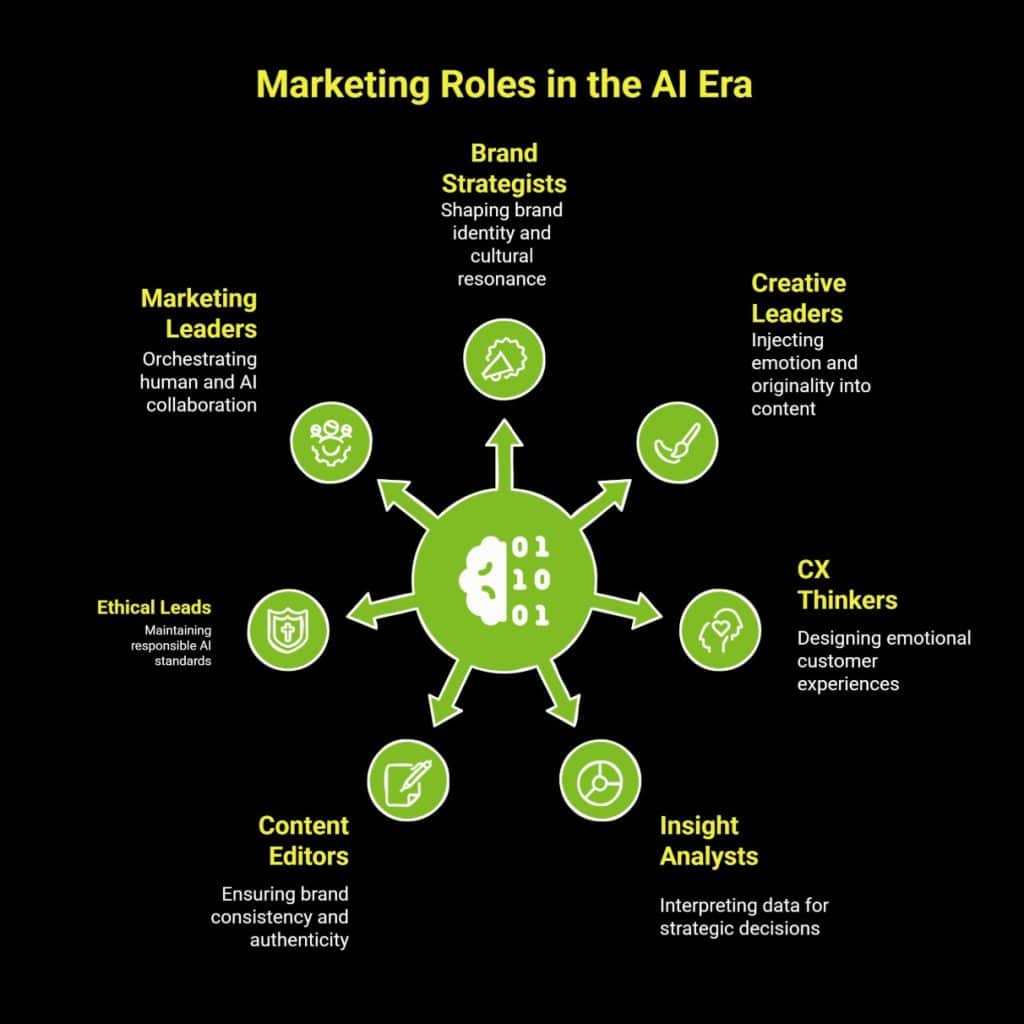
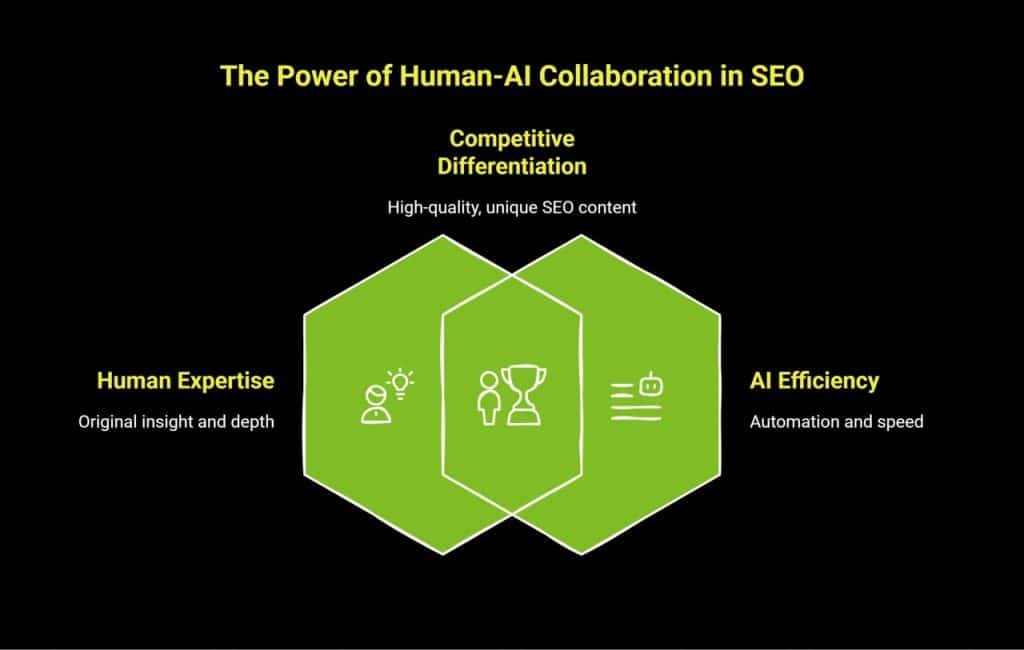
Artificial intelligence holds tremendous potential to elevate human capability rather than diminish it. Instead of viewing AI as a rival, seeing it as a collaborative partner allows us to amplify creativity, accelerate problem-solving, and focus on high-value thinking.

According to McKinsey & Company, future workplaces will rely on teams that combine human skills with AI efficiency, making creativity and critical thinking more valuable than ever.

Here’s how AI can truly enhance human intelligence:

1. Pattern Recognition Versus Understanding

AI excels at processing massive amounts of information quickly, spotting patterns we would never detect alone. Yet real intelligence requires more than identification. Human understanding brings context, interpretation, and emotional nuance that machines cannot replicate.

When used thoughtfully, AI has the potential to enhance human intelligence. By combining AI’s analytical power with our ability to find meaning and context, we transform raw data into valuable insights and wisdom that lead to smarter, more informed decisions.

2. Mathematical Prediction Versus Emotional Reasoning

Predictive algorithms can calculate probabilities and optimise decisions with remarkable precision, especially in fields like forecasting, diagnostics, and logistics. But human life is not governed only by numbers. Emotional reasoning allows us to interpret tone, intentions, social cues, and ethical dimensions.

This balance represents AI that enhances human intelligence for higher tasks, rather than replacing human judgment. When predictive accuracy meets emotional intelligence, decision-making becomes more compassionate, inclusive, and aligned with real human needs.

3. The Responsibility Gap And Ethical Implications

As AI systems become more autonomous, the risk of bias, harm, and misalignment increases. Algorithms cannot be held morally accountable, which creates a responsibility gap when things go wrong.

Human oversight is essential to apply judgment, ensure fairness, and embed ethical values into technological systems.

By combining AI’s computational strengths with human insight, empathy, and ethical judgment, we create a powerful partnership. Human oversight ensures that AI’s capabilities are applied responsibly, guiding its use to make decisions that are not only intelligent but also compassionate and ethically sound.

This balance leads to progress that is both innovative and deeply aligned with human values.

How Does AI Simulate Human Intelligence, and Where Does It Struggle to Match Human Ability?
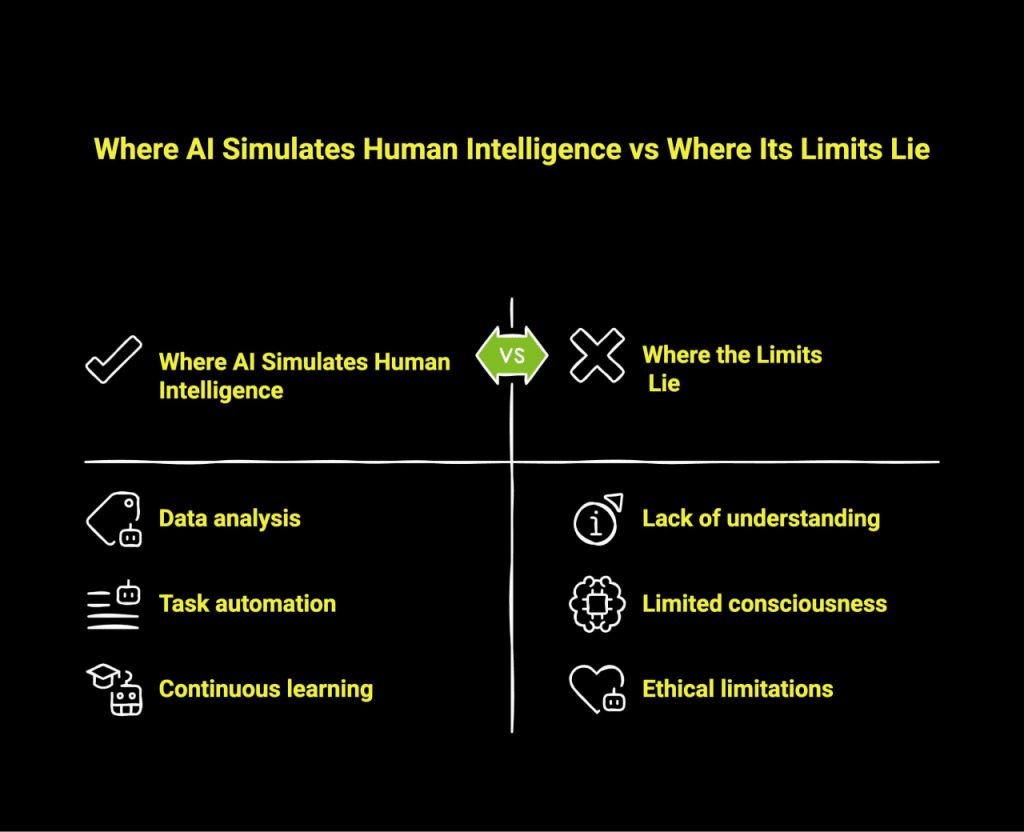
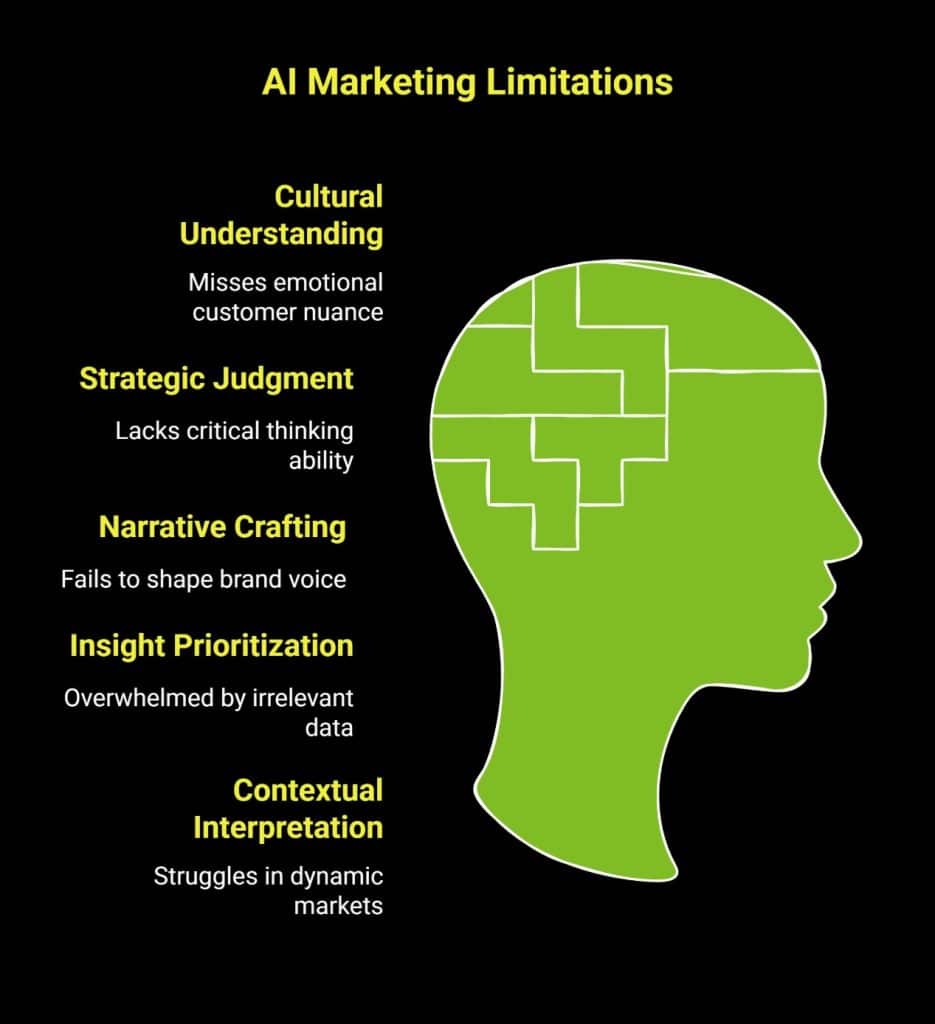
Infographic showcasing where AI simulates human intelligence vs where it lacks

Infographic showcasing where AI simulates human intelligence vs where it lacks

Artificial intelligence can mirror certain aspects of human thinking by analysing data, recognising patterns, and learning from experience. It performs specialised tasks with speed and accuracy, helping us work smarter and faster. Yet its capabilities remain fundamentally different from human cognition, which is rooted in consciousness, intuition, emotional awareness, human language, and lived experience. AI can generate answers, but it does not understand meaning, intention, or context the way humans do.

Here’s where simulation meets real limitations:

1. AI tools for boosting productivity

AI is exceptionally effective at handling repetitive, time-consuming tasks that drain human energy. Automating processes such as scheduling, data sorting, document drafting, and research allows people to focus on creativity, strategy, and human-centric problem-solving.

However, AI lacks judgment and cannot determine which tasks should be prioritised or why decisions matter in real-world contexts. Humans must still review, validate, and apply insight responsibly.

2. Redefining job roles through human-AI collaboration

Rather than replacing jobs outright, AI is reshaping them into more dynamic and rewarding roles. When humans and AI collaborate, analytical power combines with creativity and ethical reasoning. Professionals use AI insights to make smarter decisions and develop innovative solutions.

Still, AI cannot lead complex decision-making independently, especially where nuance, empathy, or long-term consequences matter. Human oversight remains essential to prevent errors, bias, and misaligned incentives.

3. Building a superagency workforce with AI integration

A superagency workforce merges autonomous AI capabilities with human intention and values. AI agents can independently manage workflows and analyse complex data, while humans guide meaning, responsibility, and real-world impact.

While AI’s capabilities continue to grow, it’s clear that it will always be human intelligence, our values, and our purpose that will guide its use for the betterment of society.

What Real-World Example Proves the Value of Human + AI Partnership?

From customer service to strategic decision-making, the best results happen when AI complements human creativity and empathy. Let’s look at some real-world examples that prove this partnership works.

Real-world use cases clearly show that AI technology thrives when it enhances human intelligence. In this partnership model, AI handles the data-heavy tasks, while humans bring in strategic thinking and emotional insight. For example, in customer service, AI-powered chatbots provide quick, 24/7 responses to common inquiries, ensuring customers get immediate support.

For e.g. Airbnb. During the global travel shutdowns, the company faced enormous uncertainty. While AI forecasting models predicted that Airbnb would collapse, it was the leadership’s human judgment and creativity that drove them to pivot.

By focusing on the emotional needs of their customers and embracing innovation, they shifted their strategy to offer long-term stays, creating a new market segment. This decision, driven by human insight, proved far more effective than relying solely on predictive algorithms.

How can your organization embrace human insight to drive meaningful change and connect with people on a deeper level? By focusing on the emotional and personal needs of your audience, your organization can create strategies that go beyond data and analytics.

Embracing human insight allows you to build authentic connections, fostering deeper, more lasting relationships that truly resonate with those you aim to serve.

What Framework Can Leaders Use to Build Hybrid Intelligence Systems?

Building effective hybrid intelligence requires more than adopting AI tools. Leaders need a structured framework that aligns technology with human purpose. When thoughtfully implemented, AI can amplify human capability, improve decision quality, and strengthen organisational culture.

Here’s how leaders can shape powerful human–AI ecosystems:

1. Define, Explore, Distil, Decide, Reflect

This five-stage framework helps leaders integrate AI with clarity and intent. Defining the problem ensures everyone understands the true objective. Exploring options uncovers technological and human possibilities. Distilling information simplifies complexity into actionable insight. Deciding turns analysis into direction. Reflecting enables continuous learning and improvement. This cycle builds resilient teams who adapt and evolve responsibly.

2. AI Supporting Possibilities, Humans Determining Direction

AI can surface insights, perform large-scale data analysis, and automate demanding tasks. However, humans must guide vision, interpret context, and apply ethical reasoning. By allowing machines to expand what is possible and people to choose what is meaningful, organisations balance efficiency with empathy. This partnership ensures progress is aligned with long-term values and real-world impact.

3. Turning Data Into Meaning And Wisdom

AI can process information faster than any human, but only people can transform data into purposeful decisions. Human intelligence adds emotional context, moral judgment, and lived experience. When teams combine algorithmic accuracy with human understanding, information becomes insight, and insight becomes wisdom that fuels strategy and innovation.

What Is At Risk When We Stop Thinking For Ourselves?
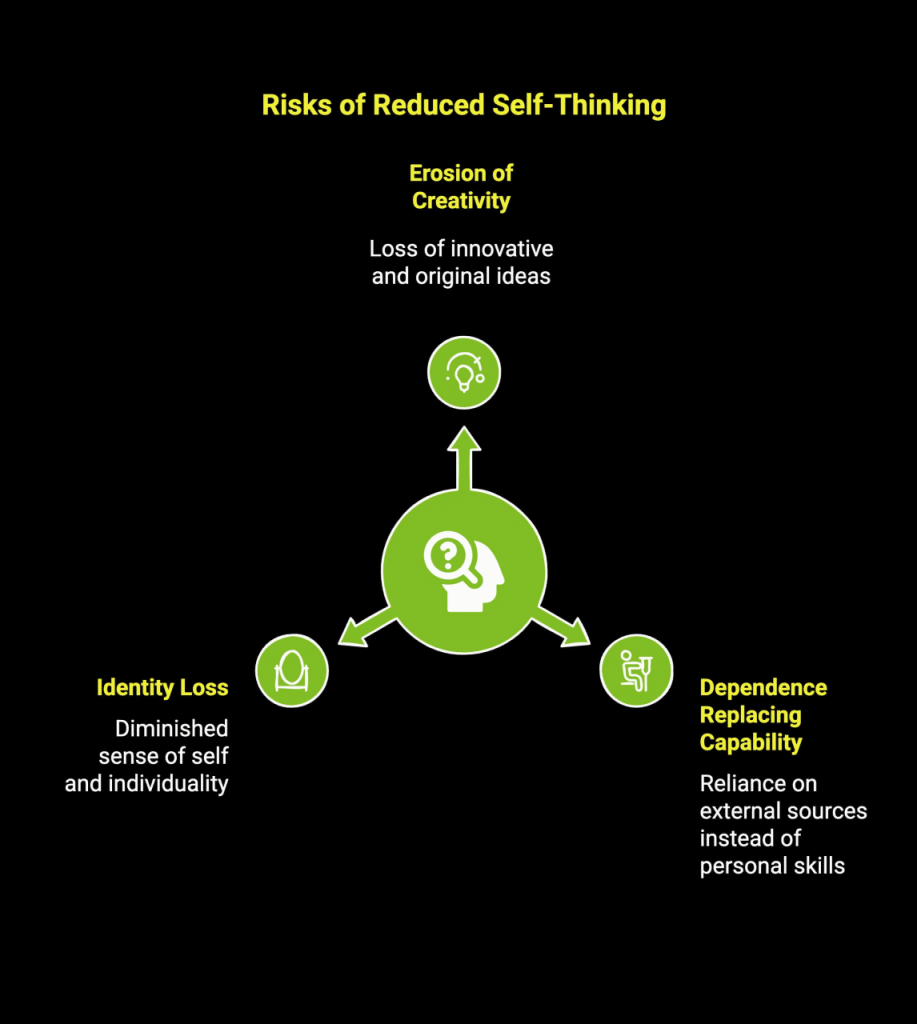
Infographic showcasing risks of reduced self thinking 1

Infographic showcasing risks of reduced self thinking 1

AI is a powerful tool, but depending on it too heavily can weaken the very capabilities that make humans exceptional. When we outsource thinking to technology, we risk losing our ability to question, analyse, and create. Critical thinking and creativity require active practice, and without intentional effort, they fade.

To protect our cognitive strength, we must stay engaged, curious, and mentally self-reliant, especially as the impact of AI expands across industries and daily life.

Here’s what’s truly at stake in various ways:

1. The Quiet Impact of AI on Our Creativity and Problem-Solving Skills

When AI applications and large language models perform tasks that demand analysis and imagination, it becomes tempting to let machines solve everything for us. But creativity is built through struggle, reflection, and experimentation. If we stop challenging our minds, we lose the ability to generate original ideas and solve problems independently.

Protecting creativity means treating AI as support rather than a replacement for human thought, a principle well understood in computer science research.

2. The Gradual Loss of Intellectual Independence Through AI Dependency

Over-reliance on AI can gradually diminish personal agency. If we always turn to algorithms for answers and decisions, our skills to reason, evaluate, and judge weaken. The consequence is not immediate but cumulative: we may become passive followers instead of active thinkers.

Balancing digital convenience with human reasoning ensures we maintain mastery over our intelligence and avoid letting technology dictate the direction of progress.

3. The Risk of Losing Brand Authenticity and Trust with Over-Automation

Brands that hand over too much control to automation risk losing authenticity. Customers connect with values, personality, and empathy, not generic automated outputs. Without thoughtful oversight, issues like algorithmic bias or privacy violations can erode trust.

Successful companies combine AI efficiency with human judgment, creating genuine experiences instead of robotic responses and preserving brand identity in a world increasingly shaped by machine-generated content.

As a piece of advice, always remember that while AI can enhance efficiency, it’s crucial to keep the human element alive in creativity, decision-making, and brand relationships to ensure long-term success and authenticity.

Partner With Wild Creek Web Studio To Combine Human Wisdom With AI Strength

The future belongs to leaders who use AI to enhance human intelligence, not replace it. Your brand needs more than automated output. It needs purpose, empathy, creativity, and strategic thinking. That is where Wild Creek Web Studio can help.

We design digital strategies that respect the power of human insight while using AI to expand possibilities. For nearly two decades, we have supported brands across industries with thoughtful strategy, ethical decision making, and marketing built on real human connection.

Why businesses choose Wild Creek Web Studio:

  • Human-centered strategy supported by the right digital tools
  • Messaging and positioning that sound authentic and build trust
  • Creative and analytical balance that produces real results
  • Leadership partnership, not vendor interaction

Contact us today to lead with intelligence, clarity, and meaning. We would love to support your growth journey.

Conclusion

In today’s rapidly evolving landscape, harnessing human intelligence in the age of AI is more crucial than ever. By recognizing the unique strengths of human cognition, such as emotional reasoning and ethical considerations, we can create a harmonious relationship between humans and machines. This collaboration not only enhances productivity but also fosters creativity and critical thinking. As we move forward, it’s essential to embrace technology while maintaining our own intellectual and ethical responsibilities. So, let’s not lose sight of our potential; instead, let’s redefine what it means to be intelligent in this new era.

Frequently Asked Questions

Does research show that AI works better as a complement to human intelligence than as a replacement?

Yes, real-world examples consistently show that a hybrid approach is most effective. The use of AI in fields like customer service and education demonstrates that an AI system excels when it complements human intelligence.

What are the main ways individuals can use AI to unlock their full potential?

Individuals can use an AI tool like generative AI to automate tedious cognitive tasks, freeing up time to focus on high-level thinking and creative projects. This allows you to enhance your human capabilities by learning new skills through online courses.

Could symbolic AI be key to future breakthroughs in human-like machine intelligence?

The development of the technology is ongoing, and future breakthroughs might involve methods similar to symbolic AI, which focuses on abstract reasoning and critical thinking, potentially bringing us closer to human-like machine intelligence.

How can AI help humans enhance their intelligence and unlock their full potential?

AI enhances human intelligence by automating routine processing and enabling deeper reasoning through advanced natural language understanding. This frees mental capacity for creativity and strategy, helping individuals develop sharper insight, solve complex problems, and unlock a stronger level of human potential.

What are some best practices for using AI to augment rather than replace human intelligence?

Use AI as a collaborative partner rather than an answer machine. Critically evaluate suggestions, apply judgment, question assumptions, and integrate insights from natural language processing with real-world experience to strengthen reasoning while avoiding passive dependence or diminished independent thinking.

What are the four types of human intelligence?

The four types include analytical, creative, practical, and emotional intelligence. Together, they enable reasoning, innovation, real-world action, and empathy. These multidimensional strengths remain beyond the full capabilities of artificial general intelligence, which still lacks human intuition, morality, and lived contextual understanding.

Could symbolic AI unlock human-like intelligence?

Symbolic AI supports structured reasoning and explainable logic, potentially advancing machine cognition. However, achieving human-like intelligence requires combining symbolic models with perception, intuition, emotional depth, and self-awareness, which current systems, even progressing toward artificial general intelligence, have not yet matched.

What is the impact of AI on human cognitive processes and consciousness?

AI influences cognition by reshaping how we process information, solve problems, and make decisions. While automation enhances efficiency, reliance can weaken memory and independent reasoning. Consciousness remains uniquely human, driven by subjective experience, emotion, and self-awareness beyond algorithmic capability.

What bioethical concerns arise as AI continues to impact human society?

Bioethical concerns include privacy, algorithmic bias, autonomy, and unequal access to technology. There are risks of exploitation, surveillance, and diminished human agency. Ensuring transparency, accountability, fairness, and ethical oversight is essential to protect dignity and societal wellbeing.
0 comments
Social media marketing do d and dont s banner

What are the 20 Social Media Marketing Do’s and Donts?

In this Article

Toggle
  • Key Highlights
  • What Should Indian Brands Do to Succeed in Social Media Marketing?
    • 1. Define Clear Social Media Goals for Your Business
    • 2. Research and Understand Your Target Audience
    • 3. Create High-Quality, Engaging Visual Content
    • 4. Maintain Consistent Branding Across All Platforms
    • 5. Post Regularly but Avoid Overposting
    • 6. Use Hashtags Strategically and Sparingly
    • 7. Monitor Analytics to Track and Improve Performance
    • 8. Respond Promptly and Professionally to Comments
    • 9. Leverage Current Trends Responsibly
    • 10. Prioritise the Right Social Media Platforms
  • What Should Indian Brands Avoid in Social Media Marketing?
    • 1. Don’t Share Sensitive or Controversial Content
    • 2. Don’t Overuse Automation and Lose the Human Touch
    • 3. Don’t Neglect Your Brand’s Online Reputation
    • 4. Don’t Use Irrelevant or Excessive Hashtags
    • 5. Don’t Copy Content From Other Brands
    • 6. Don’t Engage in Arguments on Public Threads
    • 7. Don’t Forget to Optimise Content for Each Platform
    • 8. Don’t Ignore Social Media Policy and Algorithm Updates
    • 9. Don’t Ignore Negative Feedback or Complaints
    • 10. Don’t Repeat the Same Message Again and Again
  • Need a Smarter Way to Build a Brand That Grows Online?
  • Conclusion
  • Frequently Asked Questions
    • What are the latest updates to social media marketing do’s and don’ts for small businesses in India?
    • How often should businesses post on social media to maximise engagement without overwhelming followers?
    • What types of content should businesses avoid posting to protect their brand reputation?
    • Can you list common mistakes businesses make on social media that should be avoided?
    • What are the best practices for engaging with followers in social media marketing?
    • What should businesses never post on their social media accounts?
    • What are some tips for creating effective Facebook ads?
    • How do you promote your blog posts on social media?
    • What are 3 things you can do on social media platforms?
    • How Many Social Media Platforms Should a Small Business Be Active On?

Key Highlights

  • A solid social media marketing strategy starts with clear goals and a deep understanding of your audience.
  • Following best practices for content creation, like using engaging visuals and maintaining brand consistency, boosts brand awareness.
  • Building a strong social media presence involves posting regularly without overwhelming your followers.
  • Monitoring analytics is a key part of digital marketing, helping you track performance and refine your approach.
  • Proper etiquette, such as responding to comments professionally and avoiding public arguments, protects your brand’s reputation.

Social media can feel overwhelming for many Indian brands. You post consistently, follow trends, and still struggle to see real engagement or business results. With algorithms changing often and audiences scrolling faster than ever, even small mistakes can lead to wasted effort and missed opportunities.

The goal of social media marketing is not just visibility, but meaningful connections. When done right, it helps build trust, start conversations, and turn followers into loyal customers. This requires knowing what actions support growth and which habits quietly hold your brand back.

In this blog, we break down 20 essential social media marketing do’s and don’ts every Indian brand should know. You will learn practical best practices, common mistakes to avoid, and how to create a more focused, effective social media presence.

What Should Indian Brands Do to Succeed in Social Media Marketing?

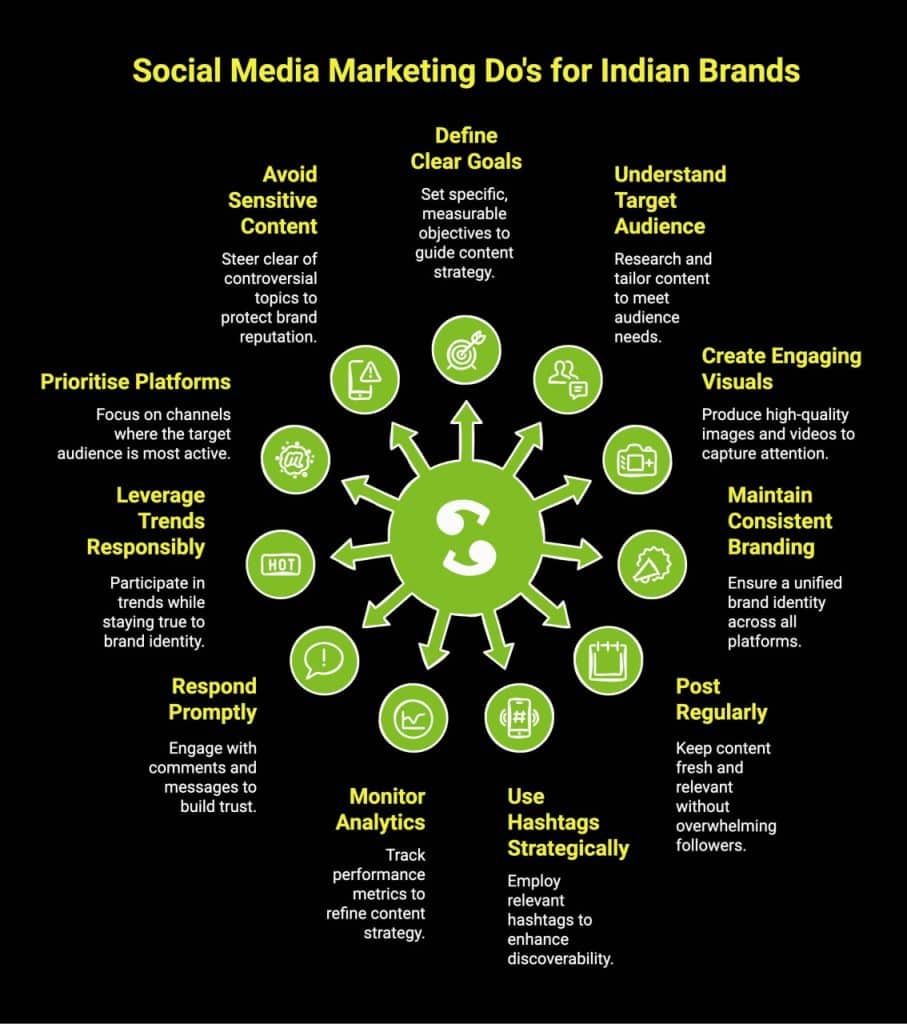
Infographic showcasing social media marketing do s

Infographic showcasing social media marketing do s

Doing social media right starts with intention. The right practices help brands connect with the right audience, stay consistent, and create content that feels valuable rather than promotional.

These do’s focus on clarity, quality, and long-term growth instead of short-term visibility.

1. Define Clear Social Media Goals for Your Business

Before publishing content, clearly define what success looks like for your brand. Goals could include increasing website traffic, generating leads, improving engagement, or strengthening brand awareness. When goals are specific and measurable, every post serves a purpose. This clarity prevents random posting and helps you evaluate what is working, what is not, and where to optimise your efforts for better results.

2. Research and Understand Your Target Audience

Strong social media strategies are built on audience insight. Understand your audience’s age group, preferences, challenges, and online behaviour. Pay attention to the platforms they use most and the content formats they engage with. When your messaging reflects real needs and interests, engagement increases naturally and your content feels relevant instead of promotional or generic.

3. Create High-Quality, Engaging Visual Content

Visual content plays a major role in capturing attention on fast-scrolling feeds. Clear images, short videos, carousels, and simple infographics communicate messages quickly and effectively. Poor visuals reduce credibility, even if the message is strong. Investing in consistent, high-quality visuals improves reach, encourages sharing, and helps your brand stand out in a crowded content environment.

4. Maintain Consistent Branding Across All Platforms

Consistency builds recognition and trust. Use the same profile image, colour palette, tone of voice, and messaging style across platforms. This consistency makes your brand instantly recognisable and reinforces professionalism. Beyond visuals, consistency in how you communicate values and personality helps audiences feel familiar and comfortable engaging with your content over time.

5. Post Regularly but Avoid Overposting

Posting regularly keeps your brand visible and relevant, but excessive posting can overwhelm followers. Each platform has a different ideal posting frequency, so observe performance and adjust accordingly. Scheduling tools help maintain balance. Focus on quality and value rather than volume, ensuring every post contributes meaningfully to your overall content strategy.

6. Use Hashtags Strategically and Sparingly

Hashtags improve discoverability when used correctly. Choose hashtags that are relevant to your industry, audience, and content topic. A balanced mix of popular, niche, and branded hashtags works best. Avoid stuffing posts with excessive tags, as this can appear spammy and reduce credibility. Thoughtful hashtag use helps reach the right audience organically.

7. Monitor Analytics to Track and Improve Performance

Analytics reveal what truly resonates with your audience. Metrics such as reach, engagement, saves, and link clicks show which content formats and topics perform best. Regularly reviewing this data allows you to refine your strategy, focus on high-performing content, and make informed decisions rather than relying on assumptions or guesswork.

8. Respond Promptly and Professionally to Comments

Engagement does not end after posting. Responding to comments and messages shows that your brand values conversation and feedback. Timely, respectful responses encourage trust and loyalty. Even simple acknowledgements matter. When issues arise, addressing them calmly and professionally reflects positively on your brand and strengthens your online reputation.
9. Leverage Current Trends Responsibly

Trends can increase visibility, but only when they align with your brand identity. Not every viral trend suits every business. Evaluate relevance before participating and add your own perspective to maintain authenticity. Responsible trend usage helps you stay current without appearing forced, out of touch, or disconnected from your brand’s core message.

10. Prioritise the Right Social Media Platforms

You do not need to be active everywhere. Focus on platforms where your target audience spends the most time and where your content performs best. Concentrating efforts on fewer channels allows better content quality, stronger engagement, and more efficient resource use, rather than spreading your efforts thin across platforms that deliver little value.11: Don’t: Share Sensitive or Controversial Content

Social media content should feel safe and welcoming. Posting polarising opinions, offensive jokes, or unverified information can quickly damage trust. Even content shared without bad intent can be misunderstood. Keeping posts professional and neutral protects your brand reputation and avoids unnecessary backlash.

To learn more about building a strong digital marketing strategy for startups, including where to focus early efforts and how to scale sustainably, explore this detailed guide.

What Should Indian Brands Avoid in Social Media Marketing?

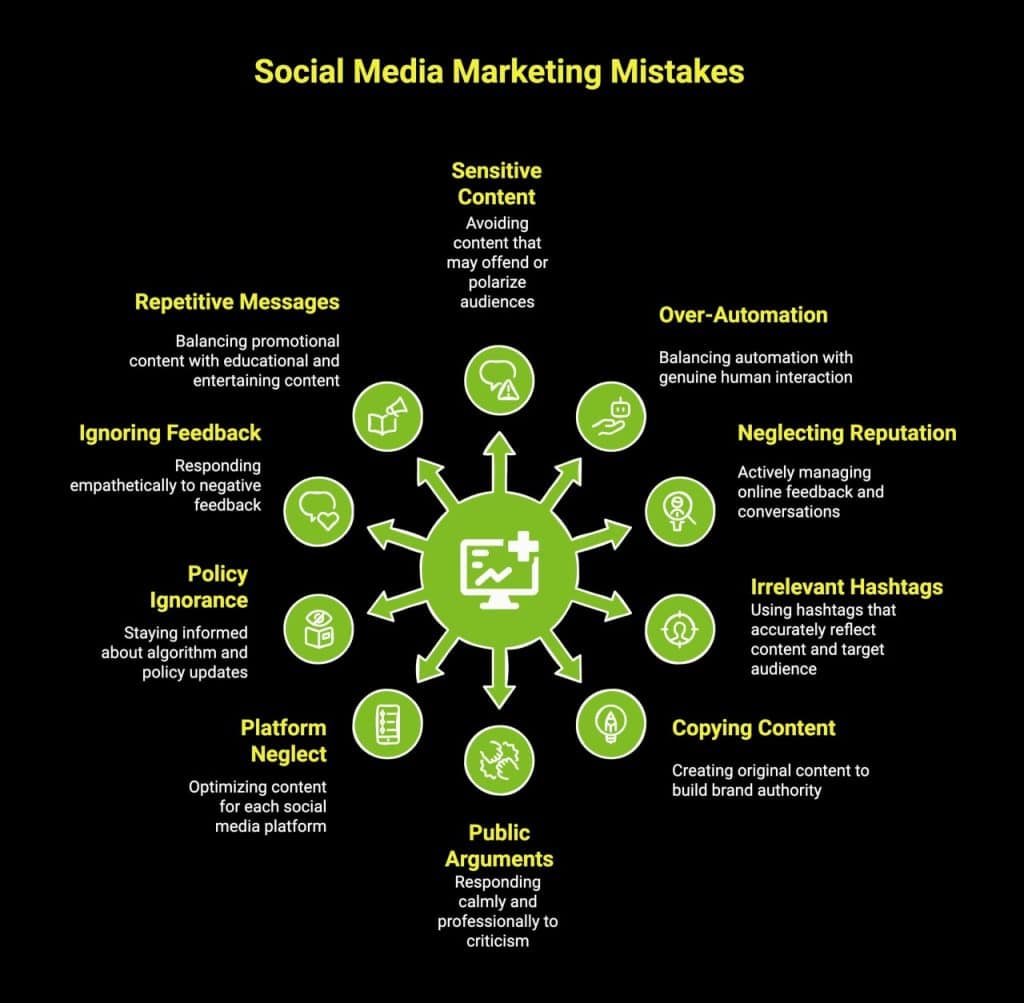
Infographic showcasing social media marketing dont s

Infographic showcasing social media marketing dont s

Knowing what not to do is just as important as best practices. Small mistakes, when repeated, can reduce reach, weaken trust, and harm brand perception.

These don’ts highlight common errors that quietly hold back social media performance if left unchecked.

1. Don’t Share Sensitive or Controversial Content

Avoid content that may offend, polarise, or create unnecessary controversy. Sensitive topics, unverified information, or strong opinions can easily be misunderstood online. Even well-intended posts can harm brand trust. Keeping content respectful, inclusive, and professional helps protect your reputation and ensures your brand feels safe and approachable to a wide audience.

2. Don’t Overuse Automation and Lose the Human Touch

Automation tools are helpful for scheduling and reporting, but relying on them excessively can make interactions feel robotic. Generic replies and auto-messages reduce authenticity. Audiences value genuine human interaction. Balancing automation with real-time engagement ensures your brand remains relatable, trustworthy, and emotionally connected to its audience.

3. Don’t Neglect Your Brand’s Online Reputation

Your online reputation is shaped by how you respond to feedback. Ignoring comments, reviews, or mentions can signal indifference. Actively monitor conversations, acknowledge positive feedback, and address concerns respectfully. Proactive reputation management prevents minor issues from escalating and demonstrates transparency and accountability to your audience.

4. Don’t Use Irrelevant or Excessive Hashtags

Hashtags should add clarity, not clutter. Using unrelated trending hashtags or too many tags can make posts appear spammy and reduce engagement. Hashtags must accurately reflect your content and target audience. A clean, relevant hashtag strategy improves credibility and ensures your content reaches people genuinely interested in what you offer.

5. Don’t Copy Content From Other Brands

Originality is essential for brand credibility. Copying content weakens trust and blurs your brand identity. While inspiration is acceptable, always add your own voice, insights, and perspective. Creating original content builds authority, helps differentiate your brand, and encourages audiences to follow you for unique value rather than repetition.

6. Don’t Engage in Arguments on Public Threads

Public arguments rarely benefit brands. When criticism arises, respond calmly and professionally without escalating the situation. Avoid emotional replies or defensive language. Offering to continue the conversation privately shows maturity and respect. Your response reflects your brand values, not just to one person but to everyone watching.

7. Don’t Forget to Optimise Content for Each Platform

Each social media platform has its own content style, audience expectations, and features. Posting identical content everywhere can reduce effectiveness. Adjust captions, visuals, and formats to suit each platform. Platform-specific optimisation improves reach, engagement, and overall performance, making your content feel natural rather than recycled.

8. Don’t Ignore Social Media Policy and Algorithm Updates

Social media platforms frequently update algorithms and policies. Ignoring these changes can reduce reach or cause compliance issues. Staying informed helps you adapt content formats, posting strategies, and engagement tactics. Following official announcements and industry news ensures your strategy remains effective and aligned with platform requirements.

9. Don’t Ignore Negative Feedback or Complaints

Negative feedback should never be ignored. Responding with empathy, acknowledging concerns, and offering solutions shows professionalism. Publicly handling issues well builds trust with both the individual and the wider audience. Silence or deletion often damages credibility more than the complaint itself and can make your brand appear unresponsive.

10. Don’t Repeat the Same Message Again and Again

Constantly pushing the same promotional message leads to audience fatigue. Follow the 80–20 rule: 80% of your content should educate, entertain, or add value, while only 20% should be promotional. This balance keeps your feed engaging, builds trust, and makes promotional content feel more natural and effective.

To learn more about why empathy, storytelling, and human connection still matter in a data-driven digital world, read our perspective on bringing the human touch back to digital marketing.

Need a Smarter Way to Build a Brand That Grows Online?

Wildcreek Web Studios partners with businesses that want sustainable growth, not short-term spikes. With nearly two decades of experience, we bring strategy, performance marketing, and brand thinking together under one roof.

Our work starts with understanding where your business stands today and where it needs to go next. From search visibility and paid growth to brand positioning and digital consulting, we focus on helping brands connect with the right audience and grow with intent.

We don’t just launch campaigns. We craft digital stories that move your business forward.

Take the next step with confidence. Contact Wildcreek Web Studios for a consultation and start building lasting growth.

Conclusion

Knowing the do’s and don’ts of social media marketing is only useful if you act on them. Start by reviewing your current goals, content, and posting habits, then fix one gap at a time. Set clear targets, audit what is working, and remove what is not. Test small improvements, track results, and adjust regularly. A consistent, thoughtful approach builds stronger engagement and protects your brand over time. If you want clear direction or expert support, get in touch with us for a free consultation and take the next confident step forward.

Frequently Asked Questions

What are the latest updates to social media marketing do’s and don’ts for small businesses in India?

Current updates focus on clarity, consistency, and audience needs. In recent years, small businesses in India have been encouraged to follow platform rules, build engagement, protect data, and use cultural messaging while avoiding spammy tactics and information that damage trust.

How often should businesses post on social media to maximise engagement without overwhelming followers?

Posting frequency should match audience habits and platform norms. Most brands get results by posting consistently a few times weekly, testing timing, and adjusting based on engagement signals from social media users, instead of posting daily and overwhelming followers.

What types of content should businesses avoid posting to protect their brand reputation?

Businesses should avoid posting offensive opinions, unverified information, and reactive content that conflicts with brand voice. Sensitive topics, misleading claims, or jokes taken out of context can harm credibility, confuse audiences, and trigger backlash that is hard to repair.

Can you list common mistakes businesses make on social media that should be avoided?

Common mistakes include copying competitors, ignoring analytics, and relying too much on artificial intelligence tools without human oversight. Automation should support strategy, not replace thinking. Brands also struggle by ignoring replies, using generic messages, and chasing trends without purpose.

What are the best practices for engaging with followers in social media marketing?

Engaging followers works best when brands treat social media like customer service, not broadcasting. Respond promptly, acknowledge feedback, ask questions, and personalise replies. Consistent interaction builds trust, shows accountability, and encourages repeat engagement instead of one-sided conversations.

What should businesses never post on their social media accounts?

Businesses should never post confidential data, offensive remarks, or excessive promotional content that adds no value. In a fast-moving digital world, careless posts spread quickly, damage reputation, and erode trust, making recovery harder than prevention through review.

What are some tips for creating effective Facebook ads?

Effective Facebook ads focus on clear targeting, concise messaging, and strong visuals. Short video content, captions that highlight benefits, and a single call to action perform best. Testing formats, creatives, and audiences helps improve click-through and conversion rates.

How do you promote your blog posts on social media?

Promoting blog posts works best when content is repurposed creatively. Share highlights as visuals, short clips, or threads, collaborate through influencer marketing, and link posts within relevant conversations. Consistent sharing across channels increases reach without repeating the same message.

What are 3 things you can do on social media platforms?

Three effective actions include sharing educational content, engaging with comments, and experimenting with features. Using live streams to answer questions, exploring social commerce tools, and building presence across social networks is a great way to grow visibility and trust.

How Many Social Media Platforms Should a Small Business Be Active On?

Most small businesses perform best by focusing on two or three social platforms. Managing fewer social channels allows consistent quality, responses, and clearer insights. Effective social media marketing depends more on relevance and consistency than trying to be active everywhere.

3 comments
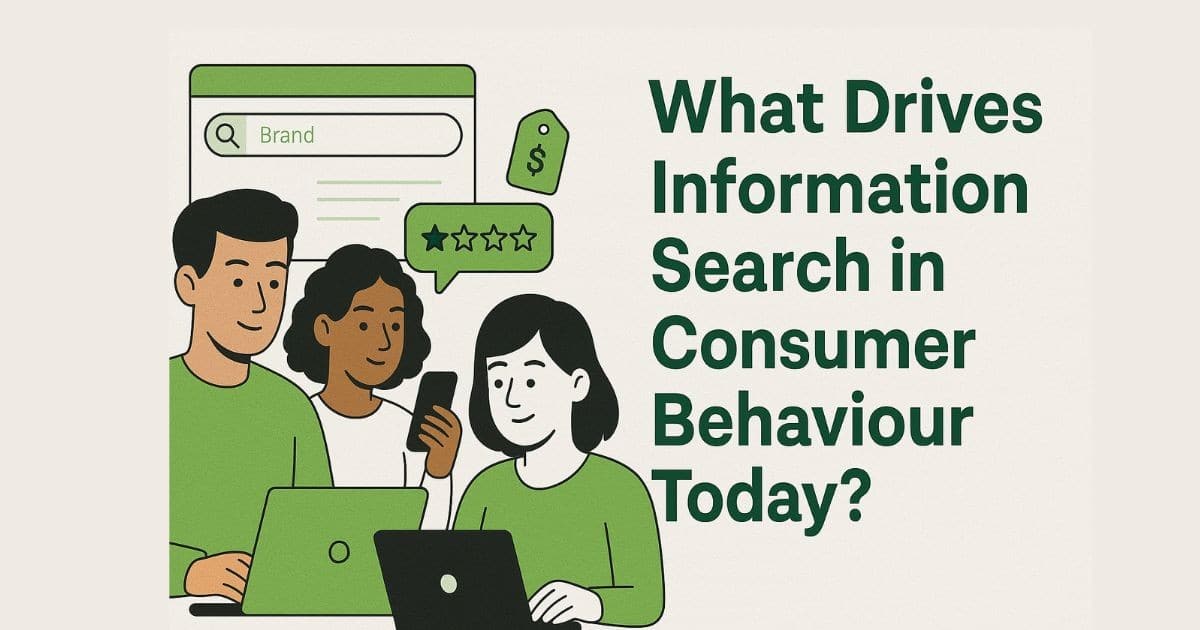
Group researching products illustration

What Drives Information Search in Consumer Behaviour Today?

In this Article

Toggle
  • Key Highlights
  • What is Information Search Behaviour in Consumers?
  • How Information Search Shapes Modern Purchase Decisions?
    • A Simple Real-World Example:
    • How Google’s  New Consumer Decision-Making Model Explains This Behaviour
    • What This Means for Marketers
  • How Consumers Search for Information: Key Search Types Explained
    • 1. Internal vs External Information Search
    • 2. Active vs Passive Search
    • 3. Online vs Offline Search
    • 4. Prepurchase vs Ongoing Search
  • How the Internet Search Behaviour of Men and Women Differ?
  • Why Consumers Search the Way They Do?
    • 1. Perceived Risk and Decision Complexity
    • 2. Level of Product Involvement and Personal Relevance
    • 3. Prior Experience and Familiarity
    • 4. Depth and Availability of Online Information
    • 5. Social Proof and Community Influence
    • 6. Decision-Making Style: Emotional vs Analytical
    • 7. Time Pressure and Urgency
  • What It Means to Partner With Wild Creek Web Studio
  • Final words
  • Frequently Asked Questions
    • How does information search differ for services versus products?
    • What factors determine the amount of information a consumer seeks?
    • How does online information affect the behaviour of a search?
    • What is the concept of the information search process in consumer Behaviour?
    • How do consumers’ buying habits differ from one another?
    • What values could colour a consumer’s view of a product?
    • Which search platforms should businesses prioritise?
    • Why are information search behaviour of customers important to a marketer?
    • What is the importance of consumer decision-making roles in the information search process?
    • Is search and evaluation on consumer behaviour important?

Key Highlights

  • Information search drives how consumers discover, compare, and choose brands.
    • Brands win decisions during search, not at the final purchase moment.
    • Google’s Messy Middle shows consumers looping between exploration and evaluation.
    • Search behaviour varies by type, intent, and decision context.
    • Men and women search differently, influencing evaluation and brand preference.
    • Factors like risk, involvement, social proof, and urgency shape search depth and speed.
    • Wild Creek Web Studio helps brands strengthen search visibility and guide confident purchase decisions.

Ever wondered why some brands get chosen instantly while others get ignored, even when they offer similar products? The answer often lies in how consumers search for information before making a decision. Today’s buyers don’t just walk into a store and pick something off the shelf. They research, compare, evaluate, and validate every choice using endless online and offline sources.

For marketers, the biggest challenge is understanding how consumers search and what influences them during that search. If you don’t appear in the right moments of discovery and evaluation, your brand is forgotten long before the purchase happens. Winning the search stage is no longer optional; it’s a competitive advantage.

In this blog, we will explore the role of information search in consumer behaviour, why it shapes evaluation and purchase decisions, and how it fits into Google’s new consumer decision-making model, often referred to as the “messy middle.”

What is Information Search Behaviour in Consumers?

Information search in consumer behaviour is the stage where people start digging for answers after realizing they need something.

It’s the moment when a problem or desire triggers curiosity, and consumers begin exploring options, comparing brands, checking reviews, and asking questions to figure out which choice feels right.

This search can happen in two ways:

  • Internal search: Consumers rely on memory, such as recalling a brand they’ve used before or something a friend once recommended.
  • External search: Consumers consult outside sources like Google searches, YouTube reviews, social media opinions, expert recommendations, or advice from people they trust.

And in today’s digital landscape, most consumers move through multiple sources before feeling confident enough to buy.

Why does this matter?

Because the way people search shapes what they eventually evaluate and purchase. If a brand shows up with helpful, trustworthy information at the right discovery moments, it has a powerful advantage.

Understanding this behaviour isn’t just useful to marketers, it’s essential. It’s how you influence decisions long before the customer reaches the checkout page.

How Information Search Shapes Modern Purchase Decisions?

Infographic showing consumer decision making funnel

Infographic showing consumer decision making funnel

Information search is one of the strongest forces influencing how consumers decide what to buy. At the moment someone begins searching, they reveal what matters to them, what problems they need solved, and what will make them trust one brand over another.

These search moments determine which brands are even considered and which ones are filtered out long before a final decision is made.

A Simple Real-World Example:

Imagine someone is looking to buy running shoes. They do not start by walking into a store. They begin with search queries like: “Best running shoes for flat feet”, “Nike vs Adidas for beginners”, “Are carbon plate shoes worth it?”

They read expert reviews, watch YouTube comparisons, scan customer feedback, and review price differences. The brands that show up with clear, helpful, trustworthy information immediately become top choices for evaluation.

Those that do not appear are never considered. The purchase decision is largely shaped before the shopper ever arrives on a product page.

How Google’s  New Consumer Decision-Making Model Explains This Behaviour

Google’s consumer research report, Decoding Decisions: Making Sense of the Messy Middle, reveals that today’s buying journey no longer follows a straight, predictable path.

Instead, once a purchase trigger occurs, consumers enter what Google calls the Messy Middle, a dynamic space where they continuously move between exploring options and evaluating them.

Inside the Messy Middle, consumers display two mental modes:

  • Exploration, where they search widely and discover options
  • Evaluation, where they compare, filter, and assess alternatives

The more information they find, the more confident they become. The quality, clarity, and availability of information shape which brand they ultimately choose.

What This Means for Marketers

Google’s findings show that purchase decisions are often won inside the Messy Middle, not at the final checkout stage.

The brands that provide strong, credible, easily accessible information during exploration and evaluation earn trust faster and dramatically increase their chance of being selected.

Consumers rely heavily on:

  • Search visibility
    • Expert and peer reviews
    • Social proof
    • Product comparisons
    • Transparent content that reduces uncertainty

Modern purchasing outcomes are shaped by how well a brand supports consumers during information search and evaluation. The battle for attention, trust, and preference is won long before the buyer clicks “buy now.”

Want to understand how search intent shapes decisions and influences visibility? Explore our guide on search intent to see how search patterns reveal real customer needs.

How Consumers Search for Information: Key Search Types Explained

Infographic showing types of consumer searches you need to know

Infographic showing types of consumer searches you need to know

Consumers do not all search for information in the same way. The depth, method, and intensity of the search depend on factors such as product involvement, perceived risk, budget, prior experience, and urgency.

Understanding the various types of information search in consumer behaviour helps marketers design content and touchpoints that match real consumer needs at different stages.

1. Internal vs External Information Search

Consumers begin with an internal search, relying on memory, past experiences, brand familiarity, or recommendations they already know. If that information is insufficient, they move to external search, seeking new details from sources such as search engines, reviews, expert content, friends, social media, and comparison tools.

2. Active vs Passive Search

Sometimes consumers intentionally and actively research a purchase. This is common for higher involvement products such as smartphones, insurance, or travel. In other situations, they are passively exposed to information through ads, social feeds, influencers, or word of mouth, and that exposure shapes future decisions even if they were not searching deliberately.

3. Online vs Offline Search

Modern searches are heavily digital, but offline information remains influential. Online search includes Google queries, blogs, review platforms, YouTube, social media, and e-commerce comparison tools. Offline search includes store visits, discussions with peers, product trials, and printed materials. Consumers frequently combine both to form a complete evaluation.

4. Prepurchase vs Ongoing Search

Some searches are prepurchase and occur right before making a buying decision. Others are ongoing searches, where people follow topics or categories out of interest, such as technology enthusiasts or fashion followers. Ongoing search builds brand familiarity and affects future decisions long before a need arises.

Understanding these different search behaviours helps marketers tailor content to meet consumers wherever they are in their decision journey.

When brands address each type effectively, they strengthen visibility, trust, and preference at every stage of evaluation.

Looking to convert search visibility into growth? Explore our guide on building a customer acquisition strategy to turn research behaviour into measurable results.

How the Internet Search Behaviour of Men and Women Differ?

Research shows that men and women often approach online search and decision-making differently. A study titled “Online Shopping: Do Men Behave Differently than Women?” found that for male respondents, perceived usefulness is the strongest factor influencing their intention to continue shopping online.

While for female respondents, perceived ease of use and perceived trust play a more significant role.

These behavioural tendencies influence how each group searches, compares options, and evaluates brands online. Here’s a quick overview that highlights the key differences:

Aspect Men Women
Research Style Fast, direct, solution-focused Detailed, exploratory, comparison-driven
Primary Search Goal Access useful information quickly Build trust and confidence before deciding
Content Preference Technical specifications and expert reviews User reviews, testimonials, and community feedback
Decision Speed Generally faster once convinced More time invested in evaluation
Evaluation Approach Logical and performance-oriented Experiential and trust-oriented
Trust Influencers Data, measurable results, authoritative sources Social proof and real user experiences
Typical Search Queries Specific queries like “best 4K monitor under $300.” Broader queries like “which monitor is best for home and work?”
Preferred Platforms Review sites and comparison tools Social platforms, forums, and community discussions
Risk Perception Lower risk once facts seem solid Higher risk until socially validated

While these are broad patterns rather than rules, they reveal opportunities for marketers to tailor messaging, content formats, and search strategies to better match different decision-making styles.

Why Consumers Search the Way They Do?

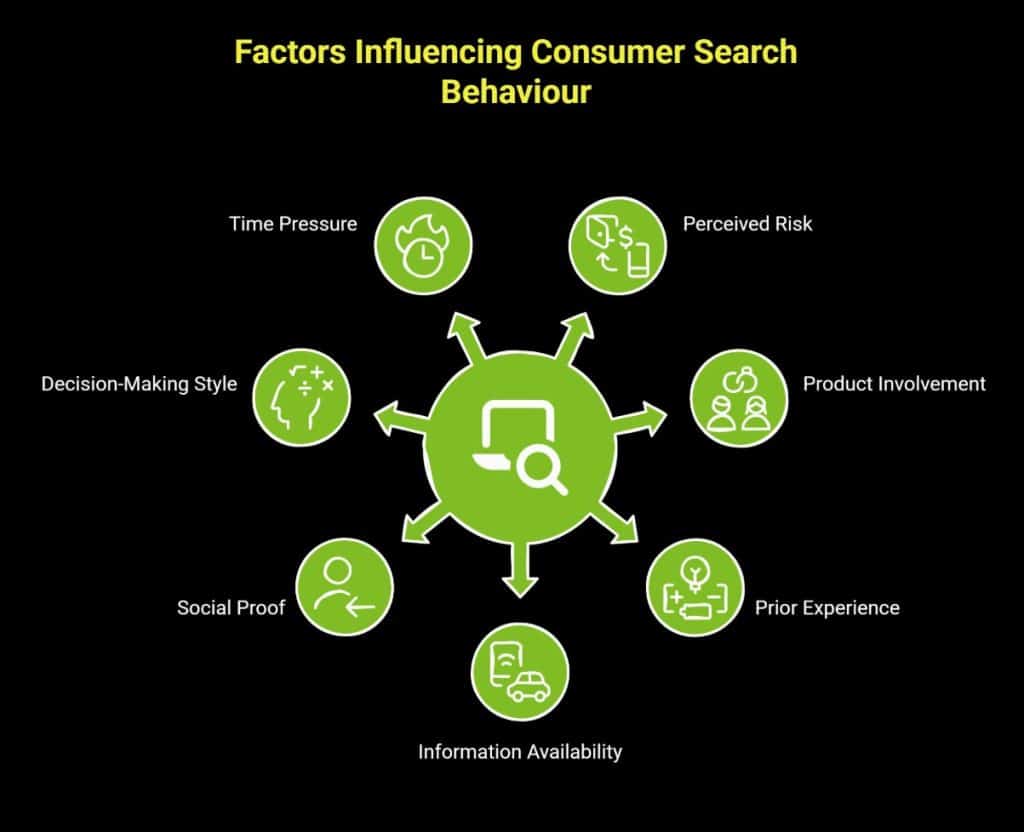
Infographic showing factors influencing consumer search behaviour

Infographic showing factors influencing consumer search behaviour

The way consumers search for information is shaped by a combination of psychological, emotional, and practical influences. These factors determine how intensely they research, which sources they trust, and how quickly they move from curiosity to decision.

For marketers, understanding why these factors affect search behaviour is key to designing experiences that guide consumers through evaluation and ultimately influence purchase choice.

Here are some factors that significantly shape information search behaviour:

1. Perceived Risk and Decision Complexity

When consumers believe there is something significant at stake, their search behaviour becomes more detailed and cautious. High-risk purchases, such as financial products, healthcare decisions, luxury items, or long-term commitments, create anxiety and uncertainty. To reduce that risk, consumers seek more proof, expert insights, and validation before deciding.

Why it influences search:

High stakes trigger the psychological need for security and control. Consumers want to make sure they are not making an expensive or emotionally costly mistake. This leads to longer search cycles, deeper evaluation, and more reliance on credible sources.

Marketing takeaway:

If you operate in a high-risk category, your content must lower perceived risk through transparency, data, expert endorsement, reviews, and scenario-based guidance, not persuasion alone.

2. Level of Product Involvement and Personal Relevance

Products tied to personal goals, identity, health, or performance drive more intense search behaviour. Someone buying a fitness tracker, skincare treatment, or home office setup invests time because the outcomes directly impact their lifestyle.

Why it influences search:

High involvement activates emotional investment. Consumers want not just a product, but the right product that aligns with self-image, values, and desired results.

Marketing takeaway:

Provide deep, real-world context: use cases, community voices, real performance demonstrations, before-and-after stories, and personalised guidance.

3. Prior Experience and Familiarity

Consumers who know a category well rely more on internal memory and shortcuts. They may purchase quickly based on brand preference. In contrast, unfamiliar categories generate uncertainty, which drives heavier search and comparison.

Why it influences search:

Lack of experience increases cognitive load. Consumers compensate by gathering external information until they feel capable of judging options.

Marketing takeaway:

Challenger brands must educate to build competence and trust. Established brands must reinforce recall and consistency to reduce effort.

4. Depth and Availability of Online Information

Consumers continue searching until they feel they understand enough to decide confidently. When information is fragmented, confusing, or overly promotional, search becomes longer and more frustrating.

Why it influences search:

Humans avoid cognitive friction. Clear, structured, easy-to-follow information reduces mental effort and speeds decision-making.

Marketing takeaway:

Create not “more content” but better pathways: comparison pages, structured FAQs, transparent pricing, guided buying tools, and evidence-based claims.

5. Social Proof and Community Influence

Consumers trust people more than brands. Reviews, ratings, testimonials, influencer perspectives, and online conversations strongly shape evaluation.

Why it influences search:

Humans depend on social validation to assess uncertainty. If other people approve a product, the perceived risk drops and confidence increases.

Marketing takeaway:

Make social proof unavoidable and visible at key evaluation moments, not buried in subpages.

6. Decision-Making Style: Emotional vs Analytical

Different consumers process information differently. Some make intuitive, feeling-based decisions guided by brand story, alignment, and relatability. Others require analytics, facts, and performance proof.

Why it influences search:

Cognitive diversity means no single message resonates with all. Emotional buyers want connection. Analytical buyers want certainty.

Marketing takeaway:

Combine emotional relevance with rational clarity: storytelling plus specifications, results plus evidence.

7. Time Pressure and Urgency

When consumers feel rushed, they shorten the search process and depend more on heuristics such as popularity tags, best-seller filters, or time-limited offers.

Why it influences search:

Time constraints reduce cognitive processing ability. The brain switches to instinctive decision shortcuts.

Marketing takeaway:

Structure navigation and messaging that supports fast, low-effort decision making when urgency exists.

Information search is not just a step in the journey. It is a confidence-building phase where uncertainty transforms into certainty.

Every factor that influences search changes how likely a brand is to be chosen. The brands that understand and design for these influences win consumer preference before the final purchase moment ever arrives.

What It Means to Partner With Wild Creek Web Studio

Growing online is harder than ever. There is too much noise, constant algorithm shifts, and countless marketing tactics that promise big results but rarely deliver. At Wild Creek Web Studio, we understand how frustrating it can feel to invest in digital efforts without seeing meaningful progress.

That is why we focus on clarity, strategy, and measurable outcomes. With 18+ years of experience, we work closely with you to understand your goals, simplify the complexity, and build digital strategies that truly move the needle.

Our team brings together expertise in SEO, paid campaigns, social media, and digital consulting, all designed to support sustainable growth rather than short-term spikes.

We believe marketing should feel transparent, collaborative, and grounded in reality. When you partner with us, you are choosing a team that listens first, customises solutions, and works alongside you to grow with confidence, step by step.

Ready to transform how you grow online? Let’s start the conversation.

Final words

Modern consumers choose the brands that help them decide with confidence. If your search experience removes friction, answers real questions, and builds trust, you win the decision long before the purchase click happens.

Now is the time to ask: Are you showing up where decisions are shaped, or only where they finish?

The brands that guide instead of push, support instead of sell, and provide clarity instead of noise are the ones people remember.

Build for the way people really search and choose. Take action now and become the brand they confidently say yes to.

Frequently Asked Questions

How does information search differ for services versus products?

Information search for services is shaped by consumer behaviour, reliance on personal sources, and limited consumer reports. Because services are intangible, consumers depend on personal experience, public sources, and information processing across various channels to reduce risk and support informed decision making.

What factors determine the amount of information a consumer seeks?

Consumer information search varies with prior knowledge, concept of motivation, situational influences, internal knowledge, and perceived risk. The target market, information overload, low involvement products, and available information sources shape information search patterns during the information search phase of consumer buying behaviour.

How does online information affect the behaviour of a search?

Online buying behaviour is influenced by consumer information from search engine optimisation, marketing programs, and public sources. Access to various channels, the Yellow Pages, and digital consumer reports plays a crucial role in the evaluation of alternatives, shaping store buying and the industrial buying process.

What is the concept of the information search process in consumer Behaviour?

The information search process begins after problem recognition, when the consumer searches for relevant information from various sources to evaluate alternatives. It is a key stage of the consumer buying process, shaping the decision process and influencing consumer attitude and purchase outcomes.

How do consumers’ buying habits differ from one another?

Consumers differ due to internal factors, personal factors, trait theory of personality, and external factors like marketing efforts and physical location. Some buy low-involvement products with little thought, while others gather much information, compare various alternatives, and experience cognitive dissonance after purchase.

What values could colour a consumer’s view of a product?

Consumer buying behaviour is influenced by values tied to product quality, customer service, brand trust, and the type of information received. Cultural beliefs, past experiences, typology of needs, and organisational buying behaviour can reshape perception and determine preference for a particular brand.

Which search platforms should businesses prioritise?

Businesses should prioritise traditional search engines, mobile phones, social platforms, and review channels where consumer searches begin. A strong online presence during the buyer’s journey provides valuable insights, increases marketing effectiveness, supports product development, and ensures visibility at a deeper level in the purchase process.

Why are information search behaviour of customers important to a marketer?

Understanding consumer search behaviour gives marketers insight into how customers discover, compare, and choose brands. It reveals motivations, barriers, and opportunities to provide relevant content, guide decisions, improve messaging, and influence preferences early in the customer journey where choices are shaped.

What is the importance of consumer decision-making roles in the information search process?

Consumer decision-making roles determine who gathers information, who influences evaluation, and who finalises purchase decisions. These roles shape search behaviour, helping marketers tailor communication, target the right decision stakeholders, and support confident choices with the right information at the right moment.

Is search and evaluation on consumer behaviour important?

Yes, search and evaluation in consumer behaviour is crucial because it determines which brands enter the consideration set. It helps reduce uncertainty, compare alternatives, build trust, and ultimately guide consumers toward confident purchase decisions before they reach the final buying stage.

0 comments
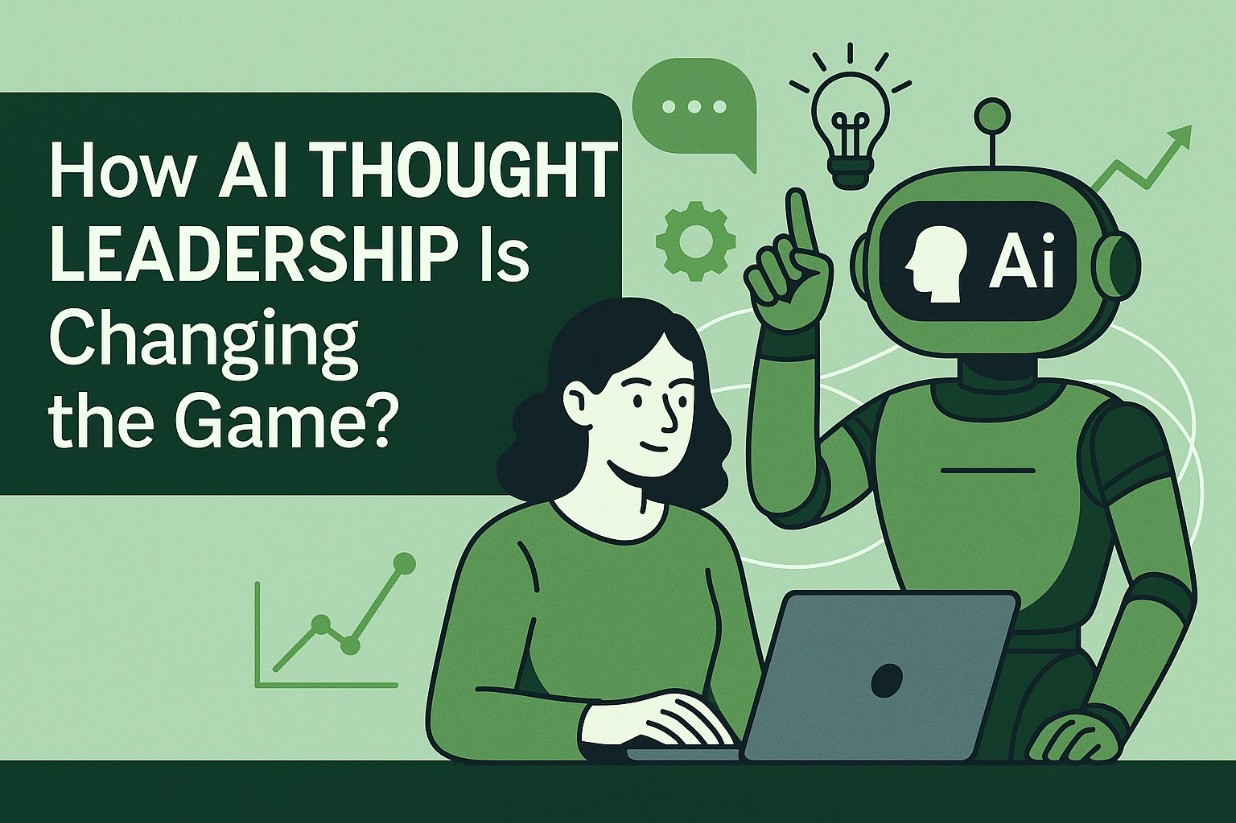
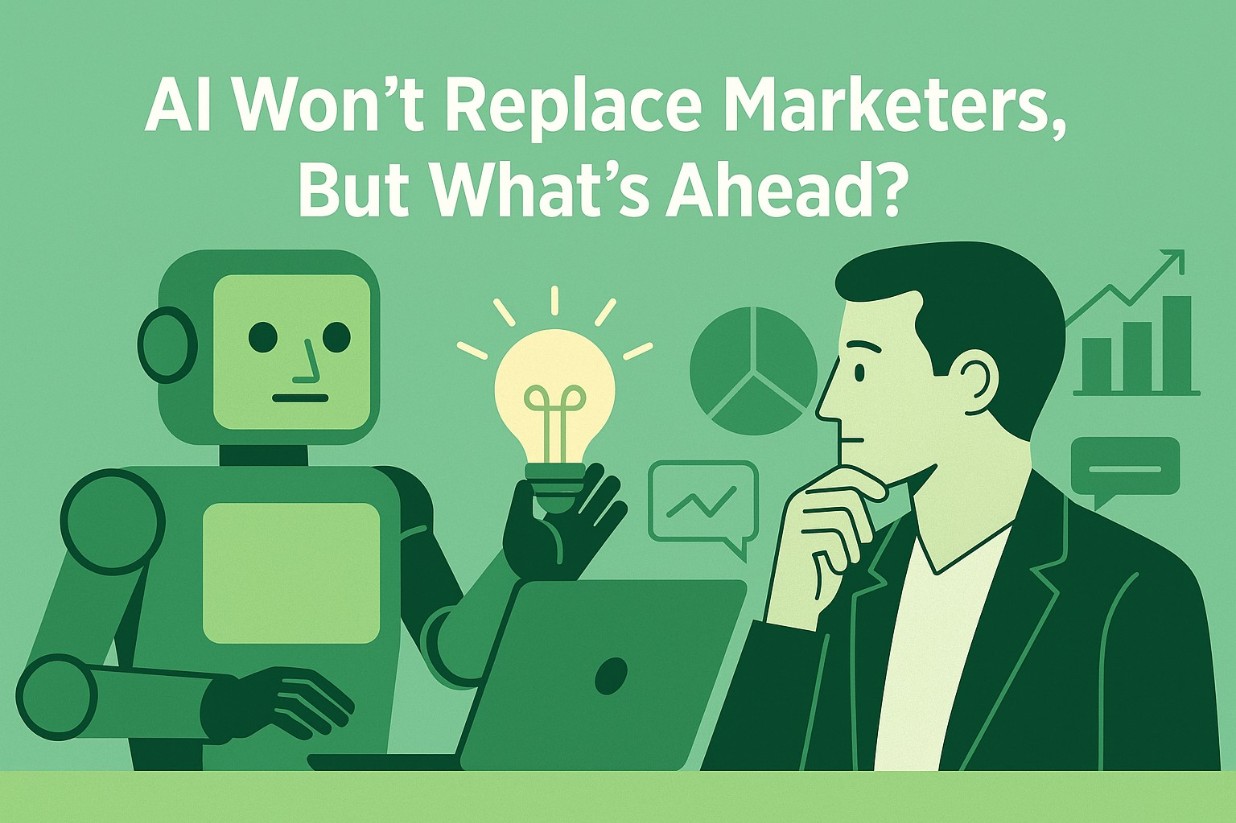
AI robot and human collaborating at a laptop with blog title

How is AI Thought Leadership Changing the Game?

In this Article

Toggle
  • Key Highlights
  • What Does AI Thought Leadership Really Mean Today?
  • How Is AI Reshaping Thought Leadership?
    • 1. AI Unlocks Intelligence at a Scale Humans Cannot Match
    • 2. AI Moves Leaders From Interpreting Trends to Predicting Them
    • 3. AI Enhances Communication With Sharper, More Cohesive Ideas
  • How Does AI Reveal the Conversations You Should Be Leading?
  • How Do Industry Leaders Transform Data Into Original Insight?
  • What Should You Avoid When Using AI for Thought Leadership?
  • What Will the Future of AI Thought Leadership Look Like?
  • Partner with Wild Creek Web Studio to Build Thought Leadership That Wins
    • Why Leading Brands Trust Wild Creek Web Studio
  • Final Words
  • Frequently Asked Questions
    • Can AI help me plan and organize my thought leadership strategy?
    • What are the risks or challenges of using AI in thought leadership?
    • How does AI help brands connect more authentically with audiences?
    • How to build B2B thought leadership with AI content?
    • What do thought leaders in AI use in tech writing?
    • What are the benefits of using AI for thought leadership compared to traditional methods?
    • Can AI replace CEOs or board members in major companies?

Key Highlights

  • AI thought leadership helps brands stand out in a crowded content landscape.
  • AI enables faster, deeper insight generation and smarter decision-making.
  • Thought leadership shifts from reactive commentary to predictive perspectives.
  • AI identifies high-impact topics and emerging conversations worth leading.
  • Leaders use AI to turn raw data into original, contrarian viewpoints.
  • Avoid over-reliance on AI, loss of brand voice, and unverified information.
  • Wild Creek Web Studio helps brands build authoritative, insight-led thought leadership that drives real influence.

Thought leadership used to be simple. Say something smart, publish it, and you’d stand out. But today, everyone has access to the same tools, the same data, and the same AI models. The result is a flood of content that sounds identical, competes for the same attention, and makes it harder than ever for brands to differentiate their expertise.

Audiences are not looking for more information. They are looking for original thinking, clear guidance, and voices they can trust. Yet most teams struggle to deliver this consistently because research takes time, insight requires depth, and publishing across multiple channels demands constant momentum.

This is where AI becomes an advantage. Not as a replacement for expertise, but as a multiplier that helps leaders uncover trends faster, shape stronger perspectives, and scale their best ideas without sacrificing quality.

In this blog, you will learn how modern brands use AI to surface high-impact topics, craft distinctive points of view, build efficient thought leadership systems, and establish real authority in a crowded digital landscape.

What Does AI Thought Leadership Really Mean Today?

AI thought leadership is not about handing the microphone to a machine. It is about using artificial intelligence to strengthen the depth, accuracy, and strategic value of your insights. The most influential brands today use AI to enhance their thinking, not replace it, and that distinction is what sets true leaders apart.

With more than 80% of marketers already integrating AI into their content processes, the bar has been raised. Simply using AI is no longer innovative. What matters now is how intelligently you use it to identify patterns, validate assumptions, and uncover opportunities others miss.

AI becomes a high-velocity research partner, expanding your ability to see what is happening in your industry with far greater clarity.

This level of intelligence changes how leaders craft their viewpoints. Instead of relying on intuition alone, you can analyze audience questions, dissect competitor messaging, and detect emerging trends before they break through. That shift moves you from reacting to the market to actively shaping the conversation.

The outcome is thought leadership that commands attention. AI equips you with sharper inputs, but your expertise delivers the interpretation, direction, and credibility. Combined, they create content that is not only informed but confidently positioned, unmistakably original, and aligned with the authority your brand wants to project.

As we continue exploring how humans and AI evolve together in shaping smarter ideas, one powerful perspective is shared in our blog Humans Are Hooked, Machines Are Learning. It is a timely reminder that AI does not replace our voice, it amplifies it.

How Is AI Reshaping Thought Leadership?

Infographic on AI s impact on thought leadership

Infographic on AI s impact on thought leadership

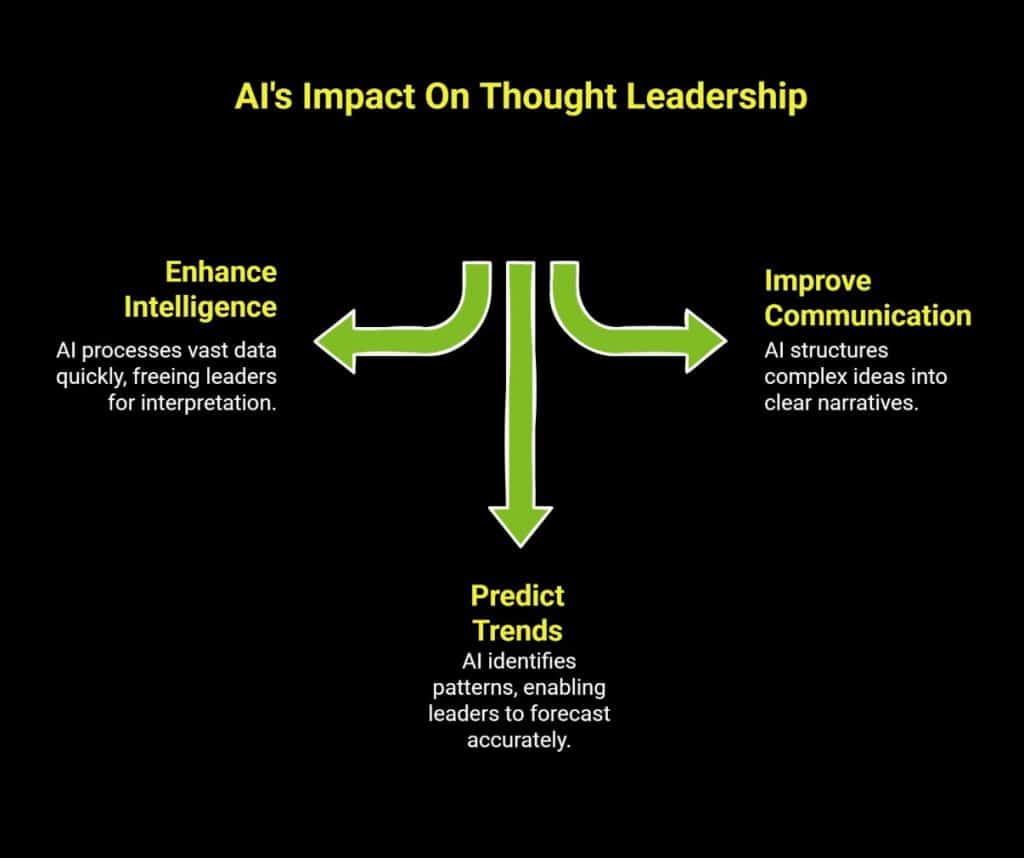
AI is transforming how leaders gather insights, shape opinions, and communicate authority. What once required weeks of research can now be uncovered in minutes, giving brands the ability to operate with greater speed, clarity, and strategic intent.

Let’s have a look at how AI is reshaping thought leadership today:

1. AI Unlocks Intelligence at a Scale Humans Cannot Match

AI can process millions of data points across articles, social conversations, search patterns, and competitor content in seconds. This level of analysis was simply not possible before. According to McKinsey, generative AI can automate up to 60% of the tasks involved in content research and synthesis, freeing leaders to focus on interpretation rather than data gathering.

For example, a cybersecurity brand can use AI to scan global breach reports, regulatory updates, and threat discussions in real time. Instead of reacting after an incident makes headlines, they can identify emerging vulnerabilities early and publish expert guidance before competitors even recognize the trend.

2. AI Moves Leaders From Interpreting Trends to Predicting Them

Traditional thought leadership has always been retrospective. AI makes it predictive. By detecting patterns in audience behavior, economic signals, or industry activity, leaders can identify what is coming next with far greater accuracy.

A clear example is in financial services. AI models can surface early indicators of market sentiment shifts by analyzing investor discussions, economic briefs, and global news cycles. Leaders can then publish forward-looking analyses rather than simple market recaps. This positions them as industry forecasters rather than commentators.

It is this shift from “explaining what happened” to “defining what happens next” that elevates modern thought leadership.

3. AI Enhances Communication With Sharper, More Cohesive Ideas

AI also strengthens thought leadership at the communication level. It structures complex concepts, refines arguments, and transforms dense information into clear, compelling narratives.

For instance, a healthcare CEO preparing a keynote can use AI to distill clinical research, patient data, and regulatory insights into a narrative that is both accurate and accessible. The technology handles the complexity. The leader adds conviction, judgment, and human credibility.

Together, these shifts redefine authority. The leaders who stand out now are not publishing more. They are publishing with a level of intelligence, foresight, and clarity that only the combination of human expertise and AI capability can deliver.

How Does AI Reveal the Conversations You Should Be Leading?

One of the strongest advantages of AI in thought leadership is its ability to surface the ideas that truly matter. Instead of guessing which topics will resonate, AI analyzes real conversations happening across social platforms, search trends, news cycles, and industry communities. It shows you where attention is building, what questions people are struggling to answer, and where meaningful whitespace exists.

This shifts thought leadership from reactive publishing to strategic positioning. When you enter a conversation before it peaks, you guide the narrative rather than chase it.

To support this, different categories of AI tools play distinct roles in helping leaders identify high-impact opportunities. Here are a few examples of how they contribute to your strategy:

Tool Type How It Strengthens Thought Leadership
Social listening tools (Brandwatch, Talkwalker) Identify rising themes and sentiment shifts before they become mainstream.
SEO intelligence platforms (Semrush, Ahrefs) Reveal high-intent questions and content gaps your expertise can address.
Generative AI systems (ChatGPT, Jasper) Convert raw findings into angles, outlines, and messaging directions.
Data analysis tools Extract patterns and insights from large datasets to support authoritative viewpoints.

To see this in action, consider a sustainability technology leader who uses social listening to spot increasing concern around carbon reporting accuracy. Search data confirms thousands of users asking how to measure emissions reliably. With these signals, they build a thought leadership piece early, while the topic is still emerging. By the time competitors notice, the narrative has already been shaped.

That is the real value of AI. It does not simply help you produce more content. It helps you choose the conversations worth leading.

Curious how the two really compare? We’ve explored that in AI vs Human Brain, a quick read that might shift how you think about the future of leadership.

How Do Industry Leaders Transform Data Into Original Insight?

Gathering data is only the starting point. True thought leadership comes from interpreting that information in a way others have not seen yet. AI can support this process by helping you explore new angles, challenge assumptions, and shape insights into meaningful perspectives. The goal is not to repeat what everyone already knows, but to elevate the conversation with interpretation grounded in experience and judgment.

Industry leaders use AI as a thinking partner. Once the research is collected, AI can help examine multiple viewpoints, test narrative positions, and uncover contrarian angles that differentiate your voice. This is where raw information becomes perspective. It is why respected thought leaders are recognized not for summarizing trends, but for defining what those trends mean.

To achieve this, the quality of your prompts matters. Instead of broad instructions like “Write about industry trends,” focus on specificity and direction. For example:

  • “Given these three industry trends [insert trends], what is a contrarian viewpoint a marketing leader could take?”
  • “Analyze this customer feedback data and generate five thought leadership angles that address the core frustration.”
  • “What strategic risks are being overlooked in this emerging trend and why?”

These targeted prompts push AI beyond surface-level content and unlock deeper insights that reinforce authority. That is the difference between generic commentary and leadership that shapes thinking.

If you are interested in how this shift is unfolding in real time, our piece on how AI is changing everything in SEO shares expert perspectives that expand this conversation.

What Should You Avoid When Using AI for Thought Leadership?

Infographic showing achieving balanced AI use in thought leadership

Infographic showing achieving balanced AI use in thought leadership

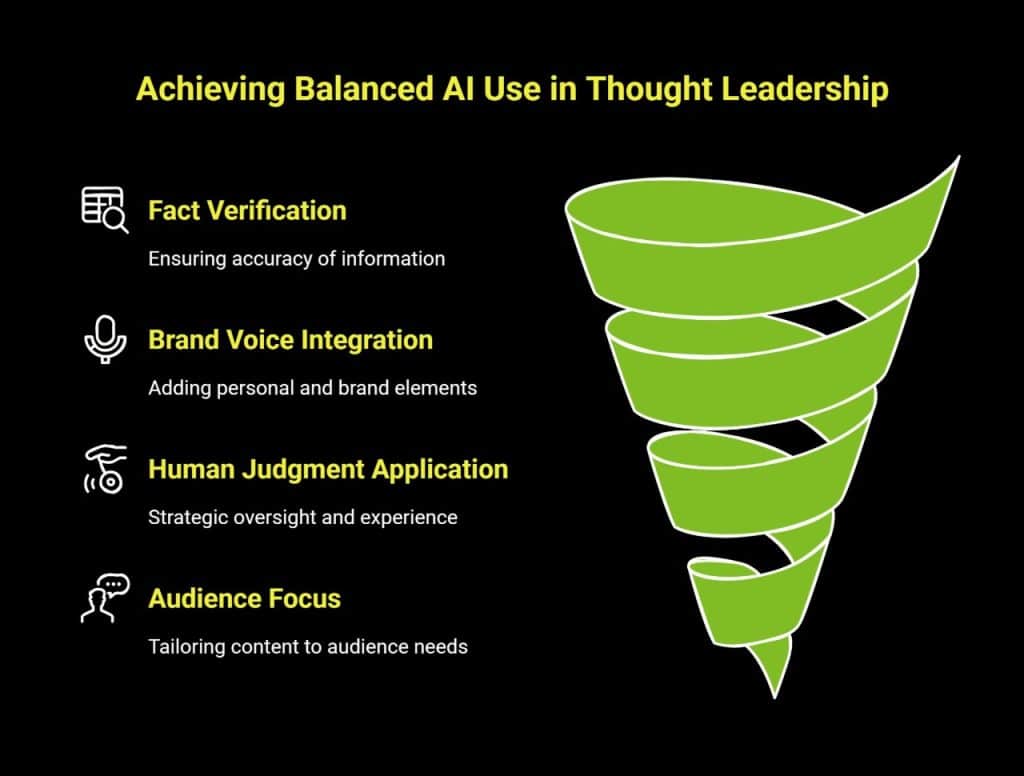
As with any powerful tool, the value of AI depends entirely on how thoughtfully it is used. One of the biggest risks is becoming overly dependent on the technology and diluting the human voice that sets true thought leadership apart. When creators rely on AI to do the thinking instead of supporting the thinking, the result is content that feels generic, mechanical, and disconnected from real expertise.

AI should accelerate insight, not replace perspective. The moment your content loses depth, nuance, or authenticity, it stops leading and starts blending into the noise. To protect your authority and maintain trust, it is essential to avoid these common pitfalls:

  • Publishing without proper fact verification: AI can surface ideas quickly, but it can also generate incorrect or outdated information. Always validate data and statistics through credible sources.
  • Ignoring your brand voice: AI drafts should be the starting point, not the final version. Edit for tone, personality, values, and leadership style.
  • Removing human judgment from the process: Strategic oversight, clarity, and real experience must guide every stage from ideation to publication.
  • Losing sight of your audience: Do not let AI’s speed distract you from serving real human needs, pain points, and context. Audience value should drive every message.

Strong thought leadership blends AI intelligence with human interpretation, expertise, and integrity. When those elements stay balanced, AI becomes a competitive advantage instead of a creative risk.

What Will the Future of AI Thought Leadership Look Like?

The future of thought leadership will be shaped by deeper collaboration between human expertise and AI-driven intelligence. As AI continues to advance, its role will shift from operational support to strategic contribution, enabling leaders to analyze market shifts, detect emerging patterns, and forecast industry movement with greater accuracy.

We will see a new era of thought leadership defined by predictive insights and highly personalized content that speaks to specific audiences, industries, and decision-makers. Instead of broad, generalized commentary, thought leaders will deliver sharp, evidence-backed perspectives designed to guide real-time decision-making.

The brands that excel will be those that blend AI-powered analysis with an authentic human perspective. They will move faster than competitors, articulate clearer points of view, and establish trust through insight that feels both timely and irreplaceably human.

The future is not about letting AI speak for you. It is about using AI to think at a higher level and communicate with authority that others cannot match.

Partner with Wild Creek Web Studio to Build Thought Leadership That Wins

If you are committed to becoming a true authority in your industry, you need more than generic AI output or short-term marketing tactics. You need strategy, clarity, and execution guided by expertise. That is exactly what Wild Creek Web Studio delivers.

With more than 18 years of digital experience and proven success across 100-plus brands, Wild Creek helps businesses strengthen visibility, authority, and measurable growth through insight-driven strategy and high-performance execution.

Why Leading Brands Trust Wild Creek Web Studio

  • Strategic digital consulting aligned with real business outcomes, not vanity metrics
  • Deep SEO and performance marketing expertise that drives qualified traffic and conversions
  • Insight-led content and positioning that elevates brand authority and credibility
  • A results-first approach backed by meaningful metrics and long-term client partnerships

If your brand is ready to own its narrative, influence your market, and scale with confidence, Wild Creek Web Studio is the partner built for that journey. Contact us today!

Final Words

The future of thought leadership will belong to those who use AI to elevate original thinking, not replace it. The window to stand out is narrowing, and the leaders who act now will shape the conversations everyone else follows.

Do not wait for the market to decide the narrative. Use AI to sharpen your insight, challenge conventional thinking, and say what others are hesitant to say. Your audience is looking for clarity, courage, and perspective that feels unmistakably human.

The question is not whether AI will transform thought leadership. It already has. The real question is: Will you lead the shift or watch others do it first?

Frequently Asked Questions

Can AI help me plan and organize my thought leadership strategy?

Absolutely. Artificial intelligence can be a huge asset in planning your content marketing strategy. By using AI for data analysis of market trends and audience behavior, you can identify the best topics to focus on. It helps you build a data-driven plan for content creation, ensuring your efforts are targeted and effective.

What are the risks or challenges of using AI in thought leadership?

The main challenges of using artificial intelligence include the risk of factual inaccuracies, potential data privacy issues, and losing your brand’s authentic voice. To protect your credibility, content creators must prioritize fact-checking, adhere to ethical considerations, and always add a layer of human review and creativity to AI-generated content.

How does AI help brands connect more authentically with audiences?

AI helps brands connect by analyzing data from social media and other sources to understand what a target audience truly cares about. This allows for the creation of highly relevant content that addresses their specific needs and questions, which can lead to higher engagement rates and a more authentic brand voice.

How to build B2B thought leadership with AI content?

To build B2B thought leadership with AI content, develop an AI thought leadership content strategy driven by insight and predictive research. Use AI to surface emerging topics, craft data-backed viewpoints, personalize messaging, and scale distribution while retaining human expertise effectively.

What do thought leaders in AI use in tech writing?

Thought leaders in AI use research-driven insights, real-time data analysis, and generative AI thought leadership tools to shape authoritative narratives. They combine expert perspective with AI-assisted outlining, structuring, and forecasting to produce clear, influential, future-focused tech content that stands apart.

What are the benefits of using AI for thought leadership compared to traditional methods?

Using AI for thought leadership enables faster research, deeper data visibility, predictive analysis, and scalable content creation. Unlike traditional manual processes, AI allows leaders to publish timely, insight-rich viewpoints and execute stronger AI thought leadership strategies across multiple channels with consistency.

Can AI replace CEOs or board members in major companies?

AI cannot replace CEOs or board members, but it can augment decision-making by analyzing data and forecasting trends. True leadership requires judgment, vision, and accountability. AI supports strategic insight, while humans provide direction, values, and trust in AI thought leadership blog conversations.

0 comments
15 benefits of blogging for indian businesses banner

What are the 15 Benefits of Blogging for Business in India?

In this Article

Toggle
  • Key Highlights
  • What Are The Top 15 Benefits Of Blogging For Businesses In India?
    • 1. Turns Your Blog Into a Conversion Powerhouse
    • 2. Creates Long-Term Value for Small Businesses
    • 3. Educates Your Audience and Builds Authority
    • 4. Converts Traffic into Leads, Effortlessly
    • 5. Boosts Your SEO Efforts
    • 6. Generates Traffic Without the Need for Ads
    • 7. Works for You 24/7
    • 8. Builds Trust and Establishes Credibility
    • 9. Gives Your Brand a Permanent Online Presence
    • 10. Supercharges Your Social Media Strategy
    • 11. Fosters Strong Client Relationships
    • 12. Helps Differentiate Your Brand from Competitors
    • 13. Grows Your Email List with Captivating Content
    • 14. Maximizes Content Repurposing for Efficiency
    • 15. Boosts Organic Brand Promotion with Minimal Investment
  • How Do You Start a Successful Business Blog for Your Brand?
    • 1. Define Your Blogging Goals and Audience
    • 2. Find Engaging Business Blog Post Ideas
    • 3. Choose the Right Blogging Platform
    • 4. Create and Optimise High Quality Blog Content
    • 5. Promote Your Blog for Maximum Reach
  • What Are the Advantages and Disadvantages of Blogs in Business?
  • Why Partner With Wild Creek Web Studio to Grow Your Digital Presence?
  • Conclusion
  • Frequently Asked Questions
    • How Often Should A Business Publish Blog Posts?
    • Can Blogging Help A Business Build Stronger Relationships With Its Audience?
    • What Is The 80/20 Rule For Blogging?
    • What Is The Importance Of Blogging In The Field Of Business?
    • How Does Blogging Help Increase Business Sales?
    • Is Blogging Suitable For Small Businesses In India?
    • What Are The Best Business Blog Post Ideas For Beginners?
    • Are There Examples Of Businesses That Have Succeeded With Blogging?
    • What Are The Benefits Of Making A Blog For A Business?

Key Highlights

  • Blogging is a powerful way to boost your search engine optimisation and improve your online presence.
  • It helps you drive organic traffic to your website, attracting more potential customers without paying for ads.
  • By sharing valuable content, you can build trust and establish your brand as an authority in your industry.
  • A business blog is an effective tool for increasing brand awareness and standing out from the competition.
  • Ultimately, a consistent blogging strategy supports long-term business growth by converting visitors into loyal customers.

Launching a business website and not seeing the website traffic you hoped for can feel frustrating and discouraging. Many businesses struggle to stand out online and attract the right audience.

To overcome that challenge, you need a reliable way to build visibility, earn trust, and turn visitors into customers rather than watching them leave without taking action.

In this blog, you will learn how business blogging strengthens your online presence, connects with your audience, and becomes a powerful engine for long term growth and engagement.

What Are The Top 15 Benefits Of Blogging For Businesses In India?

Blogging is one of the most powerful ways for businesses in India to increase online visibility, attract website visitors, build trust, and grow sustainably. It helps brands compete digitally, improve search engine optimization, and connect with audiences more meaningfully. Below are the fifteen most impactful advantages for business growth.

1. Turns Your Blog Into a Conversion Powerhouse

Blogging isn’t just about attracting visitors; it’s about turning those visitors into paying customers. By offering solutions to real customer problems, your blog acts as a tool that nurtures leads. Through thoughtful content, clear calls to action (CTAs), and strategic offers, your blog becomes a long-term driver of conversions, turning readers into loyal customers.

In India: With consumers becoming more discerning, a well-crafted blog can address their specific needs, helping them make informed decisions. This kind of engagement is essential in a market where personalized solutions matter.

2. Creates Long-Term Value for Small Businesses

In the world of digital marketing, few tools offer the lasting value that blogging can. Once a blog post is published, it remains online, continuing to attract traffic, build trust, and generate leads long after. For small businesses in India, this is especially beneficial, as it provides a cost-effective, long-term strategy for growth without relying on recurring ad spend.

In India, small businesses, especially in smaller cities, can use blogging to gain visibility without breaking the bank. It’s an investment that continues to give back as your content ranks and draws in more organic traffic over time.

3. Educates Your Audience and Builds Authority

Blogs allow you to educate your customers in ways that traditional ads can’t. Whether it’s tutorials, how-to guides, or industry insights, your blog becomes an expert resource that helps customers understand your products or services better. By offering valuable, solution-oriented content, you position your brand as a knowledgeable authority, gaining the trust of your audience.

In India, with an increasing number of internet users looking for answers to their questions online, educating them through blogs helps you stand out as an authority in your field. It fosters trust, something that is crucial when consumers have numerous choices.

4. Converts Traffic into Leads, Effortlessly

Blogging is an inbound marketing strategy that works. By providing your audience with valuable, engaging content, you naturally guide them towards taking action, whether it’s signing up for your newsletter, downloading a free resource, or making an inquiry. With strategic CTAs, your blog becomes a conversion engine that nurtures leads without being pushy.

In India, with the country’s diverse demographics, businesses can use blogs to nurture leads at every stage of the funnel. From providing initial value to final purchase decisions, blogs cater to all types of customer journeys in a scalable manner.

5. Boosts Your SEO Efforts

Every blog post you publish is a new indexed page, increasing your website’s visibility on search engines. By focusing on the keywords and questions your target audience is searching for, blogging optimizes your site’s SEO, helping you rank higher in search results and attract organic traffic.

In India, with more and more users accessing the internet via mobile devices, search engines like Google are the primary way people find businesses. By blogging consistently, businesses in India can improve their search rankings, ensuring they are visible to users searching for relevant products or services.

6. Generates Traffic Without the Need for Ads

While paid advertising has its place, blogging gives businesses the ability to generate high-quality traffic without constantly opening their wallet. By offering value-driven content, blogs attract organic traffic that grows over time, creating a steady stream of new visitors to your site.

In India, with rising costs of digital advertising, businesses, especially those in tier-2 and tier-3 cities, can use blogging to generate valuable traffic at a fraction of the cost of paid ads. Blogging enables businesses to reach their target market organically, whether it’s a local neighbourhood or a nationwide audience.

7. Works for You 24/7

Unlike social media posts or ads that have a short shelf life, blogs continue working for you long after they’ve been published. They draw in traffic, generate leads, and build credibility around the clock, allowing your business to scale even while you sleep.

In India, as businesses expand their reach across different time zones in the country, blogs ensure that your business is visible to new customers 24/7, especially those who might be browsing after hours.

8. Builds Trust and Establishes Credibility

Every time you share valuable, insightful content through your blog, you earn the trust of your audience. Over time, consistent blogging showcases your expertise, making your brand a trusted resource. When customers trust your brand, they are more likely to buy from you and more likely to return.

In India: In a market with a mix of both traditional and online shopping habits, trust is a key factor for Indian consumers. Blogs provide transparency and valuable insights that help build trust, particularly when it comes to local businesses looking to engage a wider audience.

9. Gives Your Brand a Permanent Online Presence

Blogs are evergreen. Once you publish a post, it stays on your website, continually adding value and reinforcing your brand’s authority. This is unlike fleeting social media posts that disappear after a while. Your blog serves as a central hub where visitors can explore everything your brand has to offer.

In India, for businesses expanding into diverse markets, especially in different states with varying consumer behavior, having a centralized blog can be a valuable asset in connecting with regional audiences, offering content that resonates with their unique needs.

10. Supercharges Your Social Media Strategy

Blogging and social media go hand-in-hand. Blogs provide endless content for your social media channels. Whether you’re turning a post into an infographic, creating social media snippets, or sharing quotes, your blog can fuel your social media content for weeks.

In India, Social media is a powerful tool in India, and blogging provides consistent, high-quality content that fuels social media posts. Whether it’s Facebook, Instagram, or LinkedIn, your blog content amplifies your reach and engagement across platforms.

11. Fosters Strong Client Relationships

Blogs help build relationships with existing customers by offering them content that adds value. Whether it’s sharing tips, case studies, or behind-the-scenes stories, your blog keeps clients engaged, increasing loyalty and customer retention.

In India, Indian businesses, particularly those in the service and retail industries, can leverage blogging to connect with their existing customer base, making them feel valued and more likely to return.

12. Helps Differentiate Your Brand from Competitors

Blogging allows you to share your unique perspective, experiences, and insights, setting you apart from competitors. Thought leadership and authenticity are key in differentiating your business in India’s crowded marketplace, and blogs are the ideal medium for showcasing these qualities.

In India: With the sheer volume of competition in sectors like e-commerce, real estate, and tech, blogging helps businesses stand out. It gives you the space to highlight your unique approach and showcase your brand personality.

13. Grows Your Email List with Captivating Content

Blogs act as lead magnets, offering valuable content in exchange for email sign-ups. With compelling offers or exclusive insights, your blog encourages readers to subscribe to your email list, which is an excellent resource for future marketing campaigns.

In India, as email marketing continues to be a powerful tool in India, blogging helps businesses grow their email lists, giving them a direct communication line with their audience for promotions, updates, and personalized content.

14. Maximizes Content Repurposing for Efficiency

A single blog post can be repurposed into various types of content, social media posts, podcasts, videos, or even email newsletters. This makes your content strategy more efficient and saves time while maintaining a consistent brand voice across different platforms.

In India, with diverse audiences spread across different regions, businesses in India can take their blog posts and repurpose them into formats that appeal to varying demographics, whether through regional language videos, infographics, or social media posts.

15. Boosts Organic Brand Promotion with Minimal Investment

Blogging is a cost-effective strategy for promoting your brand online. It allows you to showcase your products, services, and expertise without the need for hefty advertising budgets. By creating engaging and informative blog posts, businesses in India can gain organic exposure that helps build their reputation and visibility over time.

In India, with the Indian digital space becoming more competitive, blogging offers businesses a chance to boost brand awareness without breaking the bank on paid ads. It’s an investment that pays off with increased organic reach, long-term visibility, and loyal customers.

How Do You Start a Successful Business Blog for Your Brand?

Infographic showcasing the steps to start a business blog

Infographic showcasing the steps to start a business blog

You can start a successful blog by setting clear goals, understanding your audience, and consistently creating helpful content that solves real problems. A thoughtful blog builds trust, increases website visitors, and strengthens your content strategy. Understanding the importance of blogging for business helps you see how powerful long-term content can be.

1. Define Your Blogging Goals and Audience

Begin by identifying the purpose of a blog for business and the outcomes that matter most. Decide whether you want more traffic, stronger lead generation, or improved brand authority. Understand who you are writing for and what common questions they have. Clear goals guide smart content decisions.

2. Find Engaging Business Blog Post Ideas

Think about what is a blog used for in business and choose topics that genuinely help your readers. Use keyword research and industry insights to create content that aligns with real needs. Writing about relevant questions and customer challenges builds trust and provides meaningful value.

3. Choose the Right Blogging Platform

Select a platform that supports long-term growth and an easy user experience. Beginner-friendly builders like Wix or Squarespace make setup simple, while WordPress offers more flexibility and control. Choose one that supports landing pages, analytics, and customisation as your content expands.

4. Create and Optimise High Quality Blog Content

Write helpful, well-structured articles that reflect your brand voice and solve problems your audience cares about. Naturally incorporate keywords and focus on clarity, accuracy, and strong formatting. Update older posts to improve search ranking and demonstrate how blogging helps your business deliver ongoing value.

5. Promote Your Blog for Maximum Reach

Share your content through social media, newsletters, and collaborations. Repurpose articles into short videos, graphics, and quotes to reach new audiences. Promotion increases visibility and proves why your business needs a blog by showing measurable engagement and stronger customer relationships.

Blogging success grows step by step. Choose your next step today and keep building new content that informs, connects, and inspires. Each post strengthens your brand and moves you closer to meaningful results.

What Are the Advantages and Disadvantages of Blogs in Business?

Infographic showcasing the advatages vs the disadvantages of blogging

Infographic showcasing the advatages vs the disadvantages of blogging

Blogs can be a powerful asset for businesses by improving visibility, building trust, and nurturing customer relationships. At the same time, blogging requires consistency, time, and a thoughtful strategy to deliver results. Understanding both sides helps you plan smarter and set realistic expectations.

Below is a simple comparison table outlining the key advantages and disadvantages of business blogging to guide your decision-making.

Advantages of Business Blogs Disadvantages of Business Blogs
Helps improve online visibility and organic search performance Takes time to see measurable results
Builds brand authority and credibility through valuable insights Requires consistent writing and planning
Improves customer trust by educating and solving real problems Can feel overwhelming without a strategy
Drives inbound traffic without high advertising costs Needs ongoing content creation and updates
Converts visitors into leads through CTAs and resources Requires research and expertise to maintain quality
Strengthens customer relationships through transparency Can become ineffective if content lacks focus
Supports social media with reusable content Competitive markets require strong differentiation

A balanced approach makes blogging more effective. Focus on value, consistency, and meaningful engagement and the long-term rewards will follow.

Why Partner With Wild Creek Web Studio to Grow Your Digital Presence?

If you are ready to scale your content as business owners, strengthen your brand visibility, and drive meaningful business results, Wild Creek Web Studio can help you get there. With 18 years of experience and 100+ clients, we bring strategy, creativity, and execution together under one roof.

From corporate brands to SMEs and entrepreneurs, we provide full digital support grounded in transparency, promise delivery, and a client-first approach. Our team combines smart technology with human insight to build digital ecosystems that actually perform and grow with you.

Ready to take the next step toward sustainable digital success? Book your strategy session with Wild Creek Web Studio today and start building your next phase of growth with confidence

Conclusion

Blogging is a powerful growth tool that drives conversions, builds authority, and improves SEO while strengthening trust with your audience. Success comes from consistency, value, and clear purpose. Choose your next step today, whether it is planning topics, writing your first post, or improving existing content. Start now and watch your business grow.

Frequently Asked Questions

How Often Should A Business Publish Blog Posts?

A business should publish weekly or biweekly to improve search engine results, strengthen content marketing, deliver relevant content, match Google search intent, support marketing efforts, boost social media marketing, target relevant keywords, and follow industry trends.

Can Blogging Help A Business Build Stronger Relationships With Its Audience?

A business builds trust by sharing relevant content, improving search engine results, supporting content marketing, answering Google search questions, strengthening marketing efforts, extending social media marketing, using relevant keywords, and tracking industry trends.

What Is The 80/20 Rule For Blogging?

The 80/20 rule balances content marketing, where businesses publish relevant content that improves search engine results, satisfies Google search intent, supports marketing efforts, fuels social media marketing, uses relevant keywords, follows industry trends, and remains a great way.

What Is The Importance Of Blogging In The Field Of Business?

Blogging matters in business because it improves search engine results, strengthens content marketing, shares relevant content, answers Google searches, supports marketing efforts, enhances social media marketing, targets relevant keywords, follows industry trends, and remains a great way forward.

How Does Blogging Help Increase Business Sales?

Blogging increases sales by improving search engine results, guiding buyers with relevant content, powering content marketing, capturing Google search demand, supporting marketing efforts, amplifying social media marketing, ranking relevant keywords, tracking industry trends, and making it a great way.

Is Blogging Suitable For Small Businesses In India?

Blogging helps small businesses in India improve search engine results, use content marketing, share relevant content, reach Google search users, strengthen marketing efforts, support social media marketing, rank relevant keywords, follow industry trends, and remain a great way.

What Are The Best Business Blog Post Ideas For Beginners?

Beginners can start blogging with ideas that improve search engine results, support content marketing, deliver relevant content, answer Google search needs, strengthen marketing efforts, fuel social media marketing, include relevant keywords, and track industry trends.

Are There Examples Of Businesses That Have Succeeded With Blogging?

Many brands succeed by blogging, achieving search engine results, using content marketing, publishing relevant content, attracting Google search traffic, scaling marketing efforts, integrating social media marketing, and targeting relevant keywords.

What Are The Benefits Of Making A Blog For A Business?

A business blog improves search engine results, supports content marketing, shares relevant content, attracts Google search visitors, strengthens marketing efforts, boosts social media marketing, ranks relevant keywords, tracks industry trends, and remains a great way to build trust.

0 comments
Banner illustration showing AI and human collaboration in marketing

AI Won’t Replace Marketers, But What’s Ahead?

In this Article

Toggle
  • Key Highlights
  • Are We Asking the Wrong Question When We Wonder if AI Will Replace Marketers?
    • Where Does AI Deliver Real Value in Modern Marketing?
    • Where Does AI Fall Short in Real-World Marketing?
  • What Happens When AI Takes Over the Work Marketers Never Enjoyed Anyway?
  • Is AI Quietly Raising the Bar for What Counts as Good Marketing?
  • AI vs Human Marketers: What Truly Sets Them Apart
  • How Can Marketers Integrate AI Into Their Workflows Effectively?
    • Where Should Marketers Actually Use AI in Their Workflow?
  • What Makes These Marketing Roles More Valuable as AI Expands?
    • 1. Brand Strategists Who Define Meaning, Not Just Messaging
    • 2. Creative Leaders Who Give Ideas Emotional Weight
    • 3. Customer Experience Thinkers Who Understand Human Behavior
    • 4. Insight Analysts Who Turn Data Into Direction
    • 5. Content Editors and Voice Guardians Who Keep Brands Human
    • 6. Ethical & Governance Leads Who Keep AI Responsible
    • 7. Marketing Leaders Who Can Orchestrate Humans + AI Together
  • Why Wild Creek Web Studio Champions the Human Algorithm?
  • Final Words
  • Frequently Asked Questions
    • Have marketers already lost jobs to AI technology?
    • Are digital marketing jobs safe from AI automation?
    • Can AI be creative enough to replace human marketers?
    • Will AI replace digital marketers?
    • Can AI replace digital marketing?
    • Will AI replace content marketers?
    • Will AI completely replace marketers in the future?
    • What is the 30% rule in AI?
    • Do you think AI is taking away Marketing Jobs?
    • Is digital marketing dying because of AI?

Key Highlights

  • AI automates tasks but cannot replace human strategy, judgment, or creativity.
  • Marketers must think better, not just work faster, to stay relevant.
  • AI excels at content production, data analysis, pattern recognition, and routine tasks.
  • Humans provide cultural insight, storytelling, strategic judgment, and context interpretation.
  • AI frees marketers to focus on meaningful decisions and customer experiences.
  • Creativity, emotional intelligence, and strategy now define marketing success.
  • Wild Creek Studio helps brands pair human insight with AI efficiency for smarter marketing.

If you work in marketing, you have probably wondered at least once whether AI is coming for your job. The question is understandable. 60% of marketers already use AI tools every day, and the momentum behind automation makes it easy to assume the human role will eventually shrink.

But here is the shift many people overlook. AI is transforming the mechanics of marketing, not the meaning of it. Tools can accelerate production, analyze patterns, and streamline operations, yet they still depend on human clarity, intent, and imagination. The advantage is no longer about working faster. It is about thinking better.

This article explores how marketing is evolving in an AI-led world, what skills will matter most, and why the future belongs to professionals who can combine human depth with machine efficiency.

Are We Asking the Wrong Question When We Wonder if AI Will Replace Marketers?

Human and AI collaboration in marketing

Human and AI collaboration in marketing

The conversation around AI and jobs often begins with a false premise. The question “Will AI replace marketers?” assumes that marketing is primarily an operational function.

It treats marketing as a series of tasks that can be automated rather than a discipline built on interpretation, intention, and judgment. When the foundation of the question is flawed, the conclusions that follow are flawed as well.

A more constructive approach is to examine how AI is redefining the expectations placed on marketers. AI has not eliminated the need for human involvement. Instead, it has revealed the difference between output and intelligence, between activity and expertise, between automated content creation and meaningful marketing strategy.

Where Does AI Deliver Real Value in Modern Marketing?

Infographic on AI s value in modern marketing

Infographic on AI s value in modern marketing

Before we discuss how marketers evolve, it is important to recognize the areas where AI genuinely excels and delivers clear operational value across the marketing industry and digital marketing agencies.

  • High volume content production for content marketing and social media posts
  • Rapid data processing and data analytics
  • Pattern recognition across large datasets
  • Automation of repetitive or low complexity tasks
  • Supporting real-time adjustments in ad campaigns and simple customer service interactions

Where Does AI Fall Short in Real-World Marketing?

Infographic on AI marketing limitations

Infographic on AI marketing limitations

And just as clearly, there are areas where technology cannot substitute for human intuition, judgment, or creativity.

  • The ability to understand cultural and emotional nuance in customer behavior
  • Strategic judgment about what matters and why
  • The skill to craft narratives that shape perception and maintain a consistent brand voice
  • The discernment to prioritize insights over noise
  • The capacity to interpret context, timing, and intent in fast-changing markets

These human capabilities are not marketing accessories. They are the foundation of meaningful work. AI may reshape the tools we use, but it does not replace the thinking that guides them, especially in marketing roles that depend on human connection and emotional intelligence.

And this is where the real gap will appear: average marketers will let AI run, but great marketers will guide it, shape it, and keep the human heartbeat in every decision.

This is why the real question is not whether AI replaces marketers. The real question is whether marketing teams evolve into marketing professionals whose thinking cannot be replicated by any model.

You can see this same dynamic in SEO, as described in our article Experts’ Thoughts on How AI Is Changing Everything in SEO.

What Happens When AI Takes Over the Work Marketers Never Enjoyed Anyway?

AI has stepped in to handle many of the repetitive tasks that used to slow marketers down, and that shift is more helpful than harmful. Work that once felt like a daily grind now takes a fraction of the time, which means marketers finally get room to think instead of constantly racing to produce.

According to Exploding Topics, 71% of marketers say generative AI will allow them to focus more on strategic work. That insight alone shows how the role is evolving.

When people worry that AI will replace digital marketers, they are usually picturing the tasks AI already does well. The first draft of a blog. A quick research outline. A few content variations. A performance report that appears in seconds. These tasks are helpful, but they have never been the foundation of real marketing expertise or strategic thinking.

What AI truly offers is relief from the operational clutter. It removes the routine tasks that kept marketers busy but did not necessarily move strategy forward or improve customer experiences.

Where AI Creates Breathing Room for Better Thinking

Here are some of the responsibilities AI now handles with ease, giving marketers more time and space to focus on meaningful decisions and deeper thinking

  • Manual content variations
  • Routine optimization checks
  • Initial research summaries or deep research support
  • Basic reporting and consolidation
  • Low complexity campaign tasks
  • Simple tasks like answering customer questions
  • A B testing insights generated at scale

This shift is not just about speed. It is about elevation. When execution becomes effortless, the ability to understand people, shape messages, interpret natural language, and guide marketing strategy becomes even more important.

AI is not replacing digital marketing. It is refining it. By taking over the routine work, it highlights the parts of the job that genuinely require human thinking and gives marketers the space to operate at a higher level.

This isn’t just a marketing story. The writing world is facing the same shift, where AI handles the workload but humans guard the craft, something we break down in Will AI Replace Writers?

Is AI Quietly Raising the Bar for What Counts as Good Marketing?

Robot head with AI chip and circuit lines

Robot head with AI chip and circuit lines

AI has made it incredibly easy to produce decent content. That alone has changed the standard. When anyone can generate a polished blog, a set of headlines, or a campaign outline in seconds, good enough stops being good enough.

The real shift is this. AI has removed many of the old limitations. Deadlines, heavy production work, and slow drafting cycles are no longer excuses. So the question clients and audiences are asking has changed from “Did you deliver?” to “Did you think?”. The difference shows immediately. AI can generate information, but only humans can turn it into insight.

This is where human creativity and judgment become essential. Steve Jobs captured it well when he said, “Creativity is just connecting things.” AI can recognize patterns, but it cannot decide which connection gives a message emotional weight or cultural relevance.

That leap still belongs entirely to humans and remains a major competitive advantage.

AI has exposed the gap between producing content and shaping ideas. Content creators who rely on predictable patterns or surface-level messaging will blend into AI-generated noise. Marketers who bring perspective, context, and original thinking will stand out more clearly.

AI is not raising the bar by replacing marketers.
It is raising the bar by revealing which marketers are truly thinking.

The difference becomes even clearer when you look at how the human mind works versus AI, a theme explored in AI vs Human Brain.

AI vs Human Marketers: What Truly Sets Them Apart

As AI becomes more integrated into marketing, many people still confuse capability with expertise. Placing AI and human marketers side by side shows that the value they create is fundamentally different. This comparison makes those differences clear.

Area What AI Does Well What Human Marketers Do Better
Data and Behavior Processes large datasets and identifies patterns in customer behavior Interprets the meaning behind patterns and connects insights to strategy
Content Creation Generates blog posts, social media posts, ad copy, and product descriptions Shapes brand voice, adds creativity, and ensures messages resonate emotionally
Customer Interaction Handles simple customer service questions and routine tasks Builds relationships and creates personalized customer experiences
Strategy Suggests options based on trends and data outputs Chooses direction using judgment, context, and long-term thinking
Efficiency Automates repetitive work and speeds up production Uses freed up time for deeper research and strategic decision making
Brand Building Offers variations and recommendations Protects identity, positioning, and coherence across channels
Role in Marketing Teams Acts as an operational assistant Acts as the orchestrator and decision maker

This blend of human strategy and AI-driven scalability is also redefining modern SEO practices, a perspective we unpack in Hybrid SEO.

How Can Marketers Integrate AI Into Their Workflows Effectively?

Infographic showing AI integration in Marketing

Infographic showing AI integration in Marketing

Integrating AI isn’t about adding more tools. It’s about redesigning workflows so AI handles the mechanical work while marketers focus on the thinking that shapes real outcomes. Effective integration starts with intention, not automation.

Here’s the mindset that makes AI genuinely useful:

  • Use AI to challenge your assumptions, not just generate content.
  • Pair AI output with human judgment, because insight, not information, drives strategy.
  • Treat experimentation as part of the job, not an optional extra.

Where Should Marketers Actually Use AI in Their Workflow?

Instead of scattering AI across tasks, marketers should place it where it creates real leverage.
Here are the smartest integration points:

  • Insight Acceleration, Not Just Quick Research: Marketers can use AI to surface contradictions, cross-reference trends, and highlight blind spots that manual research often misses.
  • Thought-Starter Drafts That Save Cognitive Load: AI can produce structured outlines, idea maps, or narrative angles. You keep the creative direction, but AI removes the blank-page friction.
  • Automating Follow-Through, Not Strategic Thinking: AI works well for repetitive actions, compiling reports, updating sheets, tagging content, or generating variations. Your mental energy is reserved for decision-making.
  • Real-Time Signal Interpretation for Campaigns: Instead of waiting for weekly reports, AI can scan behaviors, suggest hypotheses, and identify early patterns.
    You decide whether the insight is meaningful.
  • Turning Tribal Knowledge Into Usable Systems: With a few prompts, AI can convert scattered team notes, meeting discussions, and past campaigns into clear guidelines, checklists, or playbooks the entire team can follow.

AI integration succeeds when it reduces operational friction and strengthens human thinking.
The tool shouldn’t replace the marketer; it should clear the path so the marketer can operate at a higher level.

What Makes These Marketing Roles More Valuable as AI Expands?

Infographic showing marketing roles in the AI era

Infographic showing marketing roles in the AI era

AI is changing the pace of marketing, but it is also exposing which roles rely on human judgment, emotional intelligence, and contextual understanding. As automation increases, certain positions don’t become less important; they become irreplaceable. These roles carry the thinking, interpretation, and decision-making that AI cannot replicate.

Before we look at which roles are rising in importance, here’s the key shift to understand:

AI has made execution effortless, which means the value now sits in direction, interpretation, and the areas only humans can lead.

Here are the marketing roles that will matter even more in an AI-first landscape:

1. Brand Strategists Who Define Meaning, Not Just Messaging

AI can generate content, but it cannot decide what a brand stands for.
Brand strategists become essential for shaping identity, positioning, and long-term story architecture work that requires cultural insight and deep interpretation.

2. Creative Leaders Who Give Ideas Emotional Weight

AI can remix patterns, but it cannot understand emotion, timing, or cultural nuance.
Creative directors, copy leads, and designers become even more valuable because they inject originality, tone, and resonance into brand communication.

3. Customer Experience Thinkers Who Understand Human Behavior

AI can optimize touchpoints, but it cannot anticipate how people feel. CX strategists and journey designers remain crucial as they shape the emotional arc of an experiencesomething far beyond algorithms.

4. Insight Analysts Who Turn Data Into Direction

AI produces patterns. Humans decide what the patterns mean. Analysts who can interpret signals, question assumptions, and translate data into strategic decisions will be in even higher demand.

5. Content Editors and Voice Guardians Who Keep Brands Human

AI can write at scale, but staying on-brand, consistent, and credible requires a human editor.
These roles ensure that content carries personality, nuance, and authenticity in generic outputs.

6. Ethical & Governance Leads Who Keep AI Responsible

As AI becomes more integrated into marketing systems, brands need leaders who can evaluate bias, protect user privacy, and maintain responsible standards.
This area will grow rapidly as AI regulations tighten globally.

7. Marketing Leaders Who Can Orchestrate Humans + AI Together

The future belongs to leaders who know how to blend machine efficiency with human insight.
They understand when to use automation, when to rely on judgment, and how to build teams that think beyond execution.

These roles matter because they carry the one thing AI can’t replicate: the human ability to think with depth, empathy, and intention.

Why Wild Creek Web Studio Champions the Human Algorithm?

Wild Creek Web Studio believes the future of marketing will be shaped by how well teams think, not how fast they produce. AI can automate output, but it cannot replace clarity, judgment, or the ability to understand what truly moves people. That is why we focus on strengthening the one skill every great marketer needs. Better thinking.

Our Human Algorithm approach helps brands pair human insight with AI efficiency so technology becomes a lever, not a crutch. Instead of chasing tools, we help teams ask better questions, make smarter decisions, and use AI to enhance strategy rather than replace it.

If AI brings the speed, we help bring the sense. That is the difference Wild Creek Web Studio aims to create for every brand we work with.

If you are building a team that wants to think better, not just faster, we would love to hear from you.

Final Words

AI is already woven into marketing, but the real advantage still belongs to the people who know how to use it with intention. The marketers who will lead the next decade are not the ones who generate the most output. They are the ones who bring clarity, judgment, and originality to the work.

This moment is an invitation to raise your standards. To use AI for scale while relying on your own insight for meaning. To build marketing that thinks harder instead of working faster.

If you choose to think better, you will never compete with AI. You will make AI compete to keep up with you.

Frequently Asked Questions

Have marketers already lost jobs to AI technology?

Some operational roles have shifted due to automation, but marketers have not been broadly replaced. AI mainly removes repetitive tasks, not strategic roles. The real change is that marketers who rely only on execution are becoming less relevant.

Are digital marketing jobs safe from AI automation?

Digital marketing jobs are safe when they involve strategy, creativity, judgment, and human insight. Tasks like research, reporting, and content variations may be automated, but roles requiring interpretation, innovation, and brand building remain secure and increasingly valuable.

Can AI be creative enough to replace human marketers?

AI can generate creative outputs, but it cannot originate intent, cultural understanding, emotional nuance, or brand perspective. Creativity in marketing requires context and judgment, which AI cannot replicate, so it cannot fully replace human marketers.

Will AI replace digital marketers?

AI will not replace digital marketers, but it will replace marketers who rely only on production. Those who combine AI efficiency with human thinking, insight, and strategy will remain essential and in demand.

Can AI replace digital marketing?

AI can support digital marketing through automation and optimisation, but it cannot replace the discipline entirely. Digital marketing depends on strategy, human context, and understanding people, which requires skills beyond machine capabilities.

Will AI replace content marketers?

AI can generate drafts, ideas, and content variations, but it cannot replace content marketers who shape narratives, maintain brand voice, and create meaning. Content marketers who use AI intelligently will only increase their value.

Will AI completely replace marketers in the future?

AI may transform how marketers work, but complete replacement is unlikely. Marketing requires empathy, judgment, and contextual decision-making. AI enhances the work, but humans still lead strategy, storytelling, and direction.

What is the 30% rule in AI?

The 30 per cent rule suggests AI can automate roughly thirty per cent of tasks in many professions. This means AI handles routine work while humans focus on higher-value activities like strategy, creativity, and decision-making.

Do you think AI is taking away Marketing Jobs?

AI is shifting job responsibilities, not eliminating them. Routine tasks are automated, but strategic and creative roles are growing. Marketers who evolve and use AI intelligently remain secure and increasingly valuable.

Is digital marketing dying because of AI?

Digital marketing is not dying. It is evolving. AI is changing the tools and workflows, but the demand for strategic marketers who understand people, culture, and brand meaning is stronger than ever.

0 comments
15 SEO myths to stops believing banner

What are the 15 SEO Myths You Must Stop Believing in 2026?

In this Article

Toggle
  • Key Highlights
  • What Are The 15 Most Common SEO Myths That Still Mislead People Today?
    • 1. SEO is a One-Time Effort
    • 2. SEO Drives Immediate Results
    • 3. SEO Always Guarantees Page-One Rankings
    • 4. All Your SEO Efforts Should Focus on Google Only
    • 5. You Don’t Need to Focus on Local SEO
    • 6. Meta Tags Aren’t Important for SEO
    • 7. You Can Skip Keyword Research
    • 8. More Keywords = Better Rankings
    • 9. Backlinks Are No Longer a Major Ranking Factor
    • 10. You Don’t Need to Worry About Mobile Optimization
    • 11. SEO Results Are Guaranteed if You Follow a Set Strategy
    • 12. Social Media Signals Directly Impact SEO Rankings
    • 13. Content Is King, But Only If It’s Long-Form
    • 14. Duplicate Content Will Always Get You Penalized
    • 15. SEO is All About Ranking for Short-Tail Keywords
  • Why Choose Wild Creek Web Studio to Elevate Your Digital Growth?
  • Conclusion
  • Frequently Asked Questions
    • What are some outdated SEO tactics you should avoid today?
    • Is duplicate content always penalised by Google?
    • Do meta tags still play a role in SEO rankings?
    • Is keyword stuffing still effective for improving search rankings?
    • Does buying backlinks help boost SEO as some claims suggest?
    • What is the 80/20 rule in SEO?
    • Is it necessary to submit your website to search engines for it to be indexed?
    • What are the 3 C’s of SEO?
    • How does local SEO benefit local businesses?
    • What exactly are LSI keywords?

Key Highlights

  • Search engine optimisation is an ongoing process, not a one-time fix, requiring constant adaptation.
  • Many common SEO myths, such as the idea that keyword stuffing improves rankings, are outdated and harmful.
  • The quality of backlinks and content is a more significant ranking factor than the sheer quantity.
  • Focusing on quality content that serves user intent is more effective than simply creating long articles or numerous pages.
  • Technical aspects like meta tags and managing duplicate content remain crucial for SEO success.
  • Social media activity and local SEO play important indirect roles in boosting your online visibility.

SEO changes fast, and that makes it easy for businesses to feel overwhelmed. With so much conflicting advice online, it becomes difficult to know what truly works and what causes wasted time and dropping rankings.

The goal is to build an SEO strategy based on clarity, not confusion, so you can focus on actions that genuinely improve visibility and results.

In this blog, we uncover SEO myths and facts, debunk misconceptions, and reveal what actually drives sustainable search success.

15 SEO myths to stops believing

15 SEO myths to stops believing

What Are The 15 Most Common SEO Myths That Still Mislead People Today?

SEO can feel confusing because there is a lot of outdated seo advice that leads business owners in the wrong direction. Believing myths can damage seo performance, limit organic traffic, and slow business growth. True search engine optimization requires strategy, consistency, and content quality, not shortcuts.

Below are the top SEO myths holding many websites back today and what to do instead.

1. SEO is a One-Time Effort

Myth: Once you optimize your website, your work is done.

Reality: SEO is an ongoing process that requires consistent updates and improvements. Once you’ve optimized your website and content, it’s not enough to leave it untouched. Google’s algorithms, user behavior, and competitor strategies are always changing, and so should your SEO approach.

Tools to Overcome This Myth:

  • Google Analytics: Regularly track performance metrics and assess how well your site is doing in terms of traffic, bounce rates, and conversions.
  • Moz Pro: Helps you stay updated with changing SEO trends and algorithms by tracking your website’s health and monitoring backlinks.

SEO is not static, and neither should be your strategy. The key is continuous optimization, updating content, improving site speed, and refreshing metadata.

2. SEO Drives Immediate Results

Myth: SEO is a quick fix for immediate website traffic.

Reality: SEO is not a “get rich quick” strategy. In reality, it may take anywhere from 3 to 6 months to see significant improvements in rankings. Google’s ranking factors are based on trust, authority, and long-term consistency. The SEO process is a marathon, not a sprint.

Why It’s a Myth: It takes time for search engines to crawl, index, and rank your content. High-quality backlinks, consistent content publishing, and domain authority take time to build.

Tools to Overcome This Myth:

  • SEMrush: Allows you to track SEO efforts over time and helps you measure organic search performance through keyword tracking.
  • Ahrefs: Provides detailed keyword tracking and backlink insights, so you can see how your SEO efforts are progressing, even when results aren’t immediate.

3. SEO Always Guarantees Page-One Rankings

Myth: SEO guarantees that you will land on page one of Google.

Reality: Page-one rankings are a common goal, but SEO doesn’t guarantee them. Google’s algorithms take into account a myriad of ranking factors, and even with optimal SEO, page-one rankings are never assured.

Why It’s a Myth: Many SEO companies make unrealistic promises. Page-one rankings depend on competition, content quality, site authority, and backlinks, and can vary with every Google algorithm update.

Tools to Overcome This Myth:

  • Ubersuggest: Provides keyword data and competitor analysis to help you track your progress and assess realistic ranking opportunities.
  • Google Search Console: Gives you insight into your website’s search performance, allowing you to identify areas that need improvement and set realistic expectations.

Focus on consistent, high-quality content, user engagement, and data-driven optimization to gradually improve rankings.

4. All Your SEO Efforts Should Focus on Google Only

Myth: SEO is only relevant for Google since it is the dominant search engine.

Reality: SEO has become an omnichannel effort. While Google is still dominant, other platforms like YouTube, TikTok, LinkedIn, and even AI-based search engines like ChatGPT are gaining prominence. Your SEO strategy needs to optimize for these channels as well.

Why It’s a Myth: Each platform has its own ranking algorithm and optimization methods. For example, YouTube’s SEO involves optimizing video titles, descriptions, and tags, while TikTok’s SEO focuses on hashtags and engagement metrics.

Tools to Overcome This Myth:

  • VidIQ: Helps you optimize videos for YouTube by tracking analytics, suggesting keywords, and providing insights into top-performing videos.
  • TikTok Analytics: Offers insights into video performance, audience demographics, and engagement, helping you optimize content for TikTok search.

Create an omnichannel SEO strategy that includes video content, social media optimization, and even AI-driven search optimization.

5. You Don’t Need to Focus on Local SEO

Myth: Local SEO isn’t important unless you have a physical store.

Reality: Local SEO is vital for businesses targeting customers in specific geographic areas, especially in India where mobile searches like “near me” are growing exponentially. Whether you have a storefront or not, optimizing for local search can drastically increase your visibility.

Why It’s a Myth: Local SEO helps you rank higher for geographically-targeted queries, which leads to more qualified leads, especially in a market like India where location-specific searches are common.

Tools to Overcome This Myth:

  • Google My Business: A must for any business looking to improve local search visibility. Make sure your business is listed and optimized on Google Maps.
  • Whitespark: An excellent tool for local SEO and citation building, helping you earn local backlinks and improve your local search rankings.

Don’t ignore local SEO. Whether it’s updating your GMB listing or focusing on local content, it’s essential for your visibility.

6. Meta Tags Aren’t Important for SEO

Myth: Meta tags like title tags and descriptions don’t matter anymore.

Reality: Meta tags are still crucial for SEO. They not only help search engines understand your content but also influence click-through rates (CTR) in search results. Optimizing these tags is still a core SEO practice.

Why It’s a Myth: Meta tags help search engines, and users decide whether your page is relevant to their search query. Neglecting them can lead to lower CTRs, which indirectly affects rankings.

Tools to Overcome This Myth:

  • Yoast SEO: A fantastic tool for optimizing meta tags, ensuring they align with SEO best practices for each post.
  • Surfer SEO: Helps analyze and optimize your meta tags and page content to boost relevance and ranking potential.

7. You Can Skip Keyword Research

Myth: Keyword research is unnecessary if you know your target audience.

Reality: Keyword research is the backbone of any successful SEO strategy. It helps you understand what your target audience is searching for, and it allows you to create content that answers their queries. Without keyword research, you could be missing out on valuable traffic.

Why It’s a Myth: Relying solely on assumptions about what people want can lead to missed opportunities. Effective keyword research ensures your content is aligned with user intent.

Tools to Overcome This Myth:

  • SEMrush Keyword Magic Tool: Helps you find relevant keywords, analyze search volume, and spot opportunities for ranking.
  • Google Keyword Planner: A free tool to discover keywords that are highly relevant to your business, offering valuable insights into search trends and volumes.

8. More Keywords = Better Rankings

Myth: The more keywords you cram into your content, the better your rankings.

Reality: Keyword stuffing doesn’t work in 2026. Google’s algorithms are smart enough to understand context and relevance. Inserting excessive keywords reduces readability and user experience, both of which can hurt your rankings.

Why It’s a Myth: Overuse of keywords leads to poor content quality. It’s essential to focus on the user experience and context, rather than keyword frequency.

Tools to Overcome This Myth:

  • Surfer SEO: Helps ensure keyword optimization is balanced and natural, optimizing for both rankings and user experience.
  • Grammarly: A tool to ensure content readability and quality, which should always be prioritized over keyword stuffing.

Focus on keyword relevance, search intent, and creating high-quality content to increase your chances of ranking well.

9. Backlinks Are No Longer a Major Ranking Factor

Myth: Backlinks no longer matter in SEO.

Reality: Backlinks continue to be one of the most important ranking factors. They signal to Google that other authoritative sites trust your content. High-quality backlinks from reputable sites increase your domain authority and help you rank higher.

Why It’s a Myth: Backlinks are a strong endorsement of your content. While the focus on quality has increased, backlinks still carry significant weight in Google’s algorithm.

Tools to Overcome This Myth:

  • Ahrefs: A powerful tool to analyze your backlink profile, track link-building efforts, and uncover opportunities for new backlinks.
  • Majestic SEO: Offers insights into your backlinks, helping you identify high-quality link sources and strategies to acquire more.

10. You Don’t Need to Worry About Mobile Optimization

Myth: Mobile optimization isn’t a priority unless you’re in e-commerce.

Reality: Mobile-first indexing means Google primarily uses your site’s mobile version to rank it. As mobile traffic grows in India, optimizing for mobile is crucial for SEO success in 2026.

Why It’s a Myth: Google prioritizes mobile content. If your site isn’t mobile-friendly, it could lose rankings, even if everything else is optimized.

Tool to Overcome This Myth:

  • PageSpeed Insights: Offers insights into your page’s mobile performance, including Core Web Vitals.

11. SEO Results Are Guaranteed if You Follow a Set Strategy

Myth: Following a pre-defined SEO strategy will always deliver guaranteed results.

Reality: SEO is not a one-size-fits-all process. Results can vary based on a multitude of factors including industry competition, website history, and changes to search engine algorithms. Every SEO campaign is unique, and while you can optimize based on best practices, there are no guarantees.

Why It’s a Myth: SEO results are influenced by a wide range of factors, including competitor activity, Google’s algorithm updates, and how well your website aligns with the latest search trends. Strategies need to be constantly tweaked to adapt to these changes.

Tools to Overcome This Myth:

  • Google Search Console: Helps monitor and understand your website’s performance, allowing you to adjust strategies as needed.
  • SpyFu: Great for monitoring competitors’ SEO performance, helping you identify gaps and opportunities.

12. Social Media Signals Directly Impact SEO Rankings

Myth: Social media signals (like shares, likes, and comments) directly influence SEO rankings.

Reality: While social media can drive traffic to your site and increase visibility, social signals do not directly impact SEO rankings. However, the indirect benefits of social media, like increased brand awareness and traffic, can help improve SEO by generating backlinks and user engagement.

Why It’s a Myth: Google has confirmed that social media shares are not a ranking factor, though social media plays a role in generating buzz and engagement that can lead to organic backlinks, which do impact SEO.

Tools to Overcome This Myth:

  • BuzzSumo: Allows you to analyze the performance of content across social media, helping you see how your content performs and generates engagement.
  • Hootsuite: Helps streamline social media management, enabling you to drive traffic from social channels to your website.

13. Content Is King, But Only If It’s Long-Form

Myth: Long-form content always ranks better on search engines.

Reality: While long-form content can be valuable for SEO, it’s the quality and relevance of the content that truly matter. Google doesn’t prioritize length for the sake of it. Instead, the goal is to provide comprehensive answers to user queries in the most user-friendly and relevant manner.

Why It’s a Myth: Longer content may work well for some topics, but other content formats, like quick how-tos or short updates, might serve the user intent better.

Tools to Overcome This Myth:

  • Surfer SEO: Helps you analyze your content’s word count and keyword placement to optimize for better rankings.
  • Grammarly: Ensures that even longer posts maintain quality and readability, which is crucial for user experience.

14. Duplicate Content Will Always Get You Penalized

Myth: Google will penalize you for having duplicate content.

Reality: While Google doesn’t penalize duplicate content, it may cause issues with indexing or cause Google to pick a version to index, which can affect rankings. Google prefers unique, original content that serves the user’s intent.

Why It’s a Myth: Google doesn’t penalize for duplicate content unless it’s blatant plagiarism or copy-pasting from another website. However, having duplicate content can harm your rankings if Google has trouble determining which version to show in search results.

Tools to Overcome This Myth:

  • Copyscape: A great tool for detecting duplicate content across the web, ensuring your content is unique.
  • Screaming Frog SEO Spider: Helps you detect duplicate content within your site, which could be affecting your SEO efforts.

15. SEO is All About Ranking for Short-Tail Keywords

Myth: Focusing solely on short-tail, high-traffic keywords guarantees higher rankings and traffic.

Reality: Short-tail keywords can be highly competitive and may not always deliver the best ROI. Long-tail keywords, which are more specific, often lead to higher conversion rates because they capture users further down the purchase funnel.

Why It’s a Myth: Short-tail keywords are often broad and less specific. For businesses in India, focusing on long-tail keywords or hyper-local keywords can attract more relevant visitors and improve conversion rates.

Tools to Overcome This Myth:

  • SEMrush: Helps identify long-tail keywords with less competition, offering better chances for ranking and targeting specific queries.
  • Answer The Public: Provides a wide range of long-tail keyword suggestions and question-based queries, which can inform your content strategy.

Why Choose Wild Creek Web Studio to Elevate Your Digital Growth?

If you are ready to build a stronger online presence, increase visibility, and achieve meaningful business results, Wild Creek Web Studio is here to help. With over 18 years of experience and more than 100 happy clients, we specialise in strategic digital execution that blends creativity, technology, and performance.

From SMEs to large brands, we offer tailored digital solutions backed by transparency, commitment, and a client-first approach. Our focus is on helping businesses grow sustainably with measurable outcomes rather than quick fixes.

Ready to grow smarter and faster? Book a strategy call with Wild Creek Web Studio today and achieve the next level of digital success.

Conclusion

Understanding the true nature of SEO requires staying informed and relying on accurate information rather than misconceptions. With this knowledge, you can implement effective strategies that enhance your website’s visibility and search engine rankings. It’s all about focusing on quality content, user experience, and keeping up-to-date with industry changes. Choose one improvement you can act on today, whether it is updating old pages, fixing technical issues, or researching topics your audience cares about. Keep refining and keep moving forward.

Frequently Asked Questions

What are some outdated SEO tactics you should avoid today?

Avoid keyword stuffing, link farms, exact match anchor spam, article spinning, and low-quality directories. These outdated SEO tactics harm rankings, reduce trust, and risk penalties. Focus instead on helpful content, user experience, and ethical optimisation.

Is duplicate content always penalised by Google?

No, duplicate content is not automatically penalised. Google usually selects the most relevant version to show. Penalties occur only when duplication is manipulative. Use canonical tags and redirects to manage repeats and maintain clarity safely.

Do meta tags still play a role in SEO rankings?

Yes, meta tags still matter. While they are not direct ranking factors, compelling titles and meta descriptions improve click-through rates, signalling relevance and boosting visibility. Optimised meta tags help attract more organic traffic from search results.

Is keyword stuffing still effective for improving search rankings?

No. Keyword stuffing harms readability and increases bounce rates. Modern algorithms understand natural language and search intent. Prioritise valuable content using context and semantic relevance, not repetition, to improve rankings and build trust with both users and search engines.

Does buying backlinks help boost SEO as some claims suggest?

Buying backlinks is risky and often harmful. Search engines detect manipulative link schemes and penalise sites involved. Earn natural, high-quality links through valuable content, partnerships, and authority building for sustainable ranking improvements and long-term results.

What is the 80/20 rule in SEO?

The 80/20 rule suggests 80% of results come from 20% of efforts. Focus on high-impact actions like valuable content, strong optimisation, backlinks, and technical improvements rather than spreading effort thin across dozens of low-return tasks.

Is it necessary to submit your website to search engines for it to be indexed?

No, it is not required. Search engines discover sites automatically through links. Submitting a sitemap via Google Search Console can accelerate indexing and improve crawl efficiency, but it does not directly influence rankings or guarantee immediate search visibility.

What are the 3 C’s of SEO?

The three C’s of SEO are content, code, and credibility. High-quality content, technically sound structure, and trustworthy reputation through backlinks and reviews work together to improve rankings, enhance authority, and deliver strong long-term search performance.

How does local SEO benefit local businesses?

Local SEO helps businesses appear in nearby searches, Google Maps, and “near me” results. It drives highly targeted traffic from customers ready to buy. Reviews, location optimisation, and Google Business Profile strengthen visibility and increase conversions.

What exactly are LSI keywords?

LSI keywords are semantically related terms that help search engines understand topic context more accurately. They improve relevance, strengthen meaning, and support natural writing. Using them enriches content depth without repetition and aligns pages better with real user intent.

0 comments
Illustration of a person pointing at a customer journey map

What Can a Customer Journey Map Tell You That Data Cannot?

In this Article

Toggle
  • Key Highlights
  • What Is a Customer Journey Map?
  • Why Is Customer Journey Mapping Important?
  • How to Create a Customer Journey Map Using a Structured 4S Approach?
    • 1. Define the Journey’s Strategic Purpose
    • 2. Select the Customer Group That Will Move the Needle
    • 3. Outline the Real Stages Customers Move Through
    • 4. Identify the Moments That Shape Perception
    • 5. Understand the Customer’s Mindset at Each Step
    • 6. Identify the Behaviours That Slow or Accelerate Progress
    • 7. Back Every Insight with Real Evidence
    • 8. Turn Insights into Experience Improvements
    • 9. Revisit the Journey as Customer Expectations Change
  • How Can End-to-End Customer Journey Mapping Help You See the Full Lifecycle?
  • How Do You Map an E-commerce Customer Journey That Actually Converts?
  • What Makes a B2C Customer Journey Map Essential for Consumer Success?
  • How the 4S Framework Becomes More Effective With Journey Mapping
  • Grow Smarter With Wild Creek Web Studio
  • Final Words
  • Frequently Asked Questions
    • Are there templates for creating a customer journey map?
    • Can you give an example of a simple customer journey map?
    • What mistakes should I avoid when making a customer journey map?
    • Who in a company should be involved in customer journey mapping?
    • What are the 5 A’s of a customer journey map?
    • Any quick way to visualise customer journey maps?
    • What are some recommended resources for journey mapping?
    • Why customer journey mapping is important for e-commerce?
    • What are the main benefits of customer journey mapping?
    • What mistakes should I avoid when making a customer journey map?

Key Highlights

  • Customer journey maps reveal motivations, emotions, and friction points that data alone cannot show.
  • They help you understand the journey from the customer’s viewpoint, not internal assumptions.
  • Mapping supports a clearer strategy through the 4S principles of Scope, Sequence, Speed, and Synergy.
  • A strong journey map requires clear goals, focused personas, real stages, and evidence-backed insights.
  • End-to-end mapping shows how each stage drives the next, shaping loyalty and long-term outcomes.
  • E-commerce journey mapping reduces cart abandonment and improves conversions through transparency and friction removal.
  • Wild Creek Web Studio helps businesses turn journey insights into actionable growth strategies.

If your customers keep dropping off midway, hesitating before they purchase, or disappearing without converting, the issue is rarely the product. It is the overall experience. Most businesses do not have a full picture of what their customers actually encounter, and that blind spot leads to friction, missed opportunities, and uneven results.

A customer journey map changes that. By visualising every touchpoint and emotion your customer experiences, you can clearly see what is working, where they get stuck, and how to create a smoother, more persuasive path to conversion.

In this blog, you will learn what a customer journey map is, why it matters, and how it fits into the 4S marketing framework to make your strategy more focused, efficient, and customer-led.

What Is a Customer Journey Map?

A customer journey map is a clear picture of how a customer moves from discovering your brand to becoming a buyer. It highlights what they do, what they look for, and what holds them back at each stage.

It helps you see the journey from the customer’s viewpoint, not the company’s assumptions. You can quickly spot confusing moments, missing information, or touchpoints that need improvement.

In the 4S marketing framework, this supports scope because it gives you the clarity you need to understand your customer before planning any marketing action.

For a deeper look at how customers move from strangers to loyal buyers, explore The 5 A’s of Converting Strangers Into Customers.

Why Is Customer Journey Mapping Important?

Customer journey mapping is important because it shows you what customers actually experience at every step. With a clear view of their questions, frustrations, and motivations, you can understand what helps them move forward and what pushes them away.

This clarity makes it easier to fix weak points in the journey and strengthen the moments that matter most. It also helps your marketing, sales, and support efforts work together with a shared focus on improving the overall experience.

By understanding these insights early, you can make smarter decisions that keep customers engaged and guide them smoothly from one stage to the next.

How to Create a Customer Journey Map Using a Structured 4S Approach?

Infographic showing customer journey mapping process

Infographic showing customer journey mapping process

Creating a customer journey map becomes far more effective when you follow a structured process that helps you understand the customer’s world with clarity and intention. Below is a step-by-step approach that gives you depth, direction, and practical insights you can use immediately.

1. Define the Journey’s Strategic Purpose

Start by identifying the specific shift you want to create in the customer experience. A journey map becomes meaningful only when it is built with intention.

For example, you may want to shorten the time it takes for a user to decide, reduce confusion during onboarding, or strengthen loyalty after purchase.

When this purpose is clear, every part of the map is tied to a measurable business outcome. This directly reflects strategic clarity, which is essential before any action can be taken.

2. Select the Customer Group That Will Move the Needle

Choose a customer segment that has a direct influence on your goal. Rather than mapping “all customers,” focus on a group whose decisions matter most. For instance, new visitors, repeat buyers, hesitant evaluators, or long-term users.

Each has a different mindset and expectation. By narrowing the focus, you gain deeper insight into a real customer journey instead of diluting the map with general assumptions. This aligns with understanding Scope in a meaningful way.

3. Outline the Real Stages Customers Move Through

Map the journey the way customers actually experience it, not the way your internal processes describe it. Replace internal terms like “MQL” or “pipeline” with customer-focused stages such as “I am researching,” “I am comparing,” or “I am ready to decide.”

This reframes the map around customer intent, and once the sequence is visible, it becomes easier to understand how each stage influences the next. This mirrors the logic of Sequence, where order shapes decisions.

4. Identify the Moments That Shape Perception

Not every touchpoint is equally important. Focus on the interactions that carry emotional or functional weight because these moments often decide whether a customer will continue or stop.

It could be a pricing page, a demo request form, a checkout step, a support interaction, or even a well-timed email. Highlighting these high-impact moments brings clarity to where improvements matter most and prevents wasted effort.

5. Understand the Customer’s Mindset at Each Step

At every important moment, uncover what customers are trying to accomplish, what information they need, and what doubts stand in their way.

For example, a customer might be excited but confused, or ready to buy but unsure about value. When you explore mindset alongside actions, you uncover the emotional drivers behind behaviour. This makes your improvements more human, relevant, and experience-driven.

6. Identify the Behaviours That Slow or Accelerate Progress

Look not only for what frustrates customers, but also for what helps them move smoothly from one step to the next. These behavioural patterns often reveal simple but powerful improvements.

For example, clear explanations, better timing, transparent pricing, or a more intuitive interface can significantly increase momentum.

By understanding behaviours, you move beyond surface-level pain points and tap into changes that speed up decision-making.

7. Back Every Insight with Real Evidence

A journey map becomes far more valuable when insights are supported by data such as drop-off rates, page analytics, support logs, or customer interviews.

Evidence helps you see the scale of each issue and prevents you from prioritising based on assumptions. This creates a more confident and actionable map that teams can rely on with clarity.

8. Turn Insights into Experience Improvements

Once the journey is understood, convert your findings into practical enhancements. This may include simplifying steps, adding clarity where customers hesitate, strengthening reassurance at key moments, or improving communication across touchpoints.

Good opportunities should make the journey feel easier, faster, and more intuitive. This is where the map directly fuels decision-making and performance.

9. Revisit the Journey as Customer Expectations Change

A journey map is never final because customers evolve, markets shift, and internal processes change. Revisit the map regularly to check whether the experience still aligns with customer expectations.

Adjust and refine based on new data and learnings. This keeps your customer experience relevant and ensures the journey remains aligned with future goals, not past assumptions.

Creating a customer journey map is not just an exercise in documentation. It is a strategic tool that helps you understand your customer deeply, refine your experience thoughtfully, and make better decisions with confidence.

How Can End-to-End Customer Journey Mapping Help You See the Full Lifecycle?

End-to-end customer journey mapping gives you a complete view of how customers move from their first interaction with your brand to the moment they choose to stay loyal and recommend you.

This wide-lens approach matters because today’s customer journey is no longer linear. Research by Uniform Market shows that customers switch between six different channels before making a decision.

The lifecycle itself is straightforward. It begins with Awareness, when customers first come across your brand. It progresses into Consideration, where they compare options and assess whether your solution meets their needs. From here, they reach the Purchase stage, where interest becomes action.

The next stage is Retention, where their experience after buying shapes long-term loyalty. The final stage is Advocacy, when satisfied customers start recommending or promoting your brand.

Understanding the full path helps you see how each stage influences the next. A strong first impression can support faster consideration.

A smooth purchase experience can strengthen retention. A helpful post-purchase moment can encourage advocacy.

This complete view aligns naturally with the thinking behind the 4S marketing framework by giving you clarity, structure, and a more strategic way to improve the journey from beginning to end.

How Do You Map an E-commerce Customer Journey That Actually Converts?

Infographic showing E commerce journey optimization

Infographic showing E commerce journey optimization

In the world of e-commerce, the journey doesn’t simply end at checkout-it starts much earlier and often veers off path at unexpected moments.

Studies by Convertcart reveal that the global average shopping cart abandonment rate is around 70%, meaning nearly 7 out of 10 shoppers never complete the checkout. This underscores how fragile the e-commerce customer journey map is; every touchpoint must be optimised.

When mapping the e-commerce journey, capture not only the stages of consideration, evaluation, purchase, and post-purchase, but also the micro-moments when buyers pause, compare, and decide whether to continue or jump elsewhere.

For example, unexpected shipping fees are cited by 48% of shoppers as the main reason they abandon carts. Knowing this, a journey map must highlight where transparency breaks down in checkout, delivery expectations, or trust building.

To apply this effectively:

  • Start by plotting the customer’s path from discovery to checkout to repeat purchase, including all devices and channels.
  • Use recorded research to identify specific pain points like confusing shipping terms, forced log-ins, or slow page load times.
  • Quantify impact by referencing industry benchmarks and comparing your own metrics.
  • Prioritise fixes that deliver the biggest returns; reducing cart abandonment by even a few percentage points can drive substantial revenue.
  • Finally, track post-purchase behaviour; loyalty and advocacy in e-commerce often come from frictionless returns, fast delivery, and communication after the sale.

By using solid data, you transform a customer journey map from a visual exercise into a strategic instrument. For ecommerce businesses, doing this well means not just improving conversion today, but building the foundation for repeat customers and sustainable growth.

What Makes a B2C Customer Journey Map Essential for Consumer Success?

Infographic showing B2C customer journey benefits

Infographic showing B2C customer journey benefits

In a B2C environment, decisions are often quick, emotionally influenced, and shaped by many micro-touchpoints. According to research from Hanover Research, nearly 47% of companies use journey mapping to identify and enhance touchpoints across the buyer experience. This statistic highlights that journey mapping is not just a buzzword; it is a recognised strategic tool.

When consumers engage with a brand today, they don’t follow a neat linear path. They research on multiple channels, compare options, check social proof, and may abandon or return at any time.

Mapping the B2C journey gives you insight into:

  • Where consumers pause and re-think their decision?
  • Which emotions, such as doubt, excitement, or urgency, play in each stage?
  • Which touchpoints (social media, online reviews, influencer mentions) disrupt or accelerate movement?

By analysing these micro-moments, you can refine messaging, reduce hesitation, and connect with consumers at exactly the right time.

For instance, if your map shows a large drop-off during comparison, you might introduce real-time chat or comparison tools to reduce friction.

Ultimately, a strong B2C customer journey map translates directly into better performance. It helps you convert faster, retain more, and improve overall loyalty.

With clearer visibility into the path a consumer takes, you can align your marketing strategy, optimise key touchpoints, and deliver an experience that feels intuitive and connected.

How the 4S Framework Becomes More Effective With Journey Mapping

Infographic on enhancing customer experience with journey mapping

Infographic on enhancing customer experience with journey mapping

Customer journey mapping and the 4S marketing framework work well together because both focus on understanding how customers move, decide, and interact with your brand.

A journey map gives you the clarity you need, and the 4S framework turns that clarity into structured action. When combined, they create a more organised and customer-centred approach to improving your experience.

Here’s how journey mapping supports each 4S principle:

  • Scope: Journey mapping gives you a complete view of the customer’s world. It shows you what customers expect, what confuses them, and what motivates them across the entire lifecycle. This depth of understanding forms the foundation for every strategy built within the 4S framework.
  • Sequence: A journey map helps you see the order in which customers move through awareness, evaluation, purchase, and post-purchase moments. With this sequence visible, you can prioritise improvements that follow the customer’s natural flow instead of tackling issues at random.
  • Speed: Mapping the journey highlights friction points, unclear steps, and moments where customers slow down or drop off. When you address these barriers, the experience becomes faster and more intuitive. This supports the Speed principle by helping customers progress with less effort.
  • Synergy: A clear journey map creates a shared understanding across marketing, sales, product, and support teams. Everyone can see how their work impacts the customer experience, which makes alignment and collaboration easier. This strengthens overall consistency and creates a unified journey.

When customer journey mapping is aligned with the 4S marketing framework, you gain both insight and structure. You understand the customer more deeply and have a clear way to prioritise and coordinate the improvements that follow.

Grow Smarter With Wild Creek Web Studio

Most businesses struggle online not because they lack potential, but because they lack clarity. Traffic comes in but doesn’t convert, competitors outrank them easily, and marketing feels scattered with no real direction. We understand how frustrating that can be.

At Wild Creek Web Studio, we help you cut through that confusion. With over 18 years of experience, we focus on building strategies that deliver measurable outcomes, not noise. We combine technical SEO, performance-driven content, and tailored digital planning to improve visibility, attract the right customers, and build lasting authority.

Everything we do is grounded in data and aligned with your goals, so you always know why a strategy matters and how it contributes to growth. If you are ready to move from uncertain efforts to confident, structured marketing, we are here to help you turn clarity into real momentum.

Ready to Improve Your Customer Journey? Let’s Talk.

Final Words

Great customer experiences don’t happen by accident. They happen when you intentionally design every moment with clarity and purpose. A customer journey map gives you the power to spot what others miss and fix what slows your customers down.

Start small. Pick one stage of your journey and make it better today. Even a single improvement can shift how customers feel, decide, and return.

Your customers are already moving. The question is whether they are moving with you. Now is the time to create the journey they actually want to follow.

Frequently Asked Questions

Are there templates for creating a customer journey map?

Yes. Many templates offer a visual representation of the entire customer journey, helping you map customer needs, customer actions, and touch points across different stages. These tools use customer data, customer persona details, and best practices to improve customer satisfaction and retention.

Can you give an example of a simple customer journey map?

A basic customer experience map might include initial awareness, the consideration stage, the checkout process, and customer support. Each stage of the customer journey lists customer interactions, customer’s perspective, and user experience insights to reveal valuable insights aligned with business goals.

What mistakes should I avoid when making a customer journey map?

Avoid ignoring customer surveys, relying only on assumptions, or skipping parts of the customer lifecycle. Failing to reflect the current state, buyer journey, or entire journey reduces journey analytics’ usefulness and weakens actionable insights for digital marketing, sales reps, and your customer journey mapping process.

Who in a company should be involved in customer journey mapping?

The customer service team, sales team, marketing, product, customer success, and any team member who interacts with potential customers should join the journey mapping process. This collaboration ensures real customer experiences shape a comprehensive view of the customer’s journey.

What are the 5 A’s of a customer journey map?

The 5 A’s typically include Awareness, Appeal, Ask, Act, and Advocate. These stages of the customer journey describe how potential customers move from discovery to brand loyalty, helping teams gain a deeper understanding of the buyer’s journey and overall customer experience.

Any quick way to visualise customer journey maps?

You can quickly visualise the user journey using simple diagrams, a service blueprint, flowcharts, or live chat transcripts. These tools offer a great way to map the entire customer experience and highlight customer touchpoints for a strategic approach.

What are some recommended resources for journey mapping?

Use customer journey map examples, buyer persona guides, market research tools, and customer feedback platforms. These resources help you understand customer behaviour, uncover customer pain points, and use customer journey maps effectively to gain a competitive advantage and improve customer service.

Why customer journey mapping is important for e-commerce?

Customer journey mapping is important for e-commerce because it highlights friction, improves conversions, and strengthens customer experience journey mapping. It helps brands understand online behaviour, refine content, and use customer journey map marketing to deliver smoother paths from discovery to purchase and retention.

What are the main benefits of customer journey mapping?

The main benefits of customer journey mapping include clearer insight into customer expectations, reduced friction, and stronger engagement. It improves customer experience journey mapping, supports better decisions, and helps customer journey map marketing teams create targeted messages that lead to higher satisfaction, conversions, and repeat sales.

What mistakes should I avoid when making a customer journey map?

Avoid skipping research, overlooking emotional triggers, or ignoring key touchpoints. Many teams miss the benefits of customer journey mapping by relying on assumptions. A strong customer experience journey mapping process and accurate customer journey map marketing insights ensure your map reflects real behaviour and needs.

0 comments
Illustration of a worried person looking at declining website traffic on a screen

Why Did My Organic Traffic Drop? 10 Key Reasons Explained

In this Article

Toggle
  • Key Highlights
  • Confused About a Traffic Decline? These 10 Causes Might Explain It
    • 1. Google Algorithm Shake-Ups
    • 2. Technical Roadblocks & Accessibility Hiccups
    • 3. Crawling & Indexing Glitches
    • 4. Google Penalty Power Plays
    • 5. Rising Competitors Stealing the Spotlight
    • 6. Backlink Loss: A Hidden Hit
    • 7. Outdated Content Holding You Back
    • 8. SERP Features Taking Over the Spotlight
    • 9. Seasonal Traffic Shifts: When Timing Matters
    • 10. Redesign or Migration Bumps in the Road
  • What Not to Do When Traffic Drops?
    • 1. Don’t Jump the Gun with Changes Without the Right Data
    • 2. Don’t Delete Pages Just Because They Lost Rankings
    • 3. Don’t Fall for the Cheap Backlink Trap
    • 4. Don’t Assume SEO Is the Problem If Search Demand Has Dropped
    • 5. Don’t Ignore Google Search Console Errors
    • 6. Don’t Change URL Structures in the Midst of a Drop
    • 7. Don’t Panic and Remove SEO Plugins or Structured Data
    • 8. Don’t Trust SEO Tools Blindly Without Context
  • Why SEO Still Needs Human Decision-Makers?
  • Why Work With Wild Creek Web Studio
  • Final Words
  • Frequently Asked Questions
    • What should I check first when my organic traffic decreases?
    • Can technical SEO problems lead to a sudden organic traffic drop?
    • How important are backlinks in maintaining organic traffic?
    • Is AI-generated content impacting my site’s organic traffic performance?
    • Why did my Google ranking suddenly drop?
    • Why organic traffic decrease, and how do I handle it?
    • Is not Google clever enough to know that the newly created subdomain is part of the same domain?
    • How important is it to follow E-E-A-T guidelines?

Key Highlights

  • Organic traffic drops often stem from algorithm shifts, technical issues, or declining content relevance.
  • Customer journey maps reveal emotional blockers and experience gaps that raw data misses.
  • Mapping highlights friction points causing users to abandon key stages.
  • End-to-end visibility helps teams focus on improvements that truly move metrics.
  • E-commerce gains clarity on checkout issues, trust gaps, and value misalignment.
  • The 4S framework strengthens journey clarity, sequence, speed, and team alignment.
  • Wild Creek Web Studio can help diagnose drops and rebuild a stronger, conversion-focused journey.

Noticing your organic traffic suddenly dip can be stressful. One day, everything looks stable, and the next, your numbers are trending downward, impacting leads, sales, and performance targets. For many marketers and business owners, the biggest challenge isn’t the drop itself, but not knowing why it’s happening.

When organic traffic declines without warning, countless questions appear: Is this a Google update? A technical issue? A competitor outperforming us? Or something we accidentally changed? Without clarity, it’s easy to panic or make the wrong decisions.

The truth is, most drops have identifiable causes, and once you understand the reason, recovery becomes much more manageable.

In this blog, we’ll walk through how to confirm a real traffic drop, the most common reasons it happens, how to diagnose the root cause, and what steps you can take to regain visibility.

Confused About a Traffic Decline? These 10 Causes Might Explain It

Infographic showing causes of traffic decline

Infographic showing causes of traffic decline

Once you confirm a real decline, the next step is understanding why it happened. Organic traffic rarely drops without a cause, and identifying the reason quickly is key to recovery.

Most drops come from Google algorithm updates, technical or indexing issues, penalties, or competitors improving their performance. Let’s look at the most common causes in detail.

1. Google Algorithm Shake-Ups

If your traffic dropped suddenly within a short period, one of the most likely causes is a Google algorithm update. These updates adjust how Google evaluates content quality, expertise, backlinks, user experience, and search intent. When ranking criteria shift, pages that previously performed well may lose visibility if they no longer align with what Google prioritizes.

This often affects:

  • Pages with thin or outdated content
  • Sites with weak authority signals or low-quality backlinks
  • Content that does not align well with user intent
  • Websites with slow performance or poor UX

How to investigate?

Check whether the date your traffic fell matches a confirmed update. Tools such as Semrush Sensor, MozCast and RankRanger track volatility across industries. If multiple websites in your niche also show fluctuations, the decline is likely update-related rather than due to a technical problem.

If the update targeted content quality, review your pages for depth, structure and E-E-A-T signals. If it targets spam or backlinks, audit your link profile before making changes.

2. Technical Roadblocks & Accessibility Hiccups

Organic traffic can drop immediately if your website becomes temporarily inaccessible to users or Googlebot. Even a short period of downtime, slow server response or high error rate can interrupt crawling and impact rankings, especially for high-traffic pages.

Typical triggers include:

  • 4xx or 5xx server errors
  • Hosting or CDN outages
  • Expired SSL certificates
  • Slow page load times during peak traffic
  • A misconfigured firewall or a bot blocking

If Google repeatedly encounters failures such as “Server Unavailable” or “Page Not Found”, it may reduce crawl frequency, which affects how quickly updates to your site are indexed.

How to investigate?

  • Open Google Search Console → Page Indexing / Page Experience to look for sudden increases in errors or affected pages.
  • Use uptime monitoring tools such as UptimeRobot, Pingdom or StatusCake to check for service interruptions linked to the timing of the drop.
  • If rankings start correcting themselves after restoring uptime, this confirms the cause.

3. Crawling & Indexing Glitches

Your site can appear fine to users but still be invisible to search engines if crawling or indexing fails. When key pages are excluded from the index, rankings and traffic fall quickly.

Common causes include:

  • Accidental noindex or nofollow tags
  • Blocked pages in robots.txt
  • Incorrect canonical tags pointing away from the intended URL
  • Redirect chains or loops, preventing crawling
  • Orphan pages with no internal links
  • Crawl budget wasted on duplicate or auto-generated pages

These issues typically lead to messages such as Crawled but not indexed, Duplicate without user-selected canonical or Discovered but not indexed in Search Console.

How to investigate?

  • Check Google Search Console → Page Indexing for errors and patterns.
  • Review internal linking and sitemap structure to confirm that important pages are prioritised.
  • Analyze server logs or crawl results using Screaming Frog, Sitebulb, or JetOctopus to verify whether Googlebot is accessing the affected pages.

Fixing indexing barriers often results in traffic recovering gradually once Google re-crawls and processes those pages.

4. Google Penalty Power Plays

A sharp and sudden decline across multiple pages at once can be a sign of a Google penalty. Penalties can be manual (applied directly by Google reviewers) or algorithmic (triggered automatically when the system detects violations of search guidelines).

Penalties commonly target:

  • Unnatural or paid backlinks
  • Thin or duplicated content
  • Keyword stuffing
  • Automatically generated content
  • Misleading or manipulative SEO practices

How to investigate?

  • Check the Manual Actions section in Search Console to see if a penalty is documented.
  • For suspected algorithmic penalties, compare keyword visibility trends in Semrush or Ahrefs to pinpoint precisely when shifts occurred and which pages were impacted.

If the issue is backlinks, run a full audit and clean up any spammy or artificial patterns. If it’s content quality, focus on rewriting, expanding, or improving the parts that feel weak. Don’t rush to delete anything. It’s usually better to fix what you have.

Once you’ve addressed the root problem, the next step is rebuilding trust and boosting your site’s authority. If you want help with that, you might find this guide useful: How to Rank Higher in Google Search Results.

5. Rising Competitors Stealing the Spotlight

Traffic can decline simply because competitors have improved rather than your site becoming worse. If competitors produce more comprehensive content, acquire stronger backlinks, or optimize better for user intent, they may outrank pages that once performed well.

This type of drop is usually gradual. You may notice stable impressions but falling clicks and rankings as competitor pages earn more SERP visibility and richer result placements.

How to investigate?

  • Use competitor tracking tools in Semrush, Ahrefs, or Similarweb to compare rankings and backlink profiles for keywords experiencing decline.
  • Look at differences between your content and top-ranking competitors, such as length, structure, depth, examples, expertise signals, or multimedia support.
  • Identify the gap, then update or expand your pages rather than starting over.

6. Backlink Loss: A Hidden Hit

Backlinks are a core trust and authority signal. If you lose links from authoritative or niche-relevant domains, Google may downgrade your perceived credibility, resulting in dropped rankings and traffic.

Links can disappear when content is updated or removed, publishers clean up outbound links, domains expire or change ownership, or external sites restructure their content. In other cases, low-quality or spam links pointing to your site can trigger algorithmic suppression.

How to investigate?

  • Audit your backlink profile using Ahrefs or Semrush to check for sudden decreases in referring domains.
  • Focus especially on lost links connected to pages that previously ranked well.

If you discover toxic links instead of lost legitimate links, prepare a disavow file and rebuild authority through legitimate outreach and content worth linking to.

7. Outdated Content Holding You Back

Content can lose rankings when it becomes outdated or no longer satisfies search intent. If your page lacks depth, misses recent information, or does not clearly answer the user’s question, Google may prioritize fresher and more detailed alternatives. This is a common challenge for many websites, but don’t worry, it can be easily fixed with a little update work!

For example, a blog post about “Best SEO tools for 2022” will naturally lose visibility in 2024 if competitors publish updated lists with new tools and current pricing.

Similarly, a generic guide on “How to start a podcast” may fall behind a more comprehensive version that includes the latest platform features, equipment comparisons, and step-by-step visuals.

How to investigate?

  • Review pages with declining rankings and compare them to top-ranking content.
  • Check whether your content addresses questions users search today rather than the version they looked for years ago.
  • Updating or expanding content often recovers traffic more efficiently than writing new pages.

By keeping your content current, relevant, and thorough, you can reclaim its ranking power and continue to meet the evolving needs of your audience.

8. SERP Features Taking Over the Spotlight

Organic traffic can decline even when rankings remain stable if the search results page becomes crowded with new features above traditional listings.

Elements such as AI overviews, featured snippets, People Also Ask boxes, video carousels, product results, and additional ads often capture attention before users reach standard organic results. When this happens, clicks drop even though your ranking position has not changed.

A study showed that when AI-enhanced SERP formats appear, average organic click-through rates can fall by more than half, dropping from 1.41% to 0.64%. This demonstrates how strongly modern SERP layouts influence user behavior and traffic performance.

How to investigate?

  • Check Google Search Console → Performance and filter keywords where impressions stayed consistent, but clicks and CTR fell noticeably.
  • If rankings are unchanged but CTR is declining, it is likely caused by new SERP features rather than a ranking issue.
  • Manually search your affected queries and identify which SERP elements now appear above your listing.

If this is the cause, improving CTR strategies such as optimizing title and meta descriptions for stronger engagement, adding structured data and producing content formats like videos or FAQs can help reclaim visibility.

9. Seasonal Traffic Shifts: When Timing Matters

Sometimes a drop in organic traffic has nothing to do with rankings or technical issues. It simply happens because fewer people are searching for the topic at that time of year. Many industries experience predictable seasonal patterns where interest rises and falls based on timing, weather, or events.

For example, travel queries typically decrease after summer, tax-related searches peak early in the year, and fitness or wellness topics surge in January. When overall search demand drops, impressions and clicks fall naturally even if your rankings are unchanged.

The key sign of seasonal decline is that both impressions and clicks decrease together, rather than just clicks or rankings. This indicates a shift in user behavior rather than an SEO performance problem.

How to investigate?

  • Check year-over-year performance in Google Analytics or Search Console to see if the same patterns occurred in previous years.
  • Use Google Trends to compare current keyword search interest with historical demand.

If rankings remain steady but impressions and clicks decline, seasonal fluctuation is the likely explanation.

Understanding these patterns can help with planning content schedules, campaigns, and expectations instead of assuming something went wrong.

10. Redesign or Migration Bumps in the Road

A redesign or site migration can improve user experience, but it can also disrupt organic traffic if key SEO elements are not handled correctly. Even small structural changes can affect how Google crawls, indexes, and understands your pages.

Traffic drops after redesigns typically come from issues such as:

  • Missing or incorrect redirects
  • Pages removed or merged without proper mapping
  • Updated URLs that were not communicated to Google
  • Lost metadata or structured data
  • Weakened internal linking
  • Changes in content placement or hierarchy

These issues make it harder for Google to connect your new pages with their previous authority. As a result, rankings fall and traffic declines, sometimes gradually and sometimes immediately after launch.

How to investigate

  • Run a crawl of your website using tools like Screaming Frog, Sitebulb, or JetOctopus to identify redirect errors, broken pages, and missing metadata.
  • Check Google Search Console for new indexing issues that appeared after the redesign.
  • Review internal linking and compare the old site structure with the new one to ensure important pages still receive sufficient visibility.

Fixing these issues early helps Google reprocess the site correctly and can speed up traffic recovery.

What Not to Do When Traffic Drops?

Infographic on common SEO mistakes during traffic drops

Infographic on common SEO mistakes during traffic drops

A sudden drop in organic traffic can feel urgent to fix, but reacting without data can cause more damage. These are the common mistakes that often make a decline worse and the real SEO reasons you should avoid them.

1. Don’t Jump the Gun with Changes Without the Right Data

Some people immediately rewrite large sections of content, replace headings, remove keywords or change layouts when traffic drops. Google might still be evaluating the existing version of the page.

Why this can worsen the situation:

  • Undoing ranking signals that were working
  • Resetting content history and engagement data
  • Making it impossible to track what caused the drop
  • Slowing down Google’s reevaluation process

Changes made without proper diagnosis can deepen the decline instead of helping it. Wait until you’ve identified the root cause before making any changes.

2. Don’t Delete Pages Just Because They Lost Rankings

Deleting content feels like a cleanup, but it destroys valuable SEO signals.

Why this harm recovery:

  • Any backlinks to the URL structure lose all value
  • Internal link flow breaks and weakens related pages
  • Topical authority is reduced if a topic disappears
  • Google must reprocess new content from scratch

A declining page usually needs improvement, not removal. Focus on optimizing rather than removing valuable content.

3. Don’t Fall for the Cheap Backlink Trap

Traffic drops often tempt site owners to purchase backlinks as a shortcut.

Why this is dangerous:

  • Low-quality links look unnatural to Google’s systems
  • Risk of both algorithmic and manual penalties
  • Long recovery time if spam needs to be cleaned up

Rebuild authority through credible and relevant sources, not shortcuts. Quality backlinks take time to develop but pay off in the long run.

4. Don’t Assume SEO Is the Problem If Search Demand Has Dropped

If fewer people are searching, rankings are not the issue. Changing content unnecessarily can break what was working.

Why this create new problems:

  • You alter content that Google still trusts
  • You disconnect the page from its established signals
  • You waste time fixing something that was not broken

Drops driven by seasonal demand require patience, not major content adjustments. Focus on optimizing content only when necessary.

5. Don’t Ignore Google Search Console Errors

Some assume warnings in Search Console are not urgent. When they are related to indexing, mobile usability or crawling, they are extremely urgent.

Why delay makes recovery harder:

  • Google may crawl your site less frequently
  • Important pages may be excluded from results
  • Usability failures can hurt rankings quickly

Fix Core Web Vitals, indexing issues, and server errors immediately to prevent further ranking drops.

6. Don’t Change URL Structures in the Midst of a Drop

Renaming slugs or changing categories while traffic is already falling forces Google to reprocess the site again.

Why rankings drop further:

  • Authority is temporarily lost during redirect processing
  • Pages take time to regain previous trust signals
  • Redirect chains or errors can appear unintentionally

Structural changes should be planned, not reactive. Avoid making URL or category changes while experiencing traffic instability.

7. Don’t Panic and Remove SEO Plugins or Structured Data

During troubleshooting, some people panic and remove plugins that control SEO elements.

Why this can cause sudden ranking chaos:

  • Metadata may disappear
  • Canonical tags may change or break
  • Schema markup may stop working completely

These are critical trust signals, and removing them without a controlled plan can lead to ranking issues. Only adjust SEO plugins or structured data if you fully understand the impact.

8. Don’t Trust SEO Tools Blindly Without Context

Tools are helpful for spotting trends, but they are not decision makers.

Why this leads to wrong conclusions:

  • Automated alerts do not understand intent or business goals
  • Tools sometimes misclassify harmless issues as severe?
  • Important human signals like expertise and user satisfaction are overlooked

Data needs interpretation. Work with an experienced SEO strategist to connect insights to practical solutions.

Traffic drops happen to everyone. What matters most is staying calm, analyzing the real cause, and making smart decisions instead of reacting blindly.

Why SEO Still Needs Human Decision-Makers?

Infographic on common SEO mistakes to avoid

Infographic on common SEO mistakes to avoid

Tools can show numbers, charts, and performance curves, but they cannot explain the real reason your traffic dropped or what the correct next step should be. They present symptoms, not causes. Understanding the cause requires human judgment, context, and strategic thinking.

SEO decisions depend on more than data alone. A tool cannot interpret search intent shifts, competitive activity, brand positioning, or user motivation.

It cannot determine whether a drop is caused by seasonality, SERP layout changes, or a competitor publishing something better. Without human interpretation, there is a real risk of misreading the data and solving the wrong problem.

Traffic recovery comes from combining analytics with experience. Tools identify patterns. Humans decide what they mean and what actions will genuinely drive progress.

That balance is what leads to confident decisions and long-term growth that automation alone cannot achieve.

Why Work With Wild Creek Web Studio

Wild Creek Web Studio is a performance-focused digital marketing partner with over 18 years of experience helping businesses achieve measurable growth. We have worked with 100+ brands, delivering real improvements in visibility, leads, and ROI.

Here’s what makes us different:

  • Results first: We focus on outcomes that matter, such as conversions, revenue, and sustainable growth.
  • Custom strategies: No generic templates. Every plan is built around your audience and business goals.
  • Proven performance: Clients have achieved significant increases in leads and conversions through our data-driven approach.
  • Full-service expertise: SEO, paid marketing, social media, analytics, and consulting under one unified strategy.
  • Transparent partnership: Clear communication, clear reporting, and clear direction.

Wild Creek is not just an agency. We are your growth partner focused on long-term success, not short-term wins.

Ready to grow with confidence? Contact us now!

Final Words

A drop in organic traffic is not a setback. It is a signal. Instead of reacting out of urgency, treat it as the insight that pushes your strategy forward. The brands that grow are the ones that pause, investigate and act with intention.

Use this moment to sharpen your focus, refine what matters, and make smarter decisions driven by evidence rather than assumptions. Every fluctuation is an opportunity to rebuild stronger and rise higher than before.

Now is the time to analyze with clarity, adjust with purpose, and move confidently.
Your next step determines the direction of your growth.

Frequently Asked Questions

What should I check first when my organic traffic decreases?

When you see a traffic drop, first use Google Analytics and Search Console to confirm the decline and identify which pages are affected. Then, check for major technical SEO issues like crawl errors or indexing problems. Investigating for a recent Google update or manual action is also a critical early step.

Can technical SEO problems lead to a sudden organic traffic drop?

Yes, absolutely. Technical issues are a very common cause of sudden traffic drops. Problems like incorrect robots.txt directives, server errors, or widespread index errors can prevent Google from crawling and indexing your site, causing your pages to disappear from search engine results. Use Google Search Console to find and fix these crawl errors.

How important are backlinks in maintaining organic traffic?

Backlinks are extremely important for maintaining organic search traffic. They are a key signal of your site’s authority and trustworthiness to search engines. A strong backlink profile helps improve your search rankings, and losing high-quality links can directly lead to a drop in authority and, consequently, a decline in traffic.

Is AI-generated content impacting my site’s organic traffic performance?

AI content can help scale production, but low-quality or generic output may negatively affect engagement and trust. If users do not find value, rankings and visibility can fall, and Google organic traffic dropped becomes a likely outcome.

Why did my Google ranking suddenly drop?

Sudden ranking drops usually come from algorithm updates, indexing problems, technical errors, or stronger competitor content. Reviewing analytics and search console trends helps identify the trigger so you can reverse performance loss and stabilize search visibility effectively.

Why organic traffic decrease, and how do I handle it?

There are many reasons for drop in organic traffic, including algorithm changes, slow pages, outdated content, broken links, seasonal patterns, or penalties. Diagnose the source using analytics, update affected pages, improve technical performance, and monitor recovery progress.

Is not Google clever enough to know that the newly created subdomain is part of the same domain?

Google treats subdomains as separate entities in many ranking scenarios. Authority does not automatically transfer. You must build structure, internal links, and clear navigation so search engines understand the relationship and evaluate content correctly.

How important is it to follow E-E-A-T guidelines?

E-E-A-T is critical for trust and rankings, especially in competitive or sensitive industries. Demonstrating expertise, accuracy, transparency, and real experience increases credibility, improves user engagement, and strengthens long-term organic visibility.

0 comments
AI generated content blog banner illustration

AI-Generated Content: Are You Using It Right?

In this Article

Toggle
  • Key Highlights
  • What Exactly Is AI-Generated Content and How Does It Work?
    • 1. How AI Interprets Your Intent?
    • 2. How AI Reconstructs Learned Patterns?
    • 3. How Modern Models Use Context and Memory?
    • Why Human Judgment Still Matters?
  • Why AI Content Creation Tools Are Exploding Right Now?
  • What Kind of AI Tools Are Out There for Content Creation
    • 1. Conversational AI Tools
    • 2. Horizontal Content Platforms
    • Vertical / Enterprise Platforms
    • So, Which Category Should You Use?
  • Why AI-based Content Matters for Modern Marketing Teams
    • 1. Create Content Based on Real Opportunity
    • 2. Make Creative Time More Valuable
    • 3. Keep Improving Content After It Goes Live
    • 4. Help Teams Scale Without Heavy Resources
  • AI-Generated Content: What It Helps With and Where It Falls Short
  • How AI Is Reshaping the Role of Content Teams Today
    • 1. Writers Are Evolving Into Narrative Architects
    • 2. Editors Are Becoming Quality Gatekeepers and Context Specialists
    • 3. Content Strategists Are Making Faster, Evidence-Based Decisions
    • 4. SEO Teams Are Managing Optimization as a Continuous Workflow
    • 5. Designers and Video Creators Are Moving From Production to Conceptual Leadership
    • 6. Content Professionals Need New Skills to Lead AI, Not Follow It
  • SEO and AI: What Marketers Need to Know Right Now
    • 1. AI-Generated Content Is Rapidly Increasing Online
    • 2. Human-AI Teams Outperform AI Alone in Creative and Strategic Work
    • What This Means for SEO Teams
  • What’s Coming Next for AI-Driven Content?
  • Why Work With Us at Wild Creek Web Studio
  • Final Words
  • Frequently Asked Questions
    • Which AI writing tools offer the best quality output?
    • How can I use Canva’s AI assistant for content creation?
    • What are the best AI tools for content creation in 2025?
    • Are there any free AI tools that help with content creation?
    • How do I create AI-generated content?
    • What is the 30% rule for AI?
    • How do you feel about AI generated content?
    • Is AI going to replace content creators and writers soon?

Key Highlights

  • AI-generated content speeds up production and reduces workload without sacrificing quality.
  • Rising content demands make AI essential for scaling across formats and channels.
  • AI performs best when guided by human insight, creativity, and editing.
  • Different AI tools serve various needs: brainstorming, drafting, or SEO performance.
  • AI reshapes content roles, shifting teams toward strategy and value rather than volume.
  • The future belongs to brands using AI for relevance, personalization, and continuous optimization.
  • Wild Creek Studio helps brands use AI strategically to drive real, measurable growth.

Content demands are exploding, and most teams cannot keep up. 95% of marketing leaders say content demand is rising, yet only 14 % feel confident they have the tools to meet it. No wonder writers feel stretched, deadlines feel tighter, and creativity feels harder to sustain.

That pressure is exactly why AI-generated content has moved from novelty to necessity. Not to replace human creativity but to support it when the workload becomes unsustainable.

In this blog, we will break down what AI-generated content really is, why it is becoming essential, the tools reshaping the landscape, its benefits and limitations, and how teams can use it to strengthen rather than substitute human creative work.

What Exactly Is AI-Generated Content and How Does It Work?

Most explanations of AI-generated content are overly simple. You type a prompt, the system produces text, and that is the end of it. But modern AI models work in ways that are far more nuanced and far more interesting than a basic request-and-response system.

1. How AI Interprets Your Intent?

When you give AI an instruction, it does more than read keywords. It infers the tone, purpose, and structure you are aiming for. A request for a bold headline prompts a different response than a request for a neutral explanation because the system is constantly predicting what style best matches your intention.

2. How AI Reconstructs Learned Patterns?

AI does not pull facts from the web. It generates content by drawing on patterns it has learned from massive datasets. You can see this clearly when a travel brand asks an AI to write a blog post about Bali.

The AI does not understand the island and it does not search for information. Instead, it recreates typical elements of travel writing such as sensory descriptions, cultural references, and itinerary-style structure.

The result feels human because it imitates the patterns of travel storytelling, not because the AI knows anything about Bali.

3. How Modern Models Use Context and Memory?

Newer systems can analyze long documents, remember earlier parts of a conversation, and even use external tools. An AI can review a 40-page report, identify major trends, transform those insights into a summary, and then rewrite the summary as an email for a CEO.

This is layered reasoning built from overlapping context windows, which is what makes modern AI feel more capable than earlier models.

Why Human Judgment Still Matters?

AI can generate drafts, reduce research time, and structure content ideas, but humans elevate the output. They bring voice, accuracy, experience, ethics, emotional intelligence, and brand nuance.

These qualities give content depth and authenticity, and they are the reason AI-supported teams consistently outperform teams that rely on AI alone.

Why AI Content Creation Tools Are Exploding Right Now?

Infographic showing AI tools for content creation

Infographic showing AI tools for content creation

Content demands are increasing at a pace that many teams can no longer manage manually. Brands are expected to publish high-quality content more frequently across more platforms, and to personalize it for different audiences at the same time. With limited time and resources, staying competitive has become a significant challenge.

This pressure is driving the rapid adoption of AI content creation tools. Instead of spending hours researching, outlining, drafting, and revising, teams can now use AI to accelerate the early stages of content production, freeing human creativity for what matters most: strategy, storytelling, and refinement.

Consider a simple example. A retail brand that once spent an entire day writing product descriptions now uses AI to generate first drafts in minutes.

The team still edits for accuracy and brand voice, but the heavy lifting is gone. The time saved is redirected into campaign ideas and creative work that actually moves the brand forward.

This kind of transformation is happening everywhere. A 2024 study published on ResearchGate found that 74% of marketing professionals reported higher productivity after integrating AI into their content workflows, particularly for drafting and optimization tasks.

This combination of rising content demands, workflow efficiency, and measurable results explains why adoption is accelerating so quickly. AI is not replacing content creators. It is becoming a powerful partner that allows them to deliver more value in less time.

What Kind of AI Tools Are Out There for Content Creation

Today’s content-creation landscape includes a wide variety of AI tools. They range from quick drafting assistants to full-scale platforms that embed brand voice, audience data, and optimization logic. The key is to understand what each category offers so you pick tools that actually fit your strategy, not just chase buzz.

1. Conversational AI Tools

These are tools you talk with, ask a question, give a prompt, and get a response. They’re great for brainstorming, early-stage writing, and research. Think of them as a co-writer who helps you get started, not someone who finishes the job for you.
Examples:

  • ChatGPT: Ideal for generating ideas, drafting blog intros or rewriting snippets in different tones.
  • Claude / Google Gemini: Useful for exploring new angles and digging into conversational outputs.
    These tools make creation faster, but they often need human editing and direction to hit your brand voice or perform in search.

2. Horizontal Content Platforms

These are AI tools built for marketing teams, designed to work across formats and channels. They come with templates, workflows, and copy-ready features.

Examples:

  • Jasper AI: Lets you produce blogs, ads, social posts, landing page copy using templates.
  • Copy.ai: Great for short-form copy, testing different headlines, email sequences, or ad variants.
    These tools help scale content creation but may lack deep specificity around your niche market or technical SEO needs.

Vertical / Enterprise Platforms

Here’s where things get strategic. These AI tools go beyond generic templates. They integrate your brand data, your audience insights, and your competitive context, and they generate content that’s optimised for your site, not just generic copy.

Example:

  • Conductor Writing Assistant: Uses your brand’s guidelines, your site performance, and your competitor data to build content designed to rank and resonate.
    This category is for teams that want content that performs, not just content that publishes.

So, Which Category Should You Use?

  • Need speed and volume? Start with conversational or horizontal tools to knock out first drafts and short-form content.
  • Need performance, brand differentiation, and SEO strength? Invest in a vertical platform that adapts to your business context.
  • Want the best of both? Combine them: use one tool for ideation, another for drafting, and a third for optimization.

By choosing wisely across these categories, you’ll build a toolkit that supports your content flow from idea to publish without forcing you to adopt every shiny tool. The question becomes less about “Can I use AI?” and more about “Which one will get me the best result?”

AI-powered content management tools bring value by streamlining workflow, boosting collaboration and optimizing content at every stage, beyond just writing, driving efficiency and consistency.

Why AI-based Content Matters for Modern Marketing Teams

Infographic showing AI s impact on modern marketing

Infographic showing AI s impact on modern marketing

Content demands have increased dramatically, and marketing teams are expected to produce more, perform better and personalize deeper without additional time or resources.

AI matters because it enables teams to make smarter decisions, move faster, and continuously improve content instead of simply producing more of it. This shift is redefining AI for content marketing, turning content from a static asset into a measurable growth engine.

Here is what is driving real impact, backed by research rather than assumptions.

1. Create Content Based on Real Opportunity

Instead of guessing what to create next, leading marketers are using AI to dig into real-world data search behaviour, competitor gaps and audience signals to pick topics that deliver value, not just volume.

One large-scale field experiment conducted by Cornell University found that adding AI-generated metadata on a video platform increased valid watches by 1.6% and watch duration by 0.9%.

Even more interesting, when human creators revised the AI titles, the gains jumped to 7.1% in views and 4.1% in duration. That kind of insight shows that content guided by data and AI performs better because the audience actually cares.

2. Make Creative Time More Valuable

AI isn’t meant to take over writing. It’s designed to handle time-intensive tasks like research, outlining, and repurposing so creative teams can focus on storytelling, brand identity, and audience connection.

According to a review of AI in marketing published in Science Direct, these tools enable more automation of routine work while allowing humans to move into higher value roles. The better teams do this, the more strategic their content becomes.

3. Keep Improving Content After It Goes Live

Published content often becomes stale when search behaviour or competitive positioning shifts. AI helps monitor performance signals and highlight which pieces need updating or expansion.

This prevents traffic decline and ensures content assets continue delivering value long after the original publish date. Instead of reacting months later, teams can improve continuously and stay ahead.

4. Help Teams Scale Without Heavy Resources

AI allows smaller marketing teams to operate with the efficiency and momentum usually associated with larger departments. By reducing manual workload and speeding up production cycles, teams can execute bigger goals without increasing headcount. It levels the playing field and lets strategy win over budget size.

AI matters because it changes how teams think, operate and measure content. It reduces guesswork, accelerates meaningful work and transforms content into an asset that grows over time.

The combination of AI intelligence and human creativity produces better results than either alone. AI is not here to replace marketers. It is here to help them win.

AI-Generated Content: What It Helps With and Where It Falls Short

AI opens up powerful opportunities for content teams, but it also comes with constraints that require human direction and responsible use.

Understanding both sides helps teams leverage AI where it makes the biggest difference while avoiding the most common pitfalls.

Benefits Limitations
Speeds Up Research and Drafting: AI accelerates information gathering, outlining, and first-draft creation, saving time on repetitive tasks. Risk of Inaccuracy: AI may produce inaccurate or incomplete information without expert review, potentially harming brand credibility.
Consistent Messaging Across Channels: AI ensures consistent brand tone and messaging across various platforms, reducing the need for constant oversight. Lacks Emotional Depth and Context: Struggles with emotional nuance and cultural context, and cannot create authentic, relatable storytelling.
Scalable Personalization: AI tailors content based on user behavior, intent, and audience segments, providing a personalized experience at scale. Repetitive or Generic Output: AI-generated content can be formulaic or repetitive without a clear strategy and brand voice, leading to a lack of originality.
Real-Time Optimization: AI helps teams continuously optimize content based on data insights, improving performance and adjusting strategies quickly. Human Oversight Needed for Quality: AI requires human direction to ensure content aligns with brand values and maintains high standards.
Increased Efficiency for Smaller Teams: AI allows smaller teams to operate at a larger scale without needing additional staff. Creativity Can Suffer with Overuse: Over-reliance on AI may stifle human creativity and originality, leading to a lack of unique insights and ideas.

AI is most effective when used as a collaborative partner. It accelerates execution, supports decision-making and expands capability, but human creativity, judgment and brand understanding remain essential to producing meaningful and trustworthy content.

How AI Is Reshaping the Role of Content Teams Today

Infographic showing AI s impact on content teams

Infographic showing AI s impact on content teams

AI is not removing roles. It is redefining what those roles look like and pushing content teams to work in ways that are more strategic, analytical and performance-driven. Instead of focusing on volume and manual production, teams are shifting toward insight, direction and measurable outcomes. Here is how that transformation is playing out inside real marketing environments.

1. Writers Are Evolving Into Narrative Architects

Writers are no longer expected to churn out long drafts from scratch. AI now speeds up early stages like research, organization of ideas and building rough structures.

This gives writers space to focus on what AI cannot replicate: voice, originality, perspective and storytelling that resonates with real human experience. Modern writers shape the why and angle behind content, rather than spending most of their time generating raw text.

2. Editors Are Becoming Quality Gatekeepers and Context Specialists

Instead of fixing grammar line by line, editors now evaluate depth, insight, accuracy and trustworthiness. Their responsibility is to ensure that AI-assisted content reflects brand standards, aligns with audience expectations and avoids generic or superficial output.

They refine ideas, not just sentences, and act as the final filter that ensures content adds value rather than noise.

3. Content Strategists Are Making Faster, Evidence-Based Decisions

AI provides visibility into what people are searching for, where competitors are weak, and which topics represent real growth potential. Strategists can now prioritize content based on measurable opportunity instead of editorial intuition.

This results in strategies grounded in demand mapping, topic clustering, seasonality and performance forecasting, rather than trial and error.

4. SEO Teams Are Managing Optimization as a Continuous Workflow

SEO is no longer a one-time step after publishing. AI tools surface ranking drops, content decay signals, shifting search intent and internal linking opportunities in real time. SEO specialists can respond immediately instead of waiting for monthly or quarterly audits.

This turns SEO into an always-on system that protects performance instead of reacting after losses occur.

5. Designers and Video Creators Are Moving From Production to Conceptual Leadership

AI tools now handle time-consuming tasks like resizing assets, generating variations, removing backgrounds or converting scripts into short-form video. This frees creative teams to focus on conceptual development, visual identity, experimentation and bigger ideas that meaningfully strengthen brand presence.

6. Content Professionals Need New Skills to Lead AI, Not Follow It

Modern marketing content roles involve guiding AI rather than letting it decide outcomes. That means developing new skills such as building effective prompts, evaluating tool capabilities, training AI models on brand voice and understanding performance analytics.

For writers, integrating content writing and AI is becoming an essential skill that improves efficiency without compromising craft.

Strong creators are no longer defined by how fast they write or design, but by how well they direct, interpret and elevate AI output.

When teams shift from execution to direction, they create content that is more strategic, differentiated and performance-driven. AI changes the workflow, but humans still shape the thinking, quality and emotional connection behind the work.

SEO and AI: What Marketers Need to Know Right Now

Infographic showing the power of human ai collaboration in SEO

Infographic showing the power of human ai collaboration in SEO

AI is reshaping how search engines surface, evaluate and reward content. These changes directly affect how marketers plan strategies, structure content and optimize for visibility and performance.

1. AI-Generated Content Is Rapidly Increasing Online

According to a study published on Arxiv.org, around 30% of the text currently published on the web originates from AI-generated sources.

With this surge, search engines are raising the bar. Automated outputs that simply repackage existing information are no longer enough. Ranking increasingly depends on original insight, human expertise and depth, not production speed or keyword volume.

2. Human-AI Teams Outperform AI Alone in Creative and Strategic Work

A comprehensive analysis published in Nature Human Behaviour, covering 106 experiments, found that human–AI teams tend to produce higher-quality results in creative and complex problem-solving tasks compared to AI or humans working independently.

For SEO-driven content, this reinforces a practical truth: AI improves efficiency, but human refinement is what creates competitive differentiation.

What This Means for SEO Teams

  • AI should support production and research, not replace human judgment and experience.
  • Search engines reward real expertise, credible perspective and unique thinking.
  • The strongest results come from AI for speed and structure combined with human insight for originality and trust.
  • SEO advantages now stem from strategy and depth, not publishing volume.

AI can accelerate output. Humans still create meaning, trust and competitive advantage.

For a deeper perspective on how AI is transforming search and the ranking landscape, explore expert thoughts on how AI is changing everything in SEO.

What’s Coming Next for AI-Driven Content?

AI is shifting the focus of content creation from speed to strategy. Instead of simply helping teams produce more, AI is increasingly shaping what should be created and why.

As AI-generated content grows across the web, original perspective and expertise will become the true differentiators. Search engines will prioritize content that demonstrates real experience and credibility, rather than automated rephrasing. As Sundar Pichai noted, “AI is one of the most important things humanity is working on. It is more profound than electricity or fire.”

The format of content itself is evolving. AI is enabling multi-format creation where a single concept can become video, audio, text and interactive experiences instantly. Teams that adopt multi-modal workflows will reach audiences wherever they choose to engage, not just through traditional articles.

With 68% of marketers already building or exploring AI-led content strategies, the competitive edge will belong to those who combine AI’s scale with human insight, creativity and accountability.

The future will not reward content that is simply produced faster. It will reward content that is more intelligent, more relevant and more human.

Why Work With Us at Wild Creek Web Studio

AI is changing the content landscape fast, and many brands are struggling to keep up. Publishing more is easy. Publishing strategically is not. Without real expertise guiding AI systems, businesses end up with content that is generic, underperforming and invisible in search. We see this challenge every day.

That is where we step in.

At Wild Creek Studio, we help brands use AI the right way to scale intelligently, maintain authenticity and drive measurable results. With more than 18 years of experience and over 100 successful brand partnerships, we know how to combine AI-powered efficiency with human insight, creativity and performance strategy.

We create content systems that do more than generate text. We build frameworks that improve rankings, strengthen brand authority and deliver growth backed by real data. We believe AI should enhance your voice, not replace it, and we work closely with teams to ensure every piece of content has purpose and impact.

If you want AI-driven content that performs instead of just publishing, Contact us today!

Final Words

AI is already reshaping the content world, and staying still is the fastest way to fall behind. Now is the time to stop experimenting casually and start using AI with intention and strategy.

Pick one part of your content workflow and improve it with AI this week. Whether it is research, optimization or repurposing, small steps create real momentum.

The advantage will belong to teams that combine AI intelligence with human insight and originality. The rest will be drowned out by sameness.

The real question is not whether you will use AI, but how well you will.

Frequently Asked Questions

Which AI writing tools offer the best quality output?

The top AI for content writing tools are Jasper and Copy.ai. They offer strong ai writing assistant features, tone of voice control, plagiarism checker, and marketing copy support, helping content writers boost productivity and improve content quality across social media and email campaigns.

How can I use Canva’s AI assistant for content creation?

Use Canva’s ai features to generate social media posts, visual content and ad copy with text prompts. It simplifies repetitive tasks like formatting, video editing and image generation, making the content creation process faster for marketing campaigns across social platforms.

What are the best AI tools for content creation in 2025?

Leading tools include Jasper for content generation, Writesonic for social media content, and Descript for video creation and video content. They support keyword research, social content, customer support materials, AI content recommendation and new content development to boost productivity across marketing campaigns and social media channels.

Are there any free AI tools that help with content creation?

Yes. Tools like ChatGPT and Canva offer a free plan or free version for social media content, image generators and google docs integration. They help create ad copy, visual content and google search optimized posts with minimal learning curve and strong use cases.

How do I create AI-generated content?

Start with a clear brief and target audience, then use AI for content writing tools to draft efficiently. Human editing is essential for accuracy, flow, and creativity, turning quick drafts into polished content that reflects your brand and expertise.

What is the 30% rule for AI?

The 30 percent rule suggests limiting automation to roughly a third of the workflow so human creativity still leads. This balance keeps quality high while using AI content optimization to enhance structure, clarity, and search visibility without losing authentic voice.

How do you feel about AI generated content?

AI-generated content is valuable when used thoughtfully. It helps scale ideas faster, but the best results come when humans add depth and perspective. I appreciate how AI-powered content creation supports creators without replacing originality, emotional nuance, or lived expertise.

Is AI going to replace content creators and writers soon?

No. Artificial intelligence will augment, not eliminate. It excels at speed and structure, but humans provide storytelling, judgment and real experience. Writers who use AI content personalization and strategy will thrive, while those relying solely on automation risk sounding identical and forgettable.

0 comments
Newer Posts
Older Posts

Recent Posts

  • Free SEO Audit Tools: Which Ones Actually Help You Grow?

  • Bing vs Google: Which Search Engine Delivers Better Results Today?

  • What Is SaaS SEO and How Can It Grow Your Software Business?

  • What Is AEO and How It Influences AI Search Results?

Recent Case Studies

  • [Case Study] How We Helped a Website Get Back 90% of Lost Traffic by Removing Half Its Content

  • [SEO Case Study] How Wild Creek Web Studio Transformed a Banking Client’s Online Presence

  • [SEO Case Study] How We Drove Growth for a B2B Industrial Client

  • SEO Case Study: How We Boosted Organic Traffic by 49.92% for a Leading Metal Fabrication Manufacturer

Wild Creek Web Studio

Wild Creek Web Studio

With over 18+ years of industry expertise and a roster of 100+ satisfied clients, we specialize in providing top-notch SEO services, SEO consulting, and PPC services.

More About Us
  • Services
    • SEO Services
    • Paid Marketing
    • Social Media Marketing
    • Consulting & Strategy
  • Human Algorithm
  • Free SEO Tools
    • Word and Character Counter
    • Case Converter Tool
    • Color Converter Tool
    • JavaScript Compress Tool
More Web Tools

Latest Blogs

Free SEO Audit Tools: Which Ones Actually Help You Grow?
Bing vs Google: Which Search Engine Delivers Better Results Today?
What Is SaaS SEO and How Can It Grow Your Software Business?
What Is AEO and How It Influences AI Search Results?

© 2025 – All Right Reserved. Wild Creek Web Studio.

Facebook Twitter Linkedin
  • Privacy Policy
  • GDPR Policy
  • Cookie Policy
  • Disclaimer
  • SCAM Alert
  • About Wild Creek
    • Awards
    • Case Studies
    • Portfolio
    • Testimonials
  • Services
    • SEO Services
    • Paid Marketing Services
    • Social Media Marketing
    • Consulting and Strategy
  • Resources
    • Blogs
    • Free SEO Tools
    • Digital Marketing Glossary
  • Contact