
Key Highlights
- Buyer-intent keywords drive qualified traffic and better conversions
- Long-tail keywords improve rankings with lower competition
- Optimised product and category pages increase visibility and sales
- Strong site structure and fast mobile experience improve SEO performance
- Content, internal linking, and schema improve search visibility and clicks
- Conversion-focused pages turn traffic into actual revenue
- Wild Creek Web Studio helps build a scalable ecommerce SEO growth system
Most ecommerce websites struggle to get consistent traffic and sales. Around 43% of ecommerce traffic comes from organic search, yet many stores fail to rank where it matters. If your products are not showing up on the first page of Google, you are losing potential customers every single day.
The problem is not just visibility; it is attracting the right audience with buying intent. Many ecommerce sites rely on broad keywords, duplicate content, or weak SEO foundations. This leads to low rankings, poor conversions, and wasted effort despite having great products.
This guide breaks down 15 proven ways to improve your ecommerce SEO. From keyword strategy to technical fixes and conversion-focused optimisation, you will learn exactly how to increase rankings, drive qualified traffic, and grow your sales.
What is Ecommerce SEO?
Ecommerce SEO is how you get your products to show up on Google when people are actively searching to buy. Instead of relying only on ads, it helps you drive consistent, organic traffic.
If you are thinking about how to do SEO for an ecommerce website, it is not just about keywords. It is about optimising product pages, improving site structure, and making your store easy to understand for both users and search engines.
When done right, ecommerce SEO drives high-intent traffic and turns it into sales by helping customers find exactly what they are looking for faster.
Want More Traffic and Sales? Here Are 15 Ecommerce SEO Tips That Actually Work
Let’s get straight to what matters.
These 15 practical tips will help you improve rankings, attract the right traffic, and drive more sales. They cover everything from keyword strategy to technical fixes and user experience.
These are proven ecommerce SEO best practices you can start applying right away.
1. Find Keywords That Match What Buyers Actually Want
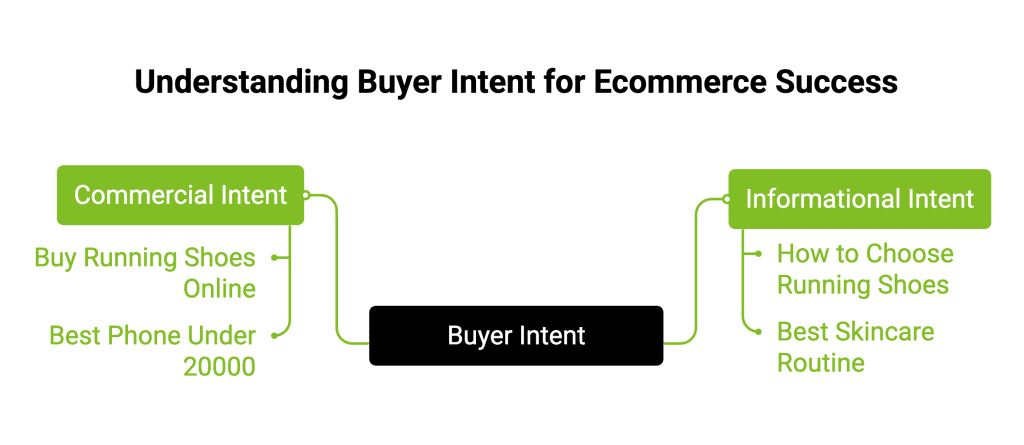
Many ecommerce stores focus solely on search volume, but that rarely translates into sales. The real goal is to understand why someone is searching in the first place.
Buyer intent reflects what the user wants at that moment. You can usually spot it by the words they use in their search query.
Here are the key types to focus on:
- Informational intent: Searches like “how to choose running shoes” or “best skincare routine” show the user is still researching. These are great for blog content.
- Commercial intent: Searches like “buy running shoes online” or “best phone under 20000” indicate the user is closer to making a purchase and should be targeted on category or product pages.
To uncover these keywords, you can use tools like Google Keyword Planner or Ubersuggest, and also analyse real search suggestions and competitor pages.
When your keywords align with intent, your traffic becomes more relevant, and your chances of converting visitors into customers improve significantly.
2. Focus on Long-Tail Keywords That Drive Conversions
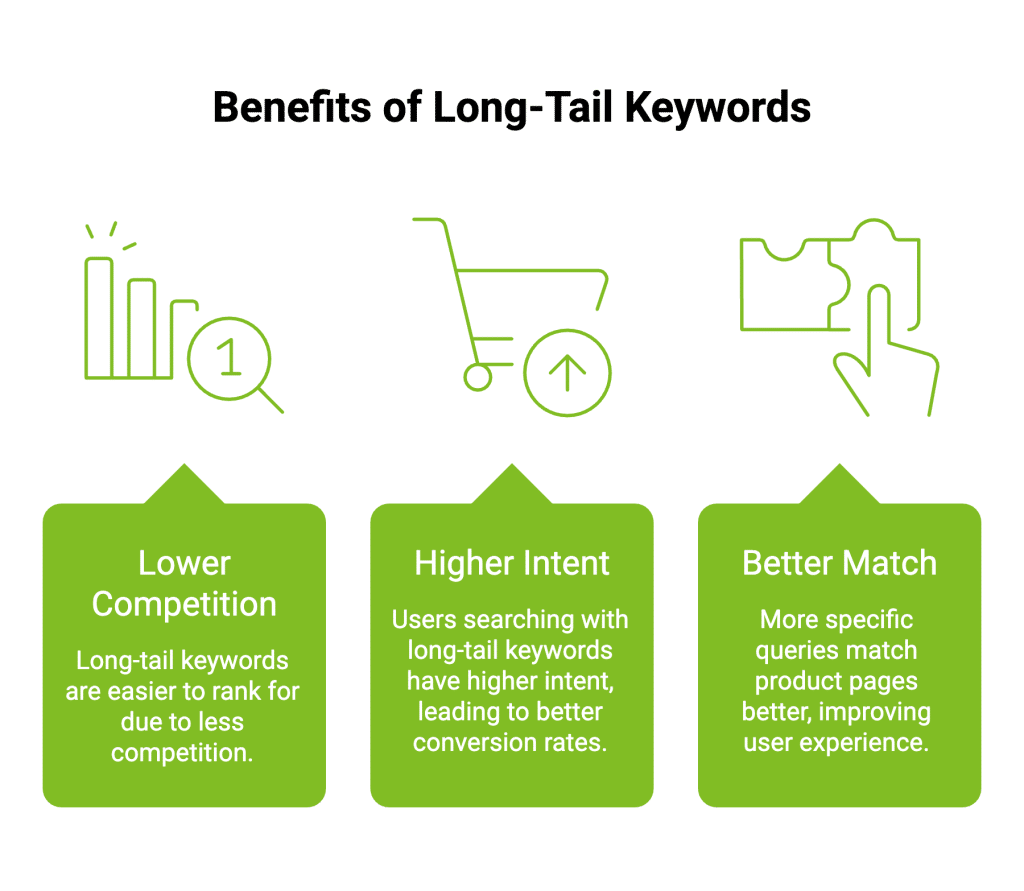
Once you understand intent, the next step is to get more specific.
Long-tail keywords are longer, more detailed search phrases like “best running shoes for flat feet under 3000.” They may have lower search volume, but they bring in users who know exactly what they want.
Why this matters:
- Lower competition makes them easier to rank for
- Higher intent means better conversion rates
- More specific queries match product pages better
Instead of targeting broad terms like “shoes,” focus on variations that reflect real buying behaviour. You can find these by looking at autocomplete suggestions, related searches, and customer queries.
Long-tail keywords help you attract qualified traffic that is more likely to convert, not just browse.
SEO today is not just about keywords. It is about clarity, structure, and intent. Here’s a deeper look at how to rank higher in Google search results and what actually moves the needle.
3. Make Your Product Pages Easy to Find and Hard to Ignore
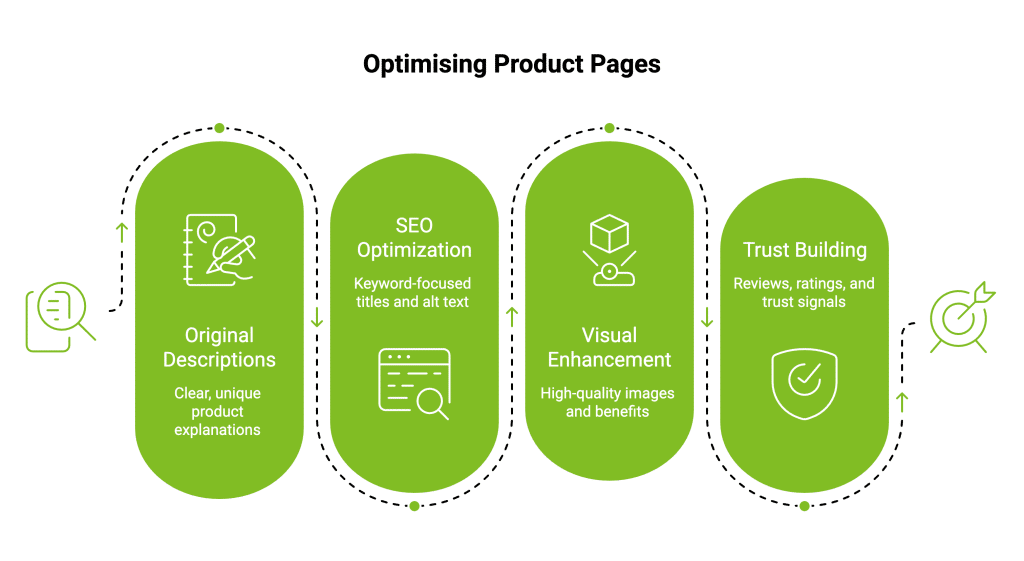
Product pages are where SEO meets sales, so they need to be both discoverable and persuasive.
Start by writing original product descriptions that clearly explain what the product does, who it’s for, and why it stands out. Avoid copying supplier content, as it hurts rankings and adds no value for users.
Then improve how the page performs:
- Use clear, keyword-focused titles
- Add high-quality images with proper alt text
- Highlight key benefits, not just features
- Include reviews, ratings, and trust signals
It is also important to make the page easy to navigate, especially on mobile. The faster users can understand the product, the more likely they are to convert.
4. Strengthen Your Category Pages to Capture More Traffic
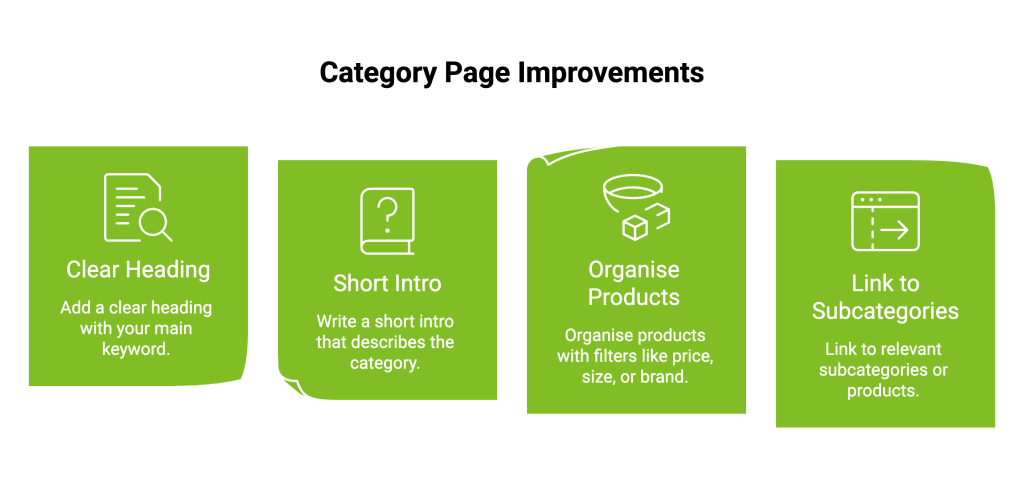
Category pages are often overlooked, but they are powerful for ranking broader, high-volume keywords.
Instead of leaving them as simple product listings, add useful, keyword-focused content that helps both users and search engines understand the page. A short introduction explaining the category and what users can expect can significantly improve performance.
To improve results:
- Add a clear heading with your main keyword: This helps search engines understand the page and improves relevance.
- Write a short intro that describes the category: Give users context about the products and what makes them valuable.
- Organise products with filters like price, size, or brand: Make it easier for users to find what they are looking for quickly.
- Link to relevant subcategories or products: Guide users deeper into your site and improve internal linking.
These pages act as a bridge between search intent and your products. When optimised well, they bring in high-intent traffic at scale and guide users toward the right purchase.
5. Improve Your Site Structure for Better Navigation and Rankings
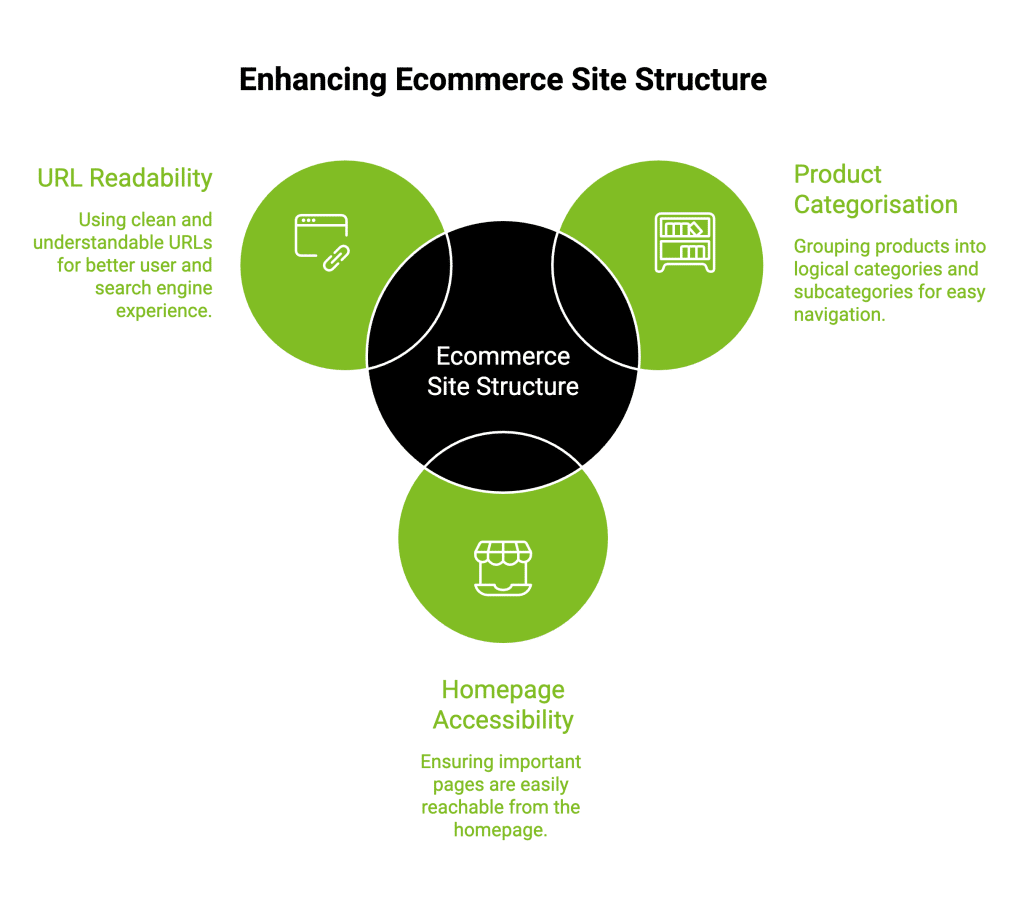
If users cannot find what they need quickly, they leave. Search engines behave the same way.
A well-structured ecommerce site makes it easy to move from the homepage to categories and then to products without confusion. It also helps search engines crawl and index your pages more efficiently.
Keep your structure simple and logical:
- Group products into clear categories and subcategories
- Keep important pages within a few clicks from the homepage
- Use clean, readable URLs
When your structure is organised, users stay longer, pages get indexed faster, and your overall SEO performance improves.
6. Make Your Website Fast and Mobile-Friendly
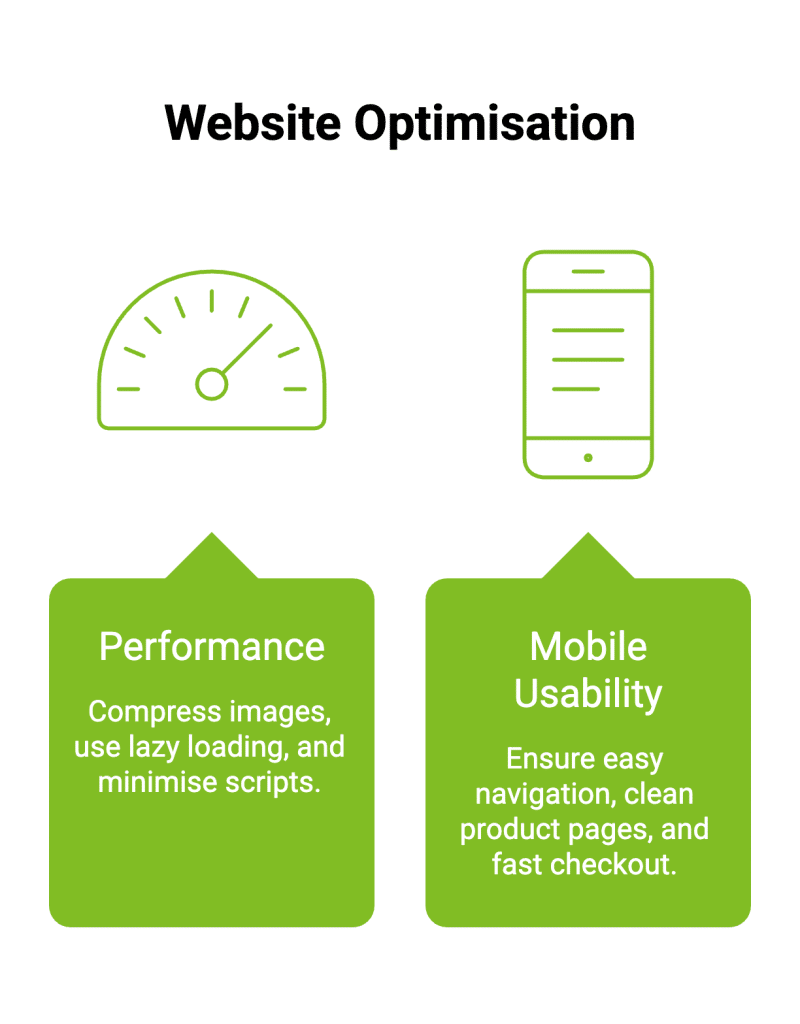
Speed and mobile experience are not just UX factors; they directly affect rankings and revenue.
Most ecommerce traffic now comes from mobile devices, and search engines like Google use mobile-first indexing. This means your mobile version is what gets evaluated first. If it is slow or difficult to use, your rankings and conversions both suffer.
Start with performance:
- Compress and properly size images to reduce load time
- Use lazy loading so images load only when needed
- Minimise heavy scripts and unnecessary plugins
Then focus on mobile usability:
- Ensure buttons are easy to tap and navigation is simple
- Keep product pages clean and scannable
- Make checkout fast and frictionless
Even a one-second delay in load time can reduce conversions significantly. A fast, smooth experience keeps users engaged, reduces bounce rate, and increases the chances of a purchase.
7. Fix Technical SEO Issues That Hold Your Store Back
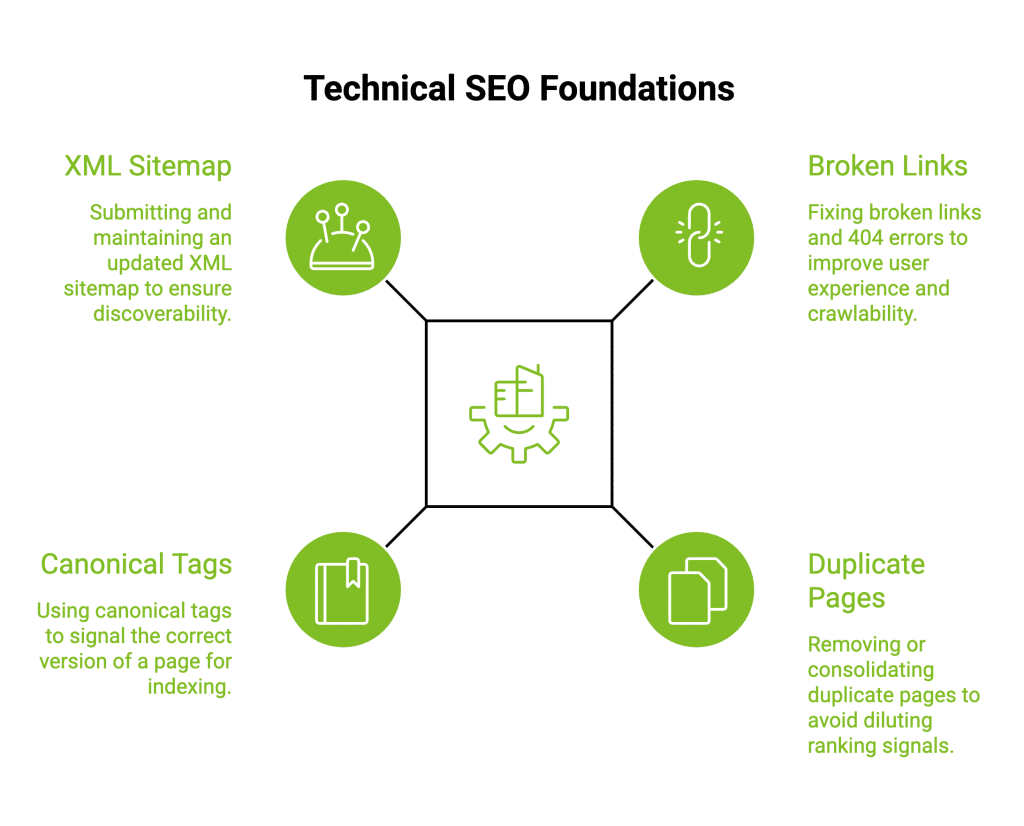
You can have great products and content, but if your site has technical issues, it will struggle to rank.
Technical SEO ensures that search engines can crawl, understand, and index your pages properly. This is especially important for ecommerce sites, where large inventories, filters, and multiple URL variations can create complexity.
Start by addressing common issues:
- Fix broken links and 404 errors: These hurt user experience and make it harder for search engines to crawl your site effectively.
- Remove or consolidate duplicate pages: Product variants and similar URLs can dilute ranking signals if not handled properly.
- Use canonical tags to signal the correct version of a page: This helps search engines understand which page should be indexed and ranked.
- Submit and maintain an updated XML sitemap: Ensure all important pages are discoverable and regularly crawled.
Also pay attention to ecommerce-specific challenges. Features like faceted navigation can generate many URL combinations, leading to crawl budget waste and index bloat. This means search engines spend time crawling low-value or duplicate pages instead of your important ones.
Keeping your site clean, structured, and crawl-efficient makes it easier for search engines to prioritise the pages that actually drive traffic and revenue.
8. Use Content to Support Your Ecommerce SEO Strategy
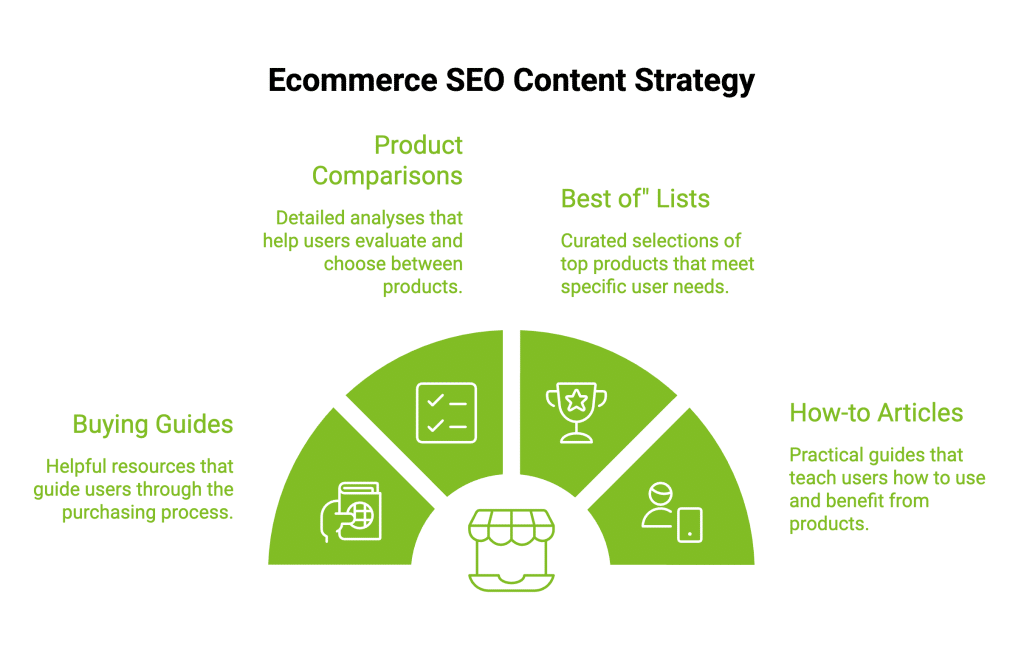
Content is what brings users to your site before they are ready to buy.
A strong ecommerce SEO strategy does not rely only on product and category pages. It also includes helpful content that answers questions, compares options, and guides users toward a purchase.
Focus on creating:
- Buying guides
- Product comparisons
- “Best of” lists
- How-to articles related to your products
This type of content helps you target informational keywords and bring users into your funnel early. From there, you can guide them to your product and category pages through internal links.
Think of it as a funnel:
- TOFU (Top of Funnel): Blog content that educates and attracts users
- MOFU (Middle of Funnel): Comparisons and “best” lists that help users evaluate options
- BOFU (Bottom of Funnel): Product and category pages where users make a purchase
Content also builds trust and authority, which makes it easier for your entire site to rank. Done right, it turns your ecommerce store into a resource, not just a place to buy.
9. Build Internal Links That Guide Users and Search Engines
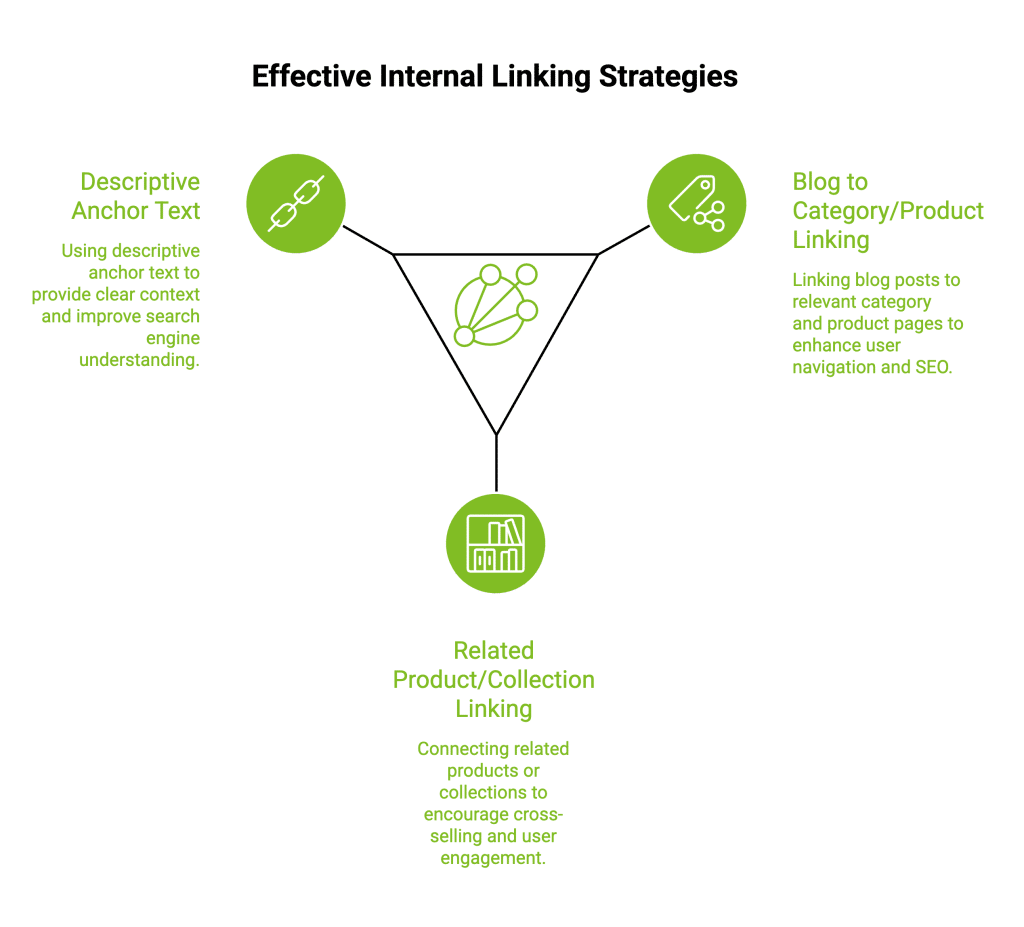
Internal linking is one of the most underrated ways to improve SEO and conversions.
It helps search engines understand how your pages are connected, and it guides users toward the right products without friction.
Here’s how to use it effectively:
- Link blog content to relevant category and product pages
- Connect related products or collections
- Use descriptive anchor text instead of generic phrases
For example, a buying guide can naturally link to product pages, helping users move from research to purchase.
Strong internal linking is also key for improving ecommerce SEO without building backlinks, because it distributes authority across your site and boosts the visibility of important pages.
10. Earn Backlinks That Build Authority and Trust
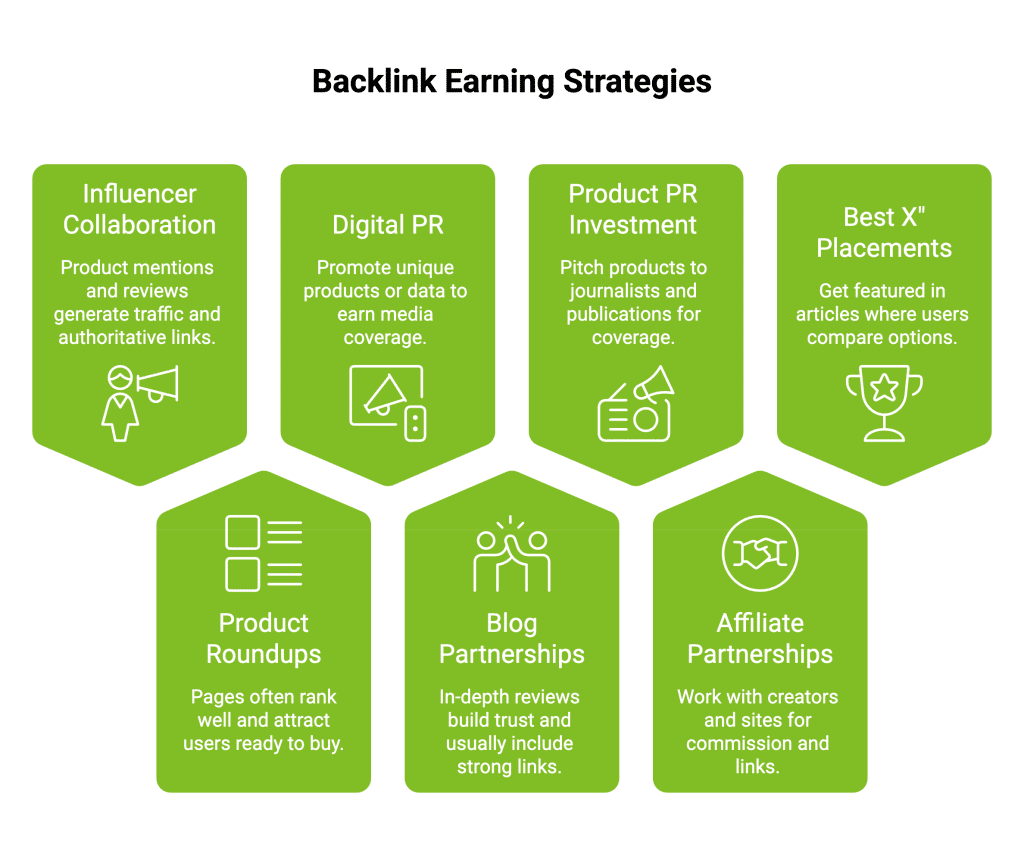
Backlinks are still one of the strongest ranking signals in SEO. They tell search engines that your store is credible and worth showing to users.
For ecommerce, the focus should be on quality over quantity. A few strong, relevant links can have more impact than dozens of low-quality ones.
Here are practical ways to earn them:
- Collaborate with influencers and creators in your niche: Product mentions and reviews can generate both traffic and authoritative links.
- Get featured in product roundups or gift guides: These pages often rank well and attract users who are ready to buy.
- Use digital PR to promote unique products or data: Launches, trends, or original insights can earn media coverage and backlinks.
- Partner with blogs and publishers for reviews: In-depth reviews build trust and usually include strong links.
- Invest in product PR: Pitch your products to journalists, editors, and niche publications for coverage.
- Build affiliate partnerships: Work with creators and sites that promote your products in exchange for commission, creating a steady source of links.
- Target “best X” placements: Get your products featured in articles like “best [product category]” where users are actively comparing options and close to making a purchase.
If you are working with external support, many ecommerce SEO services also focus heavily on building high-quality links through outreach and partnerships.
11. Use Reviews and User Content to Build Trust and Rankings
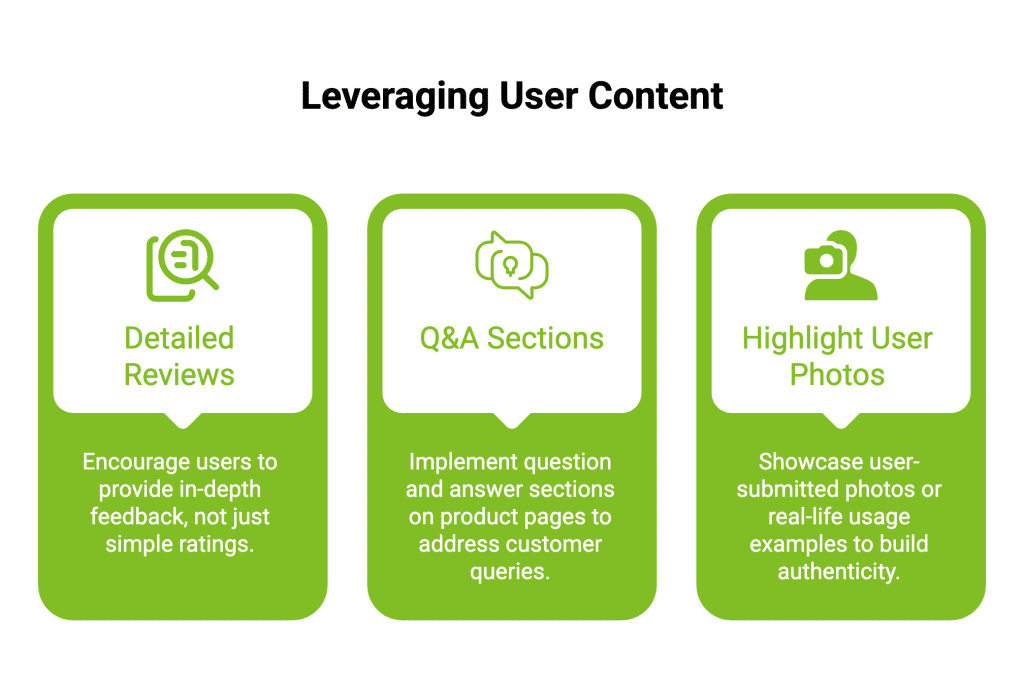
Customer feedback does more than build trust. It also adds fresh, keyword-rich content to your pages.
When users leave reviews, they naturally include terms and phrases that other buyers search for. This helps your pages rank for more variations without extra effort.
To make the most of it:
- Encourage detailed reviews, not just ratings
- Add Q&A sections on product pages
- Highlight user photos or real-life usage
This is especially valuable for B2B ecommerce SEO, where buyers often look for proof, case studies, and reliability before making a decision.
User-generated content keeps your pages updated, improves credibility, and helps potential customers feel more confident about buying.
12. Optimise Titles and Meta Descriptions to Improve Clicks
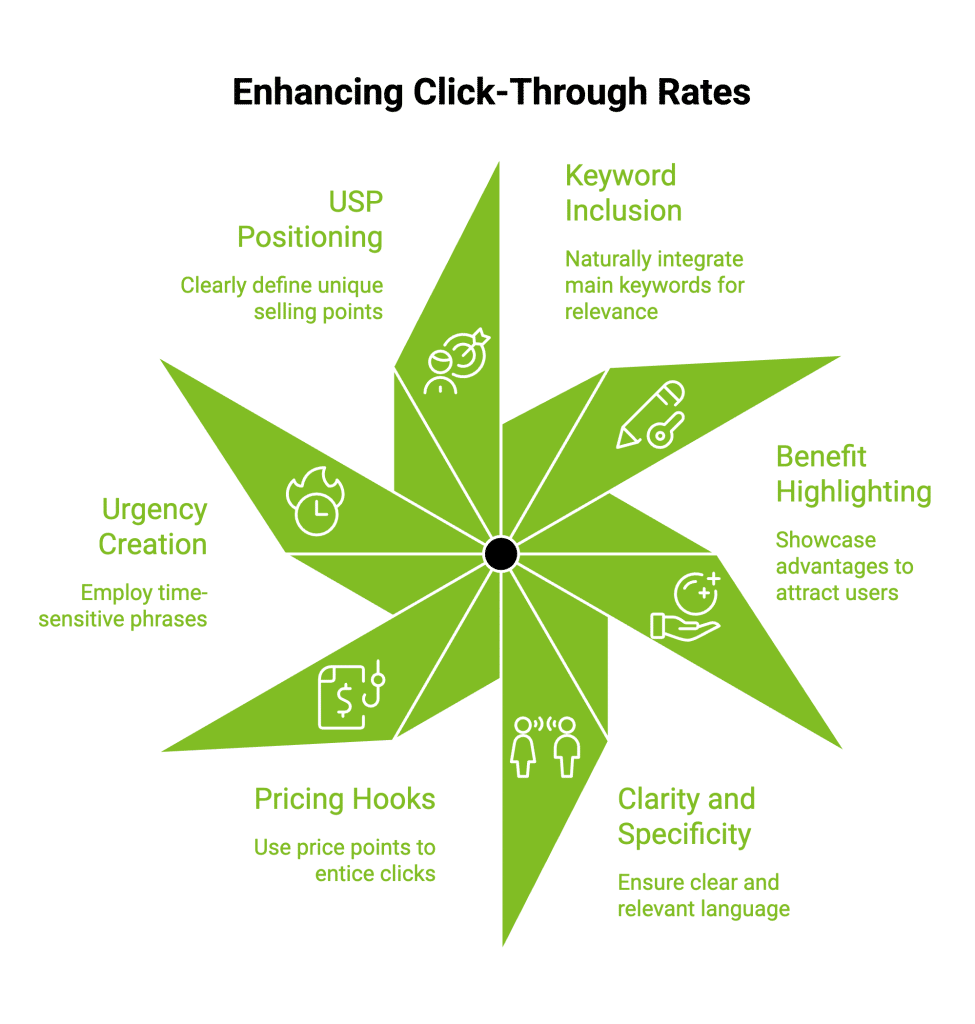
Ranking is only half the job. You also need people to click.
Your title tag and meta description are what users see on search results. If they are unclear or generic, users will skip your page even if it ranks well.
To improve performance:
- Include your main keyword naturally in the title: This improves relevance and helps users quickly match your page to their search.
- Highlight a benefit, price point, or unique selling point: Give users a clear reason to choose your result over others.
- Keep it clear, specific, and relevant to the search: Avoid vague or clickbait language that does not match intent.
- Use pricing hooks: Mention starting prices, discounts, or value indicators to attract attention.
- Create urgency: Phrases like limited stock or time-sensitive offers can increase clicks when used carefully.
- Position your USP clearly: Show what makes your product or offer different at a glance.
Think of it as your first impression. A strong title and description can significantly improve your click-through rate, which can also positively impact rankings over time.
13. Use Schema Markup to Improve Visibility and Click-Through Rate
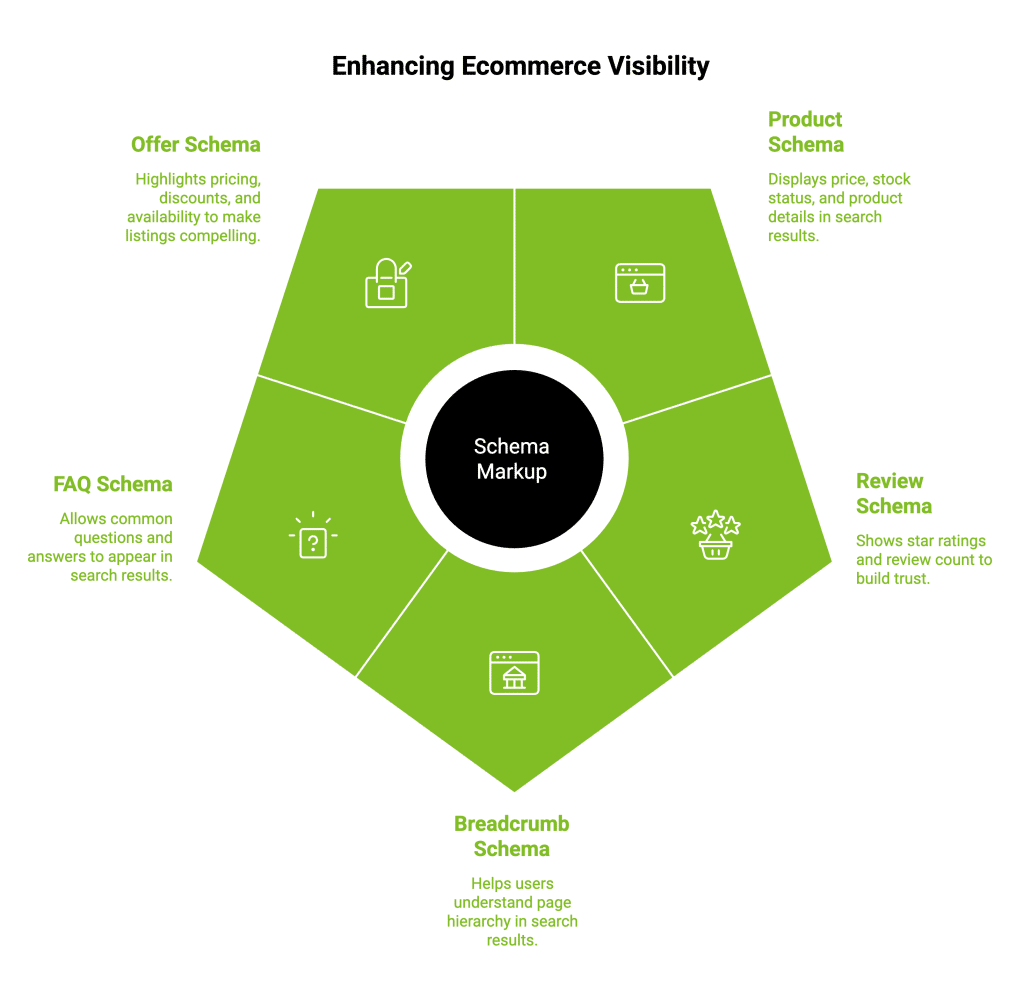
Schema is not just a technical add-on. It directly affects how your products appear in search results.
When implemented correctly, it allows search engines to show real data from your product pages, like price, availability, and ratings. This makes your listing more informative before the user even clicks.
For ecommerce, focus on:
- Product schema: shows price, stock status, and product details
- Review schema: displays star ratings and review count
- Breadcrumb schema: helps users understand page hierarchy in search results
- FAQ schema: Allows common questions and answers to appear in search results, addressing user doubts early.
- Offer schema: Highlights pricing, discounts, and availability, making your listing more compelling.
For example, if your product shows a price and a 4.5-star rating in search results, it instantly stands out compared to plain listings. This often leads to higher click-through rates, even if your ranking stays the same.
You can implement schema using JSON-LD and test it with tools like Google Rich Results Test to make sure everything is set up correctly.
In competitive ecommerce niches, small visibility improvements like this can make a noticeable difference in traffic and clicks.
14. Turn High-Intent Traffic into Sales
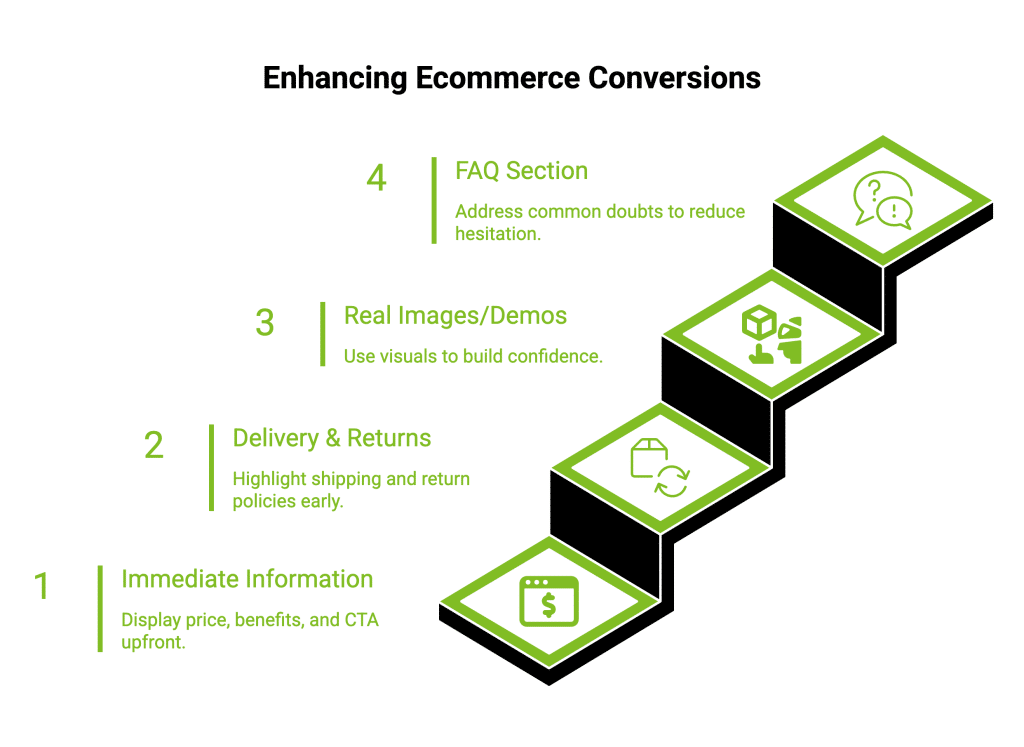
Ranking brings visitors, but conversion drives revenue.
A common issue in ecommerce is this: users land on a page, scroll briefly, and leave, not because the product is bad, but because the page does not answer key buying questions fast enough. High-intent users do not need more convincing; they need clarity.
To improve conversions, focus on how your product page communicates:
- Show price, key benefits, and CTA immediately: Make it clear what the product is, why it matters, and what to do next without scrolling.
- Highlight delivery timelines and return policies early: Shipping and returns are decision drivers. Surface them upfront to reduce hesitation.
- Use real images or short demos to build confidence: Help users visualise the product in real use, not just polished studio shots.
- Answer common doubts through FAQs: Address concerns like sizing, usage, compatibility, and results before they become exit points.
Ultimately, this comes down to a simple shift in focus. Prioritise revenue over traffic and focus more on conversion rate than impressions.
15. Track Performance and Continuously Improve
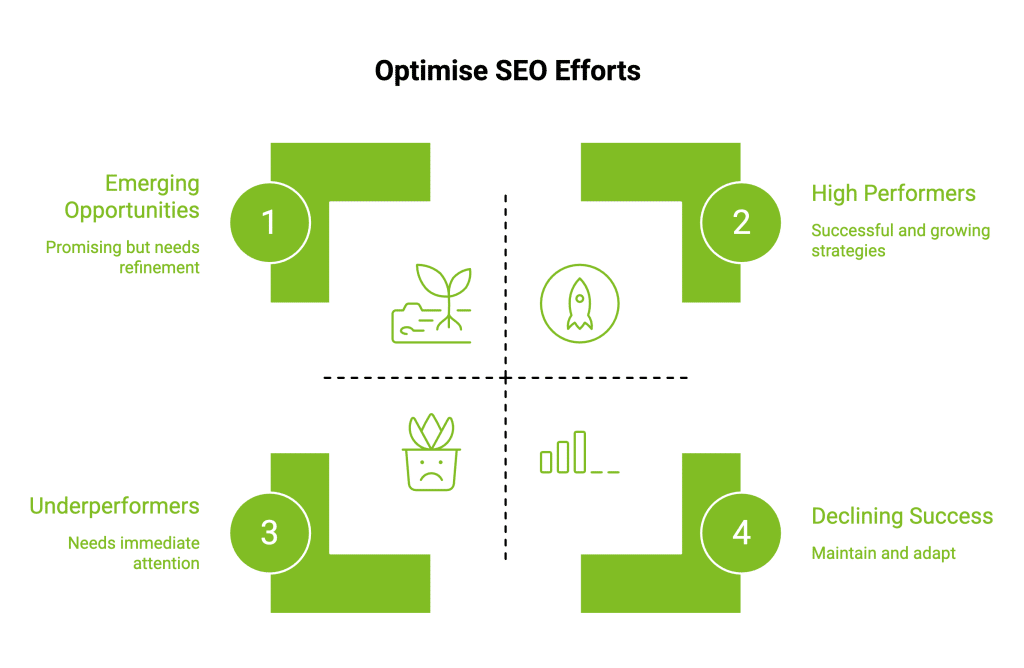
Ecommerce SEO is not a one-time setup. What works today may not work a few months from now.
To grow consistently, you need to track what is working and fix what is not.
Focus on key metrics:
- Which keywords are driving traffic
- Which pages are converting
- Where users are dropping off
- Which products are getting visibility but no clicks
Use tools like Google Analytics and Google Search Console to get real data.
If a page gets impressions but low clicks, improve the title or meta description. If traffic is high but conversions are low, improve the page experience.
To boost results, strengthen:
- Upsells to increase order value
- Bundles to simplify buying decisions
- Trust triggers like reviews and guarantees to build confidence
SEO works best as an ongoing process. Regular updates and optimisation turn small wins into long-term growth.
Not sure why your traffic isn’t growing? An ecommerce SEO audit helps you find technical gaps, content issues, and structural problems that may be limiting your visibility.
What Common Ecommerce SEO Mistakes Are Holding Your Store Back?
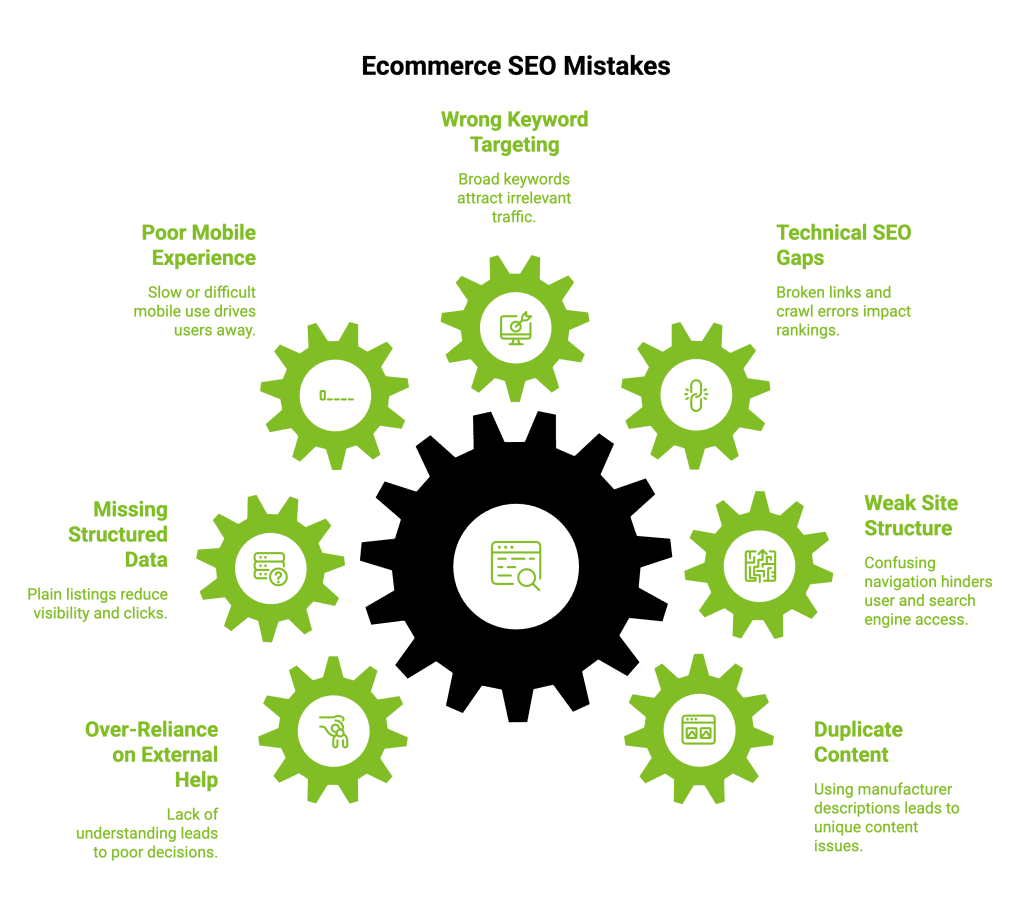
Even with a solid strategy, a few common mistakes can quietly limit your growth. Here’s what to watch out for and how to fix them.
1. Duplicate Product Content
Many ecommerce stores rely on manufacturer descriptions, which leads to duplicate content across multiple sites. This makes it harder for search engines to see your pages as unique or valuable. To fix this, rewrite product descriptions in your own voice. Focus on benefits, real use cases, and customer concerns so your content stands out and adds value.
2. Weak Site Structure
A confusing structure makes it difficult for both users and search engines to navigate your store. Important pages may get buried and never rank. The fix is to simplify your hierarchy. Keep categories logical, ensure key pages are easy to reach, and connect related pages through internal linking so everything flows naturally.
3. Technical SEO Gaps
Issues like broken links, duplicate URLs, and crawl errors can block your pages from performing well. These problems often go unnoticed but have a direct impact on rankings. Regular audits, fixing errors, and properly using canonical tags help ensure your site is clean and easy for search engines to crawl.
4. Wrong Keyword Targeting
Going after broad, high-volume keywords often brings traffic that does not convert. This usually happens when intent is ignored. Instead, align your keywords with what users actually want. Focus on long-tail and intent-driven queries that match different stages of the buying journey.
5. Poor Mobile Experience
If your site is slow or difficult to use on mobile, users will leave quickly. Since most ecommerce traffic comes from mobile, this directly affects both rankings and sales. Improving responsiveness, simplifying navigation, and ensuring fast load times can make a noticeable difference.
6. Missing Structured Data
Without structured data, your listings appear plain in search results and miss out on important details like ratings and price. This reduces visibility and clicks. Adding schema helps search engines display richer results, making your listings more appealing and informative.
7. Over-Reliance on External Help
Relying completely on ecommerce SEO services without understanding the basics can lead to poor decisions or missed opportunities. Even if you outsource, you should stay involved, track performance, and ensure the fundamentals are implemented correctly.
Fixing these issues often leads to quick improvements. In many cases, the problem is not a lack of effort, but a few gaps that are holding your performance back.
Why Choose Wild Creek Web Studio for Ecommerce SEO Growth?
If you’re looking to turn SEO into a real revenue channel, not just traffic, Wild Creek Web Studio brings the expertise to make it happen. We position ourselves as ecommerce SEO specialists, helping brands build a strong foundation across product pages, category pages, and technical SEO.
What sets us apart is our focus on building a connected, results-driven SEO system instead of isolated fixes. Every strategy we implement is aligned with search intent, site performance, and conversion goals.
Here’s what you can expect:
- Actionable strategies for product, category, and technical optimisation
- A structured approach that improves both rankings and conversions
- Focus on long-term, sustainable growth instead of short-term wins
- Experience working across industries and competitive markets
If you want SEO that goes beyond checklists and actually drives business results, Wild Creek Web Studio is built for exactly that.
Final Words
Ecommerce SEO is not a one-time task. It is something that compounds over time.
When your store aligns with what people are actually searching for, traffic improves, conversions increase, and growth becomes more predictable. Small improvements across pages and performance can lead to big results.
The key is consistency. Focus on what helps users, keep optimising, and your SEO will start working as a reliable growth channel, not just a traffic source.
Frequently Asked Questions
What SEO practices does Google recommend specifically for ecommerce websites?
Google recommends strong search engine optimisation fundamentals like clear site architecture, fast page speed, and responsive design. Use relevant keywords, optimise product images, add unique content, and structure web pages to improve search engine rankings and visibility.
What is the 80/20 rule for SEO?
The 80/20 rule in SEO means focusing on high-impact actions that drive most results. Prioritise keyword research, fixing page speed, optimising web pages, and improving search rankings instead of spreading SEO efforts across low-impact tasks.
How can a beginner optimise an ecommerce website for SEO?
Start with keyword research and organise product categories with a clean URL structure. Optimise product images, improve page load, add product reviews, and create unique content. Use basic SEO tools to track search engine results and improve performance.
What are the 5 C’s of e-commerce?
The 5 C’s of ecommerce are Company, Customers, Competitors, Collaborators, and Context. Together, they guide ecommerce businesses in shaping digital marketing, understanding audiences, refining product categories, and improving overall search engine optimisation strategy.
What tools can help me analyse and improve my ecommerce site’s SEO performance?
You can use SEO tools like Google Analytics, Google Search Console, Ahrefs, and SEMrush to track search rankings, analyse web pages, monitor keyword research, and improve page speed, link building, and overall search engine optimisation performance.
Is SEO dead or evolving in 2026?
SEO is not dead; it is evolving. Search engine optimisation now focuses on user intent, unique content, page speed, and search engine results experience. Ecommerce businesses must adapt strategies to improve search rankings and stay competitive in digital marketing.