
Key Highlights
- Healthcare SEO helps providers rank for symptoms, treatments, and local searches to attract patients.
- It relies on accurate content, strong E-E-A-T signals, and clear patient-focused communication.
- The process includes keyword research, content creation, on-page SEO, technical fixes, and local optimisation.
- High-impact pages include service, symptom, doctor profile, location, and contact pages.
- Common issues include complex language, thin content, weak local SEO, outdated info, and poor UX.
- Performance is measured through relevant traffic, engagement, conversions, and local actions.
- Wild Creek Web Studio delivers strategy-led, successful healthcare SEO focused on qualified inquiries and long-term growth.
Many healthcare providers lose patients before the first interaction simply because they are not visible online. No matter how good your care is, if you do not appear in search results, you miss patients at the moment they are actively looking.
That matters even more when 77% of patients start their healthcare journey on search engines, researching symptoms, treatments, and nearby providers.
And visibility alone is not enough. Patients compare options, read reviews, and choose who they trust. Without a strong presence, even great practices face inconsistent inquiries and rely too heavily on paid ads.
A focused healthcare SEO strategy fixes this. In this guide, you will learn how to improve visibility, attract the right patients, and build trust online.
What is Healthcare SEO?
Healthcare SEO is the process of improving your website’s visibility on search engines so patients can easily find your services through organic search when they search online. It focuses on ranking for queries related to symptoms, treatments, and local healthcare providers.
Unlike general SEO, SEO for hospitals and healthcare requires a stronger focus on accuracy, trust, and compliance. The content must be reliable, medically sound, and easy for patients to understand, while also meeting search engine guidelines.
In practice, healthcare SEO includes optimising your website structure, creating helpful content, improving local visibility, and building trust signals like reviews and doctor credentials. The goal is simple: help the right patients find you at the moment they need care.
Why Healthcare SEO Matters?
Most patients begin their healthcare journey online, and search drives a major share of visits to hospital and clinic websites. If your practice ranks well, you are not just visible; you are shaping patient decisions from the very first search.
Here is how healthcare SEO translates into real growth and measurable impact:
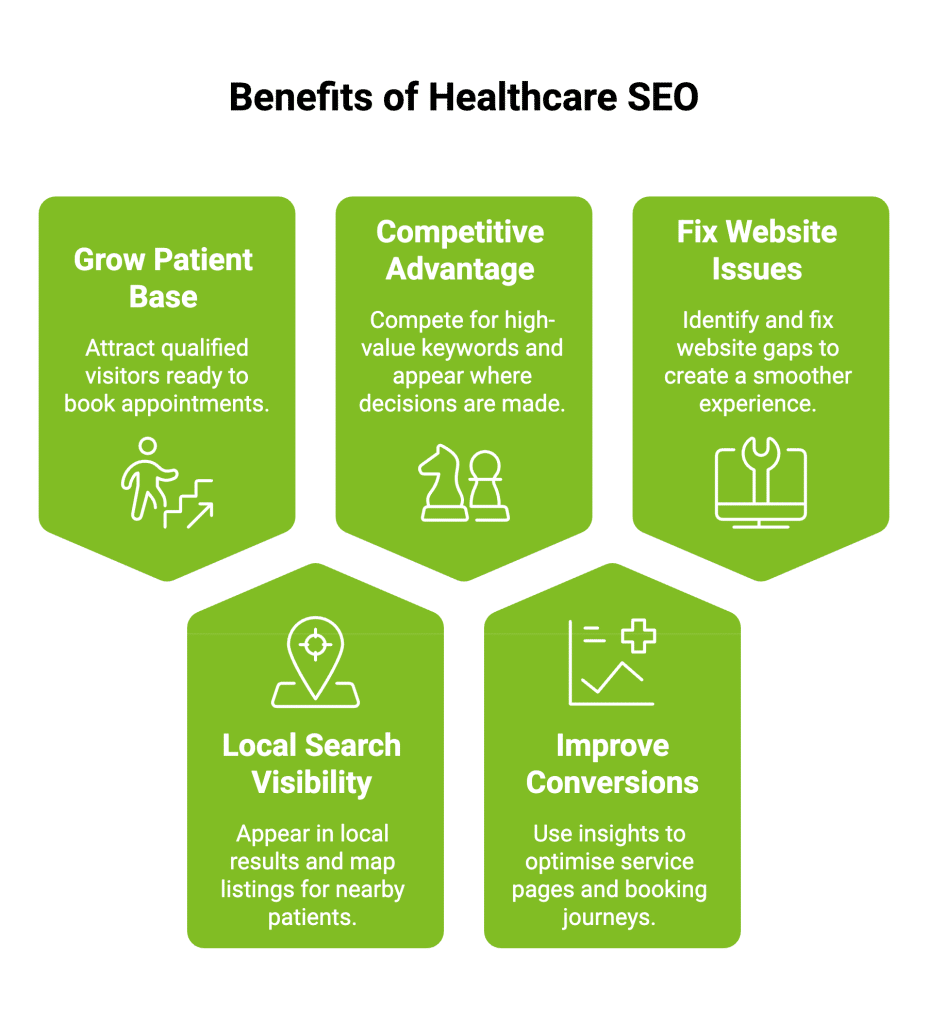
1. Grow Your Patient Base
Ranking for high-intent searches like “knee pain treatment” or “child specialist near me” puts you in front of patients who are ready to book.
You attract qualified visitors who convert into appointments, not just clicks. Over time, this creates a steady flow of new patients without constantly increasing your ad budget.
2. Show Up for Local Searches
Healthcare is deeply local. Patients want care that is nearby, accessible, and trusted.
When you appear in local results and map listings, patients take immediate action. They call, get directions, or book directly. This is where a large portion of daily inquiries actually comes from.
3. Stay Competitive in a Crowded Market
Patients rarely choose the first option they see. They compare providers, check reviews, and evaluate credibility.
If you are not ranking, you are not even in the consideration set. Strong SEO helps you compete for high-value keywords and consistently appear where decisions are being made.
4. Turn Insights Into Better Conversions
SEO shows you exactly how patients search, what they click, and where they drop off.
This allows you to improve service pages, refine messaging, and optimise booking journeys. The result is more engaged visitors and a higher percentage of them turning into actual patients.
5. Fix What Is Costing Your Patients
Many websites lose potential patients due to slow speed, poor mobile experience, or confusing layouts.
By identifying and fixing these gaps, you create a smoother experience that builds trust instantly. Faster pages, clear navigation, and easy booking flows directly increase conversions.
Healthcare SEO is not just about getting traffic. It is about attracting the right patients, improving how they experience your practice online, and building a system that drives consistent, predictable growth.
Struggling to rank your healthcare website? Learn how to rank higher in Google search results and drive more organic traffic.
How Is Healthcare SEO Different from Regular SEO?
At a surface level, healthcare SEO may look similar to other industries. It still involves keywords, content, and technical optimisation to improve visibility for relevant search queries. But in reality, it operates under much stricter expectations because it directly impacts people’s health and decisions.
Here’s a clear comparison:
| Aspect | Healthcare SEO | Regular SEO |
| Content Accuracy | Must be medically accurate, reviewed, and reliable | Can be more flexible and opinion-based |
| Trust Requirements | Very high, requires credentials, reviews, and authority signals | Moderate, depends on industry |
| E-E-A-T Importance | Critical for rankings due to YMYL impact | Important but not always a deciding factor |
| User Intent Complexity | Covers symptoms, treatments, and local provider searches | Usually focused on product or service intent |
| Content Style | Educational, clear, and patient-focused | Can be promotional or sales-driven |
| Local SEO Importance | Extremely important for patient acquisition | Important but varies by business type |
| Risk of Misinformation | Very high, can impact health decisions | Lower risk in most industries |
| Content Updates | Requires frequent updates for accuracy and relevance | Updates needed, but less critical |
| Decision-Making Impact | Influences sensitive, high-stakes decisions | Typically lower-stakes decisions |
How Healthcare SEO Works Step by Step?
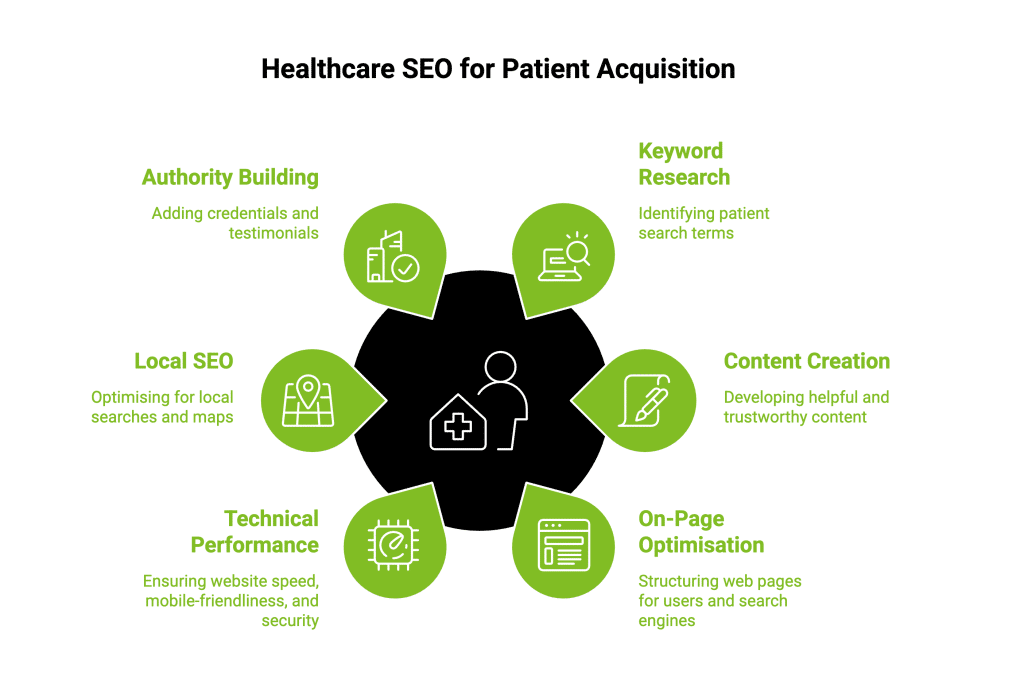
Healthcare SEO is not a single task. It is a structured process where each step builds on the next to improve visibility, trust, and patient acquisition. When done correctly, it creates a system that consistently brings in high-intent patients.
Step 1: Keyword Research Based on Patient Intent
Start by identifying what patients are actually searching for. This includes symptom-based queries, treatment-related keywords, and local searches. The goal is to target queries that reflect real patient needs, not just industry terms.
Step 2: Create Helpful, Trustworthy Content
Once you have the right keywords, build relevant content that answers patient questions clearly. Focus on explaining conditions, treatments, and next steps in simple language. Content should educate while also building confidence in your expertise.
Step 3: Optimise On-Page Elements
Structure your pages so both users and search engines can easily understand them. This includes optimising titles, headings, URLs, and internal links while keeping the content easy to read and navigate.
Step 4: Improve Technical Performance
Ensure your website is fast, mobile-friendly, and secure. Fix issues like slow loading times, broken links, and indexing errors so search engines can properly access and rank your pages.
Step 5: Strengthen Local SEO Presence
Optimise your Google Business Profile, maintain consistent contact details, and collect patient reviews. This helps you appear in local searches and maps where most healthcare decisions happen.
Step 6: Build Authority and Trust Signals
Add doctor credentials, certifications, patient testimonials, and credible references. These elements show both patients and search engines that your content is reliable and trustworthy.
Each step plays a role, but the real impact comes when they work together as part of a consistent healthcare SEO strategy focused on long-term growth.
Which Pages Do You Need for Healthcare SEO?
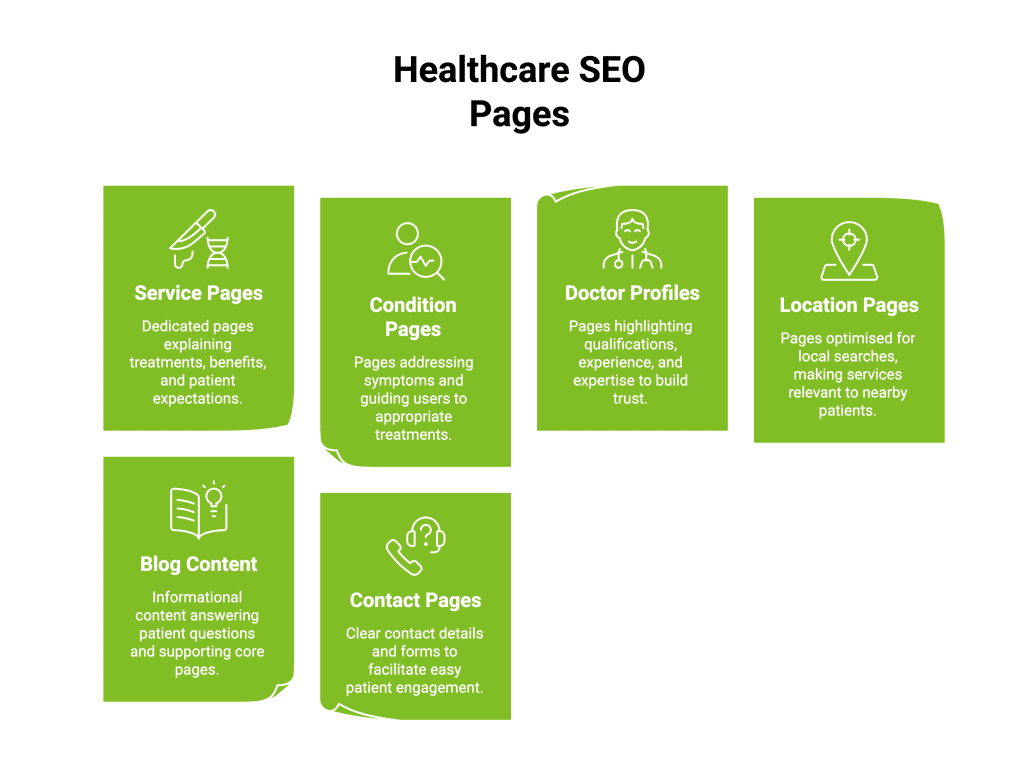
Not every page on your website contributes equally to SEO. In healthcare, specific pages play a clear role in attracting patients, building trust, and driving conversions. The goal is to cover the full patient journey, from initial research to booking an appointment.
Here are the key pages you need:
- Service pages: These are your main conversion pages. Each service should have a dedicated page that explains the treatment, who it is for, the benefits, and what patients can expect. This is where most users decide whether to contact you.
- Condition and symptom pages: Patients often search using symptoms instead of medical terms. These pages help you capture early-stage searches and guide users toward the right treatment or service.
- Doctor profile pages: Patients want to know who they are choosing. Profiles that highlight qualifications, experience, and areas of expertise help build trust and credibility.
- Location pages: If you operate in multiple areas, location-specific pages help you rank for local searches and make your services more relevant to nearby patients.
- Blog and educational content: Informational content answers common patient questions and brings in top-of-funnel traffic. It also supports your core pages through internal linking.
- Contact and conversion pages: Clear contact details, appointment forms, and strong calls to action make it easy for patients to take the next step without friction.
When these pages work together, your website becomes more than just informative. It becomes a structured system that attracts, guides, and converts patients effectively.
Struggling to optimize your healthcare website? Discover the key on-page SEO factors that can improve your rankings and visibility.
What Common Mistakes Should You Avoid in Healthcare SEO?
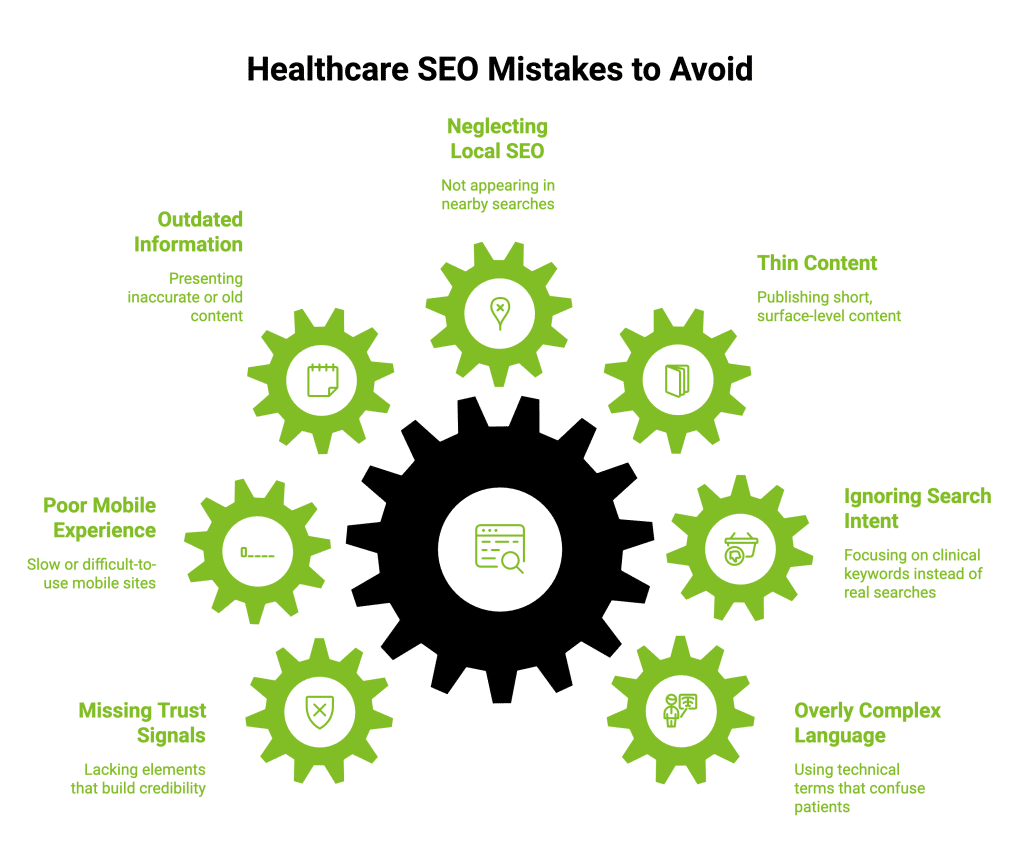
Even well-designed healthcare websites can struggle to rank if key SEO mistakes are overlooked. These issues may seem minor, but they can directly impact visibility, trust, and patient conversions.
1. Using Overly Complex Medical Language
Many healthcare websites rely heavily on technical terms that patients do not fully understand. This creates confusion and increases bounce rates.
Use simple, patient-friendly language, explain medical terms clearly, and focus on answering questions the way patients actually ask them.
2. Ignoring Real Patient Search Intent
Focusing only on clinical keywords instead of real search behaviour can result in poor traffic quality.
Research how patients search and include symptom-based queries, questions, and local intent keywords that reflect real-world searches.
3. Publishing Thin or Generic Content
Short or surface-level content does not provide enough value to rank or build trust.
Create in-depth content that covers symptoms, causes, treatment options, and next steps so each page fully answers the user’s query.
4. Neglecting Local Search Optimisation
Without local optimisation, your website may not appear for nearby searches, which are often the most valuable.
Optimise your Google Business Profile, keep your contact details consistent, and actively collect patient reviews.
5. Keeping Outdated or Inaccurate Information
Healthcare information changes over time. Outdated content can reduce credibility and rankings.
Regularly review and update your content, add “last updated” dates, and ensure all information is accurate and relevant.
6. Poor Mobile and Website Experience
A slow or difficult-to-use website leads to high drop-offs, especially on mobile devices.
Improve page speed, ensure mobile responsiveness, and simplify navigation so users can easily find what they need.
7. Missing Trust Signals
Without visible proof of expertise, patients may hesitate to choose your practice.
Add doctor credentials, certifications, patient testimonials, and reviews to strengthen credibility and build trust.
Avoiding these mistakes is not just about improving rankings. It is about creating a better experience that helps patients feel confident choosing your services.
Fixing the basics can make or break your rankings. Learn about the common SEO mistakes that are hurting your website and how to avoid them.
Why Is E-E-A-T Important for Healthcare SEO?
In healthcare, ranking is not just about relevance. It is about trust. Patients rely on online information to make important decisions, and search engines prioritise content that is accurate, reliable, and backed by real expertise. If your website does not demonstrate credibility, it becomes difficult to rank and even harder to convert visitors into patients.
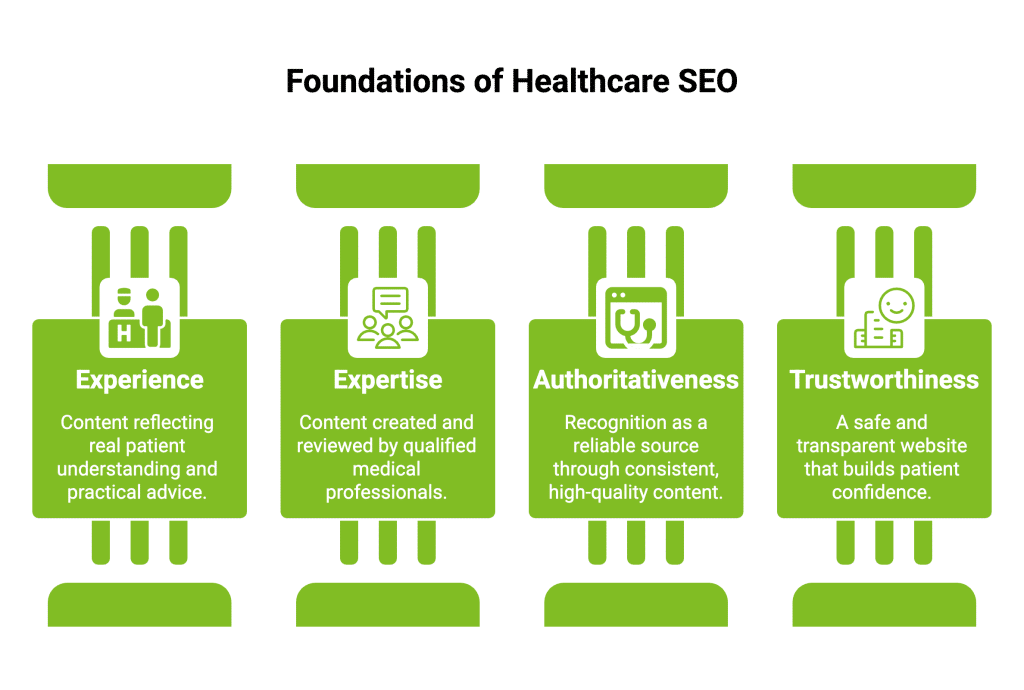
E-E-A-T stands for Experience, Expertise, Authoritativeness, and Trustworthiness. These signals help search engines evaluate whether your content is safe and dependable, especially in a high-stakes industry like healthcare.
Here’s how E-E-A-T applies in practice:
1. Experience
Your content should reflect a real understanding of patient concerns, symptoms, and treatment journeys.
For example, instead of just defining “lower back pain,” a strong page explains when pain becomes serious, what daily activities worsen it, and what a patient can expect during their first consultation.
This makes your content feel practical and patient-focused rather than generic.
2. Expertise
Content should be created or reviewed by qualified professionals.
For example, a blog on diabetes management should clearly mention that it is reviewed by an endocrinologist, along with their credentials, years of experience, and specialisation. Adding a short author bio with qualifications builds immediate credibility.
3. Authoritativeness
Authority is built over time through consistent, high-quality content and recognition from trusted sources.
For example, if your clinic publishes detailed guides on physiotherapy and earns backlinks from health portals, local news sites, or medical directories, search engines begin to recognise your site as a reliable source in that niche.
4. Trustworthiness
Your website should feel safe, transparent, and reliable at every touchpoint.
For example, having clear contact information, verified patient reviews, before-and-after case examples, HTTPS security, and regularly updated treatment pages signals that your practice is legitimate and trustworthy.
Strong E-E-A-T improves how search engines evaluate your website and how patients perceive your credibility. This is why healthcare needs SEO experts who understand how to balance search performance with accuracy, compliance, and trust.
Want to scale your SEO efforts with AI? Learn how to use ChatGPT for SEO to streamline content creation and boost your rankings.
Why Accessibility and User Experience Matter in Healthcare SEO?
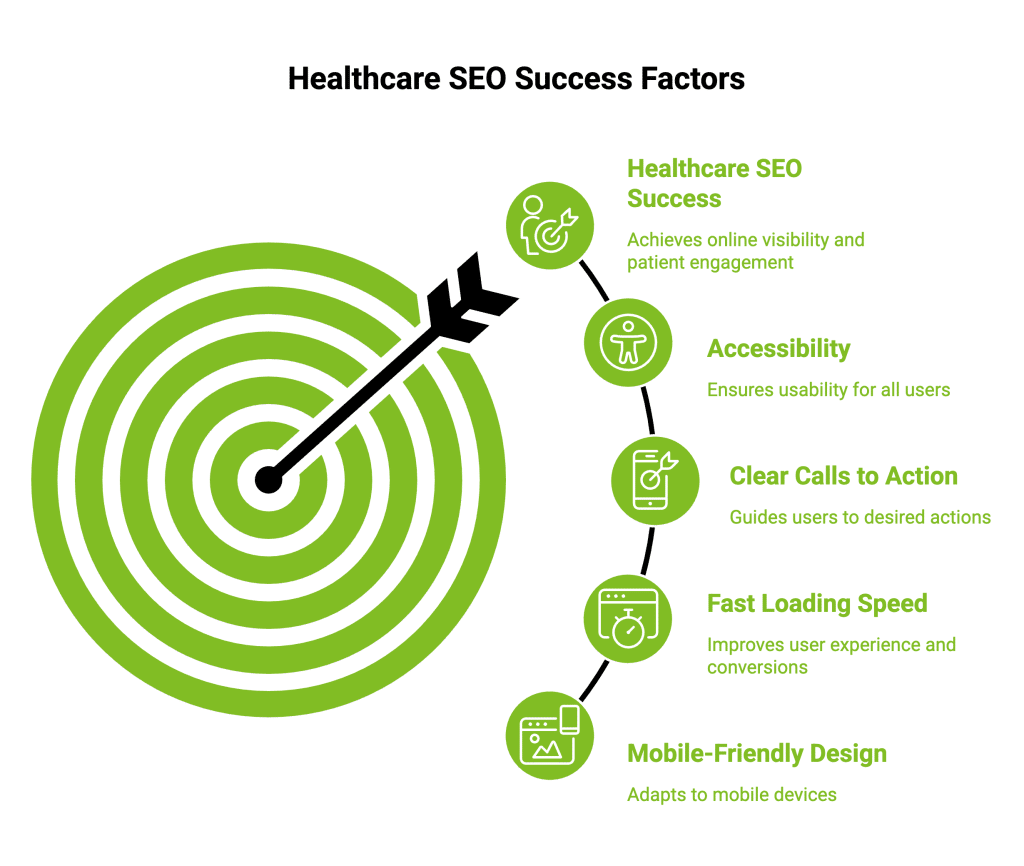
In healthcare, a good user experience is not just about design. It directly affects how patients find, understand, and act on your information. If your website is difficult to navigate, slow to load, or hard to read, users are more likely to leave before taking the next step.
Search engines also factor in user experience signals when ranking websites. This means accessibility and usability are not just improvements for users; they are essential for SEO performance.
Here’s what matters most:
1. Clear and Simple Navigation
Patients should be able to find services, doctors, and contact details without confusion. A well-structured menu and logical page hierarchy make this easier. Poor navigation leads to frustration, higher bounce rates, and lost appointment opportunities.
2. Readable and Well-Structured Content
Use clear headings, short paragraphs, and simple language so users can quickly understand important information, especially on mobile devices. Confusing or dense content reduces engagement and lowers the chances of patients taking action.
3. Mobile-Friendly Design
Most healthcare searches happen on mobile. Your website should adapt smoothly to different screen sizes and remain easy to use. A poor mobile experience results in drop-offs, lower rankings, and fewer patient inquiries.
4. Fast Loading Speed
Slow websites increase drop-offs. Optimising images, reducing unnecessary elements, and improving performance ensures users stay engaged. Even a few seconds of delay can significantly reduce conversions and impact search visibility.
5. Accessibility for All Users
Your website should be usable by people with different abilities. This includes proper contrast, readable fonts, and support for assistive technologies. Ignoring accessibility limits your reach and can prevent patients from accessing critical information.
6. Clear Calls to Action
Whether it is booking an appointment or making a call, users should always know the next step and be able to take it easily. Unclear or hidden actions lead to missed conversions and fewer patient bookings.
A strong user experience keeps patients engaged and reduces friction in their journey. It also supports your SEO efforts by improving engagement signals and helping search engines understand that your website provides real value.
How Do You Measure Healthcare SEO Performance?
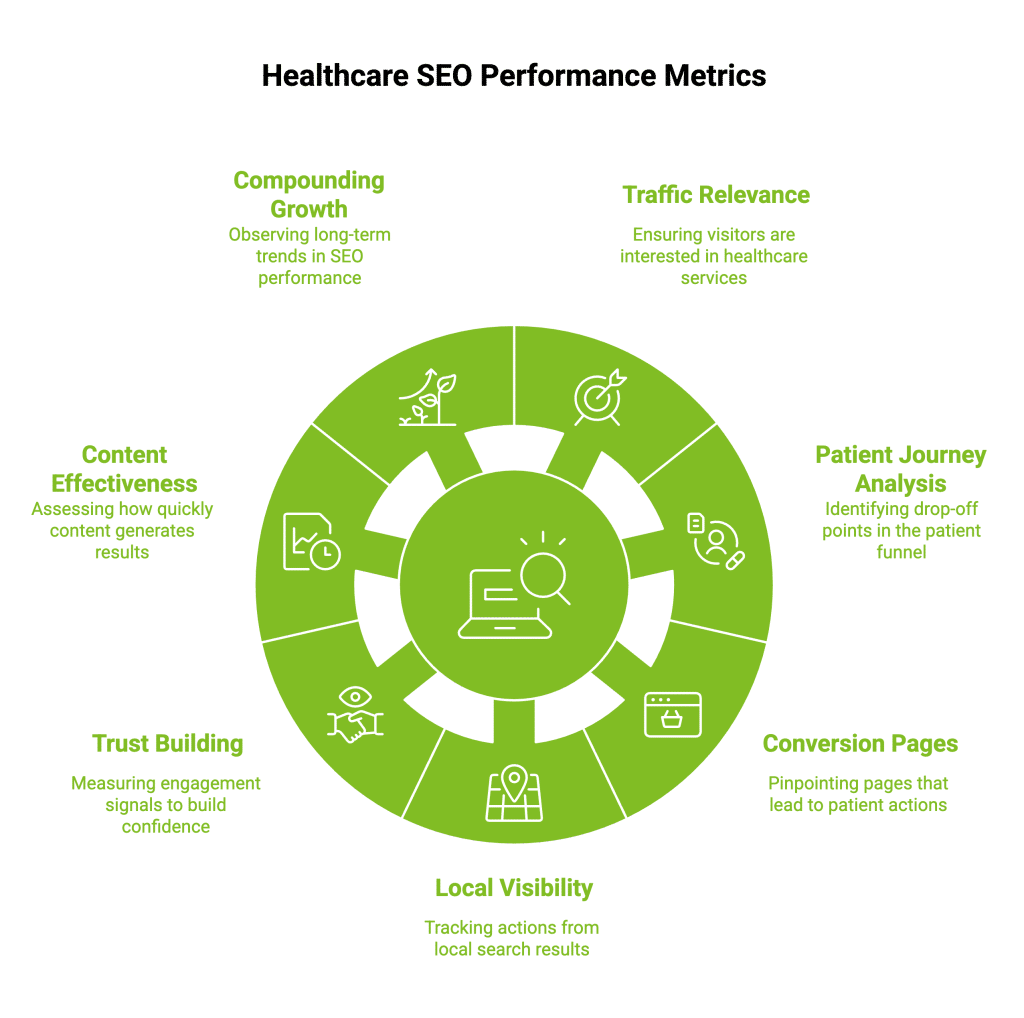
Healthcare SEO should be measured by how well it moves patients from search → trust → action, not just where you rank. Looking only at traffic or rankings gives an incomplete picture. You need to connect visibility with real patient behaviour and outcomes.
Here’s a deeper way to evaluate performance:
- Are you attracting the right traffic?
It is not just about traffic growth, but relevance. Check which queries bring users in. Are they symptom-based, treatment-focused, or just informational? If traffic is high but conversions are low, you may be targeting the wrong intent.
- Where do patients drop off in the journey?
Analyze behavior flow. Are users landing on blog pages and leaving without visiting service pages? Are they abandoning forms midway? This helps identify friction in the journey.
- Which pages actually drive conversions?
Not all traffic is equal. Identify which pages lead to bookings, calls, or inquiries. Often, a small set of pages contributes to most conversions. These should be optimised and scaled.
- How does local visibility translate into actions?
Track actions from your local presence, such as calls, direction requests, and profile views. This shows whether your visibility is turning into real patient intent.
- Are you building trust before conversion?
Look at engagement signals like time on page, scroll depth, and return visits. These indicate whether users are consuming your content and building confidence before taking action.
- How fast is your content turning into results?
Measure how long it takes for new pages to rank, attract traffic, and generate inquiries. This helps you understand the effectiveness of your content strategy.
- Are improvements compounding over time?
SEO should create momentum. Track trends over months, not days. Consistent growth in visibility, engagement, and conversions shows your strategy is working.
Measuring healthcare SEO properly means understanding not just what is happening, but why it is happening. This level of insight allows you to refine your approach, improve patient journeys, and drive more meaningful outcomes from your efforts.
Still relying on outdated tactics? Discover the low-value SEO techniques you should avoid to protect your rankings and organic traffic.
Why Wild Creek Wins at Healthcare SEO?
Healthcare SEO is not just about getting traffic. It is about attracting the right patients and turning visibility into real inquiries. At Wild Creek Web Studio, we combine deep experience with a strategy-first approach to make that happen.
What makes us different:
- 18+ years of experience in digital strategy: We have worked across industries and understand what it takes to build visibility that actually converts, especially in high-trust spaces like healthcare.
- Proven track record with 100+ brands: Our experience is not theoretical. We have helped businesses grow traffic, leads, and conversions through structured SEO strategies.
- Start with strategy, not guesswork: Every engagement begins with understanding your market, patients, and competition, so the approach is clear from day one.
- Focus on outcomes, not just rankings: We prioritise qualified inquiries, appointments, and real business growth over vanity metrics.
- Connect SEO with the full patient journey: From website experience to content and conversion flow, everything is aligned to guide users toward action.
- Built for long-term, scalable growth: We create systems that keep delivering results over time, not short-term spikes.
If you want healthcare SEO backed by experience, clarity, and a focus on real results, we are built for that.
Final Words
Healthcare SEO is not just about rankings. It is about being visible when patients need you and giving them enough clarity and trust to choose you.
It is not the clinics with the best websites that win. It is the ones that show up first, answer questions clearly, and make the next step easy.
Patients are already searching. The real question is, will they find you or your competitor?
Frequently Asked Questions
How is SEO used in healthcare?
Healthcare organisations use search engine optimisation to improve search engine rankings, increase organic traffic, and appear in search results. It helps medical websites attract prospective patients through relevant keywords, healthcare content, and better online visibility.
What are the 7 risk domains in healthcare?
The seven risk domains include patient safety, clinical care, compliance, operations, finance, reputation, and data security. Managing these ensures healthcare organisations maintain patient trust, protect medical information, and deliver reliable healthcare services.
What are the 5 P’s of healthcare marketing?
The 5 P’s include product (medical services), price, place, promotion, and people. Together, they shape digital marketing strategies, helping medical providers reach their target audience and improve online presence and patient acquisition.
How will healthcare email lists be beneficial?
Healthcare email lists help engage prospective patients, share relevant medical content, and promote healthcare services. They support digital marketing by driving website traffic, improving patient trust, and encouraging repeat visits and appointment bookings.
How can hospitals and clinics improve their visibility using healthcare SEO strategies?
Hospitals improve their online visibility by using SEO techniques such as content creation, local listings, and relevant keywords. Optimising medical websites, improving site speed, and tracking with Google Analytics helps attract new patients and boost search rankings.
Are there any unique SEO challenges specific to the healthcare industry?
Yes, medical SEO faces challenges like strict search engine algorithms, accuracy of medical content, and maintaining patient trust. Healthcare websites must provide reliable information, follow compliance standards, and consistently update content to stay competitive.
What is healthcare local SEO, and why is it important?
Healthcare local SEO helps your practice appear in nearby searches like “doctor near me.” As part of SEO for the healthcare industry, it attracts high-intent patients and increases local visibility and appointment inquiries.