
Ask a founder how their AI search visibility is doing, and most will pull up a dashboard with a big number and a green arrow pointing up. Ask what that number actually did for the business last month, and the room goes quiet.
That gap is not a reporting problem you can fix by buying a better tool. It is the honest state of AI search measurement in 2026. Most of what gets sold as an “AI visibility score” is a rough, noisy proxy, and pretending otherwise does clients no favours.
Here is what is actually worth tracking, what the free first-party tools can and cannot tell you, and where the number quietly breaks down.
Key Takeaways
- AI visibility dashboards show how often a brand gets mentioned, not whether anyone acted on it. Read the number as a leading indicator, not a scoreboard.
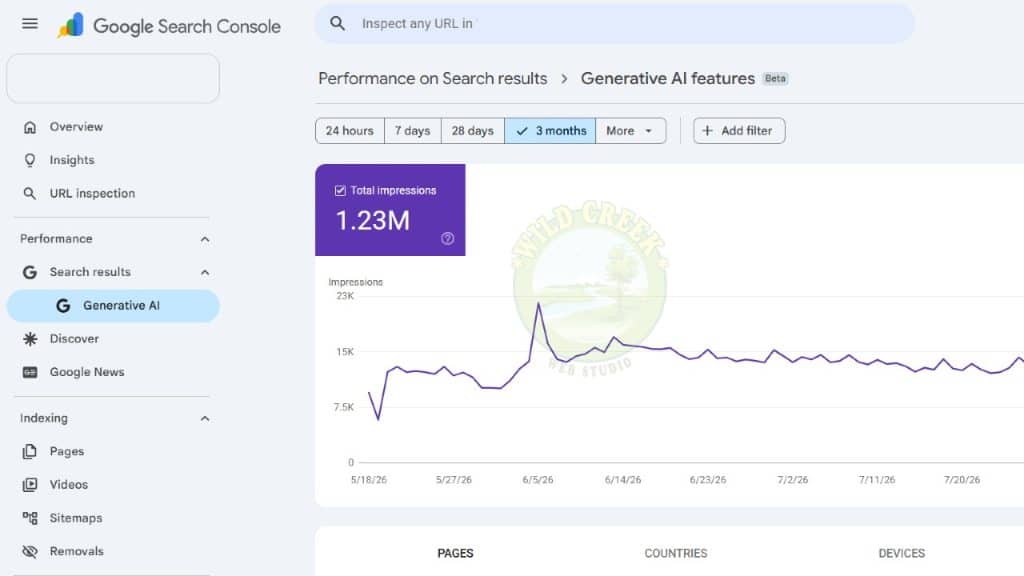
- The main free first-party AI tracking tools are all brand new. Bing Webmaster Tools launched AI Performance in February 2026, Google Analytics 4 added a native AI Assistant channel in May, and Google Search Console’s generative AI report followed in June, initially for a subset of sites.
- A large share of AI-influenced traffic never shows up as an “AI referral” at all. It lands in analytics as branded search or direct, because people ask a chatbot a question and then Google the brand it named.
- The most-quoted AI conversion statistic in the industry, ChatGPT traffic converting at roughly 16 percent, comes from one agency’s analysis of a single client’s site over seven months, not an industry-wide study.
- Branded search and direct traffic, both already sitting in Google Analytics and Search Console, are the closest thing most businesses have to proof that AI visibility is doing something.
Why This Actually Matters for Your Marketing Budget
None of this is an academic argument about methodology. If a client, or your own board, is asking whether the money going into AI search optimisation is working, the answer cannot rest on a single citation-count screenshot. It has to connect back to branded demand, qualified leads, or revenue, even if that connection is indirect and takes a few weeks to show up. Get the measurement wrong and you either kill a channel that is quietly working, or keep funding one that is not.
What Does AI Search Visibility Actually Measure?
AI search visibility, sometimes called AI visibility or GEO visibility, is how often and how favourably a brand is mentioned, cited, or recommended inside AI-generated answers from tools such as ChatGPT, Google AI Overviews, Perplexity, and Microsoft Copilot. It is a measure of presence inside a conversation, not a measure of clicks.
AI search visibility is the frequency and quality with which a brand is surfaced inside AI-generated answers, tracked separately from traditional search rankings because the two do not move together. A page can rank on the second page of Google and still be the source an AI model quotes for a specific question, and the reverse happens just as often.
That gap between ranking and being cited is exactly why founders get confused. Your team can be doing everything right on traditional SEO and still feel invisible in ChatGPT, or the other way round. They are related disciplines, not the same discipline wearing a new acronym.
Why Is the Big Visibility Number So Easy to Get Wrong?
A citation is not a sale. It means a model mentioned a brand once, in one answer, to one person, in one session. Nobody chose anything, and nobody bought anything. Treating that number as if it behaves like a ranking position or a conversion is where most AI visibility reporting goes wrong, for four specific reasons.
A citation is not a sale. It is a maybe, dressed up as a metric.
First, the same question can produce two different answers in two different sessions. AI visibility is not a fixed rank the way position three on Google is fixed for an hour. It moves with the model version, the exact wording of the prompt, and what the platform remembers about the person asking. A single “share of voice” number flattens all of that variance into something that looks stable when it is not.
Second, a lot of AI-visibility tracking measures itself. A tracker fires a test prompt, the model goes and reads the site to answer it, and the tool then reports the interest its own prompt just created. In agentic search, where one user question can silently split into several sub-queries behind the scenes, a simple citation count misses most of what actually happened.
Third, AI visibility is not one channel. ChatGPT, Perplexity, Gemini, and Copilot behave differently enough in who they cite and how people use them that averaging them into a single score buries the only genuinely useful part of the data, which platform is actually working.
Fourth, and this matters for how much a client should pay for tracking, the free version of this number is catching up fast. Bing Webmaster Tools shipped a free AI Performance report in February 2026, and Google Search Console followed with its own generative AI performance report in June. When a metric goes free inside tools most sites already have, it is worth asking how much of an edge a paid dashboard number is really buying.
Where Do the Free First-Party Tools Actually Stand?
Every one of the tools below measures arrival or a citation, not influence, and none of them covers the whole picture on its own. Here is what each one honestly gives you, as of mid-2026.
| Tool | What it shows | The catch |
| Google Analytics 4 | A native AI Assistant channel, added 13 May 2026, that automatically groups sessions from ChatGPT, Gemini, and a handful of other recognised sources. | Not retroactive. Perplexity still lands in Referral, and Google’s own AI Overviews get counted as ordinary organic search. |
| Google Search Console | A dedicated generative AI performance report, launched 3 June 2026, showing impressions inside AI Overviews and AI Mode by page, country, and device. | Impressions only. No clicks, no click-through rate, and no query-level data yet. |
| Bing Webmaster Tools | AI Performance, live since February 2026, showing which pages Copilot and Bing AI cite, plus the grounding queries behind each citation. | Microsoft’s ecosystem only. Nothing on ChatGPT, Gemini, or Google AI Overviews. |
| Third-party trackers | Cross-platform share-of-voice on a fixed set of prompts you control, useful for competitive comparison across engines the free tools do not cover. | Runs on sampled prompts, not real users, and several charge enterprise prices for what is essentially a scheduled search. |
Bing Webmaster Tools launched its free AI Performance report in public preview on 9 February 2026, roughly four months before Google’s equivalent generative AI performance report reached even a first subset of sites in Search Console on 3 June 2026. Source: Bing Search Blog; Google Search Central
How Did Attribution Quietly Break, and What Can You Still See?
Picture how people actually search now. Someone asks ChatGPT a question, gets three brand names back, Googles the one that stuck, clicks through, and buys. The AI made the decision that mattered. Google Analytics files the visit under branded search or direct, and the platform that actually did the persuading gets none of the credit.
Similarweb’s June 2026 clickstream study found that brands recommended by ChatGPT were 2.5 times more likely to receive a website visit within the following seven days than brands that were not recommended, and that 55.9 percent of that AI-influenced traffic arrived through branded search rather than a visible AI referral. Source: Similarweb, “The Downstream Impact of AI Visibility,” June 2026
That is the honest version of the attribution story: AI visibility is real and it moves traffic, but the effect mostly does not show up where anyone is looking for it. Better tracking will not rescue this by itself. Half the effect was never going to land in a tidy “AI referral” column, because the person doing the buying went back to Google or typed the URL directly.
This is exactly why branded search and direct traffic, unglamorous as they are, deserve more attention in an AI-visibility report than the citation count does. When AI mentions rise and branded search rises with it in the same window, that is a pattern worth trusting. Visibility climbing while branded search stays flat is not.
If a client asks what their AI visibility is worth, the honest answer starts with their branded search trend, not a citation dashboard.
Why the “AI Traffic Converts Better” Statistic Deserves a Second Look
There is one statistic that shows up in almost every AI-search deck this year: AI-referred traffic supposedly converts at roughly 16 percent versus around 2 percent for Google organic. It gets repeated as if it is a settled, industry-wide fact. It is not.
That figure traces back to a single case study from Seer Interactive, published in June 2025, analysing seven months of data from one client’s site. ChatGPT-referred sessions on that one property converted at 15.9 percent, against 1.76 percent for Google organic, with Perplexity, Claude, and Gemini trailing behind at lower rates. Useful data, and directionally consistent with what other agencies report, but it is one site’s traffic pattern being quoted as if it applies everywhere. Source: Seer Interactive case study
This is not a reason to dismiss the conversion advantage entirely. Higher-intent behaviour from AI referrals shows up across multiple independent write-ups, and it makes intuitive sense: someone who has already talked through their options with a chatbot arrives at a site further along in their decision than someone who typed three words into Google. It is a reason to stop treating one borrowed number as your own business case, and to check what AI traffic is actually converting at on your own analytics before promising a client anything specific.
What Should You Track at Each Stage of AI Visibility?
Not every business needs the same measurement setup on day one. What is worth tracking changes as a brand moves through what we call the AI visibility maturity curve.
| Stage | What’s typically happening | What to actually track |
| Early-stage AI Inclusion | The brand is occasionally mentioned in AI answers, usually for its own name or very specific long-tail questions, with no consistent pattern yet. | Whether the brand appears at all across a fixed set of 15 to 20 buyer-relevant prompts, checked monthly. Nothing more granular is reliable yet. |
| Mid-stage AI Discoverability | The brand shows up for a growing set of category questions, not just branded ones, and starts appearing in Bing’s or Google’s own citation reports. | Citation share inside Bing Webmaster Tools and Search Console’s generative AI report, plus whether branded search impressions are climbing alongside it. |
| Mature AI Visibility | The brand is a regular, competitive presence across ChatGPT, Gemini, and Perplexity for commercial-intent questions, not just informational ones. | Cross-platform share of voice against named competitors, GA4’s AI Assistant channel against conversions, and branded search plus direct traffic as the revenue proxy. |
Most businesses we talk to jump straight to wanting mature-stage reporting, competitive share of voice, dollar-value attribution, before they have confirmed the brand shows up in AI answers at all. Get the earlier stage right first. A clean answer to “do we appear, ever, for the questions our buyers actually ask” is worth more at month one than a beautifully designed dashboard nobody trusts.
How Do You Actually Build a Monthly AI Visibility Check?
A workable monthly routine does not need a specialist tool budget to start. It needs discipline about what you are comparing and a fixed process, repeated the same way every time.
- Fix a prompt set of 15 to 20 real buyer questions, and do not change it mid-quarter. A set that shifts every month produces numbers that cannot be compared to each other.
- Check Bing Webmaster Tools’ AI Performance and Search Console’s generative AI report for citation and impression trends on the same pages every month, so the comparison is apples to apples.
- Pull GA4’s AI Assistant channel alongside branded search and direct traffic from the same period, and look for all three moving together, not the AI number alone.
- Run a quiet check on your own tracker’s noise. Point it at a set of low-traffic, unrelated URLs and see what “AI interest” it reports for pages nobody should be citing. That is your floor.
- Report the trend, not a single snapshot. A single week’s citation count moves with model updates and prompt phrasing far more than most people expect.
The common mistake we see agencies make here is reporting the citation count in isolation, dressed up with a percentage change, and calling it the AI visibility report. It reads well in a slide. It rarely survives a follow-up question about what it did for the pipeline. Good reporting pairs the visibility signal with the branded-demand signal every single time, and says plainly when the two do not agree.
The Honest Version of This
AI visibility is not a vanity metric, and it is not nothing either. It sits somewhere most marketing teams are uncomfortable with, real, directionally useful, and only partly measurable with the tools available today. This is the Human Algorithm tension in practice: the dashboards will keep improving, but deciding which slice of a number to trust still takes a person who has seen enough bad reports to spot a good one. The businesses that get value from AI visibility are not the ones with the biggest citation count. They are the ones willing to say clearly which slice of that number is actually moving branded demand, and which slice is just noise the tool created by asking itself a question.
Chasing the visibility number for its own sake is the same mistake the industry made with rankings for a decade. Finishing first was never the same as getting paid.
If you want a second opinion on what your own numbers are actually saying, that is a conversation worth having before the next round of budget gets signed off. It also sits next to a related question we cover separately, connecting AI visibility to a defensible GEO ROI figure for leadership, which is worth reading if the next question in the room is going to be “so what did we get for the spend.”
This week’s action, if nothing else: open Search Console and Bing Webmaster Tools, confirm both are actually reporting AI data for the site, and pull branded search for the last 90 days. That fifteen minutes tells you more than most paid AI-visibility dashboards will in a month.
Frequently Asked Questions
Does ChatGPT actually send meaningful traffic to most websites?
For most sites, direct referral clicks from ChatGPT are still a small fraction of total traffic, and clickstream research from SparkToro and Datos puts Google’s search volume hundreds of times higher than ChatGPT’s search-equivalent usage. That does not mean AI visibility is unimportant. It means the influence mostly shows up later, as a branded search or a direct visit days after the AI conversation, rather than as a click straight from the chat window.
Should a business pay for a third-party AI visibility tracker?
It depends on how far along the AI visibility maturity curve a brand already is. For a business still confirming whether it shows up in AI answers at all, the free tools, Bing Webmaster Tools, Search Console, and GA4’s AI Assistant channel, cover the essentials. A paid cross-platform tracker earns its cost once you need competitive share of voice against named rivals across engines the free tools do not touch, such as ChatGPT and Perplexity.
How do I know if AI visibility is actually working for my business?
Watch whether AI citations, branded search, and direct traffic move together over the same period. Three of those signals rising together in the same window is a pattern worth trusting. Visibility climbing on its own while branded demand stays flat usually means the tracker is picking up noise, not real influence, and is worth investigating before it goes into a report.
What is the difference between AI search visibility measurement and GEO ROI measurement?
AI search visibility measurement is about confirming presence, whether and how often a brand gets cited or mentioned in AI answers, using the tools covered above. GEO ROI measurement is the layer on top of that, connecting visibility to a business case leadership can act on. Get the visibility measurement right first. It is the raw input the ROI conversation depends on.