
Key Highlights
- A solid social media marketing strategy starts with clear goals and a deep understanding of your audience.
- Following best practices for content creation, like using engaging visuals and maintaining brand consistency, boosts brand awareness.
- Building a strong social media presence involves posting regularly without overwhelming your followers.
- Monitoring analytics is a key part of digital marketing, helping you track performance and refine your approach.
- Proper etiquette, such as responding to comments professionally and avoiding public arguments, protects your brand’s reputation.
Social media can feel overwhelming for many Indian brands. You post consistently, follow trends, and still struggle to see real engagement or business results. With algorithms changing often and audiences scrolling faster than ever, even small mistakes can lead to wasted effort and missed opportunities.
The goal of social media marketing is not just visibility, but meaningful connections. When done right, it helps build trust, start conversations, and turn followers into loyal customers. This requires knowing what actions support growth and which habits quietly hold your brand back.
In this blog, we break down 20 essential social media marketing do’s and don’ts every Indian brand should know. You will learn practical best practices, common mistakes to avoid, and how to create a more focused, effective social media presence.
What Should Indian Brands Do to Succeed in Social Media Marketing?
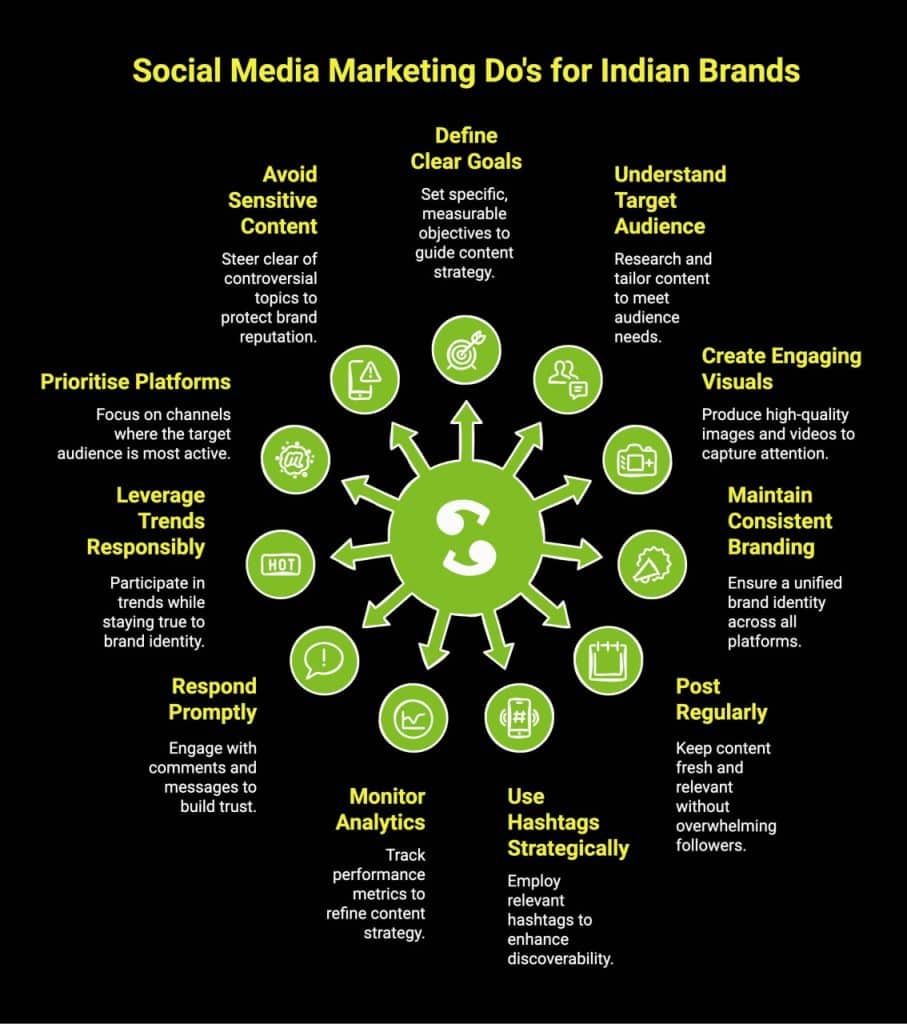
Doing social media right starts with intention. The right practices help brands connect with the right audience, stay consistent, and create content that feels valuable rather than promotional.
These do’s focus on clarity, quality, and long-term growth instead of short-term visibility.
1. Define Clear Social Media Goals for Your Business
Before publishing content, clearly define what success looks like for your brand. Goals could include increasing website traffic, generating leads, improving engagement, or strengthening brand awareness. When goals are specific and measurable, every post serves a purpose. This clarity prevents random posting and helps you evaluate what is working, what is not, and where to optimise your efforts for better results.
2. Research and Understand Your Target Audience
Strong social media strategies are built on audience insight. Understand your audience’s age group, preferences, challenges, and online behaviour. Pay attention to the platforms they use most and the content formats they engage with. When your messaging reflects real needs and interests, engagement increases naturally and your content feels relevant instead of promotional or generic.
3. Create High-Quality, Engaging Visual Content
Visual content plays a major role in capturing attention on fast-scrolling feeds. Clear images, short videos, carousels, and simple infographics communicate messages quickly and effectively. Poor visuals reduce credibility, even if the message is strong. Investing in consistent, high-quality visuals improves reach, encourages sharing, and helps your brand stand out in a crowded content environment.
4. Maintain Consistent Branding Across All Platforms
Consistency builds recognition and trust. Use the same profile image, colour palette, tone of voice, and messaging style across platforms. This consistency makes your brand instantly recognisable and reinforces professionalism. Beyond visuals, consistency in how you communicate values and personality helps audiences feel familiar and comfortable engaging with your content over time.
5. Post Regularly but Avoid Overposting
Posting regularly keeps your brand visible and relevant, but excessive posting can overwhelm followers. Each platform has a different ideal posting frequency, so observe performance and adjust accordingly. Scheduling tools help maintain balance. Focus on quality and value rather than volume, ensuring every post contributes meaningfully to your overall content strategy.
6. Use Hashtags Strategically and Sparingly
Hashtags improve discoverability when used correctly. Choose hashtags that are relevant to your industry, audience, and content topic. A balanced mix of popular, niche, and branded hashtags works best. Avoid stuffing posts with excessive tags, as this can appear spammy and reduce credibility. Thoughtful hashtag use helps reach the right audience organically.
7. Monitor Analytics to Track and Improve Performance
Analytics reveal what truly resonates with your audience. Metrics such as reach, engagement, saves, and link clicks show which content formats and topics perform best. Regularly reviewing this data allows you to refine your strategy, focus on high-performing content, and make informed decisions rather than relying on assumptions or guesswork.
8. Respond Promptly and Professionally to Comments
Engagement does not end after posting. Responding to comments and messages shows that your brand values conversation and feedback. Timely, respectful responses encourage trust and loyalty. Even simple acknowledgements matter. When issues arise, addressing them calmly and professionally reflects positively on your brand and strengthens your online reputation.
9. Leverage Current Trends Responsibly
Trends can increase visibility, but only when they align with your brand identity. Not every viral trend suits every business. Evaluate relevance before participating and add your own perspective to maintain authenticity. Responsible trend usage helps you stay current without appearing forced, out of touch, or disconnected from your brand’s core message.
10. Prioritise the Right Social Media Platforms
You do not need to be active everywhere. Focus on platforms where your target audience spends the most time and where your content performs best. Concentrating efforts on fewer channels allows better content quality, stronger engagement, and more efficient resource use, rather than spreading your efforts thin across platforms that deliver little value.11: Don’t: Share Sensitive or Controversial Content
Social media content should feel safe and welcoming. Posting polarising opinions, offensive jokes, or unverified information can quickly damage trust. Even content shared without bad intent can be misunderstood. Keeping posts professional and neutral protects your brand reputation and avoids unnecessary backlash.
To learn more about building a strong digital marketing strategy for startups, including where to focus early efforts and how to scale sustainably, explore this detailed guide.
What Should Indian Brands Avoid in Social Media Marketing?
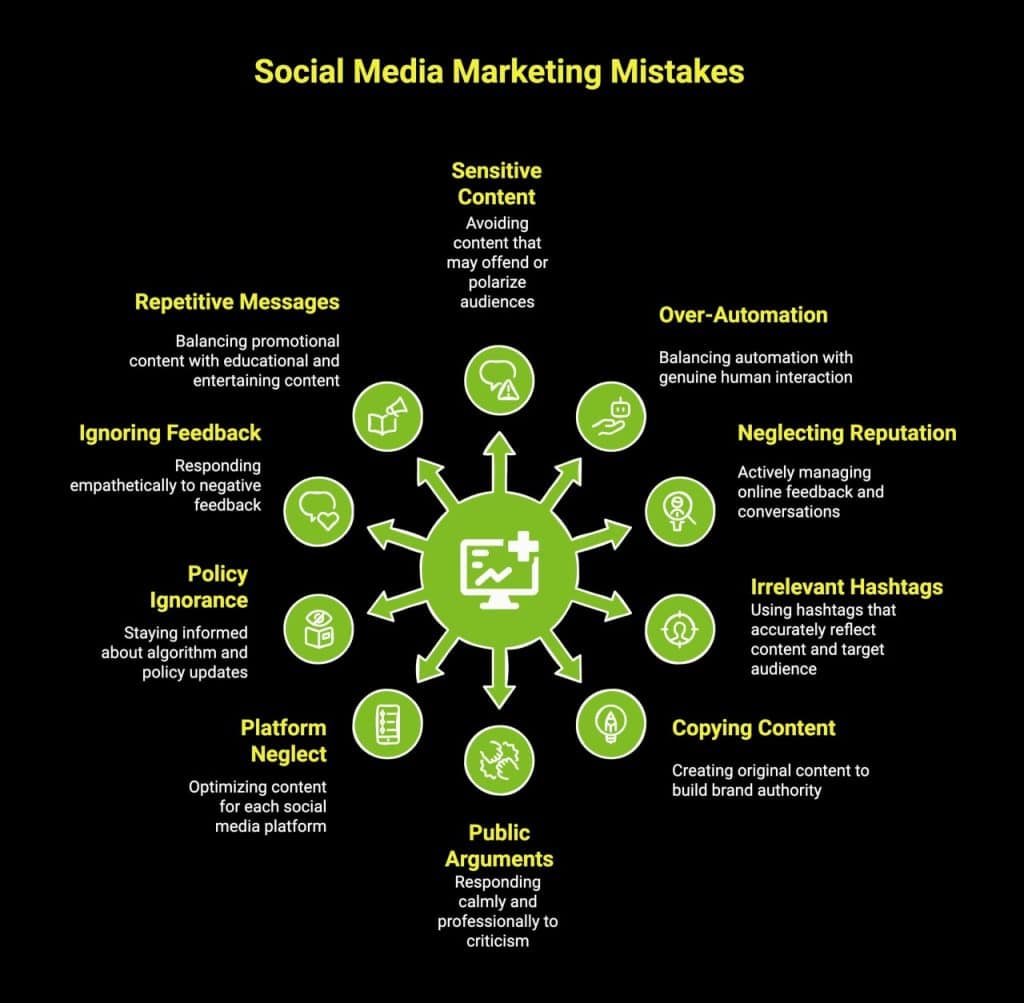
Knowing what not to do is just as important as best practices. Small mistakes, when repeated, can reduce reach, weaken trust, and harm brand perception.
These don’ts highlight common errors that quietly hold back social media performance if left unchecked.
1. Don’t Share Sensitive or Controversial Content
Avoid content that may offend, polarise, or create unnecessary controversy. Sensitive topics, unverified information, or strong opinions can easily be misunderstood online. Even well-intended posts can harm brand trust. Keeping content respectful, inclusive, and professional helps protect your reputation and ensures your brand feels safe and approachable to a wide audience.
2. Don’t Overuse Automation and Lose the Human Touch
Automation tools are helpful for scheduling and reporting, but relying on them excessively can make interactions feel robotic. Generic replies and auto-messages reduce authenticity. Audiences value genuine human interaction. Balancing automation with real-time engagement ensures your brand remains relatable, trustworthy, and emotionally connected to its audience.
3. Don’t Neglect Your Brand’s Online Reputation
Your online reputation is shaped by how you respond to feedback. Ignoring comments, reviews, or mentions can signal indifference. Actively monitor conversations, acknowledge positive feedback, and address concerns respectfully. Proactive reputation management prevents minor issues from escalating and demonstrates transparency and accountability to your audience.
4. Don’t Use Irrelevant or Excessive Hashtags
Hashtags should add clarity, not clutter. Using unrelated trending hashtags or too many tags can make posts appear spammy and reduce engagement. Hashtags must accurately reflect your content and target audience. A clean, relevant hashtag strategy improves credibility and ensures your content reaches people genuinely interested in what you offer.
5. Don’t Copy Content From Other Brands
Originality is essential for brand credibility. Copying content weakens trust and blurs your brand identity. While inspiration is acceptable, always add your own voice, insights, and perspective. Creating original content builds authority, helps differentiate your brand, and encourages audiences to follow you for unique value rather than repetition.
6. Don’t Engage in Arguments on Public Threads
Public arguments rarely benefit brands. When criticism arises, respond calmly and professionally without escalating the situation. Avoid emotional replies or defensive language. Offering to continue the conversation privately shows maturity and respect. Your response reflects your brand values, not just to one person but to everyone watching.
7. Don’t Forget to Optimise Content for Each Platform
Each social media platform has its own content style, audience expectations, and features. Posting identical content everywhere can reduce effectiveness. Adjust captions, visuals, and formats to suit each platform. Platform-specific optimisation improves reach, engagement, and overall performance, making your content feel natural rather than recycled.
8. Don’t Ignore Social Media Policy and Algorithm Updates
Social media platforms frequently update algorithms and policies. Ignoring these changes can reduce reach or cause compliance issues. Staying informed helps you adapt content formats, posting strategies, and engagement tactics. Following official announcements and industry news ensures your strategy remains effective and aligned with platform requirements.
9. Don’t Ignore Negative Feedback or Complaints
Negative feedback should never be ignored. Responding with empathy, acknowledging concerns, and offering solutions shows professionalism. Publicly handling issues well builds trust with both the individual and the wider audience. Silence or deletion often damages credibility more than the complaint itself and can make your brand appear unresponsive.
10. Don’t Repeat the Same Message Again and Again
Constantly pushing the same promotional message leads to audience fatigue. Follow the 80–20 rule: 80% of your content should educate, entertain, or add value, while only 20% should be promotional. This balance keeps your feed engaging, builds trust, and makes promotional content feel more natural and effective.
To learn more about why empathy, storytelling, and human connection still matter in a data-driven digital world, read our perspective on bringing the human touch back to digital marketing.
Need a Smarter Way to Build a Brand That Grows Online?
Wildcreek Web Studios partners with businesses that want sustainable growth, not short-term spikes. With nearly two decades of experience, we bring strategy, performance marketing, and brand thinking together under one roof.
Our work starts with understanding where your business stands today and where it needs to go next. From search visibility and paid growth to brand positioning and digital consulting, we focus on helping brands connect with the right audience and grow with intent.
We don’t just launch campaigns. We craft digital stories that move your business forward.
Take the next step with confidence. Contact Wildcreek Web Studios for a consultation and start building lasting growth.
Conclusion
Knowing the do’s and don’ts of social media marketing is only useful if you act on them. Start by reviewing your current goals, content, and posting habits, then fix one gap at a time. Set clear targets, audit what is working, and remove what is not. Test small improvements, track results, and adjust regularly. A consistent, thoughtful approach builds stronger engagement and protects your brand over time. If you want clear direction or expert support, get in touch with us for a free consultation and take the next confident step forward.
Frequently Asked Questions
What are the latest updates to social media marketing do’s and don’ts for small businesses in India?
Current updates focus on clarity, consistency, and audience needs. In recent years, small businesses in India have been encouraged to follow platform rules, build engagement, protect data, and use cultural messaging while avoiding spammy tactics and information that damage trust.
How often should businesses post on social media to maximise engagement without overwhelming followers?
Posting frequency should match audience habits and platform norms. Most brands get results by posting consistently a few times weekly, testing timing, and adjusting based on engagement signals from social media users, instead of posting daily and overwhelming followers.
What types of content should businesses avoid posting to protect their brand reputation?
Businesses should avoid posting offensive opinions, unverified information, and reactive content that conflicts with brand voice. Sensitive topics, misleading claims, or jokes taken out of context can harm credibility, confuse audiences, and trigger backlash that is hard to repair.
Can you list common mistakes businesses make on social media that should be avoided?
Common mistakes include copying competitors, ignoring analytics, and relying too much on artificial intelligence tools without human oversight. Automation should support strategy, not replace thinking. Brands also struggle by ignoring replies, using generic messages, and chasing trends without purpose.
What are the best practices for engaging with followers in social media marketing?
Engaging followers works best when brands treat social media like customer service, not broadcasting. Respond promptly, acknowledge feedback, ask questions, and personalise replies. Consistent interaction builds trust, shows accountability, and encourages repeat engagement instead of one-sided conversations.
What should businesses never post on their social media accounts?
Businesses should never post confidential data, offensive remarks, or excessive promotional content that adds no value. In a fast-moving digital world, careless posts spread quickly, damage reputation, and erode trust, making recovery harder than prevention through review.
What are some tips for creating effective Facebook ads?
Effective Facebook ads focus on clear targeting, concise messaging, and strong visuals. Short video content, captions that highlight benefits, and a single call to action perform best. Testing formats, creatives, and audiences helps improve click-through and conversion rates.
How do you promote your blog posts on social media?
Promoting blog posts works best when content is repurposed creatively. Share highlights as visuals, short clips, or threads, collaborate through influencer marketing, and link posts within relevant conversations. Consistent sharing across channels increases reach without repeating the same message.
What are 3 things you can do on social media platforms?
Three effective actions include sharing educational content, engaging with comments, and experimenting with features. Using live streams to answer questions, exploring social commerce tools, and building presence across social networks is a great way to grow visibility and trust.
How Many Social Media Platforms Should a Small Business Be Active On?
Most small businesses perform best by focusing on two or three social platforms. Managing fewer social channels allows consistent quality, responses, and clearer insights. Effective social media marketing depends more on relevance and consistency than trying to be active everywhere.




Great tips, Praveen!
Thanks for sharing your knowledge. I’m sure it will help me for improving my targeted audience in Social Media Marketing and promote my business effectively. Your blog is very great and helpful for Social Media Marketing tips.