Key Highlights
- Excessive use of AI can lead to cognitive offloading, potentially weakening your critical thinking skills.
- While AI excels at processing data through deep learning, it lacks the emotional intelligence and common sense inherent in human intelligence.
- AI thinking is based on algorithms and patterns, whereas human thought involves context, intuition, and creativity.
- A balanced approach, where AI supports rather than replaces human judgment, is key to leveraging its benefits.
- Moderate AI use can be positive, but over-reliance risks diminishing independent reasoning and analytical depth.
Did you know AI often shapes your choices before you make them? From navigation apps to digital assistants, artificial intelligence now guides everyday decisions. This convenience is powerful, but it also raises a serious concern.
Many people now rely on AI for instant answers rather than thinking critically, which may weaken problem-solving and independent reasoning over time.
This blog examines how AI influences human cognition and explores whether technology can support deeper thinking rather than simply speeding it up.
Why Do We Need To Rethink How We Use AI Today?
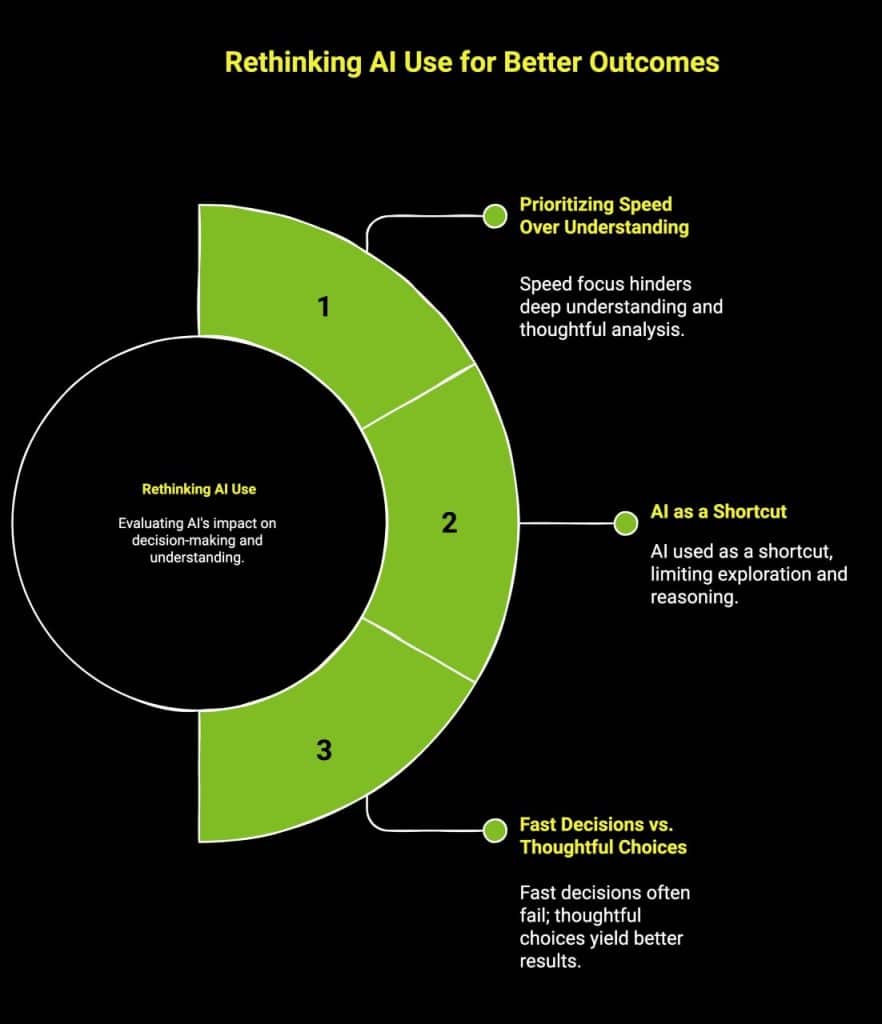
Infographic explaining rethinking AI use for better outcomes
AI is becoming deeply interwoven into everyday life, shaping how we work, think, learn, and make decisions. Here’s why a mindset shift is essential:
1. Speed Has Become The Default Metric For Success, And It Limits Real Thinking
Modern work environments often prioritise fast output over meaningful understanding. When performance is measured only by speed, decisions are rushed and lack depth. This habit trains us to value quick responses instead of thoughtful reasoning, reducing the quality of ideas and long-term outcomes. True progress demands reflection before execution, allowing us to build solutions that are durable, strategic, and genuinely effective.
2. AI Is Becoming A Shortcut For Thinking Instead Of A Partner In Thought
Instead of using AI to expand perspectives, many now turn to it for instant answers that replace personal reasoning. According to a 2025 study from MDPI, frequent AI use is strongly linked to lower critical thinking ability because people begin to rely on it to think for them. AI should enhance thinking, not replace it, supporting exploration, questioning, and discovery.
3. The World Does Not Need Faster Decisions, It Needs Smarter Ones
The pressure to move quickly creates an illusion of productivity, yet decisions made without deliberate evaluation often lead to costly errors and reactive fixes. Leaders who slow down to assess context, risks, and implications consistently achieve more stable and sustainable outcomes. Smart decision-making requires clarity, understanding, and the courage to pause.
By rethinking how we use AI, we prioritise depth over speed, collaboration over shortcuts, and smarter choices that stand the test of time.
What Does “Think Deeper, Not Faster With AI” Really Mean?
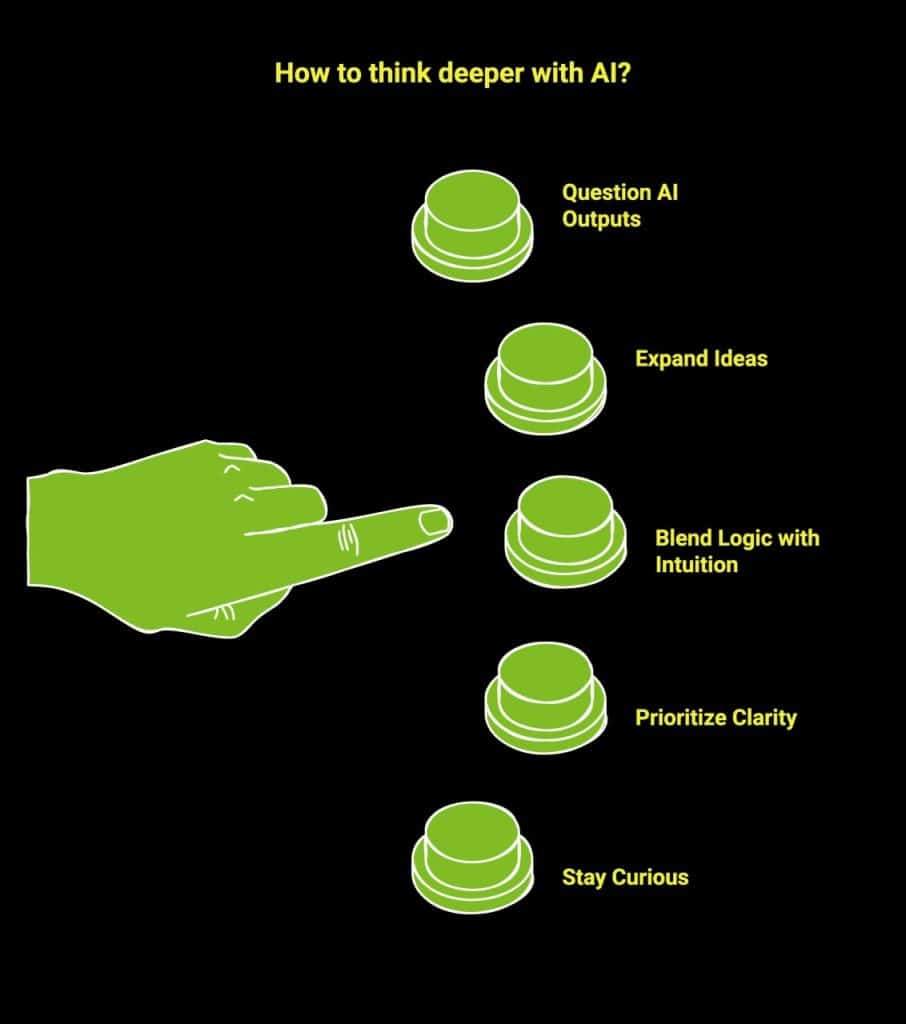
Infographic showcasing how to think deeper with AI
As AI accelerates how quickly we access information, there is a growing temptation to prioritise speed over understanding. But real intelligence isn’t about producing instant answers; it’s about questioning, analysing, and forming meaningful insights that lead to smarter decisions and stronger outcomes. The goal is not to think faster, but to think better.
Here’s what it truly means in practice:
- Engage critically instead of accepting outputs at face value: Slow down to question assumptions, analyse reasoning, and explore context before acting on AI suggestions.
- Use AI to expand thinking, not replace it: Let AI offer perspectives, data, and possibilities, while humans interpret meaning and apply judgment.
- Prioritise clarity and understanding over speed and convenience: Deep thinking leads to decisions that are resilient and well-reasoned, rather than reactive and short-lived.
- Blend human intuition with AI logic for stronger outcomes: Creativity, empathy, and ethical reasoning complement AI’s analytical capabilities to create balanced decisions.
- Encourage reflection, curiosity, and exploration: Depth develops when we ask better questions, challenge ideas, and embrace thoughtful problem-solving rather than rushing to conclusions.
Choosing depth over speed transforms AI from a shortcut into a partner that strengthens intelligence, creativity, and decision quality instead of weakening them.
How Do AI Thinking And Human Thinking Differ?
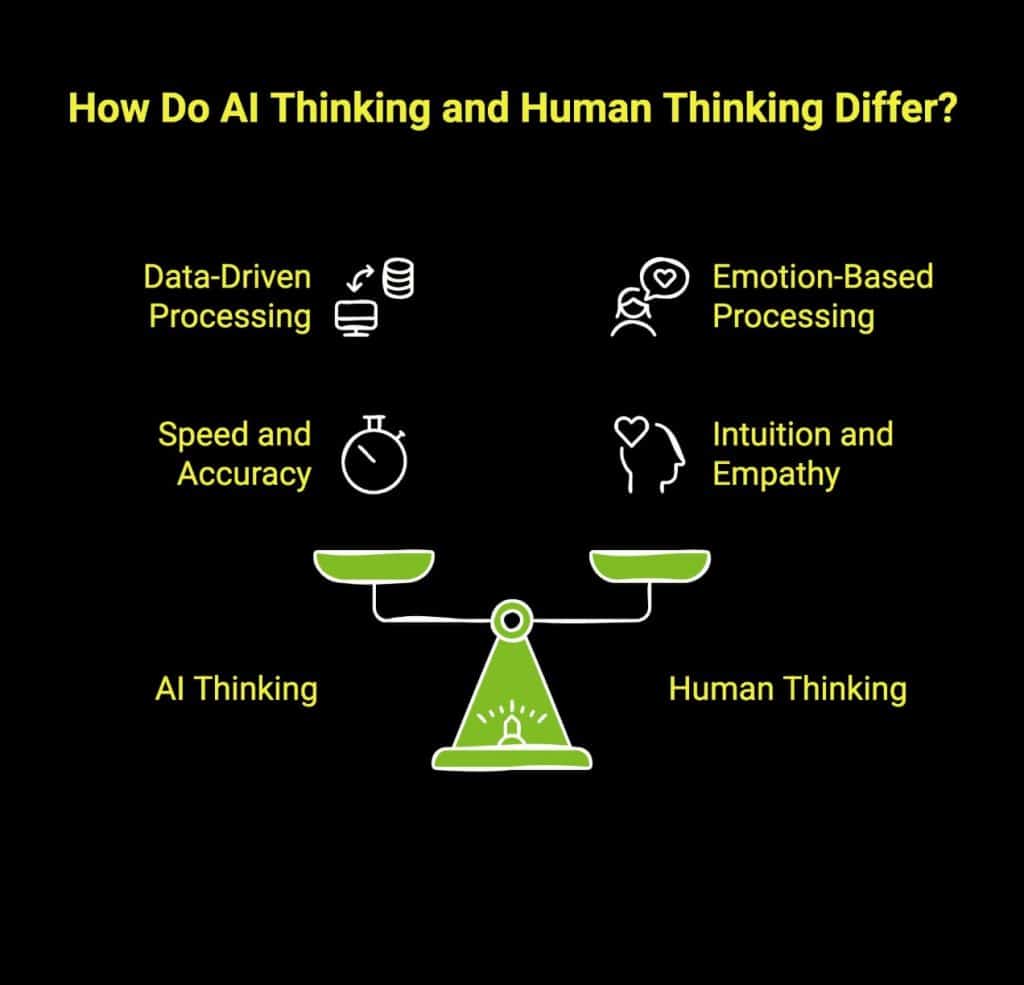
Infographic showcasing the difference between human vs AI thinking
AI and human thinking operate on fundamentally different foundations. While AI processes information through computation and patterns, human cognition blends logic with emotion, ethics, intuition, and lived experience. Understanding these differences is essential to using AI responsibly and ensuring decisions reflect both intelligence and humanity.
Here’s how these thinking models diverge and complement each other:
1. AI Works Through Patterns, Data, And Prediction
AI analyses massive amounts of structured and unstructured data to identify trends and generate predictions. It excels at optimisation, modelling scenarios, and processing complex information at high speed. However, it operates through probability rather than comprehension, meaning it recognises patterns without grasping the meaning or intention behind them. AI informs decisions, but it cannot understand context or purpose on its own.
2. Human Thinking Brings Context, Emotion, Values, And Ethical Judgment
Humans interpret information through lived experience, moral reasoning, empathy, and long-term perspective. We evaluate emotional impact, cultural relevance, and real-world consequences that extend far beyond numerical accuracy. These uniquely human capabilities are crucial in leadership, conflict resolution, innovation, and moral decision-making, where rigid logic alone is insufficient.
3. The Goal Is Not Replacement, It Is Partnership
The strongest outcomes emerge when AI’s analytical power supports human judgment and creativity. For example, AI might suggest the most efficient hiring candidate based on data, but a human decides whether that person fits the team, shares the right values, and can grow in the role.
When AI provides insight and humans provide judgment, decisions become both smarter and more human. Partnership enables decisions that are faster, smarter, and deeply aligned with real-world values.
Blending machine intelligence with human wisdom creates solutions that are powerful, ethical, and built to last.
How Is AI Impacting Human Critical Thinking?
Have you noticed how often you turn to AI before thinking things through yourself? AI is transforming how we process information, solve problems, and make decisions. While it offers powerful analytical support, relying on it too heavily can weaken essential reasoning skills. Maintaining critical thinking requires intentional balance.
Here’s how AI is reshaping critical thinking today:
1. Cognitive Offloading Is Changing How We Solve Problems
Studies suggest that frequent reliance on AI tools encourages people to outsource mental effort instead of engaging in analytical reasoning. According to MDPI, people tend to hand over mental effort to technology instead of practicing reasoning skills themselves.
When technology solves challenges for us, we practice problem-solving less often, gradually reducing our ability to think independently and logically through complex issues. Over time, this shift may weaken cognitive resilience and intellectual confidence.
At the same time, when used intentionally, AI can reduce cognitive overload by handling repetitive or data-heavy tasks. This allows humans to focus their mental energy on interpretation, judgment, and strategic thinking rather than basic processing.
2. Instant Answers Encourage Shallow Understanding
Instant access to AI-generated responses can create habits of superficial learning. When answers appear quickly, we may skip reflection, questioning, and deeper research. According to Harvard experts, relying on AI can reduce the habit of reflection and weaken our ability to analyse and form independent opinions. When answers come too easily, we stop questioning and lose depth.
This convenience risks limiting our ability to evaluate evidence, form original viewpoints, and build depth of understanding. True comprehension requires time, curiosity, and critical engagement.
However, AI can also support deeper thinking when its outputs are treated as starting points rather than final answers. Comparing AI responses, questioning assumptions, and validating information can actively strengthen analytical and evaluative skills.
3. Leaders Need To Create Space For Thoughtful Thinking
Strong critical thinking cultures do not develop passively. Teams perform better when leaders prioritise discussion, inquiry, and reflection rather than speed and efficiency alone. According to the Indian Journal of Behavioural Sciences, critical thinking remains strong only when it is intentionally practiced.
Regularly practicing analytical thinking, debate, and evidence-based decision-making reinforces cognitive skills and builds environments where thoughtful judgment is valued and protected.
When leaders use AI to inform discussions rather than replace them, it can enrich conversations with data, scenarios, and perspectives that humans then critically assess, challenge, and contextualise before making decisions.
Balancing AI’s strengths with intentional independent thinking preserves creativity, strengthens reasoning, and ensures decisions remain truly human-driven.
What Is the Human Algorithm And Why Does It Matter Now?
Today, AI is no longer working quietly in the background. It helps decide who gets hired, which patients are prioritised, and where businesses invest their money. That is why the Human Algorithm matters right now. As machines become better at processing data, humans must stay responsible for judgment, empathy, and values.
The Human Algorithm reminds us that AI can suggest what is efficient, but people must decide what is fair, meaningful, and right.
Here’s how the Human Algorithm creates meaningful impact:
1. Tools Should Support Human Judgment Rather Than Replace It
AI is most valuable when it expands perspective and strengthens clarity instead of delivering automated conclusions. Technology should surface multiple possibilities, while humans interpret them through lived experience, values, and emotional intelligence.
When decisions remain human-led, we protect responsibility, trust, and creativity, qualities essential to leadership and meaningful progress.
2. A Simple Framework For Thinking Deeper With AI
At Wild Creek Web Studio, the Human Algorithm is structured around five deliberate steps that encourage thoughtful problem-solving and intentional decision-making.
Define the real problem before involving AI, explore diverse viewpoints, distil what genuinely matters, decide with intention rather than speed, and reflect on outcomes to continuously improve. This rhythm transforms AI from a shortcut into an amplifier of clarity and depth.
3. Better Questions Lead To Better Thinking
Powerful thinking begins with the right questions. Instead of asking AI for completed answers, asking it to challenge assumptions, expose blind spots, or offer alternative angles stimulates deeper reasoning. Curiosity fuels innovation and produces stronger solutions than instant certainty or surface-level responses.
The Human Algorithm matters because it ensures technology elevates human insight and decision quality, enabling smarter, more ethical, and more meaningful outcomes.
How Can We Use AI To Think Better Instead Of Thinking Less?
AI can elevate the way we think when used intentionally. Instead of replacing human judgment, it should strengthen our reasoning, creativity, and strategic clarity. By engaging critically with AI-generated insights rather than accepting them passively, we turn technology into a catalyst for deeper, more thoughtful decision-making.
Here’s how to use AI to think better:
1. Use AI To Challenge Strategy, Not To Write It
Ask AI to analyse assumptions, surface blind spots, and present alternative perspectives rather than generating full plans. When AI reveals risks, conflicting logic, or missed opportunities, teams deepen their reasoning and refine direction.
Strategy gains strength through debate and pressure-testing, not automated conclusions.
2. Use AI To Enrich Ideas And Stories, Not To Produce Generic Content
AI can expand angles, clarify structure, and accelerate research, helping shape more compelling narratives. However, the emotional depth, authenticity, and lived insight that drive influence must come from human experience.
Without reflection and personal meaning, ideas remain generic and fail to inspire or lead.
3. Use AI To Understand Data, Then Apply Human Meaning
AI excels at organising information, detecting patterns, and revealing trends, but only humans can interpret purpose and consequence. Insight emerges when data is aligned with real-world needs, values, and long-term implications. Effective decisions blend analytical precision with empathy, ethics, and context.
Using AI as a partner in thinking strengthens creativity, sharpens strategy, and leads to smarter decisions grounded in human understanding.
What Does Thinking Deeper Look Like In Real Marketing And Leadership Scenarios?
Thinking deeper in marketing and leadership involves analyzing consumer behavior, understanding market trends, and fostering genuine connections.
It emphasizes strategic decision-making over quick fixes, encouraging leaders to explore innovative solutions that resonate with their audience while balancing data insights with human intuition.
For e.g. Netflix uses AI to analyze what people watch, skip, or finish. This helps leaders understand patterns, but it does not tell them what should be made next. That is where deeper thinking begins.
Human decision-makers look beyond the data and ask questions AI cannot. Does this story reflect what people are feeling right now? Will it still matter in five years? Is it worth taking a creative risk even if the numbers feel uncertain?
AI narrows choices by showing trends. Humans add depth by interpreting meaning, emotion, and long-term vision. If Netflix relied only on AI, content would repeat what already worked. Thoughtful human judgment breaks patterns, supports originality, and turns data into purposeful decisions.
When Should We Avoid Letting AI Lead The Decision-Making?
AI can support decision-making with speed and precision, but it should not lead in situations where human values, emotions, and ethics play a defining role. Some decisions require lived experience, empathy, and moral judgment that algorithms cannot replicate or understand beyond patterns and probabilities.
Here are key moments where humans must take the lead:
1. Decisions Involving Ethical Dilemmas And Moral Responsibility
Ethical decisions require weighing consequences that extend beyond measurable outcomes. AI cannot understand intentions, justice, fairness, or the emotional impact decisions have on people’s lives.
When choices affect rights, well-being, or societal trust, human judgment must guide decision-making to protect integrity and accountability rather than relying on algorithmic logic alone.
This is exactly where thinking deeper, not faster, with AI rethinking becomes essential in ensuring thoughtful choices rather than automated responses.
2. Situations Involving Complex Human Emotions And Personal Relationships
AI lacks emotional intelligence and cannot fully interpret grief, conflict, trauma, or cultural nuance. In areas such as healthcare, conversations, conflict resolution, or leadership communication, decisions must reflect empathy, sensitivity, and an awareness of the context. Human insight ensures conversations remain humane, supportive, and rooted in emotional understanding.
3. High-Stakes Decisions With Long-Term Human Consequences
Choices that shape policies, public safety, legal outcomes, or organisational direction require deep reflection and responsibility. AI can inform scenarios and provide data, but humans must weigh risks, values, and future implications. Long-term decisions demand wisdom and foresight, not automated prediction.
Human-led judgment preserves compassion, ethics, and meaning, ensuring decisions reflect people, not just algorithms. Allowing AI to dominate such decisions can reduce personal reflection and contribute to the AI impact on human critical thinking, weakening our ability to analyse and respond meaningfully.
Partner With Wild Creek Web Studio To Lead With Depth, Not Just Speed
If you want your brand to stand out for real ideas, meaningful leadership, and genuine value, you need more than fast tools and automated content. You need a thoughtful strategy, clear messaging, and a team that understands how to turn insight into influence. That’s what Wild Creek Web Studio brings to the table.
With 18+ years of experience and success stories across more than 100 brands, Wild Creek combines human thinking with smart digital execution. We don’t chase trends. We build brands that last, grow, and earn trust.
Why businesses feel confident partnering with Wild Creek Web Studio:
- Strategy that’s rooted in real business goals, not vanity numbers or shortcuts
- Strong SEO and performance marketing that bring the right audience to your door
- Human-led content and positioning that help you sound like a leader, not an algorithm
- A partnership built on transparency, accountability, and results you can measure
If you’re ready to tell your story with clarity, stand out in your industry, and grow sustainably, we’d love to work with you. Let’s build something meaningful together. Contact Wild Creek Web Studios today!
Conclusion
Embracing the principle of thinking deeper, not faster, invites us to harness artificial intelligence for enhanced reasoning rather than mere efficiency. This deeper engagement fosters critical thinking skills and emotional intelligence, enabling us to utilize AI technology responsibly. As we contemplate the balance between human judgment and AI algorithms, fostering a culture that values cognitive engagement will ensure that human cognition remains central in decision-making processes going forward, ultimately enhancing user experience in various domains.
Frequently Asked Questions
Can AI help humans think deeper rather than just faster?
Yes, artificial intelligence can help us think more deeply by handling routine data analysis and information gathering. This frees up our mental energy to focus on reflection, strategy, and exercising critical thinking skills.
How does cognitive offloading through AI affect our thinking skills?
Excessive cognitive offloading due to heavy AI usage can weaken our memory and independent thinking skills by reducing our cognitive engagement. While it can lower the immediate cognitive load, over-reliance risks eroding the core abilities of human cognition.
What unique strengths do humans retain over AI in deep analysis?
Humans retain several key strengths over AI, including emotional intelligence, creativity, and common sense. Our ability to understand context, apply ethical judgment, and use intuition goes beyond the logical reasoning of algorithms.
How does AI thinking differ from human thinking in terms of critical analysis?
AI analyses information through pattern recognition and statistical prediction, while humans apply intuition, emotion, values, and lived experience. Critical analysis requires context and judgment, especially when solving complex problems, turning information into meaning rather than automated conclusions.
Does relying on AI tools reduce our own thinking skills over time?
Yes. Long-term reliance on AI can reduce cognitive effort, making it easier to accept answers without questioning. When we stop practising reasoning and reflection, our natural problem-solving skills weaken, and independent thinking becomes harder across complex tasks.
Are there risks of our minds becoming duller because of frequent AI use?
Yes. Frequent AI use can encourage passive consumption instead of active thinking. If we stop forming opinions, evaluating ideas, or solving challenges ourselves, mental sharpness declines and curiosity, creativity, and critical reasoning gradually weaken, especially when handling challenging complex problems.
How does using mental models with AI enhance human thinking?
Mental models provide structured frameworks for interpreting AI insights, helping humans evaluate information clearly and avoid cognitive shortcuts. By combining data analysis efficiency with structured reasoning, decisions become more thoughtful, intentional, and aligned with real goals effectively and meaningfully.
How do you evaluate the accuracy of AI-generated information?
Accuracy improves when users verify sources, cross-check facts, and test reasoning against credible references. Evaluating bias, clarity, and context ensures reliability. Independent validation remains essential because AI outputs are not always correct or logically consistent during demanding, complex tasks.
How to deploy AI systems effectively to complement and compensate for the inherent constraints of human cognition and vice versa?
Deploy AI to handle high-volume data analysis, while humans guide interpretation, ethics, and context. Combining efficiency with judgment prevents over-reliance and protects cognitive skills. When partnership replaces replacement, thinking becomes stronger, smarter, and more meaningful across complex problems.