Key Highlights
- Customer segmentation involves dividing your customer base into groups based on shared characteristics.
- This process allows you to tailor marketing campaigns to a specific target audience.
- Understanding different customer needs helps you personalise the overall customer experience.
- Effective marketing strategies built on segmentation can boost customer loyalty and revenue.
- Segmentation differs from market segmentation, as it focuses on existing customers rather than the entire market.
- There are several types, including demographic, behavioural, and geographic segmentation.
In today’s competitive world, treating all customers the same is a recipe for missed opportunities. This is where customer segmentation comes in.
By dividing your customer base into smaller, more manageable groups, you can understand them on a deeper level.
This simple but powerful strategy allows you to fine-tune your marketing efforts and create experiences that truly resonate, building stronger relationships and encouraging loyalty. Let’s explore how this approach can transform your business.
What is Customer Segmentation, and Why is it Important for Businesses in 2026?
Customer segmentation means grouping customers by shared traits such as age, location, behaviour, or interests using data insights. It matters because it replaces generic marketing with targeted actions.
When messages, offers, and experiences match each segment’s needs, businesses see higher engagement, stronger loyalty, better conversions, and more efficient use of marketing budgets over time consistently.
Here’s why it matters more in 2026:
- More relevant marketing: Targeted messages resonate better than one-size-fits-all campaigns.
- Improved customer experience: Personalised interactions make customers feel understood and valued.
- Better use of budgets: Resources are spent on audiences most likely to convert.
- Stronger loyalty: Relevant communication builds trust and long-term relationships.
By focusing on the right customers with the right message, businesses can grow more efficiently and stay competitive.
How Segmentation Differs from Market Segmentation?
While both approaches involve grouping audiences, they are used at different stages of the customer journey and serve distinct business goals. Here’s a simple breakdown to help you clearly see the difference between customer segmentation and market segmentation:
| Aspect | Customer Segmentation | Market Segmentation |
| Primary focus | Existing customers who already interact with your business | The broader market, including potential customers |
| Main goal | Improve retention, loyalty, and repeat purchases | Identify and attract new target audiences |
| Data used | Customer behaviour, purchase history, engagement data | Demographics, market trends, and audience research |
| Marketing approach | Personalised communication and tailored offers | Broad positioning and awareness-driven campaigns |
| Business impact | Strengthens relationships and increases lifetime value | Expands reach and supports customer acquisition |
What are the Main Types of Customer Segmentation Used in Marketing?
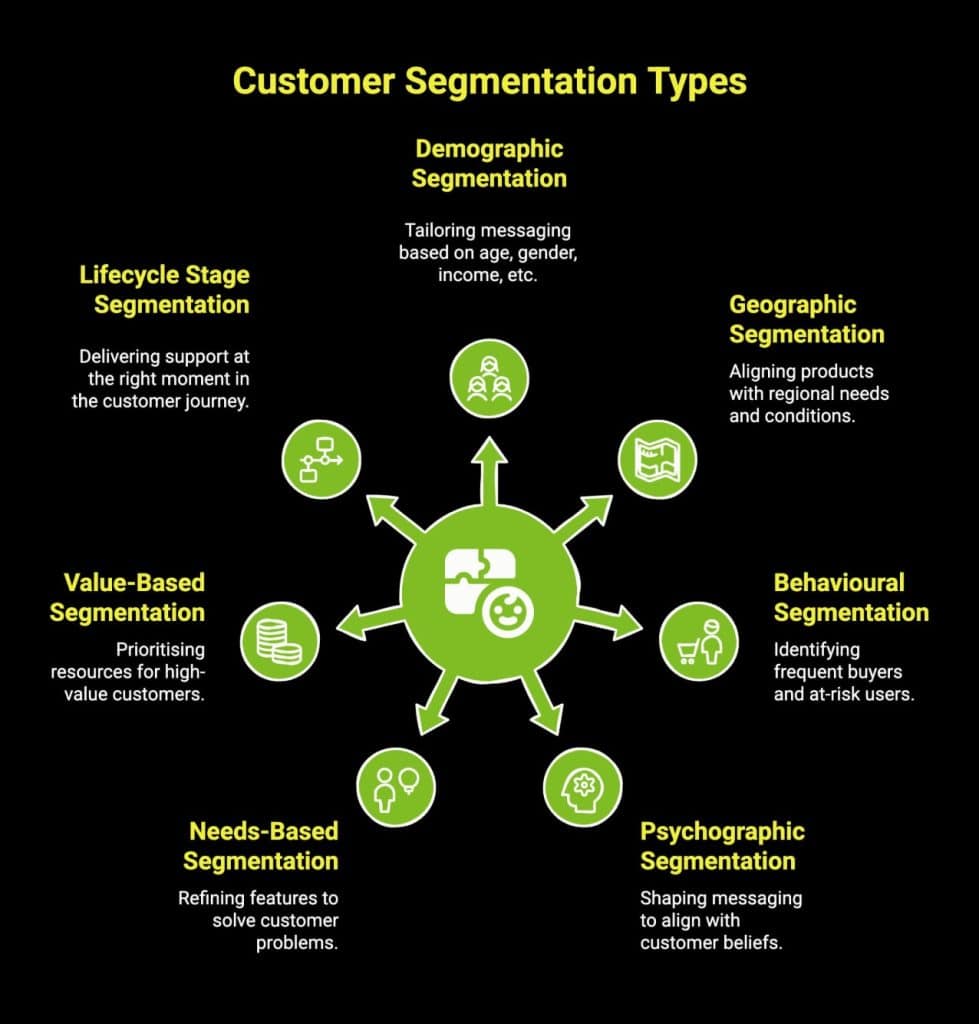
Infographic showcasing customer segmentation types
Customer segmentation helps businesses organise customers into meaningful groups based on shared characteristics. There is no one-size-fits-all model. The right segmentation type depends on your goals, industry, and data, helping teams move beyond guesswork and make smarter decisions.
Below are the most commonly used customer segmentation types and how they help in real business scenarios.
1. Demographic Segmentation
Demographic segmentation groups customers using clear, identifiable details such as age, gender, income, education, or marital status. These factors help businesses adjust messaging and offers. For example, tone, language, and channels can change based on age groups, ensuring communication feels appropriate, familiar, and easier for customers to relate to.
2. Geographic Segmentation
Geographic segmentation organises customers by location, ranging from country and city to neighbourhood or climate. Location influences needs, language, and buying behaviour. By aligning products and campaigns with regional conditions, businesses stay relevant, avoid wasted spend, and deliver offers that genuinely match what customers need in their environment.
3. Behavioural Segmentation
Behavioural segmentation focuses on how customers interact with your brand, including purchases, usage patterns, and responses to promotions. These actions reveal intent and loyalty. Tracking behaviour helps identify frequent buyers, at-risk users, or inactive customers, allowing teams to trigger timely rewards, reminders, or personalised incentives.
4. Psychographic Segmentation
Psychographic segmentation explores why customers make decisions by examining values, lifestyles, interests, and attitudes. It adds emotional context to data. Understanding motivations helps brands shape messaging, experiences, and positioning that align with customer beliefs, making communication feel more personal, meaningful, and emotionally resonant over time.
5. Needs-Based Segmentation
Needs-based segmentation groups customers by shared problems, expectations, or specific requirements from a product or service. It highlights what customers are truly looking for. By identifying common needs, businesses can refine features, support levels, or offerings that directly solve problems and build stronger trust and long-term loyalty.
6. Value-Based Segmentation
Value-based segmentation categorises customers by the revenue or long-term value they bring to a business. This approach helps prioritise resources. By understanding which segments generate higher lifetime value, teams can tailor service levels, retention efforts, and investments while managing support costs more sustainably over time.
7. Lifecycle Stage Segmentation
Lifecycle stage segmentation groups customers based on where they are in their journey, from new users to loyal advocates. Needs change at each stage. Segmenting this way allows businesses to deliver onboarding, education, or advanced support at the right moment, improving retention, satisfaction, and long-term engagement.
Using the right segmentation types together helps businesses personalise experiences, allocate resources wisely, and build stronger, longer-lasting customer relationships consistently.
If you’re curious about how authenticity and human connection can strengthen digital marketing efforts, this article takes a thoughtful look at why people-first strategies still matter.
How Can You Segment Customers and Target Them Effectively?
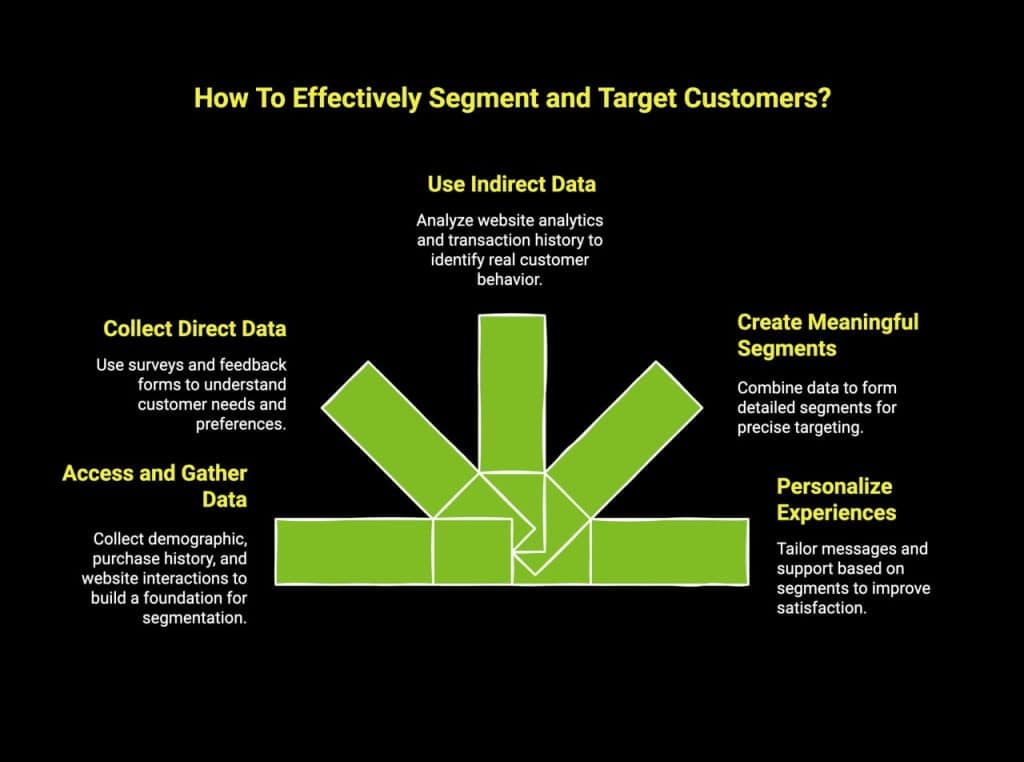
Infographic showcasing how you can Segment Customers and Target Them Effectively
Effective customer targeting starts with turning data into clear actions. Segmenting customers works best when you have accurate information, defined goals, and a structured process. When done right, segmentation helps you personalise messaging, close experience gaps, and deliver more relevant marketing and support at every stage.
Here’s a practical step-by-step approach to segmenting customers and using those segments effectively.
1. Access and Gather the Right Customer Data
Customer data is the foundation of segmentation. Collect information that reflects who your customers are and how they behave. This includes demographic details, purchase history, and website interactions. Combining multiple data sources gives you a clearer, more accurate picture and prevents assumptions from driving decisions.
2. Collect Direct Customer Data Thoughtfully
Direct data comes straight from customers and explains the reasons behind their actions. Use surveys, feedback forms, CSAT or NPS scores, and insights from sales or support conversations. Asking the right questions helps uncover needs, preferences, and pain points that are not always visible through behaviour alone.
3. Use Indirect Data to Understand Real Behaviour
Indirect data shows what customers actually do rather than what they say. Website analytics, transaction history, social activity, and reviews reveal browsing habits, buying frequency, and response to offers. These insights help identify patterns that can be used to create behaviour-based segments grounded in real actions.
4. Create Rich and Meaningful Customer Segments
Once data is collected, analyse it to identify clear patterns. Combine demographic, behavioural, and needs-based data to form well-defined segments. Avoid overly broad groups. Detailed segments allow for more precise targeting, clearer messaging, and strategies that feel relevant rather than generic.
5. Close Experience Gaps Through Personalisation
Segmentation enables personalisation at scale. Use segments to tailor messages, recommend relevant products, and customise support experiences. Aligning interactions with customer expectations reduces friction and improves satisfaction. When customers feel understood at every touchpoint, trust, loyalty, and long-term engagement naturally increase.
By following a structured segmentation process, businesses can move from broad targeting to meaningful personalisation that drives better experiences, stronger relationships, and measurable growth.
If you’re looking to understand how startups can plan smarter, prioritize the right channels, and grow with intention, this guide offers a practical breakdown worth exploring.
How Does B2B Customer Segmentation Differ from B2C Segmentation?
While both B2B and B2C customer segmentation aim to group audiences for better targeting, the way they are approached is very different. The table below highlights how these two segmentation models vary in focus, data, decision-making, and overall business goals.
Here’s a clear, side-by-side breakdown of the differences:
| Aspect | B2B Customer Segmentation | B2C Customer Segmentation |
| Primary focus | Organisational needs, efficiency, and return on investment | Individual needs, preferences, and emotions |
| Who makes decisions | Multiple stakeholders such as managers, finance teams, and executives | Usually a single individual or household |
| Key segmentation factors | Company size, industry, revenue, business model, technology stack | Age, gender, income, lifestyle, interests, behaviour |
| Buying motivation | Solving business problems, improving productivity, reducing costs | Personal satisfaction, convenience, emotional connection |
| Sales cycle length | Longer and more complex with approvals and negotiations | Shorter and often impulsive |
| Customer needs over time | Change as the business grows or scales | Change based on life stage or personal preferences |
| Marketing messaging | Focuses on value, efficiency, scalability, and outcomes | Focuses on benefits, experiences, and personal value |
| Relationship goal | Build long-term partnerships and ongoing solutions | Encourage repeat purchases and brand loyalty |
| Example approach | Demonstrating cost savings or operational improvement | Highlighting style, enjoyment, or everyday usefulness |
Understanding these differences helps businesses design segmentation strategies that truly fit their audience, whether they are selling to individuals or entire organisations.
Why Is Customer Segmentation Important for Indian Businesses?
India’s diversity makes one-size-fits-all strategies ineffective. Customer segmentation helps businesses understand varied regions, cultures, and buying behaviours, enabling smarter decisions across marketing, support, and growth.
Here’s how customer segmentation creates real impact for Indian businesses.
1. Helps You Understand and Organise Your Audience Better
Customer segmentation allows businesses to group customers based on common characteristics such as behaviour, preferences, or location. Techniques like behavioral segmentation help identify patterns across different segments, making it easier to understand what drives decisions and expectations in a highly diverse Indian market.
2. Drives Growth and Profitability
Using effective customer segmentation ensures marketing spend is focused on audiences most likely to convert. Instead of broad outreach, businesses can align pricing, offers, and priorities with high-value segments. This targeted approach improves ROI, supports smarter product development, and creates a clearer path to sustainable growth.
3. Improves Personalisation and Customer Experience
Segmentation enables brands to address unique needs with precision. Tailored marketing messages, personalised recommendations, and relevant interactions across social media and other touchpoints help customers feel understood. When experiences feel personal rather than generic, satisfaction and long-term engagement naturally increase.
4. Supports Smarter Targeting and Market Focus
Through customer segmentation analysis and deeper segmentation analysis, businesses can identify which audiences are worth prioritising. This insight helps refine campaigns, test assumptions, and launch new products to the segments most likely to adopt them, reducing risk and improving market fit.
5. Enhances Speed and Quality of Customer Service
Segmentation also transforms customer service by giving teams context before conversations begin. Knowing a customer’s history, segment, and preferences allows faster issue resolution, better routing, and more empathetic support. This reduces friction, improves first-contact resolution, and strengthens overall brand perception.
By investing in customer segmentation, Indian businesses can personalise at scale, make smarter decisions, and build stronger, more profitable relationships over time.
What Challenges Do Companies Face When Implementing Customer Segmentation?
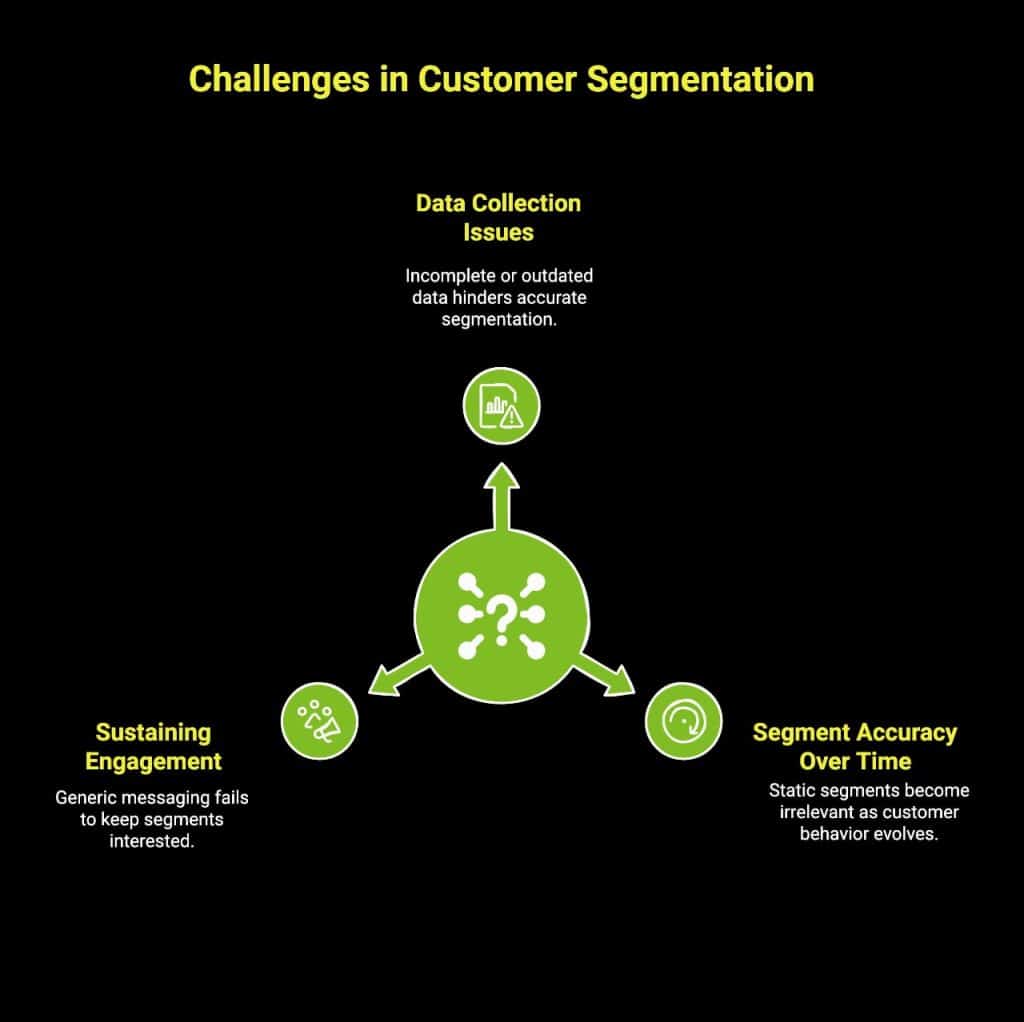
Infographic showcasing challenges in customer segmentation
Customer segmentation can unlock powerful insights, but putting it into practice is not always straightforward. Businesses often struggle with poor data quality, outdated segments, and turning insights into action. These challenges can limit personalisation, weaken targeting, and reduce the impact of segmentation efforts if not addressed properly.
Below are the most common challenges companies face and how they can be managed effectively.
1. Addressing Data Collection Issues
Accurate segmentation depends on reliable data, yet many businesses deal with incomplete, outdated, or disconnected information. Data often sits across multiple systems, making it difficult to build a clear customer view. Establishing consistent data collection, combining direct and behavioural inputs, and centralising data helps create a strong foundation for segmentation.
2. Maintaining Segment Accuracy Over Time
Customer behaviour changes, and segments can quickly become outdated. Relying on static segments leads to irrelevant messaging. Regularly reviewing new data, listening to customer-facing teams, and adjusting segments as preferences evolve ensures groups remain accurate, useful, and aligned with real customer behaviour.
3. Sustaining Engagement Across Segments
Creating segments is only the first step. The real challenge is keeping each group engaged with relevant experiences. Generic messaging reduces interest over time. Continuously tailoring content, offers, and interactions while tracking engagement metrics helps maintain relevance, strengthen relationships, and increase long-term customer value.
By addressing these challenges proactively, businesses can turn customer segmentation into a dynamic, ongoing strategy that delivers meaningful personalisation and measurable results.
What are Some Examples of Effective Business Segmentation in India?
For Indian businesses operating in such a diverse market, customer segmentation is not just a best practice; it’s essential. The vast differences in language, culture, and economic status across the country mean a single message rarely works for everyone.
Here are a few real-world examples of effective business segmentation in India:
- Myntra uses geographic and cultural segmentation by promoting ethnic wear collections heavily during regional festivals like Durga Puja, Onam, and Navratri, while pushing lighter fabrics and summer styles in southern and coastal states.
- Amazon India applies demographic and location-based segmentation, marketing premium electronics and fast-delivery benefits to metro customers, while highlighting value deals, cash-on-delivery, and household essentials for shoppers in Tier-2 and Tier-3 cities.
- PhonePe uses behavioural segmentation to identify frequent UPI users, merchants, and bill payers, offering tailored financial products such as insurance, mutual funds, or merchant loans based on individual usage patterns.
By understanding their target audience on a granular level, Indian businesses can create more relevant and impactful campaigns that resonate with the unique characteristics of each segment.
How Can Businesses Build an Effective Customer Segmentation Strategy?
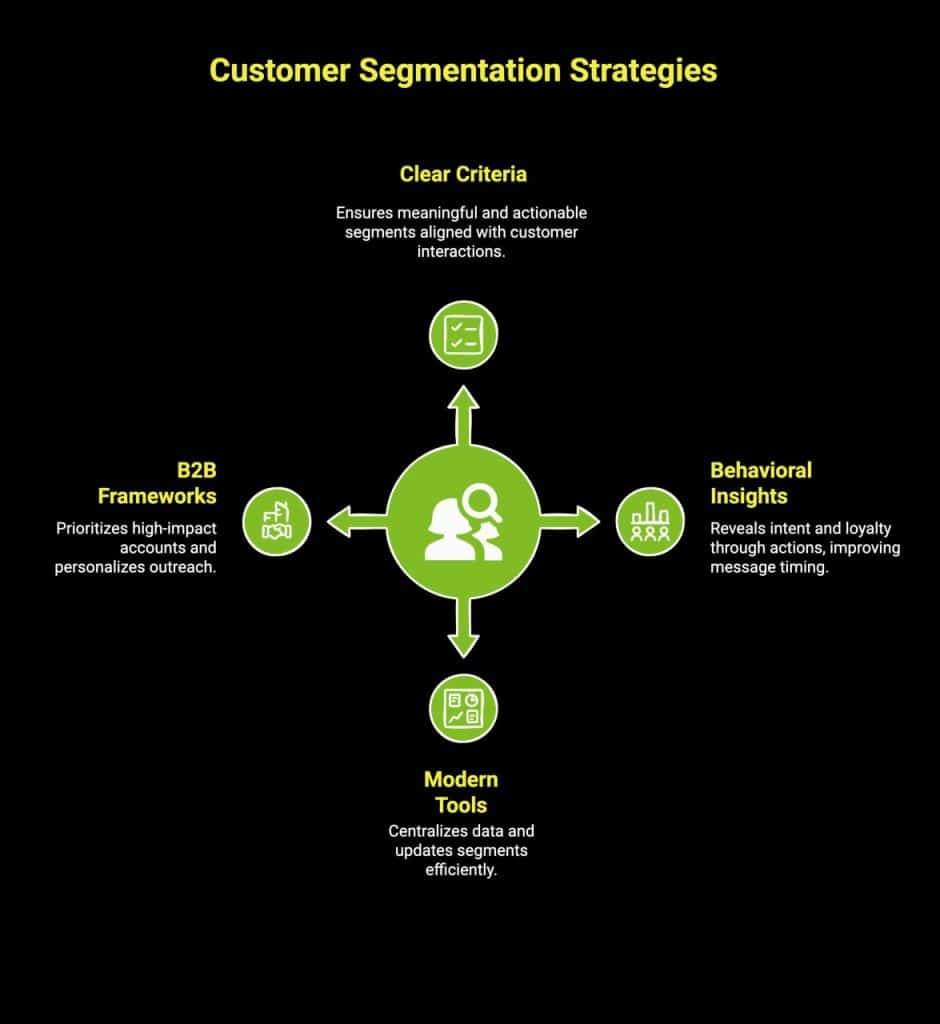
Infographic showcasing customer segmentation strategies
A strong customer segmentation strategy helps businesses move from assumptions to data-led decisions. By clearly defining who customers are, how they behave, and what they need, companies can improve targeting, personalisation, and long-term growth while avoiding wasted effort and generic messaging.
Here’s how businesses can build and apply segmentation analysis the right way.
1. Define Clear Segmentation Criteria
Start by choosing the right customer segmentation criteria based on your goals. These may include demographics, behaviour, needs, or value. Clear criteria ensure segments are meaningful, actionable, and aligned with how customers actually interact with your business.
2. Use Behaviour to Create Smarter Segments
Behavioral customer segmentation focuses on actions such as purchases, usage frequency, and responses to offers. This approach reveals intent and loyalty more accurately than assumptions. Behaviour-based insights help businesses time messages better and design experiences that match real customer habits.
3. Apply the Right Tools and Solutions
Modern customer segmentation solutions help centralise data, identify patterns, and keep segments updated as behaviour changes. Using the right tools reduces manual effort, improves accuracy, and allows teams to activate segments across marketing, sales, and support more efficiently.
4. Learn from Proven B2B Frameworks
For complex sales cycles, frameworks like b2b customer segmentation McKinsey, emphasise firmographics, decision roles, and value potential. These models help businesses prioritise high-impact accounts, personalise outreach, and align segmentation with revenue and long-term partnerships.
By defining clear criteria, using behavioural insights, and applying proven frameworks, businesses can turn segmentation into a practical, scalable system that improves relevance, efficiency, and customer outcomes over time.
Want a Digital Partner That Focuses on Outcomes, Not Just Activity?
At Wildcreek Web Studios, we believe strong digital performance starts with clarity. Since 2003, we’ve helped brands simplify their digital strategy and focus on what actually drives growth.
Our approach blends strategic insight with hands-on execution across SEO, paid media, branding, and digital consulting. We don’t chase trends for the sake of it. Instead, we align every campaign with clear business goals and measurable results.
Whether you’re scaling an established brand or strengthening your digital presence, we help you reach the right audience and build a brand that performs consistently.
If you’re ready for digital strategies that work harder for your business, book a consultation with Wildcreek Web Studios today.
Conclusion
Customer segmentation only delivers value when it is put into action. Start by reviewing your existing customer data and identifying one or two clear segments you can focus on immediately. Test personalised messaging, offers, or experiences for each group and measure the results. Refine your segments as behaviours change and keep your data updated. Small, data-driven improvements can quickly lead to better engagement and stronger growth. If you need help setting this up or refining your approach, reach out for expert guidance and take the next practical step towards more meaningful customer experiences.
Frequently Asked Questions
What are practical ways to identify the best target customer segment in India?
Start by analysing purchase patterns, location, and behaviour to identify profitable demand pockets. Look for consistent needs across regions, test assumptions with small campaigns, and refine targeting using feedback until the most responsive groups of customers emerge clearly.
How does AI customer segmentation work for medium-sized businesses?
AI segmentation works by analysing large datasets to spot patterns humans miss. For medium businesses, tools score behaviour, predict intent, and update segments automatically, helping the marketing team personalise campaigns faster without heavy manual analysis and improve results.
Can you share an example of successful B2B customer segmentation?
A strong B2B example is a SaaS company segmenting clients by usage and contract size. By prioritising high-usage accounts with tailored onboarding and support, they increased renewals, upsells, and turned key accounts into loyal customers over time.
How do businesses typically collect data for customer segmentation?
Businesses collect segmentation data through surveys, website analytics, purchase history, CRM records, and support interactions. Combining direct feedback with behavioural tracking helps reveal preferences, predict future needs, and estimate customer lifetime value more accurately for planning decisions better.
How can customer segmentation improve marketing strategies and customer experiences?
Segmentation improves marketing by aligning messages with real needs and timing. When brands choose the right type of segmentation, experiences feel relevant, offers convert better, and interactions across channels become more helpful and consistent for customers overall today.
What are the 4 types of consumer market segmentation?
The four main consumer segmentation types are demographic, geographic, behavioural, and psychographic. Each group buys differently, helping businesses understand motivations, location, actions, and values, so campaigns can be tailored to specific groups effectively based on clear insights accurately.
Which portions of your customer base have the lowest cost of acquisition and retention?
Customers who already understand your value usually cost less to retain. Repeat buyers, referrals, and engaged subscribers often convert faster, require fewer incentives, and respond better to communication, making them more cost-efficient segments for long-term growth.
Why are many retail businesses shifting to an omnichannel approach?
Retailers adopt omnichannel to meet shoppers wherever they are. Consistent pricing, inventory visibility, and flexible fulfilment across online and offline touchpoints improve convenience, trust, and sales, especially as buying journeys become more fragmented and customer expectations rise rapidly.