Key Highlights
- Discover how content scaling can significantly boost your brand’s growth and visibility online.
- Learn to build a repeatable content creation process using a well-structured content calendar and workflows.
- See how your content team can use artificial intelligence to produce high-quality content more efficiently.
- Explore innovative strategies like content repurposing to maximise your output without starting from scratch.
- Understand the importance of maintaining brand consistency through quality control measures.
- Use data-driven insights to refine your content strategy and improve overall performance.
Creating great content consistently can feel overwhelming, especially when your audience expects fresh value all the time. Many teams struggle to keep up, leading to burnout, inconsistency, and missed opportunities.
To move forward confidently, you need a smarter way to increase output without sacrificing quality, voice, or focus. Content should support growth, not become a burden.
In this guide, we explore seven smart approaches for scaling content production that help you reach more people, strengthen brand awareness, and grow sustainably without overloading your team.
What Does Scaling Production Mean?
Scaling production means increasing the volume of content you create across platforms like blog posts and social media posts while maintaining strong content quality and a consistent brand voice. It involves improving content management, refining workflows, and aligning output with your business goals so you can grow without sacrificing standards.
Here’s what scaling production really involves:
- Increasing content output efficiently without overwhelming your team or lowering quality.
- Streamlining processes with clear workflows and a strong content marketing strategy to support growth.
- Using data and performance insights to guide decisions and ensure every type of content serves search intent and audience needs.
- Expanding resources through tools, templates, automation, or outsourcing to handle higher production demands.
- Maintaining consistency in tone of voice, structure, and messaging across channels, even as contributors and platforms increase.
Scaling production is about building smarter systems so your content works harder and reaches your target audience more effectively.
What Are the 15 Ways You Can Scale Content Production Effectively for Your Website?
You can scale content production for your website by building smarter systems, using supportive technology, and improving workflow efficiency so you can publish more high-quality blog posts and social media content without losing your brand voice or content quality. When content management processes align with your marketing strategy, scaling becomes achievable and sustainable.
Below are fifteen practical tactics designed to help website owners and content teams grow consistently while staying focused on business goals, search intent, and audience needs.
1. Leverage AI Tools for Enhanced Productivity
AI tools can revolutionize content creation by automating repetitive tasks like research, idea generation, and first drafts. These tools allow your content team to focus on the creative aspects, such as refining the tone, ensuring accuracy, and staying on-brand, without compromising quality.
Tool to Use: Jasper.ai or Copy.ai
These tools can generate high-quality first drafts based on input parameters, helping you produce a larger volume of content faster. They also offer SEO optimization features that can align content with search intent.
2. Build Repeatable Content Workflows and Processes
Scaling content production becomes manageable when your content process is repeatable and well-organized. A defined workflow eliminates bottlenecks and improves collaboration, helping you move content through the pipeline more efficiently while keeping track of progress at every stage.
Both of these tools allow you to break down the content creation process into manageable tasks, assign team members, and track the status of each piece of content. This ensures nothing falls through the cracks, whether it’s ideation, writing, editing, or publishing.
3. Repurpose High-Performing Content Across Multiple Formats
Repurposing is a key strategy for scaling without reinventing the wheel. A single blog post can be transformed into social media posts, podcasts, infographics, videos, or even downloadable resources. This approach maximizes the value of your existing content while reaching new audiences in different formats.
Tool to Use: Canva or Lumen5
Canva is perfect for turning blog content into visually appealing infographics and social media posts, while Lumen5 allows you to turn articles into engaging videos that can be shared across YouTube, social platforms, and your website.
4. Outsource and Expand Your Content Resources
Scaling content production requires manpower, and outsourcing can be a powerful solution. Whether it’s hiring freelance writers, graphic designers, or video editors, outsourcing allows you to bring in specialized skills while keeping your internal team focused on higher-level strategy and creative direction.
These platforms give you access to a broad range of freelance talent. You can quickly scale up your content production without the need for long-term commitments, selecting specialists who align with your brand’s needs.
5. Create a Detailed Content Calendar and Strategy Roadmap
A content calendar is the backbone of an organized content strategy. By mapping out your content over several months, you can ensure consistent publishing and align your content with key business milestones, seasonal trends, and upcoming product launches.
Tool to Use: CoSchedule or Notion
These tools help you create a centralized content calendar that integrates project management, task assignments, and deadlines. CoSchedule, in particular, integrates with social media scheduling and performance analytics, offering a one-stop solution for content strategy.
6. Maintain Strong Quality Control And Brand Consistency
As you scale content production, maintaining consistency is crucial. Quality can slip when volume increases unless you have systems in place to review and approve each piece of content. A solid style guide and thorough editing process help ensure that every piece aligns with your brand voice and messaging.
Tool to Use: Grammarly or ProWritingAid
Grammarly assists with grammar, style, and clarity checks, ensuring your content remains polished. ProWritingAid offers deeper insights into writing style and structure, which can be used to refine content before it’s published.
7. Use Performance Data To Make Smart Decisions
Tracking the performance of your content is vital when scaling. By analyzing metrics such as engagement, rankings, traffic, and conversions, you can make informed decisions about future content topics, formats, and strategies. This helps you focus on producing content that delivers results.
Tool to Use: Google Analytics or SEMrush
Google Analytics provides in-depth insights into traffic sources, behavior, and conversions, while SEMrush offers comprehensive keyword and competitive analysis tools that can guide your content strategy based on real-time data.
8. Standardise Content Briefs For Alignment
Standardized content briefs are critical for reducing revisions and aligning your team. Each brief should include specific guidelines for SEO, target audience, content structure, and tone, ensuring that all contributors are on the same page. Clear briefs streamline the process and help maintain consistency across multiple authors and content pieces.
Tool to Use: Content Harmony or Google Docs Templates
Content Harmony specializes in creating detailed content briefs that incorporate SEO best practices, while Google Docs allows you to share templates that can be reused across multiple pieces of content.
9. Introduce Content Templates To Speed Up Production
Content templates act as shortcuts to consistency and speed. Whether you’re writing blog posts, social media updates, or email campaigns, templates provide a structured approach to each content piece, minimizing the effort required to start from scratch.
Tool to Use: HubSpot or Airtable
HubSpot offers pre-designed templates for blog posts, emails, and landing pages, while Airtable lets you create custom content templates that help streamline production across various content types and team members.
10. Set Up Content Sprints For Faster Turnaround
Content sprints are short bursts of focused work where your team produces multiple content pieces in a condensed time frame. This approach eliminates distractions, reduces context-switching, and helps you achieve faster turnaround, particularly during high-demand periods like seasonal campaigns or product launches.
Tool to Use: ClickUp or Trello
These project management tools are perfect for organizing content sprints, assigning specific tasks to different team members, and tracking progress in real time.
11. Build A Central Knowledge Library
Having a central knowledge library with internal guidelines, research, tone examples, and content ideas can accelerate the writing process. It helps ensure all team members, whether internal or freelance, can quickly get up to speed with your brand’s content standards.
Tool to Use: Notion
These knowledge management platforms allow you to build a comprehensive knowledge base where all content-related resources and guidelines are easily accessible by the team.
12. Collaborate With Subject Matter Experts
For technical or niche topics, working with subject matter experts (SMEs) brings authority and depth to your content. SMEs can contribute to content through interviews, research, or by co-writing articles, making your content more valuable and credible for both readers and search engines.
Tool to Use: Zoom or Google Meet
Use these video conferencing tools to conduct interviews with SMEs, which can be transcribed and turned into high-quality content. Collaboration platforms like Slack can also facilitate ongoing communication.
13. Encourage User-Generated And Community Content
User-generated content (UGC) is a great way to scale content production without increasing your internal team’s workload. Encouraging customers to share reviews, testimonials, or experiences allows you to leverage your community and diversify the content on your website.
Yotpo makes it easy to collect and showcase customer reviews on your website, while Disqus fosters discussions and allows users to contribute content and feedback directly on your blog posts.
14. Experiment With New Content Formats
Diversifying your content formats, from blog posts to video tutorials, podcasts, infographics, and interactive content, allows you to reach different audience segments. Experimenting with new formats keeps your content fresh and engaging, which is critical for long-term success.
Veed.io helps you convert written content into visually appealing videos, while Loom allows you to easily record video content for tutorials or quick updates, making your content more dynamic and accessible.
15. Automate Content Scheduling And Publishing
Automation tools help you schedule content across multiple platforms without manual intervention. Automation ensures consistency, saves time, and allows you to publish content when your audience is most active, even if your team is offline.
Tool to Use: Buffer or Hootsuite
These tools help you schedule social media posts in advance, track engagement metrics, and ensure that your content is being published consistently across all channels. For blog posts, WordPress has built-in scheduling features for seamless publishing.
Scaling content production requires a combination of strategy, technology, and efficient workflows. By implementing these 15 tactics and integrating the right tools into your content creation process, you can scale effectively without sacrificing quality.
Why Should SEO Content Highlight Human Decision-Making?

Infographic showcasing importance of human decision making in SEO
SEO content must highlight human decision-making because real optimisation goes beyond data and automation. Tools accelerate research and analysis, but only human judgment, creativity, and understanding of the target audience can shape meaningful decisions that drive trust, relevance, and long-term results across search engines and content platforms.
To put it simply, scaling content and SEO is not just about moving faster, but moving smarter. As the idea behind Human Algorithm reminds us, AI offers speed, and data offers precision, but humans bring context, intention, and responsibility that turn raw information into purposeful action and real outcomes.
Here’s why emphasising human decision-making matters:
- SEO tools provide data and suggestions, but humans interpret context, search intent, and the real meaning behind behaviour patterns.
- Critical thinking helps brands choose strategic opportunities instead of blindly following automated recommendations.
- People evaluate brand voice, tone, and content quality, making messaging feel real, trustworthy, and emotionally resonant.
- Humans recognise cultural nuance, shifting trends, and evolving needs far better than algorithms.
- Blending technology with human insight supports a stronger marketing strategy, improves search engine performance, and creates meaningful business results.
If you’re ready to scale with both intelligence and integrity, Wild Creek Web Studios helps brands combine human insight with smart SEO systems to drive real growth, not just clicks, but results that matter.
What Are The Main Challenges Involved In Scaling Content Creation, And How Can You Overcome Them?
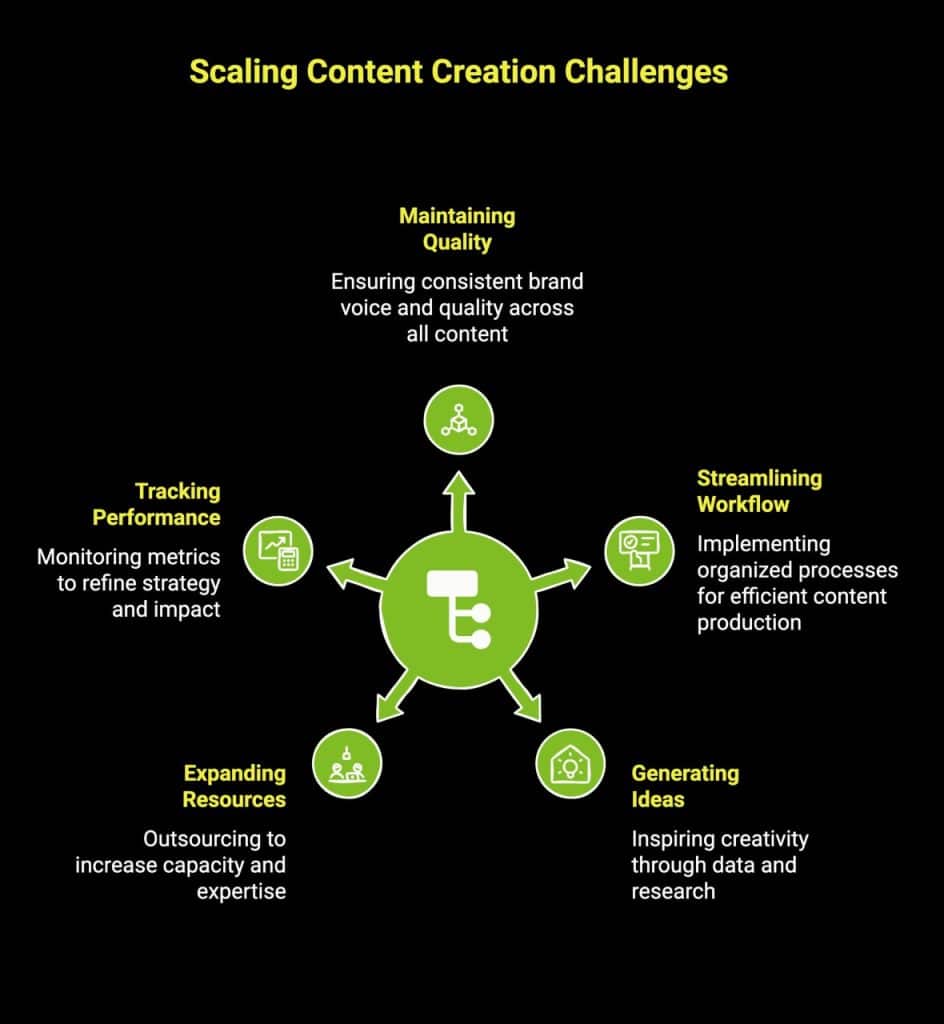
Infographic showcasing scaling content creation challenges
Scaling content creation can feel challenging when you need to create content at scale across social media posts and blog posts while preserving content quality, brand voice, and alignment with business goals. With the right content management structure and a clear content marketing strategy, scaling content production becomes far more manageable and less overwhelming.
Here are five common challenges and ways to overcome them as you scale content creation effectively.
1. Difficulty Maintaining Consistent Quality And Brand Voice
As output increases and you scale content creation, tone of voice and content quality can vary across contributors and channels. You can overcome this by creating a detailed style guide, standardised briefs, and a structured review process to ensure every type of content stays aligned with brand identity.
2. Lack Of Clear Workflow And Content Management Structure
Without organised processes, production becomes slow and confusing, making it hard to understand how to create content at scale. You can overcome this by building repeatable workflows, using project tools, and mapping steps from ideation to publishing to keep tasks on track and improve team collaboration.
3. Struggling To Generate Enough Strong Content Ideas
Creativity can stall when website content scale expands quickly. You can overcome this by using performance data, search intent insights, and competitor research to inspire topics and repurposing high-performing assets to maintain steady output without overwhelming creators.
4. Insufficient Resources Or Production Support
Relying only on internal creators can cause burnout as content scale increases. You can overcome this by outsourcing freelancers, agencies, or guest contributors to expand capacity, strengthen expertise, and maintain consistent production without long-term hiring pressure.
5. Poor Visibility Into Content Performance And Results
Scaling without performance clarity leads to guessing instead of improving. You can overcome this by tracking metrics across search engines and social media to refine strategy, invest in high-impact content, and ensure production supports real business goals.
Scaling content production becomes easier when you mix structure, creativity, and data-led decision-making. Build smart systems, stay consistent, and let insight guide growth.
Why Partner With Wild Creek Web Studio To Scale Your Digital Growth?
With 18+ years of experience and 100+ clients, Wild Creek Web Studio brings a powerhouse of digital expertise under one roof. Whether you’re a corporate brand, SME, or growing entrepreneur, we offer 360-degree digital marketing services backed by strategic consultancy and hands-on execution. Our approach blends proven frameworks, human insight, and smart technology to deliver real, measurable results.
Everything we do is rooted in transparency, delivery on promises, and a client-first mindset. We don’t chase trends. We redefine best practices and build sustainable digital ecosystems that help brands scale confidently and consistently
Book a strategy call with Wild Creek Web Studio today and unlock your next phase of digital impact.
Conclusion
Scaling content production is about smart growth, not just more output. By applying structured workflows, leveraging AI, repurposing content, and maintaining brand consistency, you can scale with quality and confidence. Choose two strategies to implement immediately and track their impact. If you need support building a scalable framework tailored to your goals, reach out for a personalised roadmap. Your next level of content growth starts now.
Frequently Asked Questions
What workflow should I follow to scale my content production process?
A scalable workflow begins with clear planning, task delegation, and structured review cycles. Using project management supports transparency and smooth execution from ideation to publishing, ensuring deadlines, responsibilities, and priorities stay organised as production volume increases.
How can I use AI tools to help scale my content production efficiently?
AI accelerates research, outlines, and editing so content creators focus on strategy and originality. It streamlines scaling content production across multiple websites or brands and adapts workflows differently for blogs, social media, and video content to maximise efficiency and impact.
What role does outsourcing play in scaling content creation?
Outsourcing expands capacity by bringing additional expertise when internal team members are overloaded. It helps increase output without long-term hiring, strengthens creativity, and supports specialised content needs such as design, writing, and video production.
How can I maintain consistency and quality control when producing large amounts of content?
Consistency requires a style guide, documented standards, and structured checkpoints. Clear expectations help creators deliver good content that aligns with tone, quality, and messaging. Regular training, templates, and multi-stage reviewing protect consistency as volume grows.
What is the 70 20 10 rule content?
The 70/20/10 model recommends publishing 70% educational content, 20% engagement-focused content, and 10% promotional pieces. This balance supports value-driven creation, keeps audiences engaged, and strengthens brand trust without overwhelming them with constant direct selling.
How can you measure content quality while scaling production?
Track engagement, conversions, relevance to search intent, and clarity of messaging. Combine metrics with editorial review to evaluate structure, depth, and accuracy. Keyword research ensures alignment with audience needs and supports performance-focused decision-making.
What strategies are effective for optimizing workflows in content production?
Use project management tools to automate tracking, approvals, and scheduling. Standardised briefs, templates, and batching content increase efficiency and reduce friction between teams, resulting in faster execution, improved collaboration, and smoother scaling.