Key Highlights
- Content fails when it doesn’t match user intent.
- User intent refers to the goal behind an action, while search intent focuses on the queries themselves.
- The main types are navigational, informational, commercial, and transactional.
- Understanding intent guides topics, content format, and boosts conversions.
- Search engines use query type, context, history, relevance, and engagement to evaluate intent.
- Tools like Google Search Console, Ahrefs, SEMrush, and Surfer SEO help analyse and optimise intent.
- Misaligned intent lowers rankings, engagement, and conversions.
- Aligning content with intent improves SEO performance and user satisfaction.
- Regular monitoring ensures that content remains relevant as user intent evolves.
Even the best content can fall flat if it doesn’t match user intent. Spending hours writing and optimising won’t help if your audience’s goals aren’t addressed.
User intent is the underlying reason someone visits your site, while search intent focuses on what they want to accomplish in a search. Understanding both helps you create content that attracts, engages, and converts visitors.
This blog explains how to identify user intent keywords and craft content that aligns with audience goals, turning casual readers into loyal followers.
What is User Intent?
Understanding user intent is key to creating content that truly meets what people are searching for. User intent reflects the goal behind a search query, helping marketers craft content that satisfies audience needs and drives engagement.
What Are The Main Types of User Intent in Search Queries?
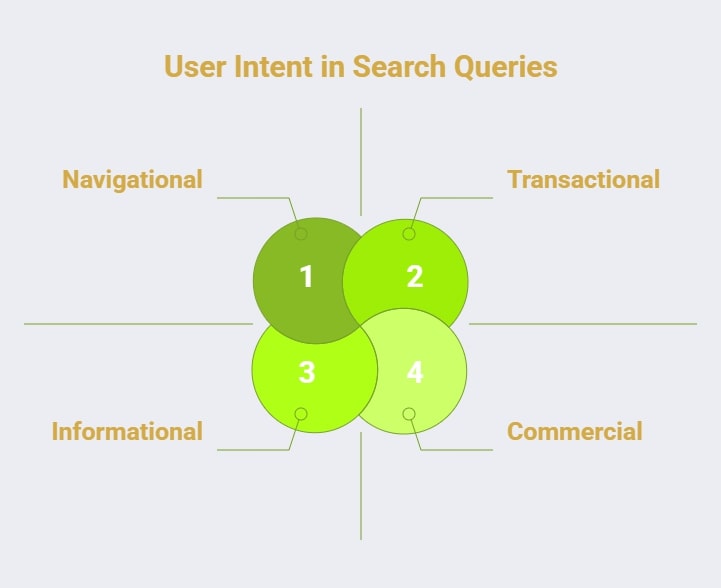
Infographic of the Types of User Intent
Understanding the types of user intent and the corresponding content formats is essential for creating content that aligns with users’ expectations. Each type reflects a distinct goal behind a search query, enabling marketers to tailor their strategies effectively.
1. Navigational
Navigational intent occurs when a user is looking for a specific website or brand. For instance, a navigational query, such as searching for “Wild Creek Studio blog,” indicates that the user wants to reach a particular destination rather than gather general information.
Here are a few examples of navigational search queries:
- “shaquille oneal instagram” – The user wants to go directly to Shaquille O’Neal’s Instagram profile.
- “Squarespace customer service” – The searcher is looking for a specific company’s support page, not general information.
- “AEP electric bill pay online” – The user intends to reach the exact page to pay their electric bill.
2. Informational
Informational intent shows that the user is seeking knowledge or answers to questions. Queries like “What is user intent?” or “How to perform user intent analysis” fall into this type of user intent category, making them ideal for educational or resource-driven content.
Examples of queries with informational intent include:
- “What is the keto diet?” – The user wants to learn about the diet, not make a purchase.
- “How to change your HVAC filter” – Seeking step-by-step guidance or instructions.
- “Why do cats yawn?” – Looking for an explanation or understanding of behaviour.
3. Commercial
Commercial intent reflects a user’s interest in exploring products or services but is not yet ready to make a purchase. Searches such as “best tools for user intent analysis” indicate an evaluation and comparison process before a purchasing decision, while a focus on local intent shows an intent to find nearby options.
Here are some examples of commercial intent queries:
- “best women’s hiking boots” – The user is comparing options before deciding which to buy.
- “Top ecommerce SEO courses” – Evaluating training options to choose the most suitable.
- “Best affordable smartphones” – Looking for recommendations or reviews before purchase.
4. Transactional
Transactional intent signals a strong desire to take action, usually a purchase or conversion. Queries like “buy SEO tools for user intent keywords” show the user is ready to complete a transaction and reach the product page.
Examples of searches with transactional intent are:
- “Buy Apple AirPods” – The user intends to make an immediate purchase.
- “pizza delivery near me” – Ready to order from a nearby restaurant.
- “designer for web pages” – Seeking to hire or book a service.
What Does Understanding User Intent Really Mean in Content Creation?
Ever wonder why some well-optimised content drives traffic but fails to convert? The missing piece is understanding user intent, knowing precisely what your audience wants to achieve when they search.
In content creation, user intent isn’t just about keywords. It’s about delivering content that satisfies real needs, engages readers, and drives action. Here’s how it matters:
- Influences Topic Selection: User intent enables you to choose topics that address actual questions, solve problems, or guide users toward practical solutions.
- Shapes Content Format: Different intents require different formats, blogs for informational queries, comparison pages for commercial research, videos for step-by-step guidance, and product pages for transactional intent.
- Improves Conversions and UX: Aligning content with intent ensures users find what they need quickly, boosting engagement, trust, and conversions.
By analysing user intent with tools like Google Search Console or keyword research platforms, you can map content to each stage of the customer journey, making your content strategy more innovative, more relevant, and more effective.
How Do Search Engines Evaluate User Intent?

Infographic on How Search Engines Understand User Intent
Search engines like Google aim to deliver results that match what users are genuinely looking for. Ever wonder how Google seems to know exactly what you meant when you type a query? Understanding SEO user intent and researching the right keywords ensures your content meets these expectations. By considering how search engines evaluate user intent, content creators can craft pages that rank higher, engage readers better, and drive conversions.
Here’s how search engines assess user intent and what it means for your content strategy:
- Analysing Query Type: Search engines categorise queries as navigational, informational, commercial, or transactional.
- Why it matters: Knowing the query type helps content creators tailor their pages; informational queries benefit from detailed guides, while transactional queries require clear product or service calls-to-action.
- Context and Semantics: Google examines the context of words, including synonyms, related terms, and natural language patterns, to understand the user’s intent.
- Why it matters: Writers should use contextually relevant terms and variations in their content to cover the full spectrum of what users might be searching for, improving relevance and discoverability.
- Search History and Personalisation: Search engines consider a user’s past behaviour, location, and preferences to predict intent more accurately.
- Why it matters: Creating localised or audience-specific content can increase engagement and conversions, as it aligns better with the expectations and needs of different user segments.
- Content Relevance and Quality: Pages that closely match user intent and deliver valuable information are ranked higher.
- Why it matters: Focus on producing comprehensive, accurate, and actionable content that directly addresses the searcher’s question or need, rather than just stuffing keywords.
- Click-Through and Engagement Metrics: Google monitors how users interact with content, including clicks, time on page, and bounce rates.
- Why it matters: Higher engagement signals that your content effectively satisfies user intent, which in turn boosts your rankings. Structuring content for readability and usability becomes critical.
- SERP Features: The presence of featured snippets, knowledge panels, or product listings shows how search engines understand user intent for specific queries.
- Why it matters: Optimising content to appear in these features, through the use of structured data, concise answers, and clear headings, can increase visibility and traffic.
By understanding these factors, content creators can align their strategy with SEO user intent, choose the right keywords, optimise structure and readability, and deliver content that meets both search engine criteria and audience expectations. The result is better rankings, higher engagement, and more meaningful conversions.
What tools help analyse user intent?
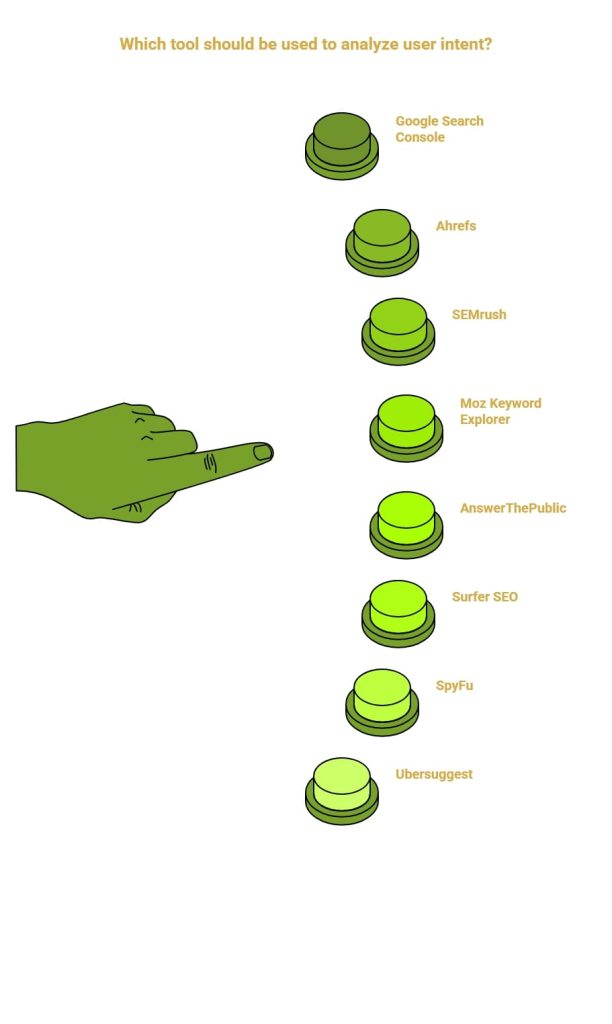
Infographic showing a button selection for choosing a tool to analyze user intent
Identifying and understanding user intent is easier with the right tools. These platforms help you perform keyword research, classify intent, analyse competitors, and optimise content to align with audience needs.
1. Keyword Research
- Google Search Console – Reveals which queries bring traffic and which pages satisfy user intent.
Pro tip: Focus on high-impression queries with low CTR to identify pages that need content adjustment.
- Ahrefs – Provides insights into keyword intent, search volume, and competitor strategies.
Pro tip: Filter keywords by “traffic potential” to prioritise high-value opportunities.
- Ubersuggest – Offers keyword ideas along with search intent insights.
Pro tip: Use the “Top SEO Pages” report to see which content performs best for a keyword.
- Moz Keyword Explorer – Offers keyword suggestions and intent categorisation.
Pro tip: Use the “Priority” score to focus on keywords that strike a balance between volume, difficulty, and opportunity.
2. Intent Classification
- AnswerThePublic – Shows common questions and queries users search for, ideal for informational intent.
Pro tip: Group questions by theme to create content clusters targeting specific search intents.
- SEMrush – Helps analyse SEO user intent, keyword difficulty, and content gaps.
Pro tip: Check the “Keyword Intent” filter to differentiate between informational, transactional, and navigational searches.
3. Competitor Analysis
- SpyFu – Lets you see which keywords competitors rank for and the intent behind them.
Pro tip: Identify competitors’ high-intent keywords and create content targeting the same audience with added value.
- Ahrefs (Competitor Analysis) – Examine competitor pages and their top-ranking keywords.
Pro tip: Use the “Content Gap” feature to uncover keywords your competitors rank for that you haven’t targeted yet.
4. Content Optimisation
- Surfer SEO – Assists in optimising content based on user intent and SERP analysis.
Pro tip: Follow Surfer’s content score recommendations to match top-ranking pages while maintaining your brand voice.
Start by selecting one tool from each category to establish a basic workflow for intent-driven content planning.
How does misaligned user intent impact SEO performance?
Failing to align content with user intent can negatively affect your SEO performance, even if your content is well-written or technically optimised. Here’s how misalignment can hurt your strategy:
- Lower rankings: Search engines prioritise content that satisfies the searcher’s goal. Poor user intent optimisation can lead to lower visibility in SERPs, as evidenced by a case study on search optimisation.
- High bounce rates: If users don’t find what they expect, they leave quickly, signalling that the content does not meet intent.
- Reduced engagement: Misaligned content discourages users from interacting with your pages, negatively impacting metrics such as time on page and click-through rates.
- Wasted resources: Investing in content creation without proper user intent prediction can result in wasted effort and budget.
- Missed conversion opportunities: Content that doesn’t match user goals fails to guide visitors through the conversion funnel.
By focusing on user intent optimisation and leveraging accurate user intent prediction, businesses can create content that meets audience expectations, improves SEO performance, and drives meaningful results.
How Does Wild Creek Studio Help Businesses Decode User Intent?
At Wild Creek Studio, we make understanding user intent simple. We help businesses uncover what their audience is truly searching for and create content that resonates with them. With our expertise in user intent keyword research, SEO user intent optimisation, and offering a 30-day free trial, we ensure your content connects with the right audience at the right time.
Ready to align your content with user goals? Let’s work together and turn insights into results.
Conclusion
Understanding user intent is crucial for creating content that not only attracts visitors but also engages them effectively, ultimately driving organic traffic. By aligning your content strategy with the various types of user intent - navigational, informational, commercial, and transactional - you can meet the needs of your audience while enhancing your SEO performance. Remember, it’s not just about optimising for search engines; it’s about providing valuable information that resonates with readers. If you want to dive deeper into how to decode user intent for your business, book a free consultation with our experts today. Your journey to meaningful connections starts now!
Frequently Asked Questions
How does optimising for user intent improve website conversions?
Optimising for user intent improves conversion rates by delivering the right content to the right person at the right time. This tailored content strategy, combined with an effective SEO strategy, enhances the user experience, guiding visitors smoothly through the buyer’s journey. By satisfying their needs at each step, you build trust and increase their likelihood of conversion.
What are some practical tools for analysing user intent?
Practical analytics tools for analysing user intent, including audience intent, include Google Analytics and Google Search Console, which provide data on keywords and user behaviour. For a deeper understanding, conducting a SERP analysis is crucial. This involves manually reviewing top-ranking pages to determine the type of content that search engines reward for a query.
How can I adjust my content if user intent changes over time?
To adjust your content as user intent evolves, regularly monitor your analytics and gather user feedback to inform your updates. Refreshing old blog posts, conducting A/B testing on calls-to-action, and staying up-to-date with search trends are key components of a flexible content strategy. This ensures you continue to provide relevant content that meets current user needs.
How do voice searches affect user intent analysis?
Voice searches often make user intent clearer because queries are typically longer and more conversational and can change based on the time of day. People ask full questions, which clarifies their query intent for the search engine. To optimise, focus on natural language search terms and provide direct answers, as this format performs well in voice search results.